




La Liste Top Hotels · Star Wine List · Mr & Mrs Smith Seal of Approval
Two restored 1920s buildings on Nachmani Street place The Norman at the intersection of Tel Aviv's Bauhaus heritage and contemporary Israeli culture. The property holds 90 points on the 2026 La Liste Top Hotels ranking and operates three distinct dining venues, including rooftop Japanese tapas restaurant Dinings and chef Barak Aharoni's Alena. It is the only designated luxury boutique hotel within the White City UNESCO heritage zone.

Pearl is the En Primeur Club membership app, where members save venues, book tables and use the concierge.
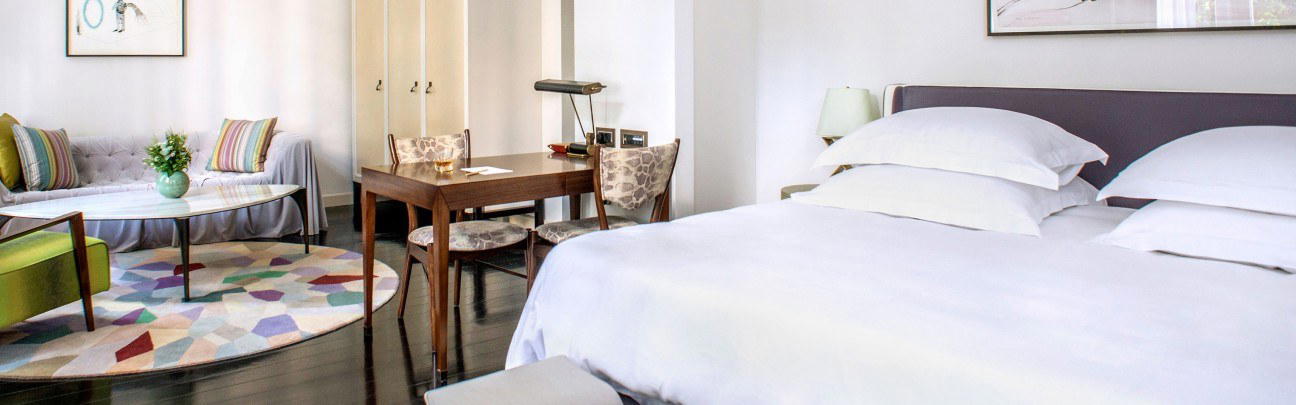
Where the White City's Architecture Becomes the Guest Experience
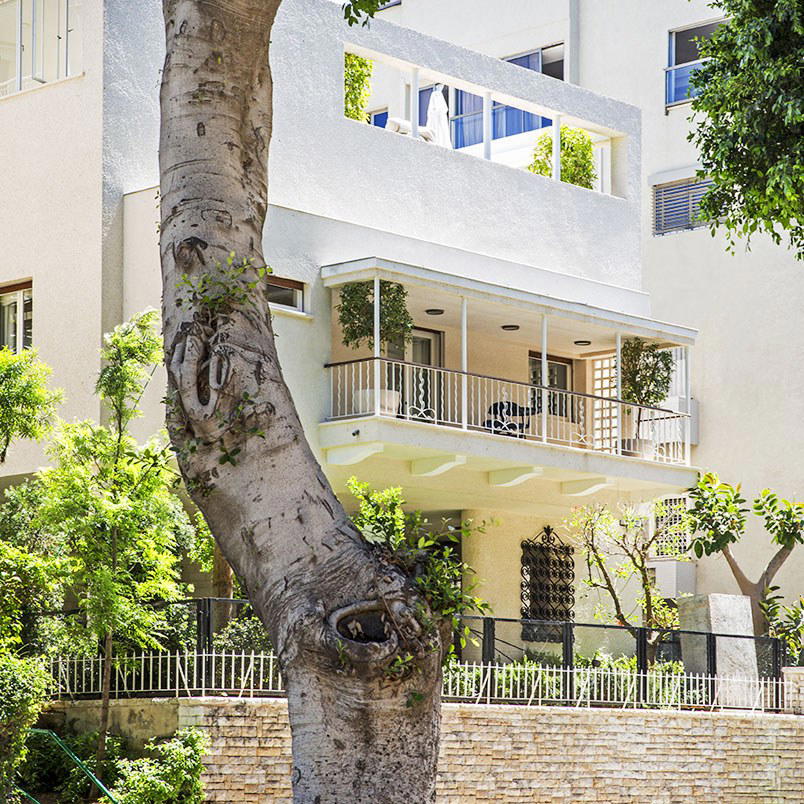
Tel Aviv's White City designation covers roughly 4,000 Bauhaus and Modernist buildings constructed during the 1930s and 1940s, a concentration so significant that UNESCO inscribed the area in 2003. Nachmani Street sits within that protected zone, and the two buildings that form The Norman, No. 23 and No. 25, predate the Bauhaus wave, reaching back to the 1920s when the city's architectural vocabulary was still sorting itself out between European Modernism and older eclectic traditions. That layering is precisely what makes the address matter. Where most of Tel Aviv's heritage hotels are Bauhaus purists by geography, The Norman occupies a more architecturally complex position: one building in grand Modernist style with clean lines and wooden shutters, the other in an Eclectic idiom carrying Renaissance influence and what the property describes as oriental accents. The contrast is not a design tension, it is a historical document.
The broader Rothschild Boulevard corridor, steps away, functions as the city's most legible axis of early 20th-century civic ambition: wide pavements, mature ficus trees, and a density of restored facades that make it the natural starting point for any architectural tour. The Norman sits just off this axis on a prominent square, which means guests get the neighbourhood context without the boulevard's tourist traffic. Among Tel Aviv's luxury options, from the The Jaffa Hotel, Tel Aviv in the south to the David InterContinental Tel Aviv on the seafront, The Norman is the only property operating inside the White City's core with boutique scale. That positioning earned it 90 points on the 2026 La Liste Leading Hotels ranking, a credential that places it in the same international conversation as properties such as Cheval Blanc Paris and Aman Venice, though at a very different scale and price point.
Three Dining Formats, One Building Complex
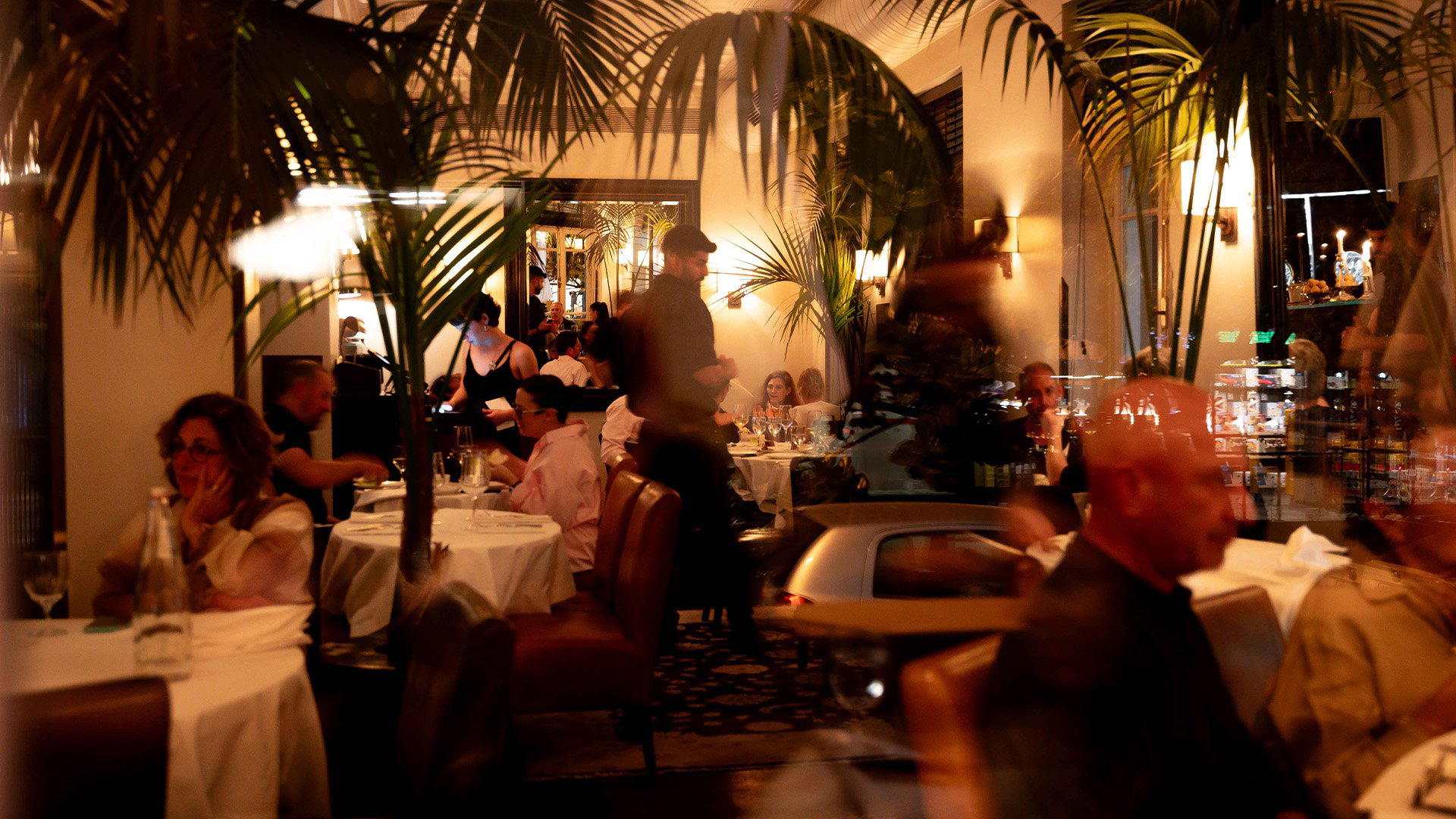
The dining program at The Norman is where the property's identity becomes most legible. Three venues occupy the complex, each calibrated to a different mode of eating. Alena, the main restaurant, is described as elegant but informal, a combination that in Tel Aviv's dining culture translates roughly to serious cooking without ceremony.
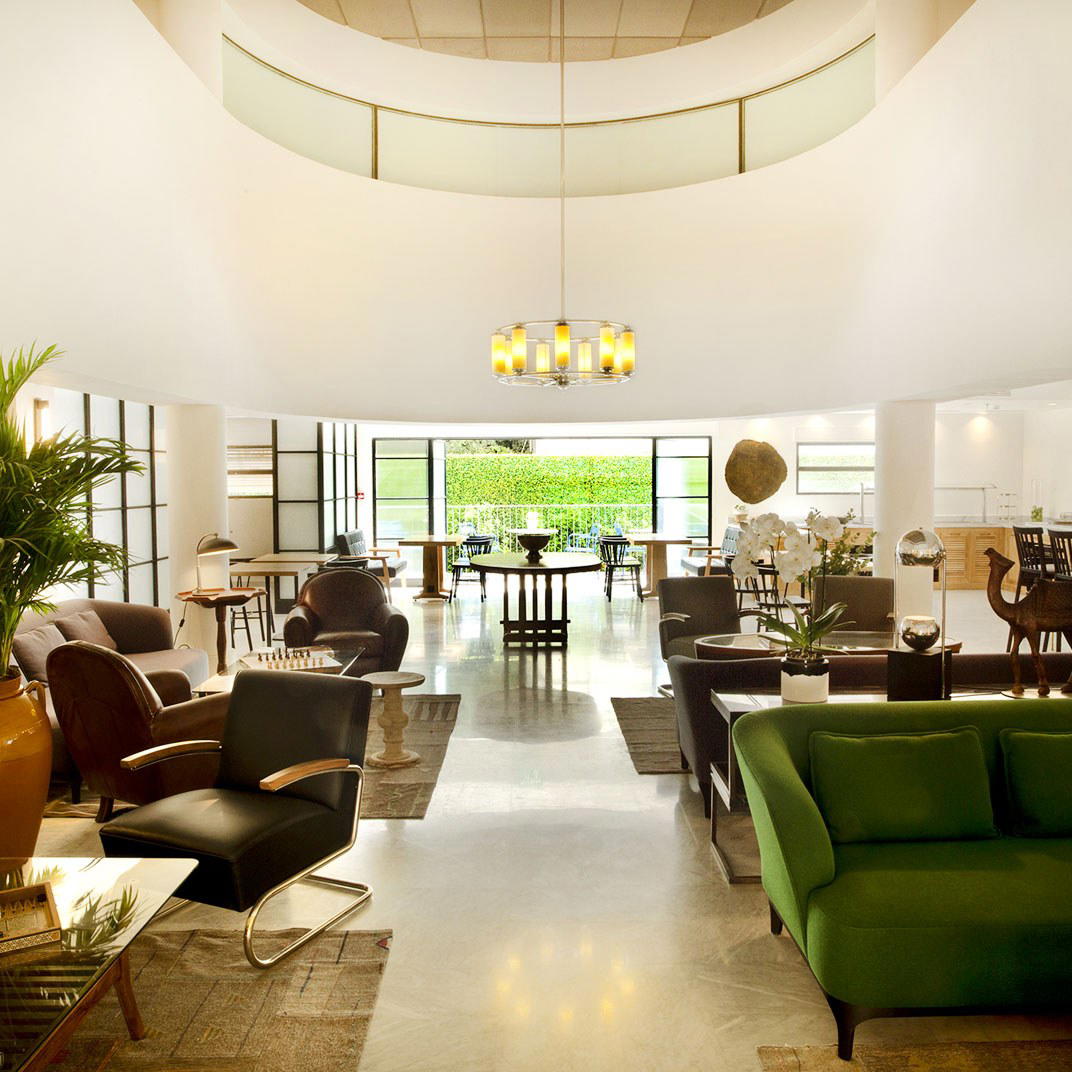
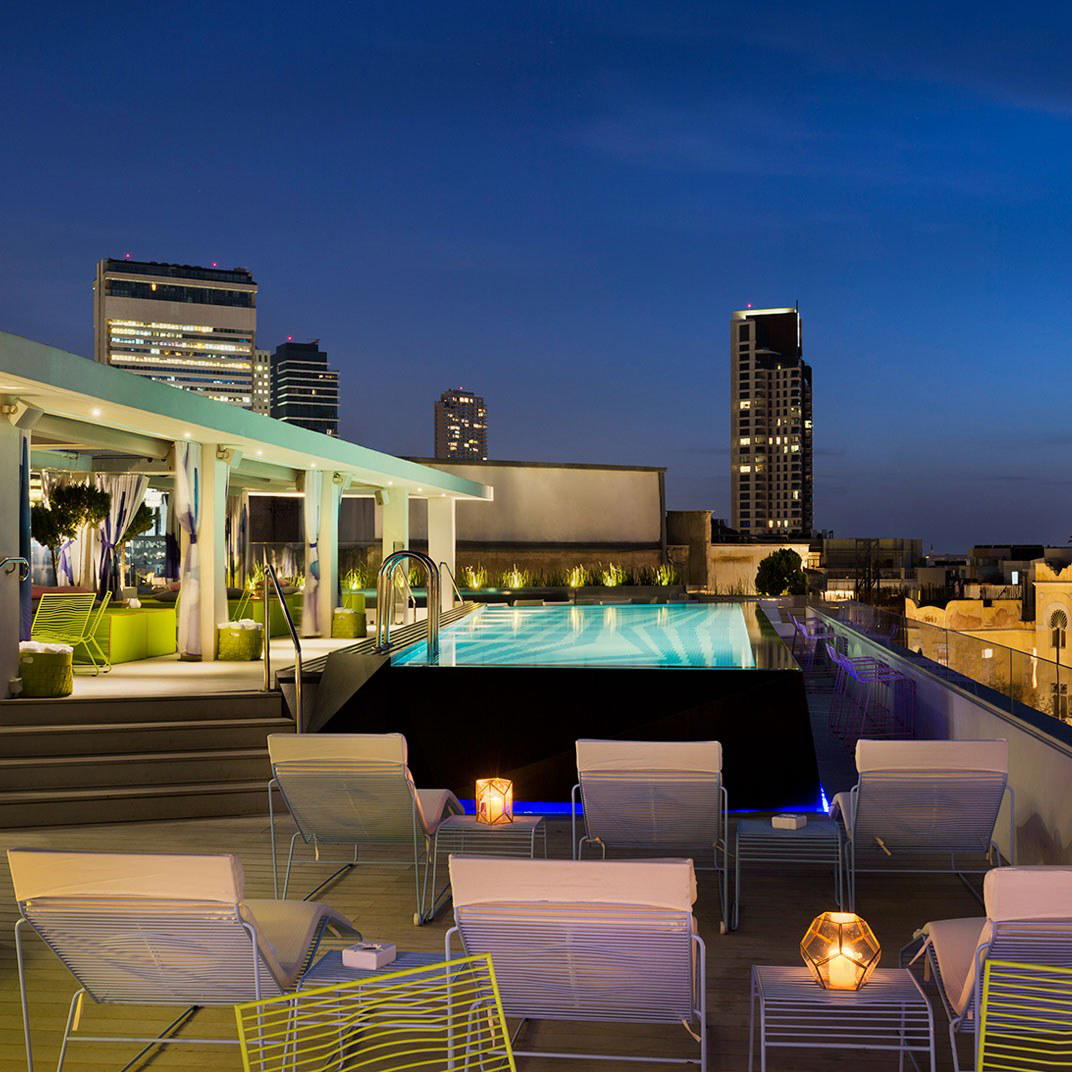
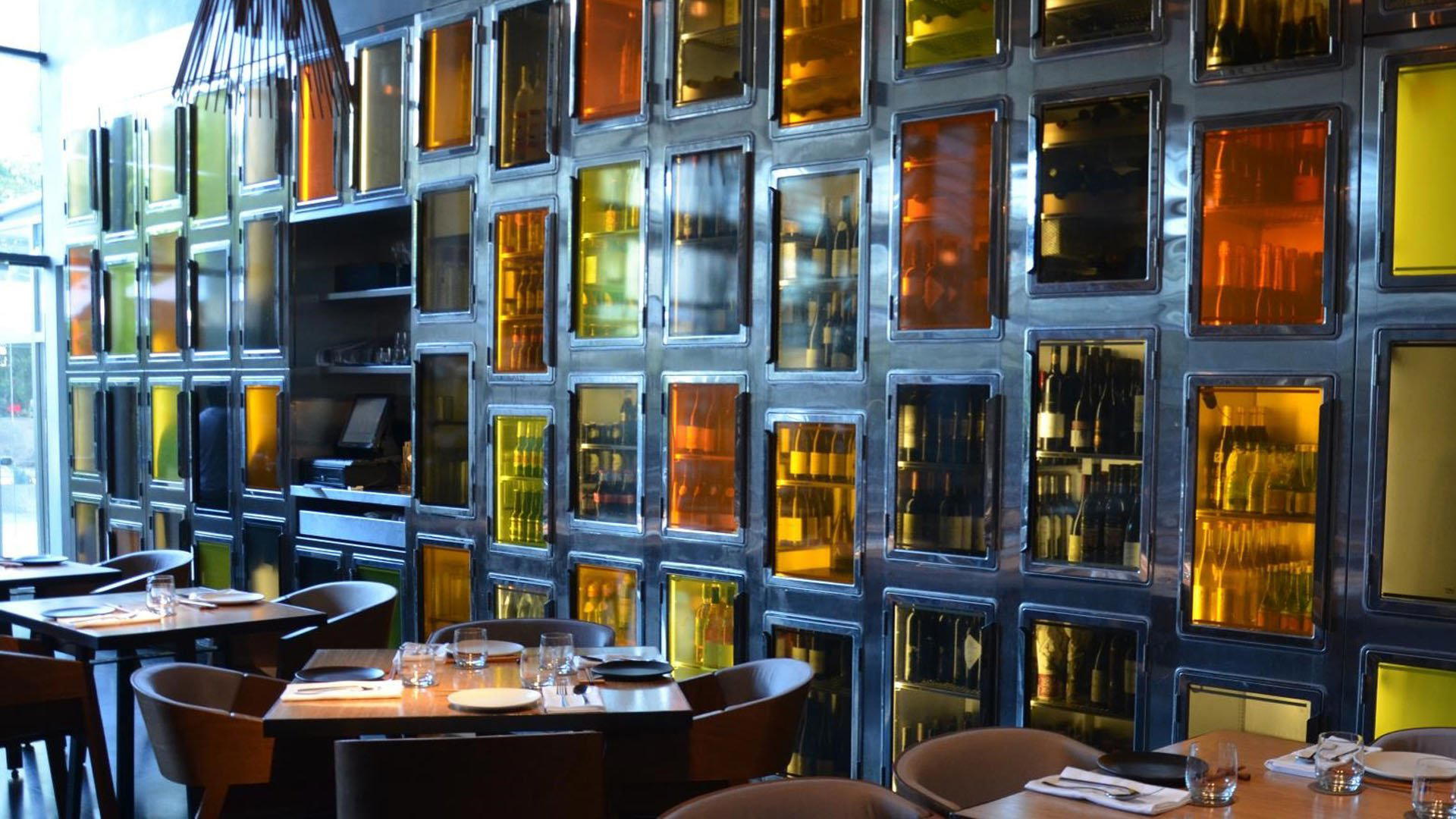
Library Bar occupies a classic setting within the property, the kind of format that positions drinking as a continuation of the hotel's archival aesthetic, old books, curated objects, the sense that the room itself has a point of view. Rooftop venues in Tel Aviv tend to compete aggressively on views and atmosphere; the third venue, Dinings, distinguishes itself by format rather than spectacle. A Japanese tapas concept on the hotel's rooftop, Dinings brings a precision-oriented culinary logic to a setting that already benefits from panoramic city sightlines and an infinity pool. The combination of Japanese technique and Israeli produce sources is a pairing that Tel Aviv's dining culture has explored with increasing seriousness, given the city's deep familiarity with both traditions. All three venues operate as walk-in options, not exclusively for hotel guests, a policy that connects the property to the surrounding neighbourhood rather than sealing it off.
The Physical Property: Rooftop, Garden, and Wellness
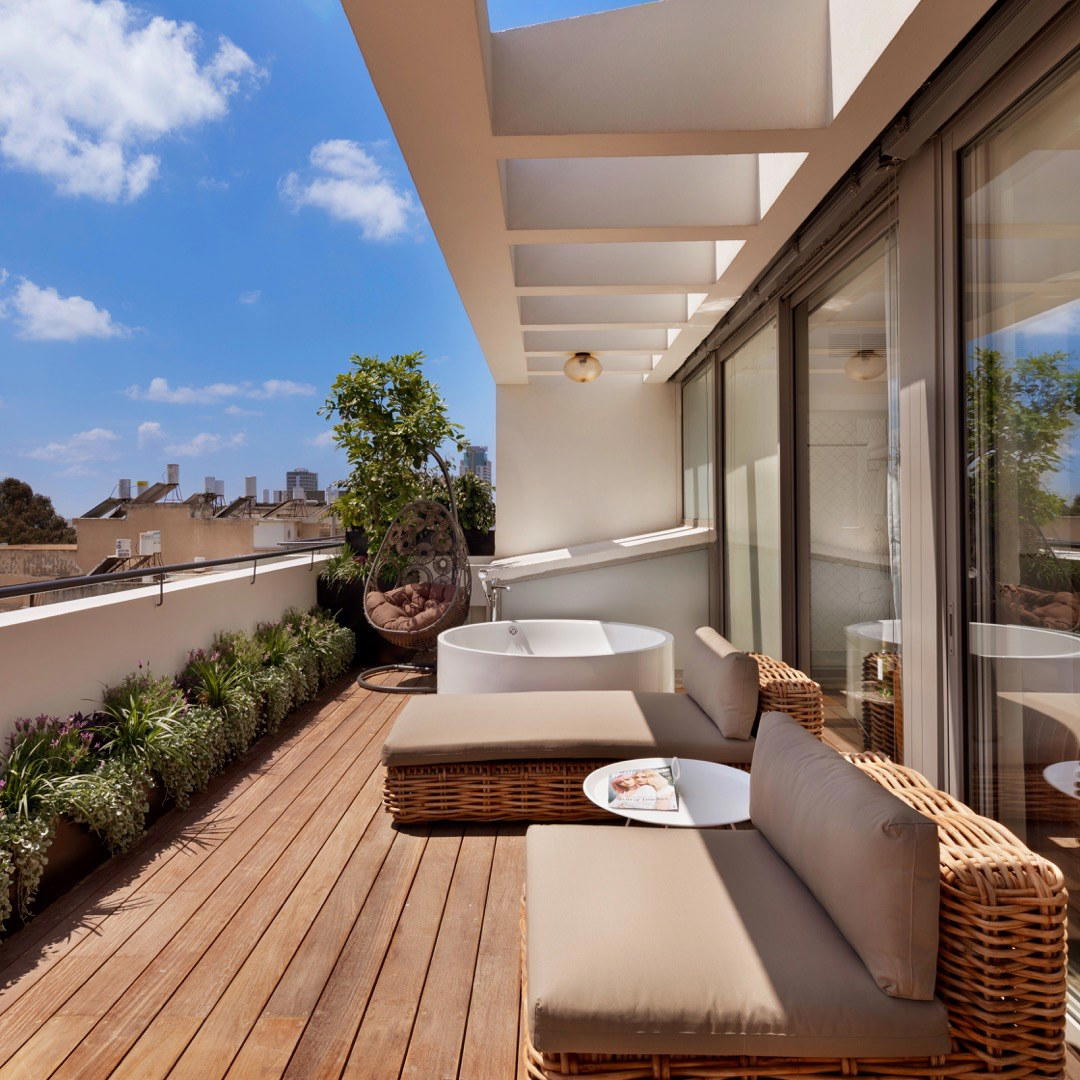
Two buildings share a citrus garden positioned between them, a detail that in a dense urban setting carries more weight than it might elsewhere. Tel Aviv's residential neighbourhoods are not short of greenery, but a private courtyard garden within a hotel complex on a central street is a meaningful pause point. The rooftop operates at a different register: an infinity pool with city views and a sundeck that functions as the property's most social space, particularly during the long Mediterranean summer when outdoor living in Tel Aviv extends well into the evening. A wellness area with a spacious terrace rounds out the amenity set, offering a quieter counterpoint to the rooftop's energy.
Interior design choices work from the buildings' original fabric outward: antique elements retained from the historic interiors, hand-selected materials layered in, and a contemporary Israeli art collection distributed through the spaces. This approach places The Norman in a different category from heritage hotels that restore a building and then fill it with period reproduction furniture. The art collection signals a connection to the city's present cultural life, not just its architectural past. For comparison, Tel Aviv's other design-led boutique options, including the Alma Hotel and Hotel Montefiore, each have their own design vocabularies, but neither combines the UNESCO heritage building status with a three-venue dining program and rooftop pool at this scale.
How The Norman Fits Tel Aviv's Hotel Spectrum
Tel Aviv's upper accommodation tier runs from large-scale seafront properties like the The David Kempinski Tel Aviv and Dan Tel Aviv, which compete on room count, ballroom capacity, and beach access, to intimate boutique properties competing on character, neighbourhood position, and food and drink programming. The Norman and The Drisco Tel Aviv occupy the upper end of the boutique segment, both working with historic building stock and limited room counts. The Brown TLV Urban Hotel sits further down the price and formality register, appealing to a different traveller profile entirely.
For those planning trips beyond Tel Aviv, The Norman's central position makes it a natural base for day excursions to Jerusalem, where David Citadel Hotel offers an alternative base, or to the Galilee and Negev, where properties like Beresheet in Mizpe Ramon and Six Senses Shaharut in Shaharut offer a very different experience of Israeli terrain. The The Efendi Hotel in Acre and Elma Arts Complex Luxury Hotel in Hadera extend the heritage-building tradition northward along the coast. See our full Tel Aviv restaurants and hotels guide for a broader map of the city's options.
Planning Your Stay
The property operates at 23-25 Nachmani Street, within easy walking distance of Rothschild Boulevard and the cultural institutions clustered around it. As a boutique hotel with limited rooms and three public-facing dining venues that draw neighbourhood regulars alongside hotel guests, peak periods, particularly the summer months and major Jewish holidays, warrant advance booking. The Norman's two residential buildings include a suites building at No. 23 available for both short and long-term stays, which positions it as a viable option for extended visits rather than just transient nights. The non-kosher dining program across all three venues is worth noting for guests whose plans depend on that distinction, as it is not universal across Tel Aviv's hotel restaurants.
Cuisine-First Comparison
Comparable venues nearby, for context on price, style, and recognition.
| Venue | Cuisine | Price | Awards | Notes |
|---|---|---|---|---|
| The Norman Tel AvivThis venue (the venue you are viewing) | Historic pre-Bauhaus residences restored with modern luxury amenities | Not listed | La Liste Top Hotels · Star Wine List | Not listed |
| Alma Hotel | Restored historic Bauhaus building with modern bohemian updates | Not listed | Not listed | Newe Sha'anan |
| Sam&Blondi | Boutique hotel in a heritage 1930s building with eclectic European design. | Not listed | Michelin Selected | Tel Aviv City-Centre |
| The Vera Hotel | Hyperlocal industrial-chic boutique in historic building blending raw textures with modern ease. | $200–300 | Not listed | Newe Ẕedeq |
| Hotel in the Basel Complex | Large mixed‑use urban complex with an integrated upscale hotel component above or alongside luxury residences and retail. | Not listed | Not listed | Basel Complex |
| Dan Tel Aviv | Luxury beachfront hotel with attentive service and VIP appeal. | $200–300 | Virtuoso Luxury Hotel Partner · Leading Hotels of World Member | Tel Aviv Promenade |
Recognition history
Dated appearances from independent guides and award organizations, with the underlying list record or original source where available.
La Liste Top Hotels
La Liste
Star Wine List
Star Wine List
Mr & Mrs Smith Seal of Approval
Mr & Mrs Smith
Virtuoso Luxury Hotel Partner
Virtuoso
Small Luxury Hotels of the World Member
Small Luxury Hotels of the World
Continue exploring
More in Tel Aviv
Hotels in Tel Aviv
All hotels in Tel Aviv →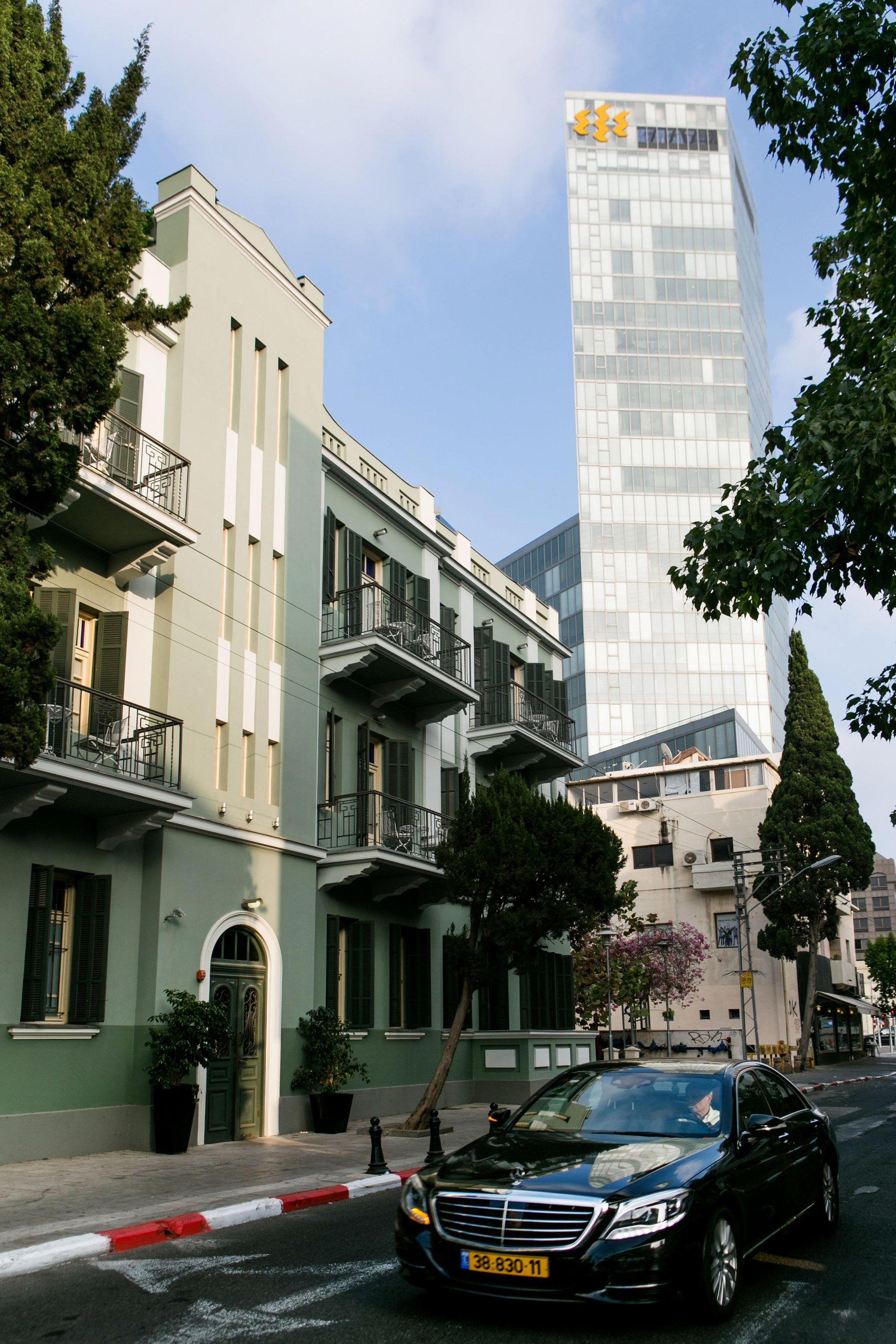
Bars in Tel Aviv
All bars in Tel Aviv →
Restaurants in Tel Aviv
All restaurants in Tel Aviv →

Details
- Elegant
- Sophisticated
- Modern
- Intimate
- Romantic Getaway
- Business Trip
- Weekend Escape
- Rooftop Pool
- Panoramic View
- Historic Building
- Design Destination
- Wi Fi
- Pool
- Spa
- Fitness Center
- Room Service
- Concierge
- Restaurant
- Bar
- Garden
- Business Center
- Valet Parking
- Skyline
- Garden
- Wheelchair Accessible
- Elevator
Glamorous 1920s style decor blended with contemporary elegance, featuring high ceilings, bespoke artworks, lavish furnishings, and a serene atmosphere enhanced by soundproofing.