On a quiet lane just off Zagreb's central Trg bana Jelačića, Vinodol occupies a covered courtyard that has been feeding the city's professional class for decades. The kitchen works Croatian tradition with a steady hand, making this an address that locals return to rather than discover once. For visitors trying to read how Zagreb actually eats, it is a more useful stop than many newer arrivals.
Pearl is the En Primeur Club membership app — saves, bookings, and concierge access live there. Same editors, same standards.
- Address
- ul. Nikole Tesle 10, 10000, Zagreb, Croatia
- Phone
- +385 1 4811 427
- Website
- vinodol-zg.hr
- Directions
- Get directions
 Saves & bookings on Pearl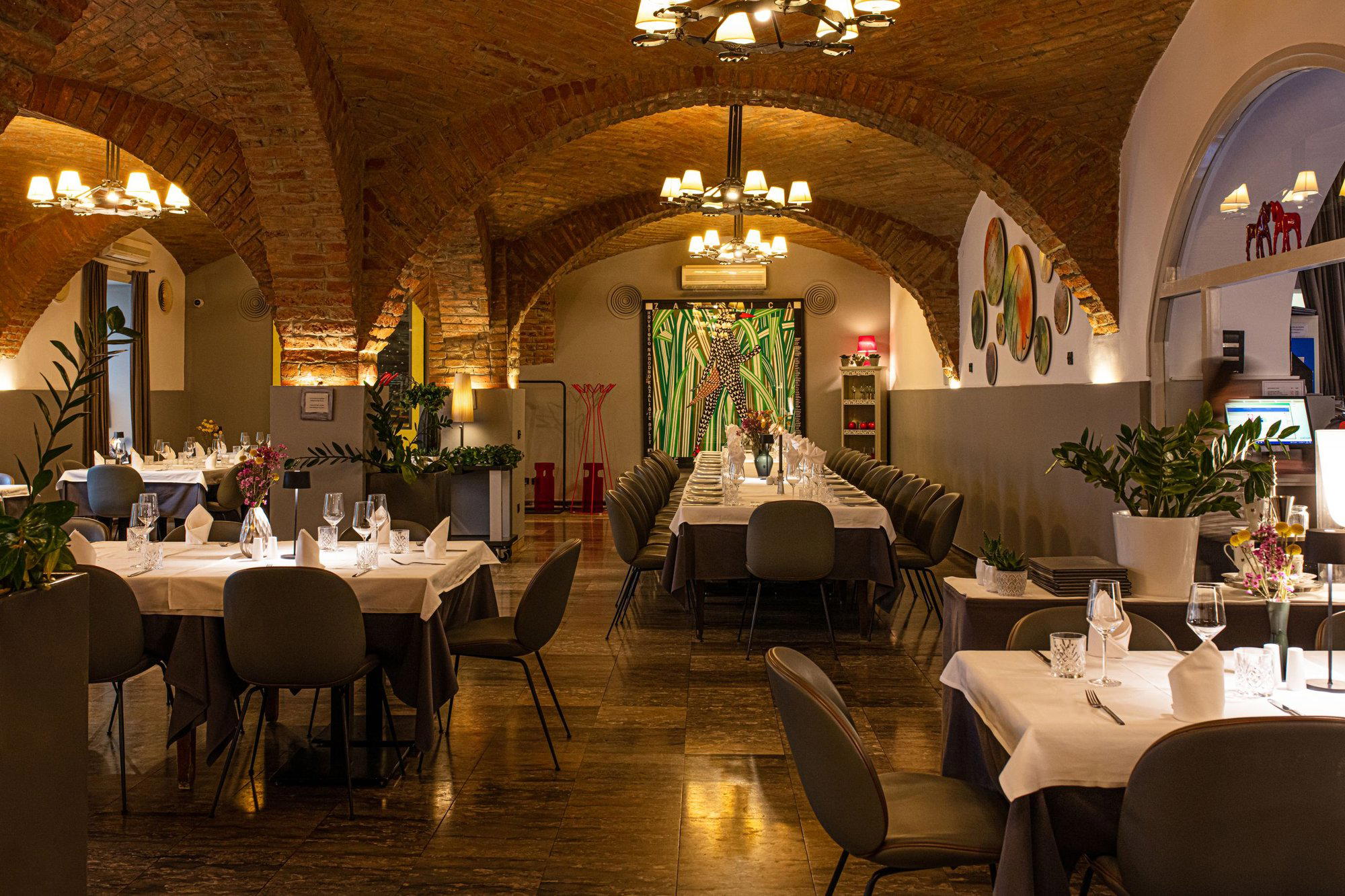
The Courtyard as Dining Room
Zagreb's restaurant culture has a habit of rewarding patience. The city's most durable addresses are rarely the ones generating headlines in a given season; they tend to sit on side streets, in covered passageways, or behind unassuming facades, drawing a crowd that already knows where it is going. Vinodol, a traditional Croatian restaurant at ul. Nikole Tesle 10 in Zagreb, sits just a short walk from the main square. Its covered courtyard functions as the dining room proper, a format common in Central European cities where the boundary between interior and exterior is treated as a seasonal variable rather than a fixed architectural fact. In summer the open-sky section extends the space; in cooler months the covered sections hold enough warmth to make the distinction academic.
Arriving at Vinodol, the physical experience sets the tone for the meal before the menu appears. Stone and brick, a sense of enclosure without heaviness, tables that are spaced to allow conversation rather than broadcast it to neighbours. These are the conditions under which Croatian dining ritual tends to operate at its most comfortable: unhurried, structured, with enough breathing room between courses that a bottle of wine can develop across the arc of an evening rather than be drained in the gap between ordering and eating.
How Zagreb Eats: The Ritual Frame
Understanding Vinodol requires understanding something about how Zagreb's established restaurant culture paces a meal. This is not a city where tasting-menu formats have fully displaced the traditional multi-course structure, even at the higher end. Restaurants like Noel (Modern Cuisine) have pushed Zagreb into contemporary European territory with elaborate tasting sequences, and addresses like Dubravkin Put (Mediterranean Cuisine) bring a lighter Mediterranean logic to the table. But a substantial part of the city's dining public still eats along a more traditional rhythm: a cold starter, a soup or warm appetiser, a main built around roasted or braised meat, and a dessert that closes rather than punctuates.
Vinodol operates within that rhythm. Croatian meat-centred cooking, particularly the slow-roasted preparations associated with the continental interior, is the kitchen's reference point. The peka tradition, where lamb or veal is cooked under a bell-shaped lid buried in embers, represents one of the more labour-intensive expressions of that heritage, and it appears in various forms at addresses across Zagreb's mid-to-upper tier. This style of cooking demands time: preparation, resting, service. It is incompatible with the compressed timing of a fast-casual format, which is partly why the restaurants that do it well tend to be the ones with established clienteles who plan rather than walk in.
That patience extends to the wine service. Croatian wine, particularly from Slavonia in the east and the Dalmatian coast, has become a stronger presence on Zagreb restaurant lists over the past decade. Graševina from Slavonia, often served slightly chilled, and Pošip from the Dalmatian islands both work well alongside roasted meats and grilled fish. A well-run traditional Croatian table generally sequences wine alongside rather than after the food, treating the bottle as a structural element of the meal rather than an afterthought.
Vinodol in Zagreb's Competitive Frame
Zagreb's restaurant tier has become more differentiated over the past several years. At the contemporary end, Noel and creative addresses operate at price points that reflect European fine-dining comparables. At the affordable end, Izakaya (Japanese Contemporary) demonstrates how a single-concept kitchen can hold a city-wide audience at lower price points. Al Dente and Amfora occupy other parts of the range. Vinodol sits in the mid-to-upper bracket, aligned with the price tier of ManO2 (Croatian, €€€) and Dubravkin Put, where the expectation is a full-service, full-course meal rather than sharing plates or a single dish.
For visitors coming from coastal Croatia, the comparison with Dalmatian cooking is instructive. The Adriatic tradition, represented at its most refined by addresses like Pelegrini in Sibenik, LD Restaurant in Korčula, or Restaurant 360 in Dubrovnik, leans toward fish, olive oil, and lighter preparations. Zagreb's continental tradition runs heavier: structured meat dishes, cream-based sauces, bread dumplings, and preparations that reflect the city's Habsburg-era Central European inheritance more than its Adriatic geography. Vinodol occupies the latter tradition, making it a more representative address for understanding Zagreb's culinary character than its coastal equivalents. Elsewhere in Croatia, that tension between continental and coastal registers plays out at places like Agli Amici Rovinj in Rovinj, Korak in Jastrebarsko, Boskinac in Novalja, Krug in Split, Nebo by Deni Srdoč in Rijeka, Alfred Keller in Mali Lošinj, and San Rocco in Brtonigla. For the broadest view of where Croatian cooking sits internationally, the EP Club comparison set extends to fine-dining references as far as Le Bernardin in New York City and Lazy Bear in San Francisco.
Planning a Meal Here
Vinodol is located at Ulica Nikole Tesle 10, within a few minutes' walk of Trg bana Jelačića and the Dolac market, making it a natural anchor for an afternoon that moves between the market and an early evening meal. The courtyard format means that lunch in warmer months and dinner year-round are both viable, with the atmosphere shifting between the two.
For restaurants in this tier and format, booking in advance is standard practice, particularly for larger groups or weekend evenings when the courtyard fills with regulars who plan their visits rather than arriving speculatively.
Cuisine and Recognition
Comparable venues nearby, for context on price, style, and recognition.
| Venue | Cuisine | Price | Notes |
|---|---|---|---|
| VinodolThis venue — the venue you are viewing | Traditional Croatian | $$ | Not listed |
| Trilogija Fino&Vino | Contemporary Croatian with Mediterranean Influences | $$ | Kaptol |
| Market street food & drinks | Modern Croatian Bistro | $$ | City Centre |
| Ježeva kućica | Traditional Croatian Mediterranean | $$ | Maksimir |
| CHEFlja | Italian Mediterranean | $$ | western Zagreb |
| Vodnjanka | Authentic Istrian | $$$ | Lower Town |
Continue exploring
More in Zagreb
Restaurants in Zagreb
Browse all →
Bars in Zagreb
Browse all →
Hotels in Zagreb
Browse all →

At a Glance
- Elegant
- Classic
- Cozy
- Celebration
- Terrace
- Local Sourcing
Current opening hours
- Monday
- 12 PM–12 AM
- Tuesday
- 12 PM–12 AM
- Wednesday
- 12 PM–12 AM
- Thursday
- 12 PM–12 AM
- Friday
- 12 PM–12 AM
- Saturday
- 12 PM–12 AM
- Sunday
- 12 PM–12 AM
Hours can change for holidays and private events. Last verified .
Sophisticated decor with brick-vaulted ceilings, warm grey tones, white tablecloths, and an elegant atmosphere in a tucked-away courtyard setting.