
Tabelog 100 #47
Our verdict
Vietnamese Aobaba Fukuyama ten gives Fukuyama a rare, award-recognised Vietnamese address at an accessible price tier. Its reputation rests less on spectacle than on vegetable-led cooking, vegetarian options, family-friendly service, and a room flexible enough for solo meals, small groups, and larger gatherings.

Pearl is the En Primeur Club membership app, where members save venues, book tables and use the concierge.
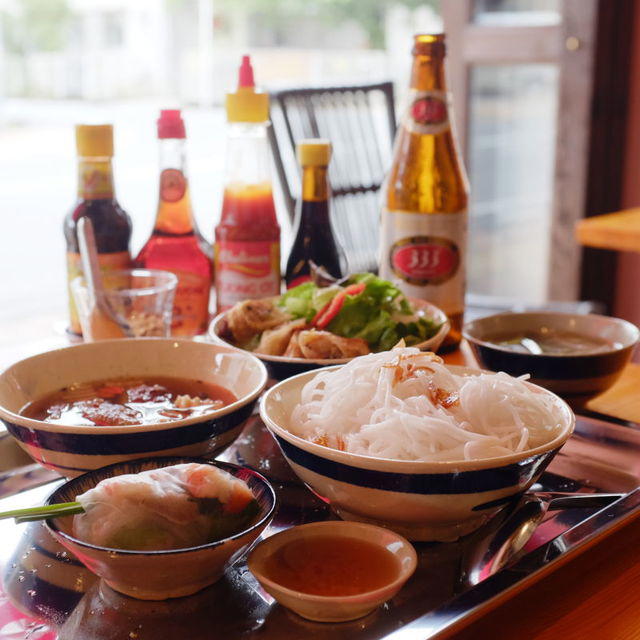
The menu
What to order
- Pho with three types of beef
- Fresh spring rolls
- Banh xeo (Vietnamese sizzling pancake)
- Vietnamese noodle dishes with extruded rice vermicelli
Fukuyama is not where many travellers expect the conversation around Asian and ethnic cooking to sharpen, yet Vietnamese Aobaba Fukuyama ten makes its case through a practical, accessible profile rather than special-occasion theatre. In a regional city, strong non-Japanese restaurants have to work for everyday lunches, casual dinners, informal groups, and travellers looking beyond the most obvious local choices.
Vietnamese Aobaba Fukuyama ten sits in that practical middle ground. It is a Vietnamese restaurant with a Tabelog score of 3.55 and Tabelog Hyakumeiten recognition in 2024. In Fukuyama, that recognition puts it in a narrower category than the city’s more familiar local and French-leaning dining rooms. The comparison is not with high-ticket regional counters, but with restaurants making a clear cuisine-specific argument at modest spend.
Vietnamese cooking in Fukuyama, judged by balance as much as appetite
Vietnamese food in Japan often succeeds when it avoids becoming a checklist of noodle bowls and spring-roll shorthand. The more convincing version is built around freshness, herbs, rice-based formats, pickled notes, and a lighter relationship with oil than many neighbouring casual cuisines. Here, the useful Fukuyama position is Asian cooking that offers a different register from heavier casual dining patterns.
That ingredient angle is the lens. In a city where Sarrasin can represent a different kind of dining decision, and Tori Tsune is built around another Japanese format, a Vietnamese restaurant at this level does a separate job. It offers lower-commitment variety, especially at lunch, while keeping enough structure for dinner. Vietnamese cooking depends on contrast, not weight, and that contrast widens the audience beyond the usual banquet crowd.
The broader appeal is adaptation rather than a rigid export model. A Fukuyama table may include diners looking for a quick lunch, a casual dinner, or a group meal that does not feel as heavy as a standard night out. That is where the restaurant’s cuisine matters: it gives the meal definition while still fitting the rhythms of everyday local dining.
A flexible choice for Fukuyama dining
The format is best understood as approachable rather than ceremonial. For a cuisine-specific restaurant in a regional city, that matters. Vietnamese Aobaba Fukuyama ten can function as more than a casual lunch stop because it gives diners a recognisable culinary direction without asking them to treat the meal as a formal occasion.
Everyday use is part of the equation in the way many accessible regional restaurants have to be. That practical hospitality changes how the restaurant fits Fukuyama. It is neither a specialist counter built only for a narrow audience nor a generic family restaurant, but the useful space between: cuisine with definition, in a setting intended for ordinary city use.
Access should be framed simply: the restaurant is in Fukuyama. For travellers building a short food itinerary, it pairs naturally with the broader city circuit: Our full Fukuyama restaurants guide gives the wider dining map, while nearby and citywide alternatives such as other Fukuyama dining rooms, Le Miroir, and unnamed local options show how varied Fukuyama’s field becomes beyond a single cuisine.
Why the recognition matters more than the price
The notable point is not that Vietnamese Aobaba Fukuyama ten is expensive. It is not. Dinner is listed at JPY 3,000 to JPY 3,999, while lunch is listed up to JPY 999, making the award recognition more interesting. Tabelog Hyakumeiten recognition does not merely reward luxury signals; it can highlight restaurants where a cuisine holds its shape at an accessible level. That is the editorial case here.
Fukuyama has stronger travel cues than it does a dense international dining scene. A recognised Vietnamese address therefore carries more weight than it might in larger metropolitan markets, where the field is broader and more segmented. Here, it diversifies evening choice without asking diners to commit to a tasting-menu budget or formal room.
Planning is simple because the price band is clear and the category is legible. The restaurant is listed as Vietnamese, with a Tabelog score of 3.55 and 2024 Tabelog Hyakumeiten recognition. For diners comparing options, those are the grounded signals: modest spend, a defined cuisine, and a recognised place within Fukuyama’s wider restaurant map.
For travellers comparing categories rather than dishes, this is the point: Fukuyama’s restaurant scene is not only Japanese regional cooking or higher-spend French rooms. It also has a modestly priced Vietnamese restaurant with Tabelog Hyakumeiten recognition in 2024, enough identity to stand apart, and enough accessibility to function as local utility as well as a specialist address. For the wider trip plan, use Our full Fukuyama hotels guide, Our full Fukuyama bars guide, Our full Fukuyama wineries guide, and Our full Fukuyama experiences guide alongside the restaurant map.
Readers tracking Vietnamese and casual Asian dining across Japan can use Vietnamese Aobaba Fukuyama ten as a Fukuyama reference point rather than as an isolated curiosity. The useful comparison is with other casual, cuisine-specific dining in regional cities: places where the entry price stays low, the concept stays legible, and the cooking has to appeal to locals as much as travellers.
Frequently asked questions
Is Vietnamese Aobaba Fukuyama ten okay with children?
Vietnamese Aobaba Fukuyama ten is best approached as an accessible Vietnamese restaurant in Fukuyama. For family-specific arrangements, check directly with the restaurant before visiting.
What is the atmosphere like at Vietnamese Aobaba Fukuyama ten?
The restaurant is positioned as a practical, modestly priced Vietnamese option rather than a formal special-occasion room. Its appeal is the combination of a clear cuisine identity, accessible pricing, and a recognised place in Fukuyama’s dining scene.
How much does it cost to eat at Vietnamese Aobaba Fukuyama ten?
Dinner at Vietnamese Aobaba Fukuyama ten is listed at JPY 3,000 - JPY 3,999; lunch is listed up to JPY 999.
What days is Vietnamese Aobaba Fukuyama ten closed?
Specific closing days are not provided in the available ground-truth details. Confirm current hours directly with Vietnamese Aobaba Fukuyama ten before visiting.
What's the address for Vietnamese Aobaba Fukuyama ten?
Fukuyama.
What has Vietnamese Aobaba Fukuyama ten built its reputation on?
Its strongest credential is Tabelog Hyakumeiten recognition in 2024, alongside a Tabelog score of 3.55. The restaurant is listed as Vietnamese, with dinner priced from JPY 3,000 to JPY 3,999 and lunch up to JPY 999 in Fukuyama.
At-a-Glance Comparison
Comparable venues by cuisine and price in the same metro.
| Venue | Cuisine | Price | Awards | Notes |
|---|---|---|---|---|
| Vietnamese Aobaba Fukuyama tenThis venue (the venue you are viewing) | Casual Vietnamese noodle house & restaurant | Not listed | Tabelog 100 #47 | Not listed |
| Hira no Ya | Hiroshima-style okonomiyaki & Bingo Fuchu-yaki | $10–20 | Tabelog 100 #77 | Hikino / near Higashi-Fukuyama Station |
| Mingei Chadokoro Fukatsuya | Traditional Japanese Tea House | $1–10 | Not listed | Fukuyama City |
| Manneken | Belgian Waffles | Not listed | Not listed | Fukuyama Station |
| Unagi Nakasho | Traditional Unagi (eel) restaurant | $30–50 | Tabelog 100 #67 | Okinogamicho |
| お好み焼き ちょっとよんない | Hiroshima-Style Okonomiyaki | $10–20 | Not listed | 鞆町鞆 |
Recognition history
Dated appearances from independent guides and award organizations, with the underlying list record or original source where available.
Tabelog 100 #47 · No. 47
Tabelog · Tabelog 100 - Asian cuisine / Ethnic cuisine - WEST - 2024
Continue exploring
More in Fukuyama
Restaurants in Fukuyama
All restaurants in Fukuyama →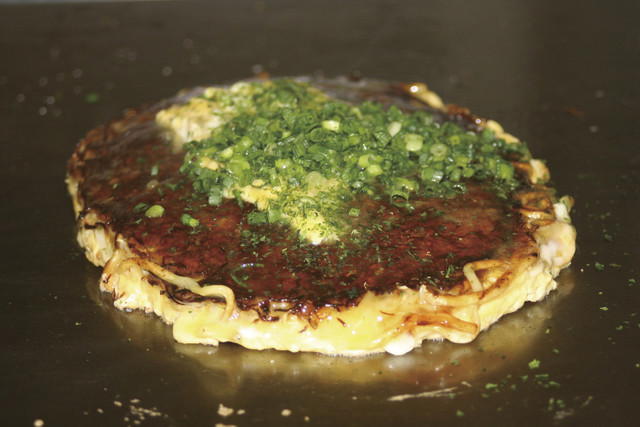

Bars in Fukuyama
Browse all →
Details
- Lively
- Cozy
- Trendy
- Whimsical
- Bohemian
- Casual Hangout
- Group Dining
- Solo
- Family
- After Work
- Standalone
- Design Destination
- A La Carte
- Vegetarian Friendly
- Vegan Options
Current opening hours
- Monday
- 11:30 AM–3 PM, 5:30–10:30 PM
- Tuesday
- 11:30 AM–3 PM, 5:30–10:30 PM
- Wednesday
- 11:30 AM–3 PM, 5:30–10:30 PM
- Thursday
- 11:30 AM–3 PM, 5:30–10:30 PM
- Friday
- 11:30 AM–3 PM, 5:30–10:30 PM
- Saturday
- 11 AM–10:30 PM
- Sunday
- 11 AM–9:30 PM
Hours can change for holidays and private events. Hours as of .