
Tabelog 100 #67
Our verdict
Unagi Nakasho gives Fukuyama a focused eel address rather than a broad Japanese dining room, with recognition in Tabelog’s Unagi 100 selections for 2024 and 2022. The draw is the ingredient discipline behind unagi: fish handled as the meal’s central argument, supported by sake, a compact room, and a family-friendly setting.

Pearl is the En Primeur Club membership app, where members save venues, book tables and use the concierge.
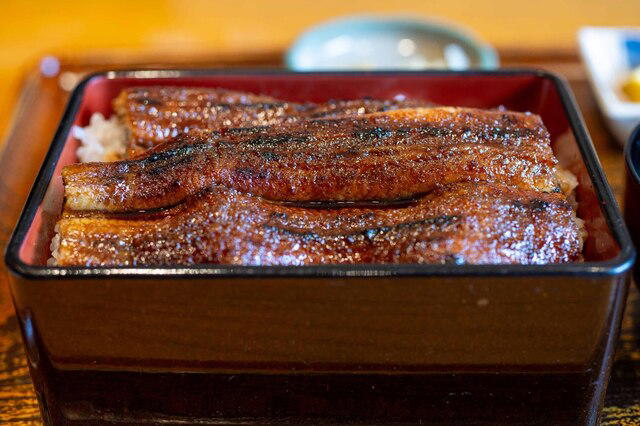
The menu
What to order
- Unagi jū (grilled eel over rice box)
- Nagoya-style hitsumabushi
- Charcoal-grilled unagi over rice
Approaching a house-style unagi restaurant in Fukuyama changes the tempo of a meal before the first order is placed. This is not the theatre of a metropolitan tasting counter, nor the casual sprawl of an izakaya. The format is narrower and more old-fashioned: eel is the point, rice is the frame, and the room’s job is to keep attention on the handling of fish rather than on decorative distraction.
That matters in unagi cooking because the ingredient carries more responsibility than in many Japanese restaurant categories. Freshwater eel is not a garnishable luxury; it succeeds or fails through preparation, sauce management, and timing over heat. A specialist house has less room to hide than a broader Japanese kitchen. The category rewards repetition, and Unagi Nakasho sits in that tradition with Tabelog Hyakumeiten recognition in 2024, a useful signal in a field where regional specialists rarely receive the same international attention as sushi or kaiseki rooms.
Fukuyama's eel tradition belongs to specialists, not tasting-menu theatre
Fukuyama’s dining scene is easier to understand when it is read through everyday specialisation rather than destination gloss. The city supports focused rooms where a single format defines the visit: eel houses, yakitori counters, soba restaurants, Western-leaning kitchens and local Japanese dining rooms all operate in parallel. For a broader read on the city’s dining map, Our full Fukuyama restaurants guide gives the surrounding context, while other Fukuyama dining rooms show how varied the city’s restaurant register can be without becoming trend-led.
Within that mix, eel occupies a distinct lane. It is ingredient-led but not minimalist in the sushi sense; it is technical but rarely explained course by course; it is comfort food with high discipline behind it. The useful comparison is not with luxury omakase, but with other single-subject Japanese formats where repetition is the credential. Tori Tsune represents a different protein-led tradition, while Sarrasin and Vietnamese Aobaba Fukuyama ten sit in separate cuisine categories. The comparison underlines the point: an unagi meal here is not competing on range. It is competing on whether a kitchen can make one category feel complete.
Ingredient focus is the argument: eel and a room built for repeat meals
The strongest signal is the kitchen’s focus on eel. In unagi restaurants, that phrase carries weight because the work happens before the lacquered finish reaches the table. The eel has to be prepared and cooked with enough consistency that the sauce supports rather than covers it. Regional variation across Japan can bring different preferences in steaming, grilling and tare intensity, but the diner’s decision is simpler: choose this kind of restaurant when the pleasure is in a narrow craft repeated with confidence.
The format also fits the category. Unagi’s richness tends to ask for a meal that is direct rather than diffuse, and a specialist room is a more natural setting than a menu built for breadth. This is where the restaurant’s modest, local character helps. It points toward a restaurant used for repeat meals as much as for travelling diners following recognition lists, with the experience kept close to the central question of eel and rice.
There is a practical consequence to that local usefulness. The meal belongs to a more traditional rhythm: arrive with flexibility, expect demand around standard lunch and dinner windows, and treat the award recognition as a reason to avoid assuming immediate seating. The restaurant is in Fukuyama, which makes it best approached as part of a relaxed local plan rather than a tightly scheduled rail-to-table itinerary. The listed category is Unagi (Eel), with both lunch and dinner budgets in the JPY 4,000 - JPY 4,999 range.
How to place it in a wider Japan itinerary
For travellers moving through western Honshu, Unagi Nakasho is useful because it offers a precise regional meal without requiring the ceremony of a formal tasting menu. It suits a day built around Fukuyama or a rail stop between larger cities, especially when the plan benefits from a restaurant that reads as local rather than export-facing. The price band sits in the accessible specialist tier for Japan, below many metropolitan counter formats and above casual weekday lunch rooms.
EP Club readers building a fuller Fukuyama stay can pair the meal with Our full Fukuyama hotels guide, Our full Fukuyama bars guide, Our full Fukuyama wineries guide and Our full Fukuyama experiences guide. For a broader Japan dining file, the contrast with other specialist dining in Japan and beyond is instructive: the best of these rooms belongs to a tighter food culture than a generic “Japanese restaurant” label allows.
The editorial case is clear. Choose this address for eel as a disciplined ingredient category, not for breadth, spectacle or chef mythology. In a city where specialist dining rewards local habits, a recognised unagi house with a fish-first identity gives the meal a firm reason to exist.
Frequently asked questions
Does Unagi Nakasho work for a family meal?
Unagi Nakasho is a specialist eel restaurant in Fukuyama, best suited to diners who want a focused unagi meal rather than a broad menu.
What's the vibe at Unagi Nakasho?
It reads as a house-style unagi restaurant: practical, focused, and built around eel rather than formal tasting-menu theatre.
What's the price range at Unagi Nakasho?
Pricing at Unagi Nakasho is listed as Dinner: JPY 4,000 - JPY 4,999; Lunch: JPY 4,000 - JPY 4,999.
Where do I go for Unagi Nakasho?
Fukuyama.
How hard is it to get a table at Unagi Nakasho?
Unagi Nakasho has Tabelog Hyakumeiten recognition in 2024 and a listed score of 3.70, so timing matters, especially around lunch and dinner in Fukuyama.
In Context: Similar Options
Comparable venues by cuisine and price in the same metro.
| Venue | Cuisine | Price | Awards | Notes |
|---|---|---|---|---|
| Unagi NakashoThis venue (the venue you are viewing) | Traditional Unagi (eel) restaurant | $30–50 | Tabelog 100 #67 | Not listed |
| Tori Tsune | Yakitori | Not listed | Tabelog 100 #38 | Mikadocho |
| Sarrasin | Soba and Kawachi duck specialty | $50–100 | Tabelog 100 #53 | Meijicho |
| Mikiwatei Oichi Kochi | Seasonal Japanese Kaiseki with Local Seafood | $200–300 | Not listed | Tomonoura |
| Jiyuken | Japanese Izakaya with Western Fusion | Not listed | Not listed | Motomachi |
| Steak Kaiseki Miyako Kasuga | Teppanyaki Steak Kaiseki in Garden Villa | $150–200 | Tabelog 100 #45 | Kasugacho / Kasuga-cho |
Recognition history
Dated appearances from independent guides and award organizations, with the underlying list record or original source where available.
Tabelog 100 #67 · No. 67
Tabelog · Tabelog 100 - Unagi - 2024
Continue exploring
More in Fukuyama
Restaurants in Fukuyama
All restaurants in Fukuyama →

Bars in Fukuyama
Browse all →

Details
- Classic
- Cozy
- Family
- Casual Hangout
- Group Dining
- Solo
- Standalone
- Private Dining
- Sake Program
- A La Carte
- Set Menu
- Counter Dining
- Sake
- Beer
- Pescatarian Friendly
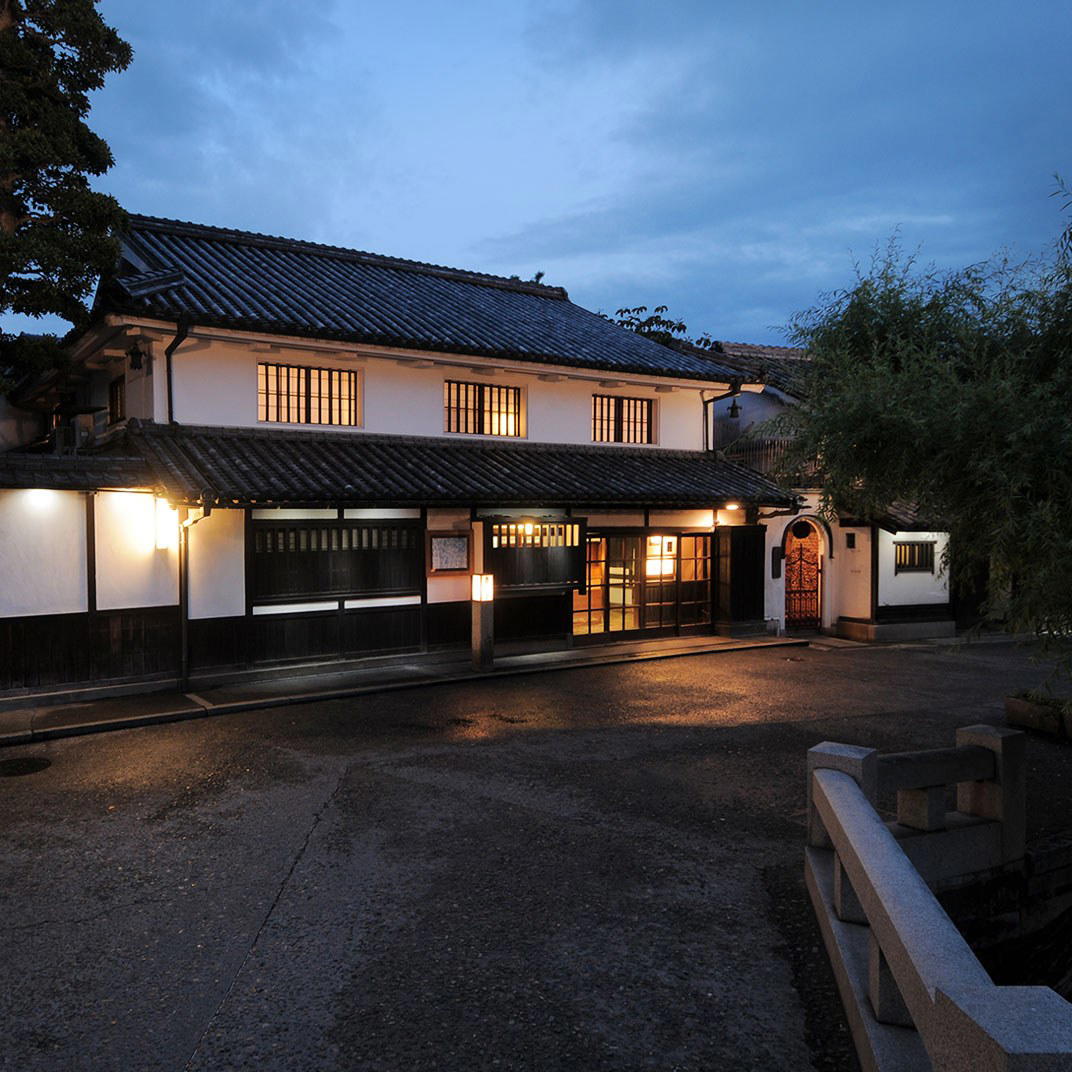
A classic house-style unagi restaurant with a relaxed, non-smoking atmosphere, offering counter seats, tatami rooms, and spacious, comfortable seating suited to families and small groups.