
Tabelog 100 #23
Our verdict
Vietnam Chan puts Vietnamese cooking into Tokyo’s Asian and ethnic dining conversation with unusual credibility: Tabelog 100 selection for Asian cuisine / Ethnic cuisine in Tokyo in 2022, 2023, and 2024, plus a 3.61 Tabelog score. The appeal is less about ceremony than precision, with a compact Shinjuku setting, a 36-seat room, and a wine-conscious drinks program that gives the meal more range than the category often receives.

Pearl is the En Primeur Club membership app, where members save venues, book tables and use the concierge.
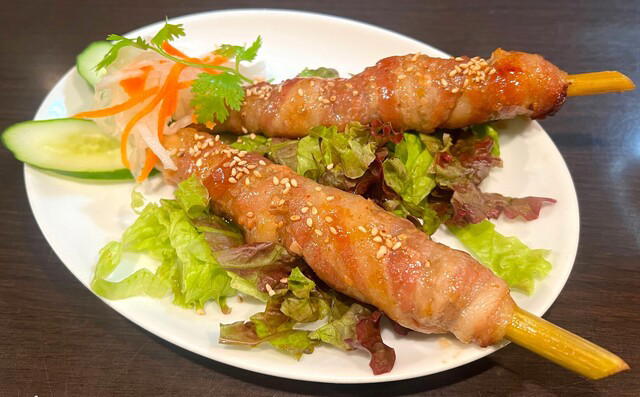
Tokyo’s side streets shift quickly: rail-line movement, groceries, small restaurants, and diners moving with purpose. Here, Vietnamese cooking in Tokyo needs no resort décor or imported mythology to make sense. It works best when the idea is appetite rather than spectacle, and when acidity, herbs, rice, broth, and grill notes are understood as part of a broader culinary structure, not as decorative shorthand. Vietnam Chan belongs in that Tokyo conversation as a recognized Vietnamese, Asian, and Ethnic restaurant rather than as a luxury outlier.
Tokyo’s Vietnamese scene sits outside the city’s exported dining narratives. Sushi counters, ramen queues, French tasting menus, and yakitori rooms take the oxygen, while Asian and ethnic restaurants often build reputation through repetition, regulars, and platform recognition rather than international awards. That makes Tabelog’s Asian cuisine / Ethnic cuisine Tokyo 100 list a useful signal. Recognition in 2024 places Vietnam Chan in a measured peer group: not a luxury outlier, but a restaurant that has drawn local attention within Tokyo’s broad casual dining field.
Vietnamese cooking read through Tokyo's neighbourhood dining habits
The category matters. Vietnamese food in Tokyo has to remain legible to diners looking for brightness, herbs, rice, noodles, and savoury depth while fitting the Japanese preference for tightly run everyday dining. Stronger addresses avoid reducing the cuisine to simple convenience. They argue for Vietnamese food as a proper meal choice, with enough freshness, contrast, and texture to sit comfortably within Tokyo’s wider casual restaurant culture.
The format is best understood through the expectations of Tokyo dining rather than through a themed-destination lens. The appeal is not built on spectacle but on how a meal can be assembled: lightness and depth, acidity and heat, soft textures and cleaner finishes. Vietnamese cooking has the freshness, fermented depth, and contrast to make a casual meal feel more layered than sceptics of everyday dining expect.
Balance should not read as spa cuisine. Here it signals a broader Japanese appreciation for clarity: vegetables, herbs, broth, rice, and lighter preparations can feel clean without becoming austere. Better Vietnamese meals in Tokyo work through contrast as much as richness. Sweetness meets acidity, herbs cut oil, and rice or noodles reset the palate. Those principles travel well in Tokyo, where diners come for impact, value, and recognisable craft, not a lecture.
Comparison defines the lane. Koi Nobori, also in Tokyo, represents another way to frame a specialist meal, while Gyusuji Curry Chiisana Curry Ya and SPICY CURRY Roka show how casual Asian-adjacent categories build intense loyalty around comfort and repetition. Harukor Ainu Restaurant occupies another cultural niche. Vietnam Chan sits in the middle: accessible in spirit, serious enough for Tabelog recognition, and not dependent on theatrical cues that distract from food in international casual dining.
A Tokyo room built for pace, groups, and return visits
Tokyo suits this kind of restaurant because it does not require every meal to become an occasion. The city already works as one of the world’s most layered casual-dining zones, with Korean, Chinese, Southeast Asian, curry, café, and izakaya cultures overlapping at street level. A Vietnamese table here competes not only with other Vietnamese restaurants but with the full Tokyo appetite: quick lunches, group dinners, late-evening second stops, and small celebrations without hotel dining rooms.
The practical signals should be read through that shared casual-dining energy rather than through luxury expectations. This is a restaurant to approach for appetite, pacing, and repeatability, not for seclusion or ceremony. In Tokyo dining rooms, details like aroma, broth, herbs, spice, and the rhythm of a meal can matter more than architectural drama. Different dayparts may serve different needs, but the central appeal remains the same: Vietnamese cooking made legible for everyday Tokyo use.
For a Tokyo food itinerary, treat this as part of a broader Tokyo eating day, not a single destination meal. Nearby editorial threads might run through 2D Cafe, then out toward specialised counters, curry rooms, cafés, and casual comfort formats elsewhere in the city. Other Tokyo dining rooms may follow very different seafood, grill, or noodle rhythms, but they make the same point: Tokyo’s strongest mid-priced meals often live outside the luxury spotlight.
Planning should stay grounded. The restaurant’s verified public profile places it in Tokyo, with Tabelog listing a dinner budget of JPY 4,000 - JPY 4,999 and a lunch budget of JPY 1,000 - JPY 1,999. Those details matter in Tokyo, where the difference between a quick lunch and a fuller evening meal can shape the whole itinerary. Check the venue’s current channels before going, because smaller restaurants can adjust service details by daypart or holiday.
How it fits into a wider Tokyo shortlist
Vietnam Chan is not trying to compete with Tokyo’s ceremonial dining rooms. Its relevance is more specific: it gives Vietnamese cooking a place in the city’s serious casual conversation, backed by Tabelog 100 recognition and a format that reads well for regular use. That combination is often more useful to travellers than another formal tasting menu, especially in Tokyo, where the surrounding dining field rewards decisiveness.
For planning, use Our full Tokyo restaurants guide as the anchor, then build adjacent evenings through Our full Tokyo bars guide, Our full Tokyo hotels guide, Our full Tokyo experiences guide, and Our full Tokyo wineries guide. Readers extending the same casual-specialist logic beyond Tokyo can compare the category spread with other dining in Japan and abroad in generic terms: specialist rooms, focused casual formats, and neighbourhood restaurants can read very differently once they leave their home context.
What It’s Closest To
Comparable venues by category and price.
| Venue | Cuisine | Price | Awards | Notes |
|---|---|---|---|---|
| Vietnam ChanThis venue (the venue you are viewing) | Casual Vietnamese Restaurant | $30–50 | Tabelog 100 #23 | Not listed |
| ヨヨナム | Modern Vietnamese Bistro | $50–100 | Not listed | Shibuya |
| An Di | Modern Vietnamese with Japanese Ingredients | $50–100 | Not listed | Setagaya |
| Mi Rei | Casual Vietnamese restaurant | $30–50 | Tabelog 100 #95 | Ōta |
| Phở Thìn Tokyo | Traditional Hanoi-style beef pho | $10–20 | Tabelog 100 #94 | Toshima |
| Daisan Harumi | Dining | Not listed | Not listed | Tokyo |
Recognition history
Dated appearances from independent guides and award organizations, with the underlying list record or original source where available.
Tabelog 100 #23 · No. 23
Tabelog · Tabelog 100 - Asian cuisine / Ethnic cuisine - TOKYO - 2024
Continue exploring
More in Tokyo
Restaurants in Tokyo
All restaurants in Tokyo →

Bars in Tokyo
All bars in Tokyo →




Details
- Lively
- Cozy
- Energetic
- Casual Hangout
- Group Dining
- After Work
- Solo
- Late Night
- Standalone
- Beer Program
- A La Carte
- Set Menu
- Beer
- Cocktails
- Vegetarian Friendly
Current opening hours
- Monday
- 11:30 AM–2:30 PM, 5:30–10 PM
- Tuesday
- 11:30 AM–2:30 PM, 5:30–10 PM
- Wednesday
- 11:30 AM–2:30 PM, 5:30–10 PM
- Thursday
- 11:30 AM–2:30 PM, 5:30–10 PM
- Friday
- 11:30 AM–2:30 PM, 5:30–10 PM
- Saturday
- 11:30 AM–2:15 PM, 5:30–10 PM
- Sunday
- 11:30 AM–2:15 PM, 5:30–10 PM
Hours can change for holidays and private events. Hours as of .
Casual and bustling izakaya-style Vietnamese eatery with tightly packed tables, warm lighting, simple decor, and an energetic atmosphere that feels like a busy local spot rather than a polished design restaurant.