


Michelin Plate · Macarfi 7.8 Food Rating · Guía Repsol 1 Sol
Our verdict
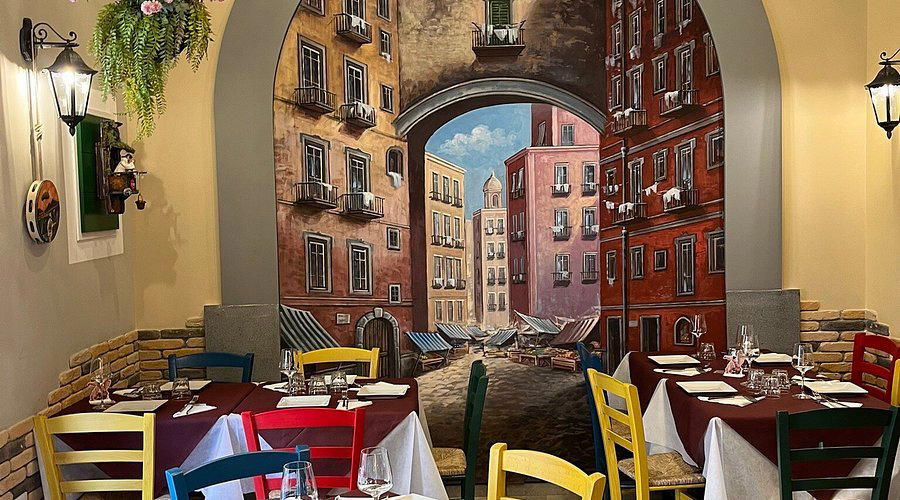
A Michelin Plate-recognised address on one of Pals' main streets, Vicus occupies a high-ceilinged dining room that layers contemporary design over the bones of an old family café. The kitchen works in the register of elaborated Catalan tradition, with seasonal rice dishes and imaginative technique that place it clearly above the village's casual eating options without chasing the higher price brackets of the Costa Brava's more formal rooms.

Pearl is the En Primeur Club membership app, where members save venues, book tables and use the concierge.
The menu
What to order
- Brioche with spicy Balfegó tuna
- Black rice with baby squid
- Zucchini flowers stuffed with cod brandade
- French toast with cinnamon ice cream
- Pork rib with confit boletus mushrooms
A Medieval Village, and What It Asks of Its Restaurants
Pals is one of the better-preserved Gothic villages in the Empordà, a compact stone settlement that sits above the coastal plain between the Ter marshes and the Costa Brava's pine-backed beaches. Tourism shapes the economy here as it does in Begur and Peratallada, and that pressure tends to push restaurant menus in two directions: either simple grilled fish aimed at high-turnover lunch trade, or expensively composed tasting menus pitched at weekend visitors from Barcelona. What the village has historically lacked is a credible middle register, the kind of kitchen that applies genuine technique and seasonal discipline to familiar Catalan ingredients without demanding a three-hour commitment and a three-figure bill.
Vicus, on Carrer de l'Enginyer Algarra in the lower commercial stretch of the village, occupies that gap. At the €€ price point, it sits below Pahissa del Mas and Sol Blanc, both of which operate at €€€ and position themselves more explicitly as destination dining. Vicus's peer in pricing is Es Portal, though the two kitchens take different approaches to the Catalan canon. The Michelin Plate recognition Vicus carries into 2025 marks it as the kind of address where inspectors found cooking worth flagging, even if the room and the ambition remain firmly local in scale.
The Room: Contemporary Shell, Traditional Core
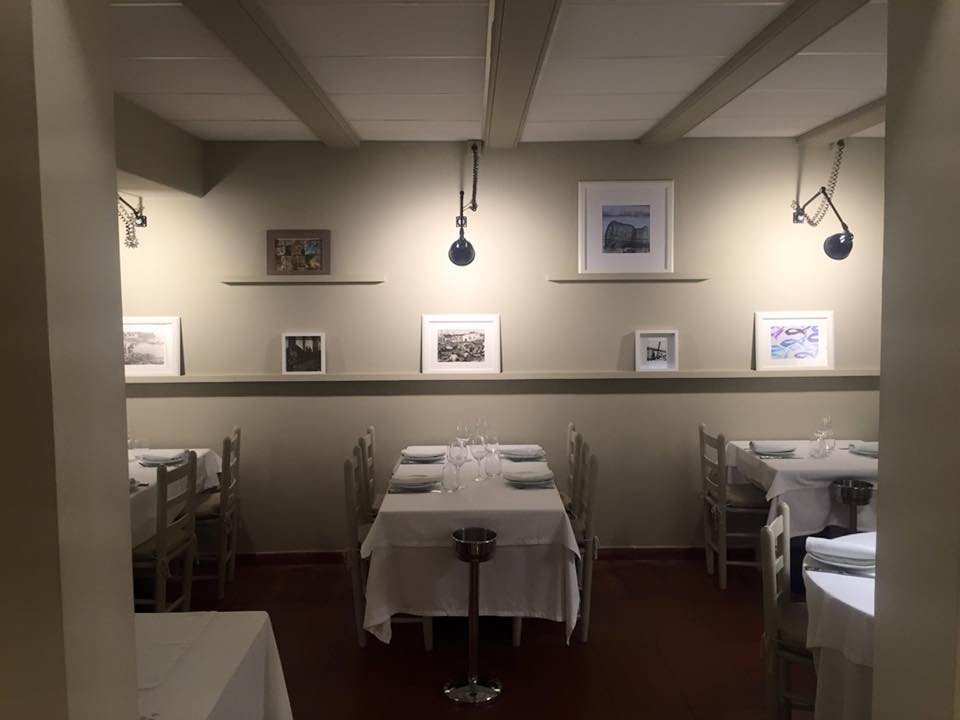
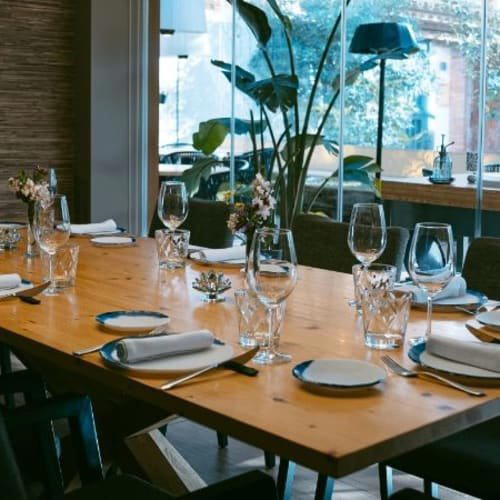
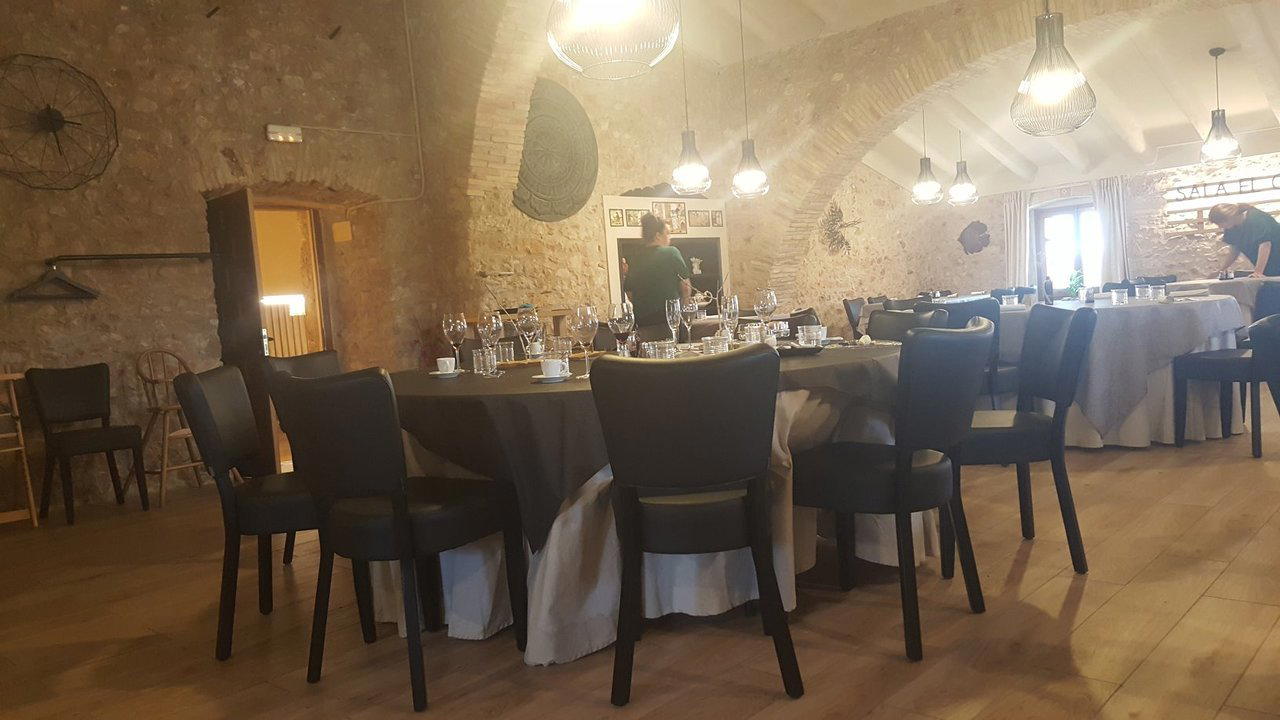
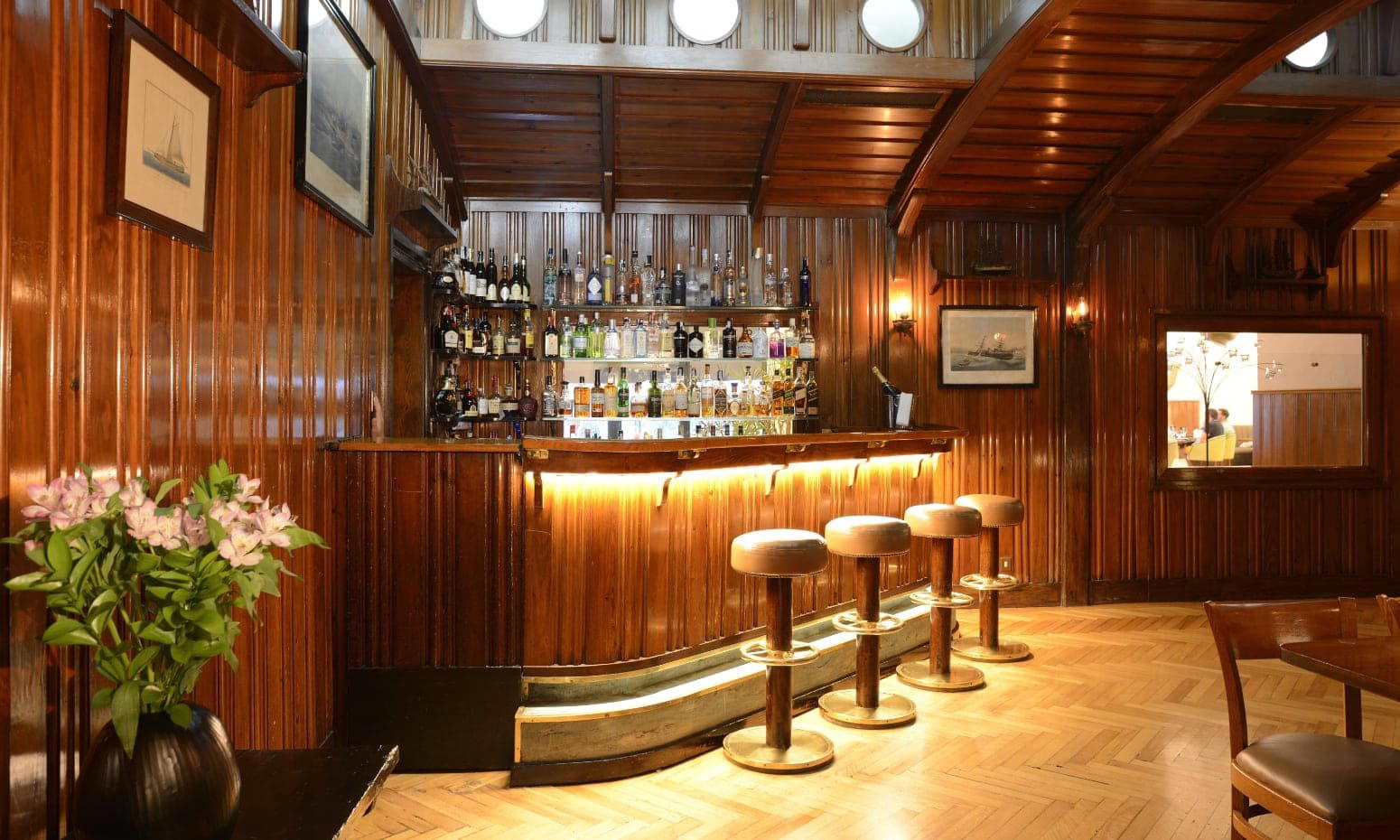
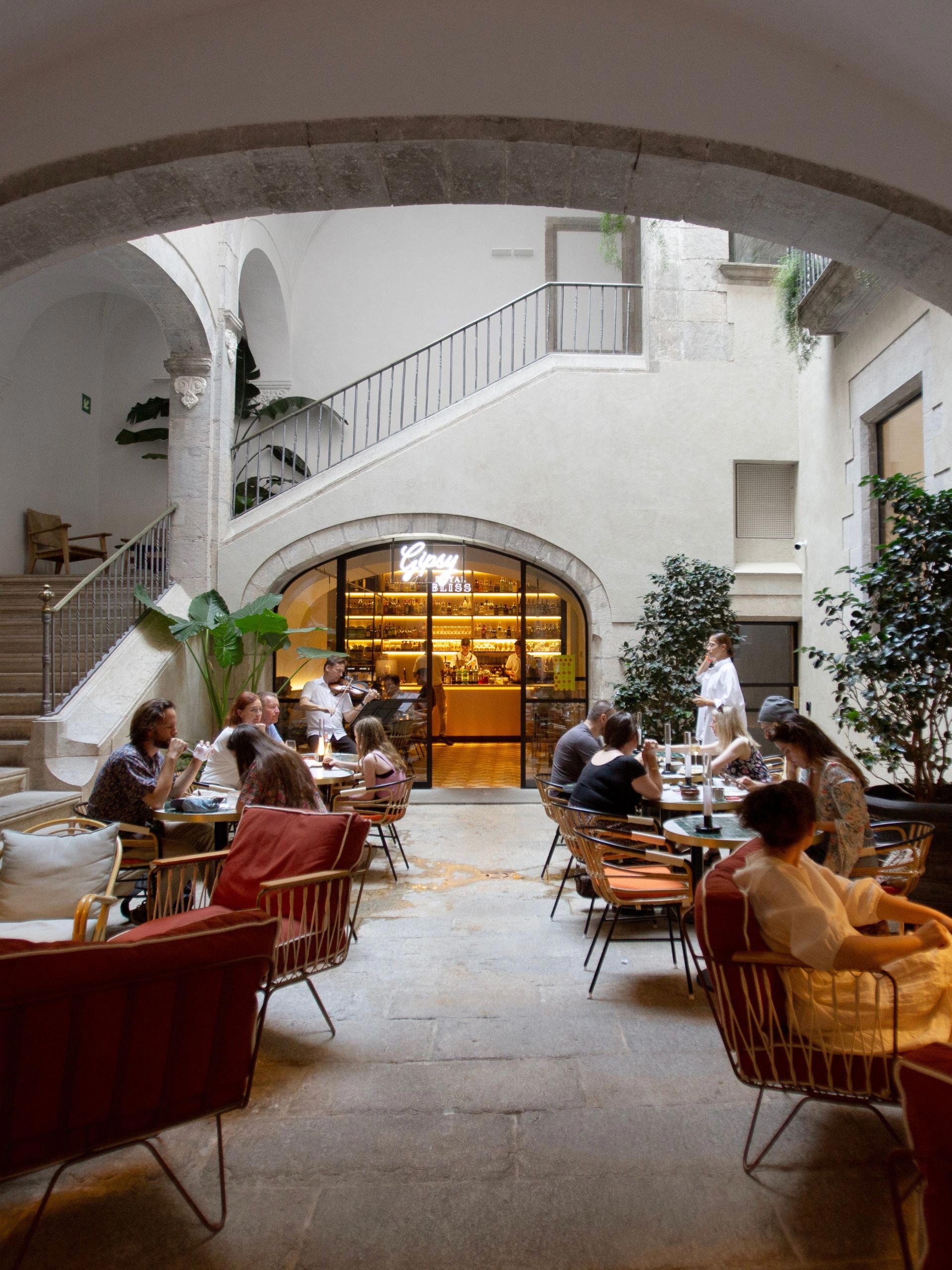
The building's history is legible as soon as you step inside. Vicus started life as a family café, and the dining room has not erased that past so much as built a layer over it. High ceilings give the space more volume than the narrow village streetfront suggests. The bar remains, the floors carry their original character, and the furniture holds a domestic quality that distinguishes it from the sparse minimalism many Catalan village restaurants adopted through the 2010s renovation wave.
The effect is a room that reads as contemporary without feeling anonymous. In a village where the architecture is predominantly Gothic stone and where the tourist economy can make interiors feel either artificially rustic or aggressively modern, the balance Vicus achieves is more considered than it first appears. It is the kind of space where the cooking can be taken seriously without the dining experience becoming an occasion requiring advance preparation of a different social register.
The Cooking: Elaborated Tradition with Seasonal Discipline
Catalan kitchen has always had a stronger claim to complexity than its regional reputation sometimes suggests. The combination of mountain, plain, and coast within a small geographic area produces an ingredient range that supports genuinely varied cooking, and the region's medieval spice trade left culinary habits, sweet-savoury combinations and textural contrasts, that still surface in contemporary preparations. Vicus works within that tradition rather than departing from it.
Kitchen's approach is described accurately as elaborate traditional cuisine with an imaginative touch. That is a meaningful distinction in a regional context where elaboration can mean either modernist intervention or disciplined classical technique. Here it signals the latter, with enough creative movement in certain dishes to prevent the menu from reading as a recitation of Catalan standards.
Rice is a structural pillar of the menu, which connects Vicus to a broader Empordà coastal habit. The black rice with squid and pear aioli is a representative dish: the squid ink preparation is conventional on the Costa Brava, but the pear aioli introduces a sweet acidity that shifts the dish's register without destabilising it. The rice with pork rib and confit boletus mushrooms comes from a different tradition, drawing on the mountain-facing half of Catalan cooking rather than the marine side, and the boletus preparation suggests a kitchen that takes drying and confit techniques as seriously as grilling. Alongside the rice section, the menu includes seasonal dishes that shift with the Empordà's agricultural calendar, which in this part of Catalunya means asparagus and broad beans in spring, tomatoes and peppers through summer, and game and fungi through autumn.
The chef's training across a number of leading restaurants informs the technical precision evident in these preparations. That training history functions here as a credential for the kitchen's ambition rather than as a departure point for avant-garde experimentation. The goal is cooking that delivers at the ingredient level, with Michelin's Plate recognition in 2025 suggesting the approach is working consistently enough to be noted at guide level.
Where Vicus Sits in the Pals Eating Scene
Pals's restaurant offer is smaller and more concentrated than nearby Begur's, and the village's dining scene tends to bifurcate between simple lunch options for day visitors and more formal rooms. Vicus represents a segment of that scene that functions equally well for a midweek dinner during the quieter shoulder months as for a Saturday lunch in high summer. At €€ with Michelin recognition, it draws a mix of local regulars, second-home owners from Barcelona and further afield, and visitors staying along the nearby coast who want a kitchen with genuine preparation standards rather than tourist-facing simplicity.
For visitors already oriented toward the broader Spanish fine dining circuit, the context is worth noting. The Costa Brava sits within reasonable distance of El Celler de Can Roca in Girona, one of the most decorated kitchens in Europe, and the wider Spanish scene includes addresses such as Disfrutar in Barcelona, Arzak in San Sebastián, DiverXO in Madrid, Aponiente in El Puerto de Santa María, Quique Dacosta in Dénia, Azurmendi in Larrabetzu, and Martin Berasategui in Lasarte-Oria. Further afield, the modern cuisine format Vicus operates within has international reference points such as Frantzén in Stockholm and FZN by Björn Frantzén in Dubai. Vicus does not operate at those altitudes, but it represents the kind of address that makes a village like Pals worth lingering in rather than passing through.
Planning a Visit
Vicus is located at Carrer de l'Enginyer Algarra, 51, 17256 Pals. The €€ pricing makes it accessible across a range of budgets without the reservation lead times that high-end tasting menu rooms require. During peak summer weeks along the Costa Brava, which run from mid-July through August, tables in recognised Pals restaurants fill more quickly than the village's modest size might suggest, and some advance planning is sensible. Shoulder season visits in May, June, September, and October generally allow more flexibility, and the seasonal menu components are often at their most interesting during these months when the Empordà's agricultural transitions are most visible on the plate.
For a fuller picture of eating and drinking in the area, see our full Pals restaurants guide, our full Pals bars guide, our full Pals hotels guide, our full Pals wineries guide, and our full Pals experiences guide.
Frequently asked questions
What distinctions does Vicus have?
Vicus has received recognition including: This is the successful story of an old family business that initially started life as a café. Located along one of the main streets in Pals, it features a dining room with high ceilings that combines a pleasant contemporary look with more t….
What should I order at Vicus?
The rice dishes are the most direct window into what this kitchen does well. The black rice with squid and pear aioli shows a willingness to reframe a Catalan staple with a precise, unexpected pairing, while the rice with pork rib and confit boletus reads more classically regional. Both reflect the 2025 Michelin Plate recognition for cooking that works within tradition rather than departing from it.
What's the price range at Vicus?
Pricing at Vicus is listed as €€.
How far ahead should I plan for Vicus?
At the €€ price tier, Vicus draws a broad mix of local regulars and visitors passing through Pals on the Costa Brava circuit, and Michelin Plate status adds consistent external demand. For weekend visits in summer, reserving several days to a week ahead is a reasonable precaution, though mid-week in the shoulder season is generally easier to secure.
What's Vicus best at?
The kitchen's clearest strength is disciplined elaboration within the Catalan tradition: taking regional preparations with established forms and adding a layer of technical or seasonal specificity without losing the dish's identity. That approach, backed by a chef trained across several leading restaurants, earned the venue its 2025 Michelin Plate and explains the consistency guests note across repeated visits.
At a Glance
| Venue | Cuisine | Price | Awards | Notes |
|---|---|---|---|---|
| VicusThis venue (the venue you are viewing) | Contemporary Catalan Cuisine | $50–100 | Michelin Plate · Macarfi 7.8 Food Rating | Not listed |
| Es Portal | Contemporary Catalan with Empordà Focus | $50–100 | Michelin Plate · Macarfi 7.5 Food Rating | Catalan |
| Pahissa del Mas... | Contemporary Catalan | $50–100 | Michelin Plate | Modern Cuisine |
| Sol Blanc | Modern Catalan | Not listed | Michelin Plate · Macarfi 8.3 Food Rating | Catalan |
Recognition history
Dated appearances from independent guides and award organizations, with the underlying list record or original source where available.
Michelin Plate
Michelin
Guía Repsol 1 Sol
Guía Repsol
Macarfi 7.8 Food Rating
Macarfi
Full recognition history (5 entries)
Michelin Plate
Michelin
Michelin Plate
Michelin
Continue exploring
More in Pals
Restaurants in Pals
All restaurants in Pals →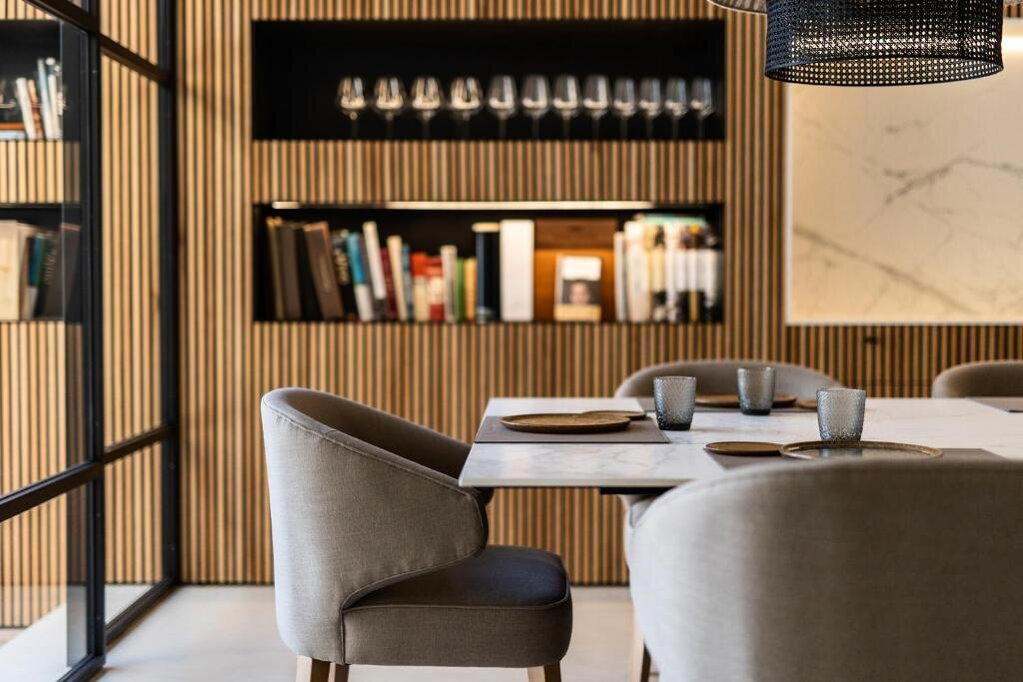



Vicus
The wine
- Wine program
- Deep wine list
- Extensive wine list
- Sommelier-led
Details
- Elegant
- Sophisticated
- Quiet
- Modern
- Romantic
- Date Night
- Special Occasion
- Celebration
- Standalone
- Historic Building
- Extensive Wine List
- Sommelier Led
- Local Sourcing
- Farm To Table
- Organic
- A La Carte
- Set Menu
- Tasting Menu
- Small Plates
- Local Wines
- Empordà Wines
- Natural Wines
- Allergy Accommodating
- Vegetarian Friendly
- Organic Focus
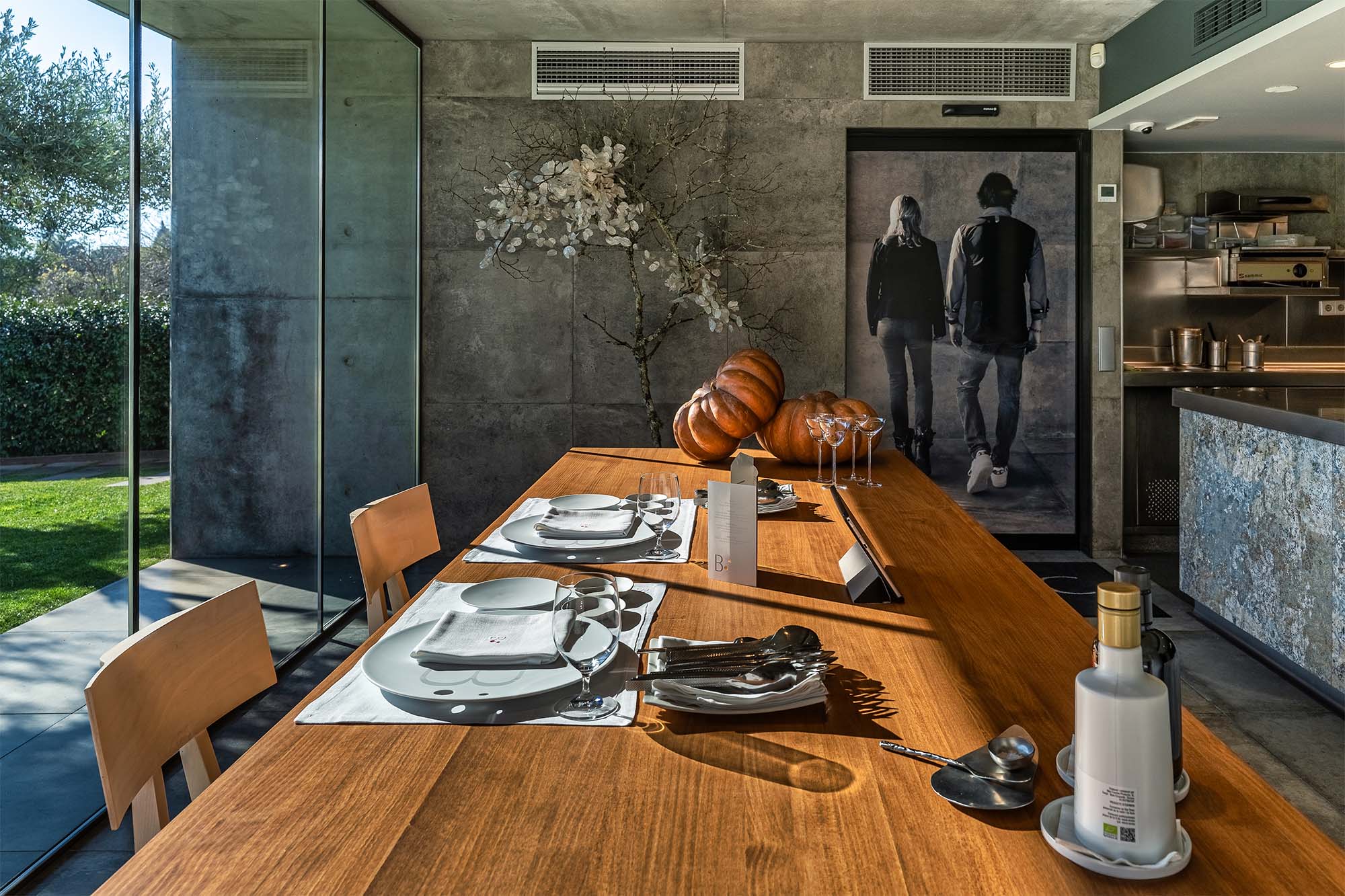
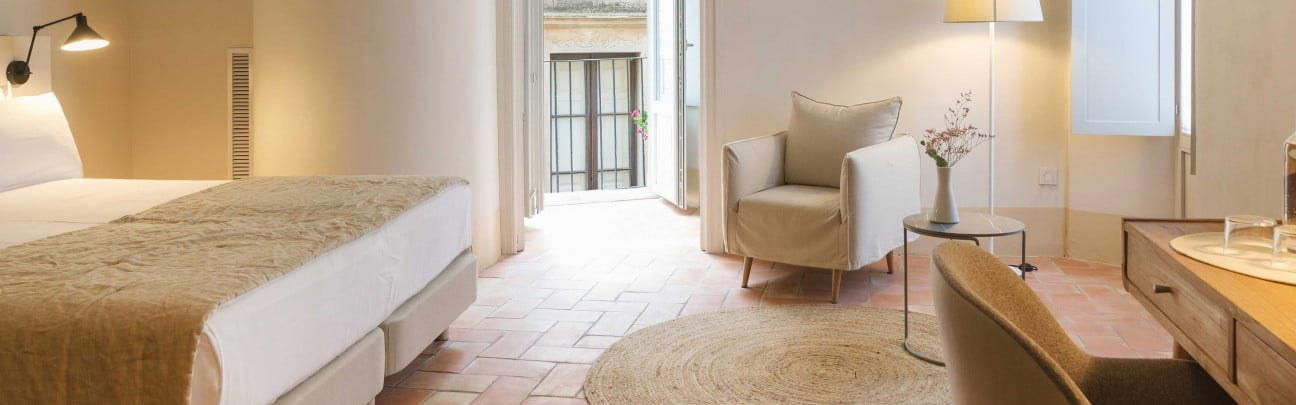
Contemporary and sophisticated dining room with high ceilings, blending modern aesthetics with traditional decorative details; quiet, well-spaced tables create an intimate atmosphere despite the restaurant's popularity.