
Preferred Hotels Member
Set along the Sa Riera cove on the Costa Brava, Talaia Plaza EcoResort occupies one of Begur's most architecturally considered positions, with 105 rooms calibrated around the area's Mediterranean setting. The property sits within a stretch of coastline where eco-conscious design and low-density hospitality have become the defining standard, placing it in a different conversation from the mass-market coastal resorts of southern Catalonia.

Pearl is the En Primeur Club membership app — saves, bookings, and concierge access live there. Same editors, same standards.
- Address
- Carrer de Sa Riera, 17255 Sa Riera, Girona
- Phone
- +34 972 62 30 23
- Website
- talaiaplazaecoresort.com
- Directions
- Get directions
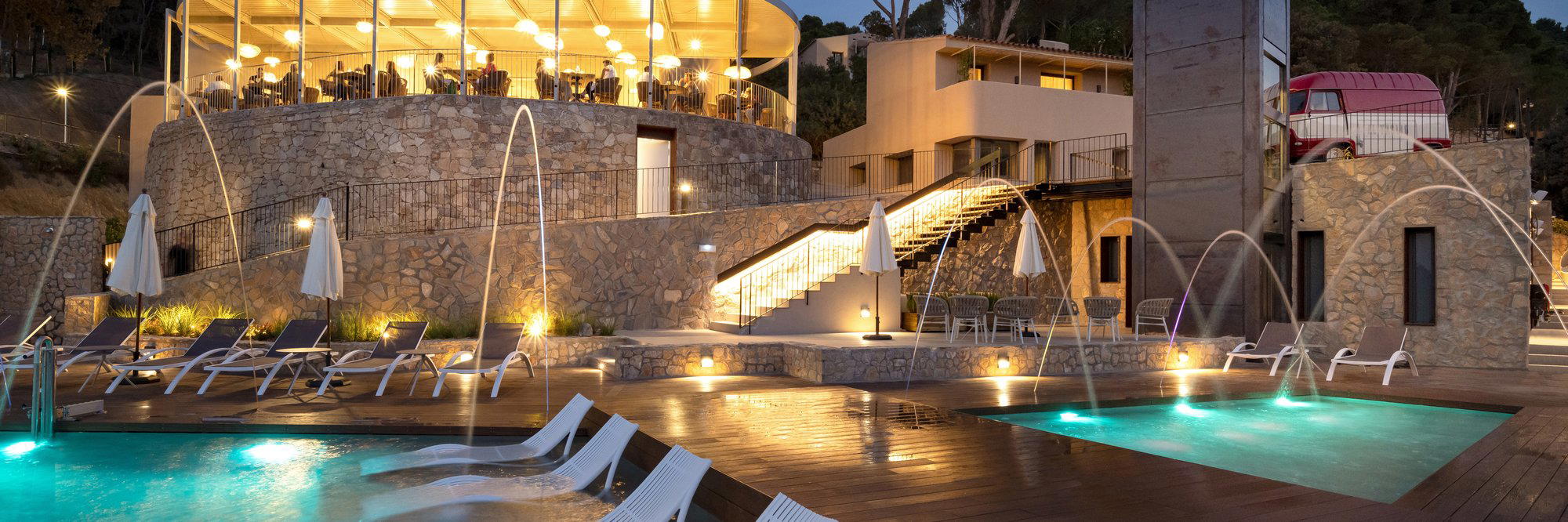
Where the Costa Brava Slows Down
The drive into Sa Riera from Begur's medieval hilltop village takes under ten minutes, but the tonal shift is immediate. The road narrows through pine forest, the air carries salt and resin in roughly equal measure, and the cove arrives without fanfare — a small arc of sand backed by low-rise buildings that have, by some combination of planning restriction and local temperament, kept their scale. This is not the Costa Brava of Lloret de Mar or Platja d'Aro. Sa Riera belongs to a quieter northern section of the coast where the Catalan government's protected zone designations have kept development measured, and where the built environment is expected to earn its place in the landscape rather than dominate it.
Talaia Plaza EcoResort addresses this expectation directly. With 105 rooms positioned on Carrer de Sa Riera at the edge of the cove, the property operates at a scale that the surrounding area permits rather than the scale that market logic alone might have dictated. Along this stretch of the Costa Brava — which also includes properties like Can Mascort Eco Hotel in Palafrugell to the south, the designation of "eco" is less a marketing layer than an operational framework, shaped by proximity to protected coastline and the expectations of a guest profile that has largely moved on from amenity quantity as a primary booking signal.
Architecture and the Eco Credential
Along the northern Costa Brava, the design conversation at better properties has shifted from Mediterranean pastiche toward something more materially honest. The whitewashed-cubic vocabulary that dominated coastal Catalonia in the 1970s and 1980s has given way, at the upper end of the market, to buildings that reference the geology and agricultural logic of the region, stone, timber, terracotta, and shade-led site planning rather than sun-chasing glass. The eco-resort designation, when it carries meaning, implies a set of decisions made at the level of construction material, water system, and site relationship rather than simply a recycling program in the guest rooms.
Talaia Plaza's positioning along the Sa Riera seafront places it in a context where the physical relationship between building and coast is the primary design test. Coves of this scale have limited visual depth, a property either integrates into the hillside terracing or it creates visual friction with the water. The 105-room count suggests a building of meaningful footprint, and on a cove this size, how that footprint is broken, screened, and stepped determines whether the architectural claim holds up against the surroundings.
For readers comparing this approach to resort design against larger-footprint luxury properties in Spain, the contrast is instructive. Properties like Mandarin Oriental Ritz, Madrid or Mandarin Oriental Barcelona operate within urban architectural frames where scale and grandeur are expected. Coastal eco-resort design in Catalonia operates under an almost opposite brief: the building should recede, or at minimum, defer.
The Costa Brava Eco-Resort Category
Spain's broader luxury hotel market has developed two largely parallel tracks over the past decade. One runs through the grand urban palaces, think Atrio Restaurante Hotel in Cáceres or Abadía Retuerta LeDomaine in Teruel, properties where architecture serves a cultural or heritage narrative. The other runs through terrain-led rural and coastal properties, where the building's relationship to site is the primary editorial statement. Talaia Plaza belongs to the second category, and within that category, the Costa Brava operates as one of the more demanding settings, the coastline is protected, the guest expectations are high, and the density ceiling is enforced.
Comparable coastal properties in Spain's island and Mediterranean markets, Cap Rocat in Cala Blava, La Residencia, A Belmond Hotel, Mallorca, or Hotel Can Ferrereta in Santanyí, each demonstrate that the most durable Iberian coastal properties earn their positioning through specificity of place rather than amenity range. The question for any eco-resort operating at 105 rooms is whether the sustainability credential deepens that specificity or functions as a positioning device layered on top of a more conventional resort model.
Begur and Sa Riera as a Destination
Begur sits in the Baix Empordà comarca of Girona province, roughly equidistant between the French border and Barcelona, approximately 120 kilometres from each. The hilltop village, with its Moorish castle ruins and Caribbean-influenced architecture (a legacy of returned emigrants from the Americas), functions as the organizational centre for half a dozen distinct coves, each accessible by narrow road from the village itself. Sa Riera is among the most accessible, which has made it the busiest of the Begur coves during high summer, though its scale keeps it from tipping into resort-town density.
The surrounding Girona coast draws a guest profile that is broadly distinct from the Balearic or southern Costa del Sol markets. The proximity to Barcelona (under two hours by car via the AP-7 or C-31) means the weekender demographic is substantial, but the international visitor base, particularly from France, Germany, and northern Europe, sustains the area through a longer season than many comparable Spanish coastal zones. For those planning travel to the region, our full Begur restaurants guide covers the dining options within reach of Sa Riera in detail.
The broader Costa Brava hotel market has attracted investment in properties that position themselves against the Balearic luxury tier rather than against the mass coastal market. Mas de Torrent Hotel & Spa in Torrent, a few kilometres inland from the coast, represents the Relais & Châteaux tradition in this corner of Catalonia. Talaia Plaza's eco-resort framing targets a partially overlapping but distinct guest: someone for whom environmental positioning is a genuine filter rather than an incidental amenity.
Planning a Stay
Sa Riera is accessed most practically by car from Begur village, though the cove itself is compact enough to navigate on foot once you arrive. High season on this stretch of the Costa Brava runs from late June through August, with the peak compression of visitors arriving in July and the first half of August. The shoulder months, May, June, and September, offer the characteristic coastal light without the parking and beach-space constraints of summer peak. Girona-Costa Brava Airport (GRO), around 40 kilometres from Sa Riera, handles seasonal connections from several European carriers; Barcelona El Prat (BCN) is the more consistent international hub, with the drive to Sa Riera running roughly 90 minutes under normal conditions.
For guests assembling a broader Iberian itinerary that pairs coastal Catalonia with other terrain-led properties, useful reference points include Terra Dominicata in Escaladei in the Priorat wine country, Akelarre in San Sebastián to the north, or, for those continuing through Spain's island markets, BLESS Hotel Ibiza and Hotel Can Cera in Palma.
At-a-Glance Comparison
Comparable venues nearby, for context on price, style, and recognition.
| Venue | Cuisine | Price | Awards | Notes |
|---|---|---|---|---|
| Talaia Plaza EcoResortThis venue — the venue you are viewing | Eco-conscious hillside resort blending glamping and luxury lodges in pine forest. | Not listed | Preferred Hotels Member | Not listed |
| Angelats Hotel | Historic eco-friendly boutique manor | $100–200 | Michelin Selected | Ribes de Freser |
| Agroturismo Llucasaldent Gran | rustic chic agritourism finca blending Menorcan tradition with modern luxury | $300–500 | Michelin Selected | Alaior |
| Viento 10 | Restored historic city house with modern boutique charm. | Not listed | Michelin Selected | Jewish Quarter |
| El Far Hotel Restaurant | Historic clifftop boutique | $100–200 | Not listed | Llafranc |
| Casa Vincke Hotel | Boutique hotel in a historic 19th-century mansion with modern renovations | $200–300 | Michelin Selected | Palamós center |
Recognition history
Dated appearances from independent guides and award organizations, with the underlying list record or original source where available.
Preferred Hotels Member
Preferred Hotels
Continue exploring
More in Begur
Hotels in Begur
Browse all →
Bars in Begur
Browse all →
Restaurants in Begur
Browse all →


Details
- Scenic
- Quiet
- Rustic
- Cozy
- Romantic Getaway
- Family Vacation
- Wellness Retreat
- Weekend Escape
- Beachfront
- Infinity Pool
- Destination Spa
- Panoramic View
- Terrace
- Pool
- Spa
- Fitness Center
- Sauna
- Massage
- Wi Fi
- Restaurant
- Waterfront
- Mountain
- Garden
- Wheelchair Accessible
- Step Free Entrance
- Accessible Parking
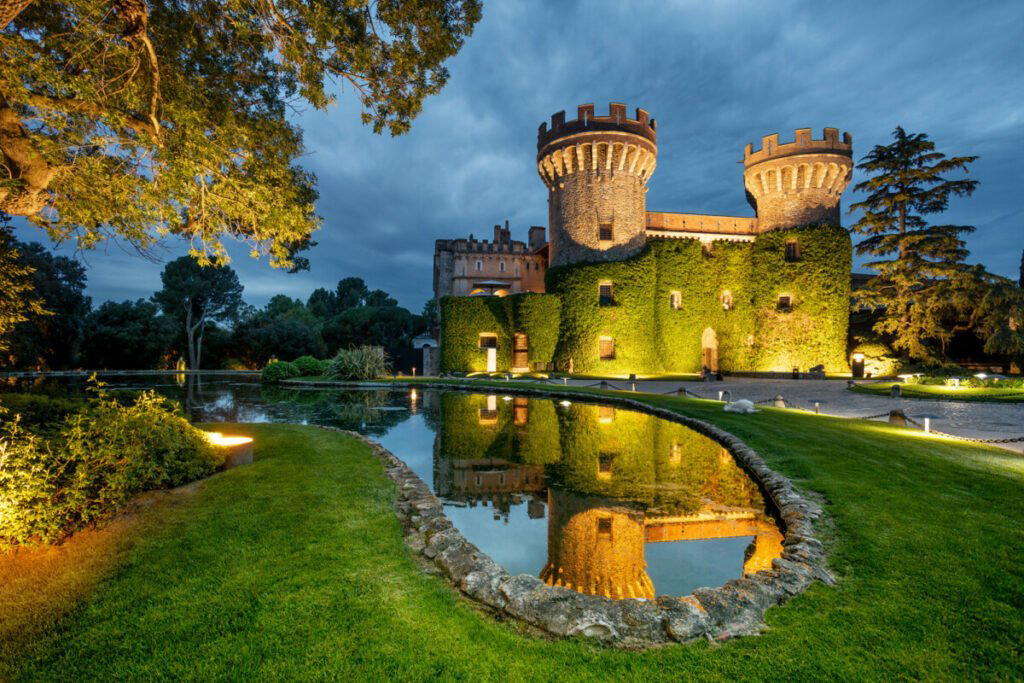
Tranquil and inviting with natural integration, beautiful terrace views, and a relaxed atmosphere praised for its peacefulness and nature immersion.