Our verdict
Urizun sits in Naha's Asato district, operating as one of the city's established addresses for Okinawan cuisine rooted in the islands' distinct agricultural and coastal traditions. The cooking draws from a larder that mainland Japanese restaurants rarely access: bitter goya, purple Okinawan sweet potato, sea grapes, and heritage pork. For travellers moving beyond the souvenir strip of Kokusai-dori, this is where the archipelago's food culture becomes legible.

Pearl is the En Primeur Club membership app, where members save venues, book tables and use the concierge.
The menu
What to order
- Goya Champuru
- Rafute
- Okinawan Soba
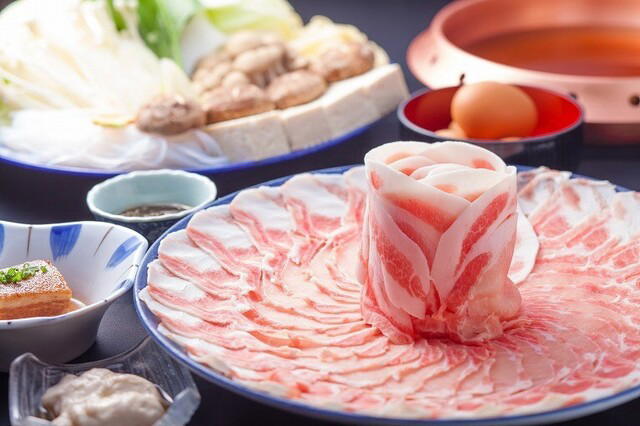
- Pork Belly
- Tofuyo
- Durten
Asato After Dark: Reading Okinawa Through Its Larder
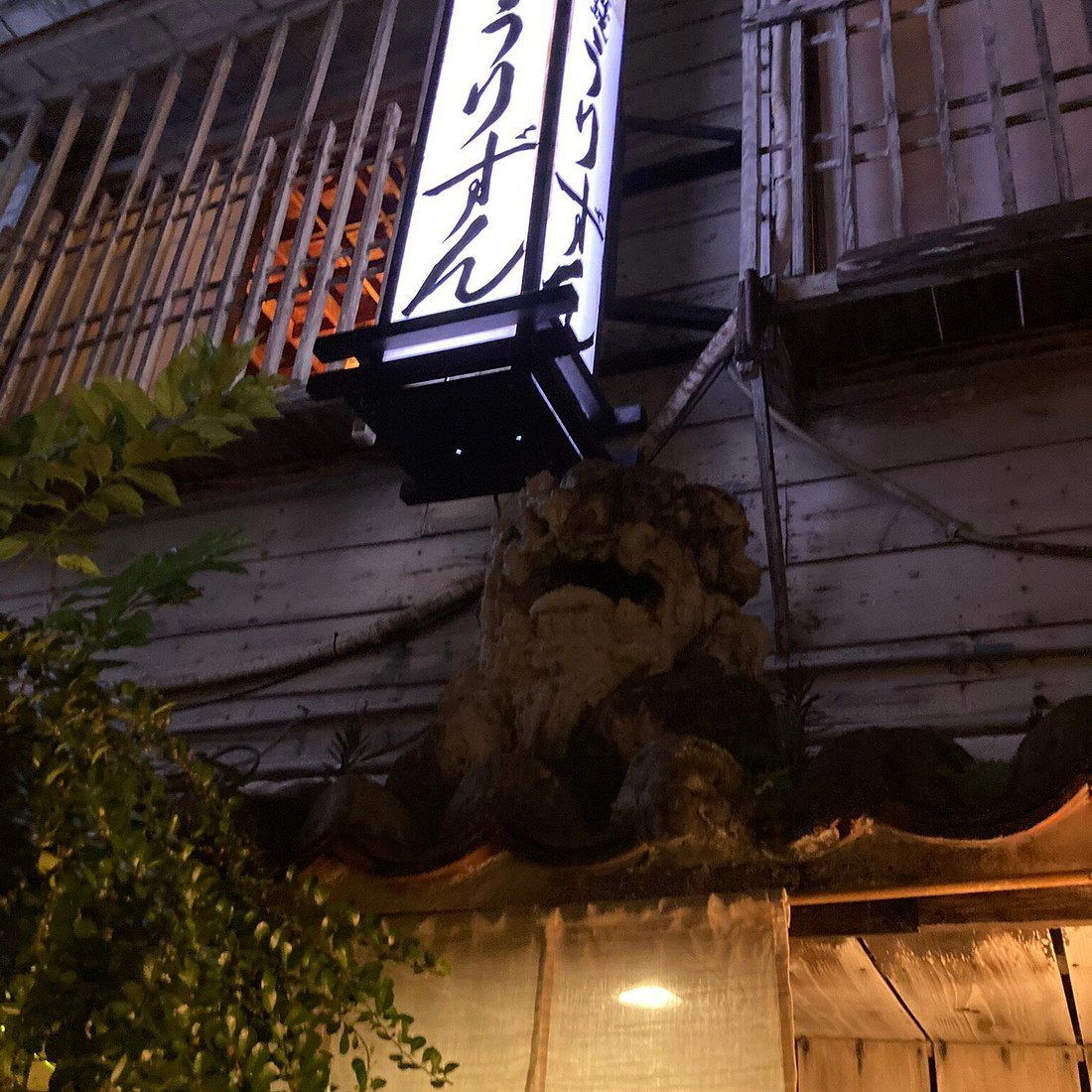
Naha's Asato neighbourhood operates at a register that Kokusai-dori, two kilometres west, never quite reaches. The neon thins out, the traffic settles, and the buildings drop to the low-slung, concrete-block scale that defines residential Naha. Walking toward Urizun at 388-5 Asato, the sensory cues shift: the smell of awamori drifting from open doors, the sound of ceramic against ceramic, the particular amber light that marks a serious Okinawan izakaya rather than a tourist approximation of one. The physical approach sets the interpretive frame before you sit down.
Asato has the kind of unglamorous neighbourhood density that produces restaurants with actual regulars. It is not a dining district in the polished sense that Roppongi or Gion are, which is precisely why addresses like Urizun carry disproportionate weight among travellers who have already cleared the obvious checklist. For context on how Naha's restaurant geography distributes itself, our full Naha Shi restaurants guide maps the city's key dining zones and what each one offers.
The Okinawan Larder and Why It Differs
The ingredient question is where Okinawan cooking makes its clearest argument for distinctiveness. The archipelago's food culture developed in partial isolation from mainland Japanese culinary norms, shaped instead by geography, subtropical climate, and historical trade routes that ran south toward Southeast Asia and the Chinese coast before they ran north to Honshu. The result is a larder with almost no parallel on the Japanese mainland.
Goya, the bitter melon that mainlanders associate with Okinawa almost reflexively, is in fact just the most visible signal of a deeper divergence. Okinawan pork traditions involve cuts and preparation methods that kaiseki and washoku practitioners in Kyoto or Tokyo rarely engage with. Sea grapes (umi-budō) grow in Okinawa's warm coastal shallows and are essentially unavailable fresh anywhere north of Kagoshima. Purple Okinawan sweet potato (beni-imo) has a density and earthiness that distinguishes it clearly from standard varieties. Mozuku seaweed, another island staple, is harvested locally and appears in both light vinegared preparations and heavier cooked dishes.
What this means practically is that an Okinawan establishment drawing on these ingredients with genuine fidelity is, by definition, serving food that cannot be accurately reproduced from a mainland supply chain. The sourcing is the argument. This is the tradition Urizun operates within, at an address in a city where that tradition is not performance but context.
Awamori as the Structural Framework
Okinawan food and awamori do not merely coexist on menus; they are structurally interdependent in a way that sake and washoku are in mainland settings. Awamori, distilled from long-grain indica rice rather than the japonica used in sake, carries flavour compounds that cut through pork fat and complement the bitterness of goya in ways that lighter Japanese spirits do not. A serious Okinawan izakaya is, among other things, an awamori proposition.
The spirit also offers a collecting and connoisseurship dimension that is underexplored outside the islands. Kusu, aged awamori, can reach decades of maturation and commands both price premiums and enthusiast attention that rivals premium shochu or even certain whisky expressions in Japanese specialist circles. Urizun, operating in the izakaya register rather than the fine-dining bracket occupied by addresses like HAJIME in Osaka or Harutaka in Tokyo, uses awamori as a functional through-line rather than a premium upsell. That distinction matters for how you plan the evening.
Placing Urizun in Its Competitive Frame
Japan's fine-dining tier in 2024 is heavily concentrated in Tokyo, Kyoto, and Osaka. Institutions like Gion Sasaki in Kyoto and Goh in Fukuoka operate at the award-cited end of the national spectrum, while regional addresses such as akordu in Nara, Abon in Ashiya, and affetto akita in Akita demonstrate that credentialed cooking extends well beyond the three main cities.
Okinawa sits further still from that axis, which creates a particular dynamic: the island's leading izakayas and Ryukyuan cuisine specialists are evaluated on terms that differ from the Michelin and Tabelog criteria that govern mainland rankings. Addresses like Aji Arai in Oita, Ajidocoro in Yubari District, and Akakichi in Imabari occupy a similar position in their respective prefectures: operating with genuine local authority in places where the national rating apparatus has limited reach. That is not a weakness. It is a condition that keeps a certain kind of restaurant honest.
The distinction is evident within a single evening.
Planning the Visit
Naha is accessible via Naha Airport, which handles both domestic connections from Haneda, Narita, Osaka, and Fukuoka, and some international routes. The city's monorail, Yui Rail, connects the airport to central Naha, and Asato station puts travellers within walking distance of the neighbourhood. Urizun's address at 388-5 Asato is navigable by foot from that station or by taxi from Kokusai-dori in under ten minutes.
Arriving at opening time, typically early evening in the izakaya format, is the lowest-friction approach. For reference comparisons on reservation dynamics at other Japan addresses, see how Amegen in Saga, anchoa in Kanagawa, and Arakawa in Hyogo handle bookings in comparable regional settings.
The izakaya format, by its nature, accommodates a wide range of pacing. You can anchor an evening over three dishes and two awamori pours, or extend across six or seven plates. The format does not impose a fixed structure the way a kaiseki progression or an omakase counter does at places like Le Bernardin in New York City or Lazy Bear in San Francisco. That flexibility is, for many, the point.
Frequently asked questions
Can I bring kids to Urizun?
Urizun sits in the Asato neighbourhood of Naha, away from the tourist corridor of Kokusai-dori, and operates in a setting oriented toward adult diners exploring Okinawan food and awamori. Families with older children who have an interest in regional Japanese cuisine are more likely to find it comfortable than those with very young children. Calling ahead is advisable given the venue's atmosphere and potential seating constraints.
How would you describe the vibe at Urizun?
Asato after dark runs quieter and more local than central Naha, and Urizun reflects that register. The draw is the depth of the Okinawan larder and the awamori list rather than spectacle or scene. Expect a room where the food and drink do the work.
Is Urizun a good place to try awamori for the first time in Okinawa?
For visitors new to awamori, Urizun in Naha Shi's Asato neighbourhood offers a context that tourist bars on Kokusai-dori rarely match: the spirit served alongside traditional Ryukyu dishes that show why the pairing exists in the first place. Awamori is distilled from long-grain indica rice using black koji, giving it a profile distinct from sake or shochu, and understanding it alongside Okinawan food rather than in isolation makes the introduction considerably more coherent.
What dish is Urizun famous for?
Urizun is rooted in traditional Ryukyu cooking, which means the menu draws on ingredients and preparations specific to the Okinawan archipelago, things like goya, rafute, and tofuyo that mainland Japanese restaurants rarely handle with equivalent seriousness. The awamori selection functions as a structural companion to the food rather than an afterthought. Specific dishes on the current menu should be confirmed directly with the venue.
Where is Urizun in Naha Shi?
Urizun is located at 388-5 Asato, Naha, Okinawa 902-0067, Japan, Naha Shi.
Do I need a reservation for Urizun?
Urizun's location in Asato rather than a high-traffic tourist zone does not translate to walk-in availability being guaranteed. Given its reputation among those seeking authentic Okinawan food in Naha Shi, reservations made in advance are the safer approach, particularly on weekends or during peak travel periods.
What's the defining dish or idea at Urizun?
The defining idea at Urizun is structural: Okinawan food and awamori treated as interdependent rather than separate. The Ryukyu archipelago developed a food culture distinct from mainland Japan, and Urizun's menu in Naha's Asato neighbourhood is one of the clearer arguments for that distinctiveness, built around regional ingredients and the conviction that awamori belongs at the table the way sake belongs to washoku.
| Venue | Cuisine | Price | Awards | Notes |
|---|---|---|---|---|
| UrizunThis venue (the venue you are viewing) | Traditional Okinawan Izakaya | $30–50 | Not listed | Not listed |
| HAJIME | Avant-Garde Japanese Fine Dining | $300–500 | 3 Michelin Stars · World's 50 Best #83 | French, Innovative |
| Harutaka | Edo-Style Omakase Sushi | $200–300 | 3 Michelin Stars · World's 50 Best #76 | Sushi |
| L'Effervescence | Modern French with Japanese Influences | $200–300 | 3 Michelin Stars · World's 50 Best #69 | French |
| RyuGin | Modern Kaiseki | $500+ | 3 Michelin Stars · World's 50 Best #41 | Kaiseki, Japanese |
| Crony | Modern French with Japanese Influences | $150–200 | 2 Michelin Stars · World's 50 Best #34 | Innovative, French |
Continue exploring
More in Naha
Restaurants in Naha
All restaurants in Naha →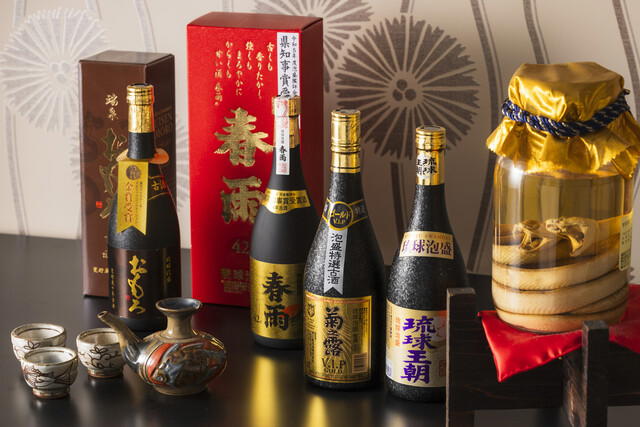



Details
- Lively
- Well Known
- Cozy
- Rustic
- Casual Hangout
- Group Dining
- After Work
- Standalone
- Sake Program
- Local Sourcing
- A La Carte
- Small Plates
- Awamori
- Aged Spirits
Current opening hours
- Monday
- 5:30 PM–12 AM
- Tuesday
- 5:30 PM–12 AM
- Wednesday
- 5:30 PM–12 AM
- Thursday
- 5:30 PM–12 AM
- Friday
- 5:30 PM–12 AM
- Saturday
- 5:30 PM–12 AM
- Sunday
- 5:30 PM–12 AM
Hours can change for holidays and private events. Hours as of .
Warm and bustling with a nostalgic, quaint interior lined with bottles of awamori from across the prefecture; lively with the cool set of Naha.