Urban Momo
Our verdict
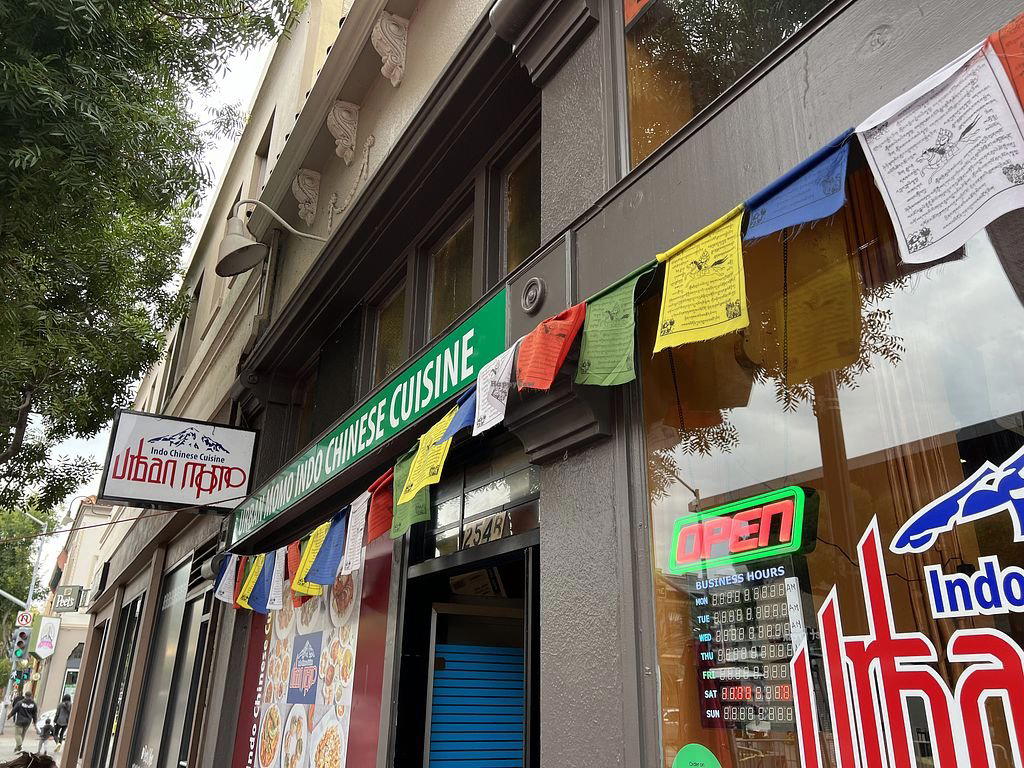
Urban Momo brings the Himalayan dumpling tradition to downtown San Mateo, where South B Street's compact dining corridor runs from casual noodle bars to four-figure omakase counters. The momo — steamed or fried, filled with spiced meat or vegetables — sits at the centre of a format that imports technique from Nepal and Tibet into a Bay Area neighbourhood increasingly comfortable with that kind of culinary range.

Pearl is the En Primeur Club membership app — saves, bookings, and concierge access live there. Same editors, same standards.
- Address
- 254 S B St, San Mateo, CA 94401
- Phone
- (650) 458-3053
- Hours
- Daily 11 AM–12:45 AM
- Website
- urbanmomos.com
- Directions
- Get directions
- Booking
- Book on OpenTable
Where the Himalayan Dumpling Lands in the Bay Area
San Mateo's downtown dining corridor along South B Street covers more culinary ground than its modest footprint suggests. Within a few blocks, you can move from single-dollar ramen bowls at B Street & Vine to the $$$$ precision of All Spice or the twelve-seat Japanese counter at Wakuriya. Urban Momo at 254 S B St occupies an entirely different register from either: it is one of the Bay Area's few dedicated momo houses, a format that centres the Himalayan steamed or fried dumpling rather than using it as an accent dish inside a broader South Asian menu.
The momo's cultural geography is worth understanding before you walk in. It traces its origins to Tibetan and Nepali cooking traditions, where the dumpling functions as both everyday food and ceremonial dish. The filling — spiced minced meat or vegetable combinations — is enclosed in a thin wheat dough wrapper and cooked by steaming, pan-frying, or deep-frying depending on regional preference. When the format migrated into Himalayan diaspora communities in cities like New York, London, and across the Bay Area, it retained that core simplicity while adapting to local ingredient access. That intersection of imported method and available produce is precisely what defines the momo house genre outside the subcontinent.
The Format and What It Signals
Dedicated momo restaurants operate on a logic closer to a Taiwanese dumpling house or a Georgian khinkali specialist than to a full-service South Asian restaurant. The menu is narrow by design. The craft is in the dough ratio, the moisture content of the filling, the steam timing, and the quality of the accompanying achar, the spiced dipping sauce that varies considerably between establishments and serves as a fingerprint of regional identity. In cities where South Asian food has historically been represented primarily by North Indian or Bangladeshi restaurants, a momo-focused format is a meaningful correction toward Himalayan specificity.
San Mateo's dining scene, covered in depth in our full San Mateo restaurants guide, is increasingly diverse in this way. Bahche brings Turkish technique to the same neighbourhood. Avenida operates on a different register entirely. The city's compact geography concentrates these formats within walking distance of one another, which accelerates the kind of culinary cross-referencing that diners in larger cities have to commute to find.
Local Ingredients, Global Technique
The editorial angle most relevant to a Bay Area momo house is the tension between technique that arrives fully formed from another tradition and the local produce environment that shapes what actually goes inside the wrapper. Northern California is not the Himalayan foothills, but it is one of the most ingredient-rich growing regions in the United States. That supply chain creates an opportunity for Himalayan dumpling formats to work with produce, seasonal greens, locally raised meat, regionally grown alliums, that would not exist in the tradition's source context.
This is a pattern visible across the country's more technically precise cooking. Single Thread Farm in Healdsburg and Blue Hill at Stone Barns in Tarrytown have built their entire editorial identities around this local-ingredient, refined-technique intersection. At the other end of the price spectrum, the momo house operates on the same underlying principle: technique imported from a specific culinary tradition, applied to whatever the local food system produces well. The comparison is not about price tier, it is about the structural logic of how a cuisine travels and adapts.
Venues like Atomix in New York City and Lazy Bear in San Francisco represent what happens when that logic is pushed into tasting-menu territory. The momo house operates in the register below that, where accessibility and volume matter more than ceremony. But the underlying craft question is the same: when a technique travels this far from its origin, what does it gain and what does it lose?
Planning a Visit
For visitors building a broader San Mateo itinerary, the South B Street corridor allows for a momo stop as a starting point before moving to B Street & Vine for drinks or ending the evening at All Spice if the occasion calls for something more structured. The peninsula's transit connections from San Francisco make San Mateo a realistic day-trip destination for diners who want to move between price tiers and culinary traditions without the city's parking friction.
Visitors comparing the Bay Area's more technically ambitious cooking should note that the region's reference-point restaurants, The French Laundry in Napa, Lazy Bear, and further afield Alinea in Chicago, Le Bernardin in New York City, Providence in Los Angeles, Addison in San Diego, Emeril's in New Orleans, The Inn at Little Washington, and 8 1/2 Otto e Mezzo Bombana in Hong Kong, sit in an entirely separate competitive tier. Urban Momo operates at an accessible price point within a highly specific format. The comparison is not about peer ranking; it is about understanding that the Bay Area's dining range runs from that top tier all the way to narrow-format specialists like this one, and that specialists in a single dish tradition are worth taking seriously on their own terms.
Frequently asked questions
What part of town is Urban Momo in?
Urban Momo is located at 254 S B St, San Mateo, CA 94401, San Mateo.
Is Urban Momo in San Mateo a good option for vegetarians looking for Himalayan food?
Momo restaurants across the Bay Area routinely carry vegetable-filled dumplings alongside meat varieties, reflecting how the dish is served across Nepal and Tibet. Urban Momo, operating as a dedicated momo house at 254 S B St in San Mateo, fits that format, making it a practical stop for vegetarians seeking Himalayan dumplings specifically rather than a generalist South Asian menu.
What do people recommend at Urban Momo?
Urban Momo's focus is momos — steamed or fried Himalayan dumplings that anchor the menu in the same way khinkali define a Georgian dumpling house. Given the restaurant's position in San Mateo's downtown dining corridor on S B St, the format points toward a short, dumpling-forward menu rather than a broad South Asian spread. Ordering a selection across preparations — steamed alongside pan-fried — is the standard approach at dedicated momo counters of this type.
Similar Picks
Comparable venues nearby, for context on price, style, and recognition.
| Venue | Cuisine | Price | Notes |
|---|---|---|---|
| Urban MomoThis venue — the venue you are viewing | Nepali Fusion Momo House | Not listed | Not listed |
| Sapporo Rock & Roll Sushi | Rock & Roll Sushi | $20–30 | South San Mateo |
| Neal's Coffee Shop | Classic American Diner | $10–20 | Not listed |
| Taqueria La Cumbre | Authentic Mexican Taqueria | $10–20 | Downtown San Mateo |
| Izakaya Ginji | Authentic Japanese Yakitori Izakaya | $30–50 | Downtown San Mateo |
| Vespucci Ristorante Italiano | Italian | Not listed | Downtown San Mateo |
Continue exploring
More in San Mateo
Restaurants in San Mateo
Browse all →
Bars in San Mateo
Browse all →
Hotels in San Mateo
Browse all →
Details
- Trendy
- Lively
- Casual Hangout
- Group Dining
- Late Night
- A La Carte
- Small Plates
- Vegetarian Friendly
Current opening hours
- Monday
- 11 AM–12:45 AM
- Tuesday
- 11 AM–12:45 AM
- Wednesday
- 11 AM–12:45 AM
- Thursday
- 11 AM–12:45 AM
- Friday
- 11 AM–12:45 AM
- Saturday
- 11 AM–12:45 AM
- Sunday
- 11 AM–12:45 AM
Hours can change for holidays and private events. Last verified .
Moderate noise level with casual, everyday atmosphere.