Tabelog 100 #89
Our verdict
Cherry blossom season changes the rhythm around Nakameguro, and unito belongs to the quieter, regular-driven side of Tokyo Italian dining. The room sits in the city’s Italian and innovative category rather than the luxury tasting-menu race, with Tabelog Italian TOKYO 100 selections in 2021, 2023, and 2025 giving it a clear signal among local diners.

Pearl is the En Primeur Club membership app, where members save venues, book tables and use the concierge.
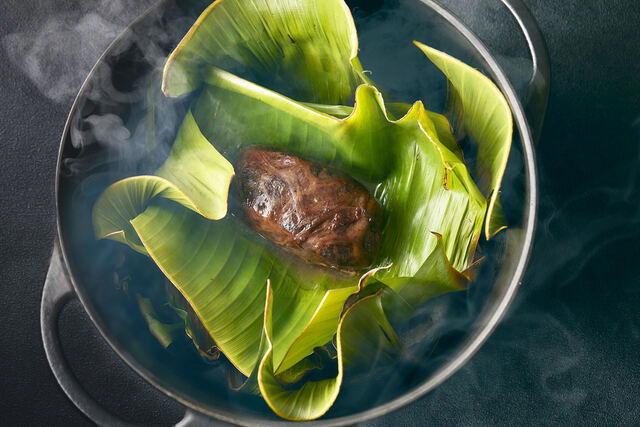
Approaching unito in Tokyo, the mood is best understood through the city’s quieter dining rhythm: regulars, compact rooms, and restaurants protected by habit rather than noise. Here, Italian cooking differs from gilded hotel restaurants or trophy counters. It is where return visits matter, the pace of the room carries weight, and a familiar table can persuade more than spectacle.
unito sits in that register. Its listed categories are Italian and Innovative, a pairing that fits Tokyo’s broader non-Japanese dining culture. The city has long treated Italian food less as imported comfort than flexible grammar: pasta, wine, seasonal produce, intimate service, and omakase-adjacent pacing can coexist without turning the meal into theatre. The useful question is not whether the restaurant follows a textbook Italian model, but whether its format gives repeat diners enough variation, polish, and hospitality structure to justify returning through the year.
Tokyo Italian for diners who return with seasons, not checklists
Tokyo’s serious Italian rooms split into camps. Some chase the grand tasting-menu mood associated with French fine dining; others are local anchors, where conversation, table spacing, and seasonal adjustments matter as much as headline cuisine. unito leans toward the latter while carrying a public quality marker: recognition in Tabelog’s Hyakumeiten selection for 2025, plus a Tabelog score of 3.70. In a city where local rating behaviour often separates places with sustained repeat custom from restaurants that photograph well once, that matters.
The regulars’ perspective is the right lens. A restaurant in this register does not need mass attention; it needs a core clientele that knows when to choose lunch, when to reserve dinner, and when the calendar makes Tokyo dining feel more competitive than usual. During busy seasonal periods, the ordinary rhythm of the city changes, and both lunch and dinner planning may require more care. That scheduling intelligence separates a casual booking from a well-timed one.
Compared with a French-leaning room such as CRAFTALE, the point is less formal culinary architecture than the way Tokyo absorbs Italian idioms into a local dining pattern. Compared with Spanish Ryouri Pablo or Bar Portillo de sal y amor, the budget and recognition place it in a more committed dining category. The appeal is not novelty for its own sake; it is a room structured for considered meals, celebrations, and regular dinners without pushing every table into ceremony.
Wine, room etiquette, and the unwritten rules of the room
The appeal of a Tokyo Italian restaurant often depends on whether the beverage conversation feels integrated rather than bolted on. For diners considering unito, that means reading the restaurant less as a single-dish destination and more as a complete evening: food, pacing, service, and the kind of table where a meal can unfold without needing spectacle. In a city dense with intimate dining formats, that social shape is part of the attraction.
The hospitality logic is similarly practical. Tokyo restaurants at this level often balance adult dining-room expectations with the needs of regulars, couples, small groups, and visitors booking from abroad. Rather than relying on vague assumptions, diners should confirm room arrangements, group suitability, and any special requirements directly before visiting. That kind of preparation is not fussy; it is simply how smoother meals happen in Tokyo.
There is also etiquette. The point is not stiffness, but Tokyo’s middle register of serious dining, where the room can be relaxed without becoming careless. International diners can approach it as a local restaurant first: a place designed around repeat patterns, not translation or novelty as the central experience. The more useful attitude is to arrive on time, book carefully, and let the restaurant’s own rhythm set the pace.
For a wider city map, compare unito with Tokyo counter formats, casual specialists, and destination dining rooms.
How to read it against Tokyo's wider dining map
The restaurant’s 2025 Hyakumeiten recognition gives it a useful form of credibility. Tokyo dining trends move quickly, especially in areas shaped by heavy foot traffic and seasonal demand, so current category recognition helps distinguish a restaurant with local traction from one relying only on appearance. The Tabelog score of 3.70 reinforces that pattern: not a celebrity claim, but a public signal within the Italian and Innovative categories.
The case for choosing this room is strongest for diners who want Tokyo Italian with continuity rather than a trophy reservation. Japan’s broader restaurant map offers further context for comparing dining rooms in major cities and Japanese dining ideas in more casual formats.
unito is for diners who value continuity. Its signals are not celebrity biography or maximal theatre, but category recognition, a clear Italian and Innovative identity, a defined budget tier, and the kind of Tokyo dining profile that rewards planning before arrival. In Tokyo, especially when the city’s restaurant calendar tightens, that clarity has its own appeal.
Frequently asked questions
What kind of setting is unito?
unito is listed in Tokyo under the Italian and Innovative categories, with a Tabelog score of 3.70 and 2025 Hyakumeiten recognition.
What price level is unito?
Pricing at unito is listed as Dinner: JPY 10,000 - JPY 14,999; Lunch: JPY 6,000 - JPY 7,999.
Same-City Peers
Comparable venues for cuisine and category context.
| Venue | Cuisine | Price | Awards | Notes |
|---|---|---|---|---|
| unitoThis venue (the venue you are viewing) | Italian Fusion | $50–100 | Tabelog 100 #89 | Not listed |
| Mahakala | Kushikatsu Izakaya | $30–50 | Not listed | Not listed |
| 3110 | Sushi | Not listed | Not listed | Not listed |
| Bar Portillo de sal y amor | Traditional Spanish tapas & paella bar | $50–100 | Tabelog 100 #42 | JPY 6,000 - JPY 7,999 JPY 2,000 - JPY 2,999 |
| CRAFTALE | Modern French with Japanese Influences | $100–150 | 1 Michelin Star · Tabelog 100 #28 | French |
| Spanish Ryouri Pablo | Spanish tapas & paella bar | $50–100 | Tabelog 100 #68 | JPY 5,000 - JPY 5,999 JPY 3,000 - JPY 3,999 |
Recognition history
Dated appearances from independent guides and award organizations, with the underlying list record or original source where available.
Tabelog 100 #89 · No. 89
Tabelog · Tabelog 100 - Italian - TOKYO - 2025