
Tabelog 100 #39
Our verdict
Kagawa’s udon culture is built on wheat, speed, and local routine rather than ceremony. Kamaage Udon Okajima Marugame ten belongs to the everyday end of that tradition, with Tabelog 100 Udon Kagawa 2024 recognition, a self-service-friendly format, and prices that keep the focus on the noodle rather than the room.

Pearl is the En Primeur Club membership app, where members save venues, book tables and use the concierge.
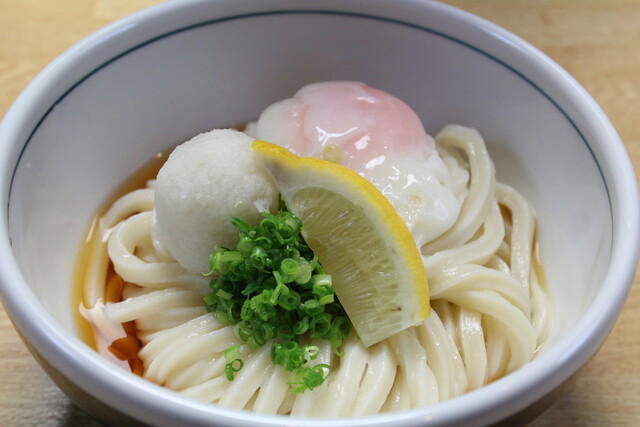
The menu
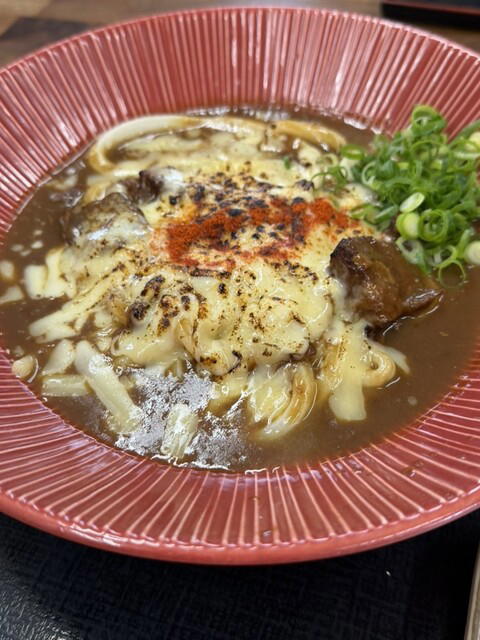
What to order
- Kamaage udon
- Kake udon
- Niku udon
- Take-out kamaage udon (boiled udon with dashi)
- Fresh udon for home cooking
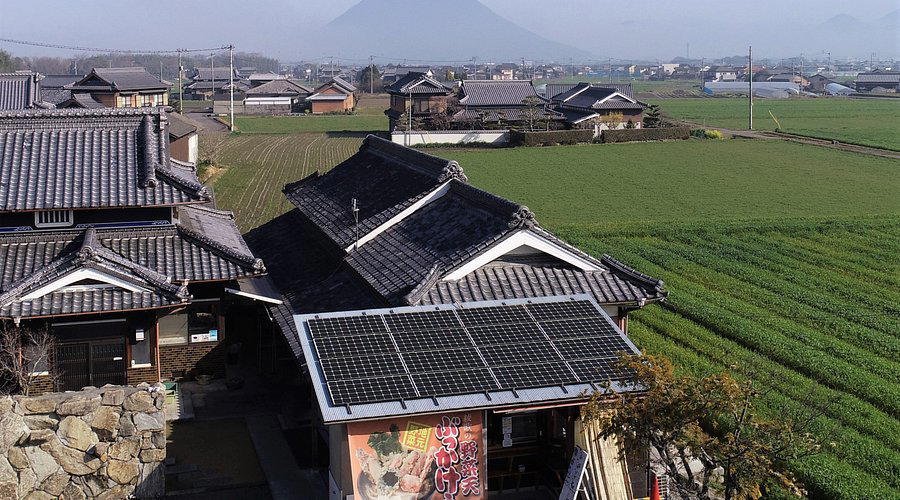
Marugame udon is not a hushed ritual. It is working food culture: steam, trays, families, solo diners, and noodles moving quickly from kitchen to bowl. In Kagawa, the question is rarely whether udon merits a detour, but which version of the prefecture’s wheat-and-dashi grammar to understand first. Kamaage Udon Okajima Marugame ten sits in that practical register, where the appeal is value, clarity, and the daily usefulness of a bowl.
The context matters. Sanuki udon’s reputation rests on chew, water, wheat handling, and broth clarity, not luxury coding. A shop can be serious without being formal, and Kagawa’s recognized addresses prove it through repetition rather than spectacle. Okajima’s selection for Tabelog 100 Udon Kagawa 2024 places it among the prefecture’s noted specialists, with a Tabelog score of 3.67 and pricing listed in the - JPY 999 range. That is where Sanuki udon often shows discipline: not through excess, but through repeatable essentials.
Sanuki udon judged by weight, broth, and daily utility
The ingredient story starts with the noodle, because in Kagawa the noodle is the meal’s argument. A bowl of udon is a useful measure in a category where appetite, texture, and value are tightly linked. It says more than a flourish-filled menu description: this is udon as staple food, suited to a quick stop, a simple lunch, or an itinerary built around the prefecture’s defining noodle culture. The format is best understood as direct and practical rather than decorative.
That practicality is part of the prefecture’s udon intelligence. Sanuki shops often separate noodle pleasure from the idea of a composed restaurant plate. The diner controls pace and appetite; the shop protects consistency. Okajima belongs closer to Marugame’s everyday noodle circuit than to destination dining as practiced in larger cities. The local comparison set reinforces it: Nakamura Udon, Mendokoro Wataya Marugame ten, Yamato, IKEKO UDON, and other Marugame udon addresses all help frame the city’s wheat-noodle landscape, while Honetsukidori Ikkaku Marugame honten occupies another local lane. For a broader read of the city’s tables, start with Our full Marugame restaurants guide.
Ingredient sourcing here is less about named farms than respecting what Kagawa has made visible: wheat noodles as regional identity. The prefecture’s udon culture depends on flour handling, boiling discipline, and dashi that supports rather than buries the noodle. Okajima’s public details do not turn this into a chef-led narrative, which helps the reader. The useful lens is category literacy: how the shop fits a low-priced udon bracket, how the noodles carry the meal, and how the experience supports repeat local use. Those signals matter more than ornament.
A practical room for a serious noodle prefecture
The space should be read through the food’s logic. Udon rooms in Marugame are rarely about ceremony for its own sake; they are about getting the bowl into the diner’s hands while the noodles still have presence. Solo diners, families, regulars, and travelers can read the same kind of shop differently, as in much of Kagawa’s better udon culture: the core product remains the point, and the surrounding service style exists to keep that product moving.
Planning should suit the genre, while individual operating details should be checked before going. Udon in Marugame is often a timing decision rather than a formal dining commitment, and travelers are rewarded when they treat a simple bowl as serious without overcomplicating the visit. The risk is assuming every noodle shop behaves like a long-service restaurant. In Kagawa, udon is tied to daily flow. Treat it as a practical possibility, then use the rest of the day for the city, the coast, or another bowl.
Against Marugame peers, Okajima’s case is accessibility within a dense local category. It is not necessary to romanticize the experience around scarcity; the stronger reading is that it gives travelers a clear way into the city’s udon landscape. That makes the shop easy to fold into a travel day while keeping the focus aligned with other practical udon specialists such as Nakamura Udon, Mendokoro Wataya Marugame ten, IKEKO UDON, and Yamato. Travelers chasing a broader Kagawa noodle map can compare it with other unnamed udon stops across the prefecture without losing sight of Marugame’s own concentration of everyday specialists.
How to place it in a Marugame itinerary
The editorial choice is simple: use this stop to understand Kagawa’s udon as infrastructure. It is not the city’s only food story, and should not be forced into that role. Marugame’s dining map also includes casual Japanese meals and regional specialists, but udon is the thread explaining how the prefecture eats with speed and precision. Okajima gives that thread shape: recognized by Tabelog’s Kagawa udon list, priced for routine use, and organized around wheat noodles rather than restaurant theater.
For a wider Marugame stay, the dining decision sits alongside logistics. Use Our full Marugame hotels guide to place the overnight, then compare after-dark options in Our full Marugame bars guide. Regional drinks and producer visits are better handled through Our full Marugame wineries guide, while non-restaurant planning belongs in Our full Marugame experiences guide. Readers extending a Japan food route beyond Kagawa can contrast the casual noodle economy here with other unnamed dining rooms, counters, cafes, and specialist shops elsewhere in Japan. For an international counterpoint to Japanese casual formats, think in terms of how simple, repeatable food rituals travel rather than chasing a one-to-one comparison.
The right expectation is a Kagawa udon address that earns attention through category fundamentals: noodle character, affordability, practical usefulness, and recognition inside a prefecture where competition is unusually dense. That makes Kamaage Udon Okajima Marugame ten a strong read on Marugame’s food culture, especially for travelers who care less about ceremony than how a region turns a staple into daily craft.
Frequently asked questions
Where exactly is Kamaage Udon Okajima Marugame ten?
Marugame.
Is Kamaage Udon Okajima Marugame ten more mid-range or high-end?
Pricing at Kamaage Udon Okajima Marugame ten is listed as - JPY 999.
When can I go to Kamaage Udon Okajima Marugame ten?
Check current opening details for Kamaage Udon Okajima Marugame ten before visiting.
What is Kamaage Udon Okajima Marugame ten known for?
Kamaage Udon Okajima Marugame ten is known as an udon specialist in Marugame and was included in Tabelog 100 Udon Kagawa 2024.
How It Stacks Up
Nearby venues at a similar price tier for orientation.
| Venue | Cuisine | Price | Awards | Notes |
|---|---|---|---|---|
| Kamaage Udon Okajima Marugame tenThis venue (the venue you are viewing) | Traditional Sanuki kamaage udon | $1–10 | Tabelog 100 #39 | Not listed |
| Jun Teuchi Udon Yoshiya | Sanuki Udon | Not listed | Tabelog 100 #80 | Iino-cho |
| Mendokoro Wataya Marugame ten | Traditional Udon Noodle Shop | $1–10 | Tabelog 100 #99 | Kitahirayamacho |
| Ikkaku (骨付鳥 一鶴 土器川店) | Traditional Japanese Bone-in Chicken (Honetsukidori) | $10–20 | Not listed | 土居町 |
| Ayauta Seimen | Sanuki Udon | Not listed | Tabelog 100 #19 | Ayautacho Okadanishi |
| Udon Okada | Self-service Sanuki udon | $1–10 | Tabelog 100 #75 | Iinocho |
Recognition history
Dated appearances from independent guides and award organizations, with the underlying list record or original source where available.
Tabelog 100 #39 · No. 39
Tabelog · Tabelog 100 - Udon - KAGAWA - 2024
Continue exploring
More in Marugame
Restaurants in Marugame
All restaurants in Marugame →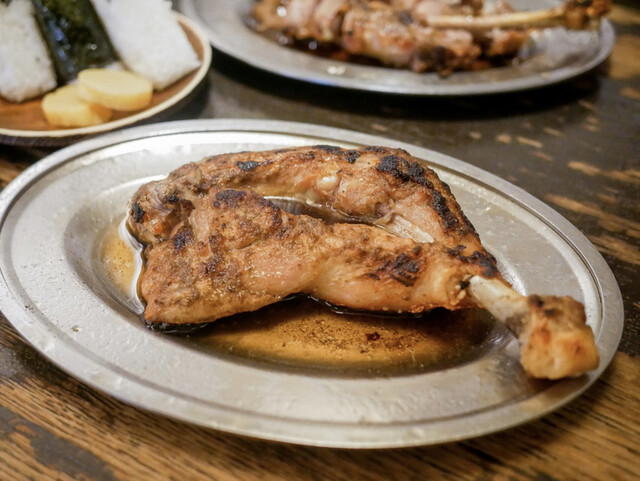
Bars in Marugame
Browse all →
Details
- Lively
- Classic
- Cozy
- Solo
- Family
- Casual Hangout
- Group Dining
- Standalone
- A La Carte
- Counter Dining
Current opening hours
- Monday
- 6 AM–3 PM
- Tuesday
- 6 AM–3 PM
- Wednesday
- 6 AM–3 PM
- Thursday
- 6 AM–3 PM
- Friday
- 6 AM–3 PM
- Saturday
- 6 AM–3 PM
- Sunday
- 6 AM–3 PM
Hours can change for holidays and private events. Hours as of .
Bright, busy Sanuki udon house with a functional, cafeteria-like layout and a warm, everyday local atmosphere rather than decorative design focus.