
Tabelog 100 #96
Our verdict
Unafuji belongs to Tsu’s practical, ingredient-led dining culture rather than the luxury counter circuit. The draw is unagi treated as a regional staple: focused, lunch-oriented, and serious enough to earn selection for Tabelog 100 - Unagi - 2024, while remaining positioned in an everyday Japanese price band.

Pearl is the En Primeur Club membership app, where members save venues, book tables and use the concierge.
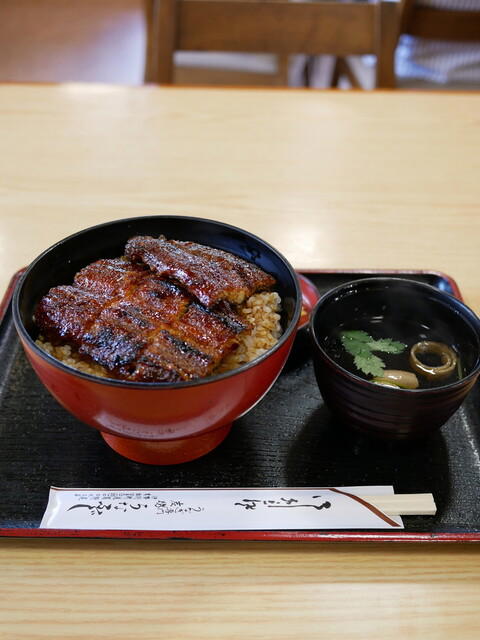
Approaching a serious unagi house in regional Japan, the first cue is rarely ceremony. It is the rhythm of a lunch room built around one ingredient, with diners arriving for eel, rice, and the quiet confidence of a kitchen that does not need a sprawling menu to make its case. In Tsu, that matters. The city is not chasing the spectacle of Tokyo dining or the heritage theatre of Kyoto; its stronger restaurants tend to work through local appetite, family use, and a narrower sense of purpose.
Unafuji fits that pattern. Its recognition on Tabelog Hyakumeiten - Unagi - 2024 places it inside a national category where specialization counts: eel houses are judged against other eel houses, not against tasting-menu restaurants or hotel dining rooms. That distinction is useful for travellers. This is not a broad Japanese restaurant with an eel section; it sits in the unagi lane, where grilling discipline, sauce, and rice carry the meal.
Unagi as a regional lunch ritual, not a luxury performance
Unagi has long occupied a particular place in Japanese dining: celebratory enough to justify a dedicated trip, familiar enough to remain tied to lunch, family tables, and seasonal appetite. The dish depends on a compact chain of decisions. The eel must be handled cleanly, the grill work must manage fat without turning heavy, the tare must support rather than bury the fish, and the rice has to hold its own under sauce. In this format, excess is usually a warning sign.
That is why the category rewards repetition. A restaurant built around eel is less about novelty than command of a few variables. In Tsu, where restaurant culture is spread across local addresses rather than concentrated in a single nightlife district, the serious lunch specialist has a different authority from the urban omakase counter. The room is part of daily life, but the food still asks for precision.
Compared with Tsu’s broader dining options, the positioning is clear. Sukiyaki Gyushabu Matsuju, Toyo Ken Honten, and Hachimitsu Man Honpo each point to a different kind of stop within the city’s dining map. The eel house occupies a middle ground: more focused than casual grazing, less formal than a destination dining room, and more ingredient-dependent than general dining.
What the Tabelog unagi selection signals
Tabelog’s Hyakumeiten selections are especially revealing in categories where Japan’s dining culture is highly specialized. A 2024 inclusion in the unagi list signals credibility within a narrow genre rather than a single broad wave of attention. For a traveller, that is the useful trust marker: the restaurant has been read through the standards of its own category.
The Tabelog score of 3.67 also needs Japanese context. On Tabelog, scores above the mid-threes can indicate serious local pull, particularly outside Tokyo and Osaka, where review density and tourist traffic differ. The stronger signal is not the number alone but the combination of category selection and a format narrow enough to expose weakness quickly. Eel does not hide behind variety.
Ingredient focus is the editorial hinge here because unagi restaurants rise or fall before the plate reaches the table. Japan’s eel culture is tied to supply, seasonality, and long-running debates around quality and sustainability; reputable houses have to maintain consistency in a category where the raw product is costly and technique cannot fully rescue indifferent fish. The better decision for diners is to treat this as a focused eel stop rather than a general lunch recommendation.
That also makes the restaurant useful within a Tsu itinerary. Pairing a specialist meal with a broader look at the city gives more texture than chasing a single prestige address. For a wider read on the area’s dining range, use Our full Tsu restaurants guide, then map the rest of the trip through Our full Tsu hotels guide, Our full Tsu bars guide, Our full Tsu wineries guide, and Our full Tsu experiences guide. The point is not to overbuild the meal; it is to understand why a single-ingredient lunch can carry more local meaning than a longer menu.
Where it sits among Japan's specialist tables
Japan rewards narrow expertise. The same logic that makes an eel house compelling also explains the appeal of single-theme, technique-led rooms elsewhere: specialist restaurants, focused counters, casual shops built around one core product, or bar formats led by a narrow point of view. The connecting thread is focus, not scale.
For travellers building a Japan food route beyond the obvious city circuits, Tsu offers a useful correction. Regional restaurants can be less performative, but the standards are not softer. A place selected for the national unagi category has to compete in a field where diners understand the grammar of eel and rice. That makes Unafuji a sharp choice for readers who value specialization over spectacle.
Context helps prevent overreading. This is not the same proposition as a design-forward cafe, a contemporary dining room, another regional specialist, a casual counter, or a table built around a different culinary grammar. Its appeal is narrower and more traditional: eel as the reason to go, not one option among many.
The practical reading is simple. Choose it when the meal itself is the plan and when a daytime, ingredient-specific restaurant suits the route through Tsu. For a city with a quieter national dining profile than Nagoya, Osaka, or Kyoto, Tsu’s strength lies in exactly these precise addresses: restaurants that do one thing with enough discipline to be noticed beyond their prefecture.
Frequently asked questions
Is Unafuji a family-friendly restaurant?
Unafuji is best understood as a focused unagi restaurant in Tsu. The listed lunch budget is JPY 2,000 - JPY 2,999. Check the venue's official channels for the latest details.
How would you describe the vibe at Unafuji?
It reads as a focused unagi house rather than a formal dining room. Tabelog’s 2024 Unagi Hyakumeiten selection points to a straightforward operation in Tsu, with the meal built around eel and rice.
Is Unafuji expensive?
Pricing at Unafuji is listed as JPY 2,000 - JPY 2,999.
What days is Unafuji closed?
Published hours and closing days can change, so check the venue's official channels before visiting Unafuji in Tsu.
Quick Comparison
Comparable venues by cuisine and price in the same metro.
| Venue | Cuisine | Price | Awards | Notes |
|---|---|---|---|---|
| UnafujiThis venue (the venue you are viewing) | Japanese Eel (Unagi) | Not listed | Tabelog 100 #96 | Not listed |
| Sukiyaki Gyushabu Matsuju | Matsusaka Beef Sukiyaki & Shabu-Shabu | $30–50 | Tabelog 100 #7 | Tsu Station area |
| Yakiniku Hakkou | Traditional Japanese Yakiniku & Tripe | $50–100 | Tabelog 100 #76 | Hisai |
| Hachimitsu Man Honpo | Japanese traditional sweets (honey manju) | $1–10 | Tabelog 100 #87 | Not listed |
| Toyo Ken Honten | Historic Japanese Western-style (yoshoku) restaurant with French influence | $20–30 | Tabelog 100 #29 | Marunouchi |
| Ikkaku | Kagawa Honetsukidori Grilled Chicken | $20–30 | Not listed | Takamatsu |
Recognition history
Dated appearances from independent guides and award organizations, with the underlying list record or original source where available.
Tabelog 100 #96 · No. 96
Tabelog · Tabelog 100 - Unagi - 2024
Continue exploring
More in Tsu
Restaurants in Tsu
All restaurants in Tsu →

Details
- Classic
- Cozy
- Family
- Group Dining
- Casual Hangout
- Solo
- Standalone
- A La Carte
- Set Menu
Current opening hours
- Monday
- 11 AM–1:30 PM
- Tuesday
- Closed
- Wednesday
- 11 AM–1:30 PM
- Thursday
- 11 AM–1:30 PM
- Friday
- 11 AM–1:30 PM
- Saturday
- 11 AM–1:30 PM
- Sunday
- 11 AM–1:30 PM
Hours can change for holidays and private events. Last verified .
A traditional, house-style eel restaurant with a formal charcoal-grilled feel and a family-friendly, popular local atmosphere.