
Tabelog 100 #99
Our verdict
Udon Izakaya Edobori gives Osaka’s udon culture an evening register: wheat noodles, izakaya pacing, nabe, sake, shochu and wine in a compact Edobori room. Its Tabelog 100 Udon WEST 2024 selection places it among the region’s serious noodle addresses, while the format keeps the mood closer to after-work tavern than formal counter dining.

Pearl is the En Primeur Club membership app, where members save venues, book tables and use the concierge.
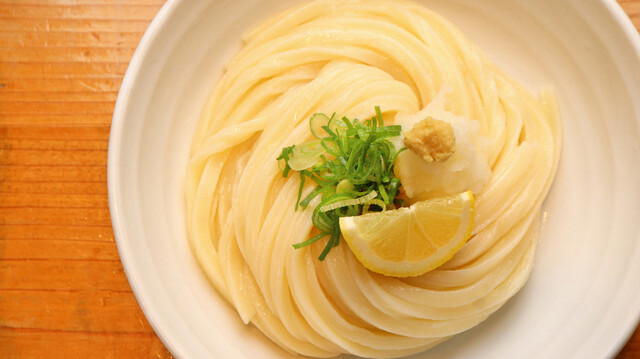
The menu
What to order
- Udon noodles
- Chicken hot pot course
- Curry udon
- Cold udon
Edobori is not shorthand here for the Osaka of neon food streets and queue theatre. The register is quieter and more practical: everyday meals, after-work appetite, and small rooms that win repeat customers rather than tourist momentum. An udon izakaya fits that context. The venue can be read as a place for noodles, nabe and tavern-style eating, with a format that points more toward casual Osaka dining than destination spectacle.
Udon Izakaya Edobori belongs to the hybrid Osaka category where noodle craft and drinking culture meet. Its public identity rests on udon, Japanese-style tavern cooking and hot pot. That matters because udon is judged not only by the presence of wheat noodles but by the balance of the bowl and the comfort of the meal around it; here the category has a broader social setting than a quick-service noodle shop.
Noodles, broth and the izakaya logic of Osaka udon
Osaka has deep udon culture, but not one genre. Some addresses are daytime specialists, some family canteens, others evening taverns where wheat noodles anchor a longer meal. Edobori sits in the latter camp: udon first, not udon alone. The useful axis for understanding the appeal is the relationship between noodle, broth and tavern pacing. In this style of eating, dashi is not background liquid; it is part of the bowl’s argument, built for balance and comfort rather than blunt heaviness.
The izakaya side changes the meal. Instead of udon as a final stop after drinks, diners can approach the venue through noodle dishes, nabe and other tavern-style plates. That places Udon Izakaya Edobori closer to Osaka’s everyday dining intelligence than to its prestige tasting-menu economy. It is not turning udon into ceremony. It gives the category a tavern frame, often how Osaka eats at its sharpest: casual in posture, technically demanding underneath.
The Tabelog 100 Udon WEST 2024 selection is the major trust signal, supported by a listed Tabelog score of 3.65 and a public price band of dinner at JPY 2,000 - JPY 2,999 and lunch up to JPY 999. Tabelog’s Hyakumeiten lists are useful for regional Japanese categories because they surface genre specialists that may not translate into international awards language. In a city where higher-end dining can draw visitor attention, an udon listing says something specific: this noodle address is being judged inside its own competitive field.
Edobori gives the meal a quieter, more local register
Neighbourhood labels can be less important than the Osaka rhythm around a meal. Here the appeal is not the spectacle economy of the city’s busiest tourist corridors but the more grounded logic of a practical udon izakaya. The format supports quick meals and slower tavern-style eating, while the category itself signals a place designed around repeatable pleasure rather than hushed formality.
Compared with other Osaka casual names such as Victory, Edobori Kida and Saboten Shokudo, the difference is not simply price or genre. It is udon recognition plus izakaya breadth. Edobori Kida sits in the same Osaka conversation for udon, while Saboten Shokudo points to the city’s appetite for compact, genre-specific comfort food. Udon Izakaya Edobori’s distinction is noodle craft carried into a tavern-friendly format, making it more flexible for dinner than a narrow lunch-only specialist.
For travellers building an Osaka food itinerary, this counters the city’s louder signatures. Other Osaka dining can represent the portable, station-linked side of local appetite, which is almost a different grammar of eating. Bakeries, cafes, pizzerias and Italian rooms across the city show the breadth of Osaka’s everyday dining. Udon remains one of the clearest ways to read the local palate because it compresses wheat, broth and speed while allowing nuance.
How to place it in an Osaka itinerary
The strongest use case is not a trophy dinner. It is a calibrated Osaka meal for someone who wants regional noodle culture without losing izakaya sociability. The venue works especially well when the day calls for something grounded and city-specific: a meal that is central to Osaka’s food identity without requiring the choreography or expense of a formal restaurant.
The format suits diners who prefer categories with clear local meaning. Udon and nabe are not rare in Japan, but the combination tells a precise Osaka story: wheat noodles as comfort, broth as technique, tavern pacing as social architecture. The public categories are Udon, Izakaya and Nabe, so expect a broader casual format rather than a secluded luxury setting. The editorial judgment is simple: go for grounded Osaka udon in an izakaya frame, not ceremony, luxury signals or chef-driven theatre.
Practical planning should stay close to the confirmed public profile: Tabelog Hyakumeiten recognition in 2024, categories spanning udon, izakaya and nabe, and an accessible price band for both lunch and dinner. For adults and serious noodle travellers, those details are enough to define the visit. It is the kind of Osaka address that rewards diners who care less about spectacle and more about whether a familiar category has been handled with focus.
To build around it, use Our full Osaka restaurants guide for broader dining context, then cross-check the city through Our full Osaka bars guide, Our full Osaka hotels guide, Our full Osaka experiences guide and Our full Osaka wineries guide. For a wider Japan comparison set, EP Club also tracks other casual and specialist dining formats in Japan and abroad, useful reference points for how everyday Japanese categories travel, adapt and retain discipline.
Frequently asked questions
What's the pricing like at Udon Izakaya Edobori?
Pricing at Udon Izakaya Edobori is listed as dinner at JPY 2,000 - JPY 2,999 and lunch up to JPY 999.
What's Udon Izakaya Edobori's location?
Osaka.
Is Udon Izakaya Edobori open every day?
Public recognition and category information is available for Udon Izakaya Edobori, but specific opening hours are not included in the confirmed details here. Check directly before visiting.
What's the defining dish or idea at Udon Izakaya Edobori?
The place is built around udon, backed by its selection for Tabelog 100 Udon WEST 2024. The venue also lists izakaya and nabe, so the format is broader than a straight noodle shop.
Is Udon Izakaya Edobori allergy-friendly?
The core category is udon, which means wheat is central to the menu, and the venue also lists izakaya dishes and nabe. Diners with allergies should contact the restaurant directly for ingredient checks.
Is Udon Izakaya Edobori okay with children?
The confirmed details here do not specify a children policy. Because the venue is listed as an izakaya as well as an udon and nabe restaurant, families should check directly before visiting.
Snapshot
Comparable venues to anchor price and recognition.
| Venue | Cuisine | Price | Awards | Notes |
|---|---|---|---|---|
| Udon Izakaya EdoboriThis venue (the venue you are viewing) | Udon izakaya | $10–20 | Tabelog 100 #99 | Not listed |
| Ghar | Japanese curry house | $10–20 | Tabelog 100 #76 | Nishi |
| Okashi Tsukasa Takaoka Fukunobu | Traditional Japanese wagashi shop | $10–20 | Tabelog 100 #20 | Chūō |
| Sanuki Tachigui Udon Kirin Ya Honmachi honten | Standing Sanuki Udon | $1–10 | Tabelog 100 #80 | Chūō |
| Curry Rice | Japanese Curry House | $1–10 | Tabelog 100 #35 | Chūō |
| Daikoku | Traditional Osaka cafeteria (teishoku & obanzai) | $10–20 | Tabelog 100 #65 | Chūō |
Recognition history
Dated appearances from independent guides and award organizations, with the underlying list record or original source where available.
Tabelog 100 #99 · No. 99
Tabelog · Tabelog 100 - Udon - WEST - 2024
Continue exploring
More in Osaka
Restaurants in Osaka
All restaurants in Osaka →



Bars in Osaka
All bars in Osaka →




Hotels in Osaka
All hotels in Osaka →




Wineries in Osaka
Browse all →
Details
- Lively
- Cozy
- Casual
- After Work
- Casual Hangout
- Group Dining
- Solo
- Standalone
- Sake Program
- Beer Program
- A La Carte
- Small Plates
- Sake
- Beer
- Shochu
Current opening hours
- Monday
- 11 AM–2 PM, 6–10 PM
- Tuesday
- 11 AM–2 PM, 6–10 PM
- Wednesday
- 11 AM–2 PM, 6–10 PM
- Thursday
- 11 AM–2 PM, 6–10 PM
- Friday
- 11 AM–2 PM, 6–10 PM
- Saturday
- 11 AM–2 PM
- Sunday
- Closed
Hours can change for holidays and private events. Hours as of .
A relaxed neighborhood izakaya with a cozy, bustling atmosphere, casual seating, and the feel of a local udon shop that turns lively in the evening over drinks and shared dishes.