
Tabelog 100 #20
Our verdict
A traditional wagashi shop in Doshomachi with Tabelog 100 recognition for Japanese sweets in West Japan. Okashi Tsukasa Takaoka Fukunobu belongs to Osaka’s quieter confectionery culture: take-out focused, reputation-led, and closer to gift-giving ritual than café browsing.

Pearl is the En Primeur Club membership app, where members save venues, book tables and use the concierge.
The menu
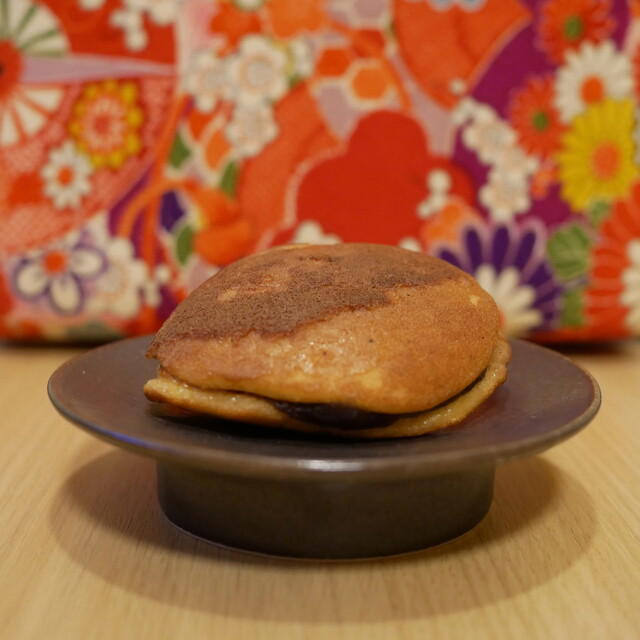
What to order
- Premium handcrafted warabi mochi
- Sake manju
Osaka has a different tempo from its neon dining corridors. The city’s smaller specialist shops are built for errands, office traffic, and everyday purchases, which is precisely the context in which wagashi makes sense. Japanese sweets are rarely about spectacle here; they are about timing, season, presentation, and the social grammar of bringing something precise to someone else’s table.
That makes Okashi Tsukasa Takaoka Fukunobu a useful marker of how Osaka’s confectionery reputation works. The shop was selected for the Tabelog 100 list for Japanese traditional sweets in 2023, a category that rewards a different skill set from restaurant tasting menus. In this field, recognition tends to follow consistency, local trust, and the ability to compress craft into a small purchase rather than a long meal.
Wagashi in Osaka is judged by restraint, not theatre
Osaka’s dining identity is often reduced to quick appetite and late-night energy, but the city also has a serious register of everyday craft. Wagashi sits in that register. It is tied to tea culture, seasonal gifting, office calls, family obligations, and the small courtesies that shape urban Japan. A good shop does not need a dining room to matter; the transaction can be brief, but the expectation is exacting.
The Tabelog 100 selection places Okashi Tsukasa Takaoka Fukunobu inside a regional field rather than a tourist checklist. West Japan’s wagashi culture includes formal traditions and Osaka’s commercial pragmatism. Osaka shops can feel less ceremonial than more famous sweet counters elsewhere, but that does not mean less disciplined. The difference is in use: sweets are bought, carried, shared, and folded into the day.
The format matters. This is best read as a specialist sweet shop rather than a conventional restaurant experience. That tells the reader a great deal about the visit. The point is not necessarily to linger over a plated dessert, but to buy with intention. For travellers accustomed to pastry shops that double as cafés, wagashi in this mode asks for a shift in behaviour: choose carefully, carry respectfully, and treat the sweets as part of a later moment rather than only an immediate snack.
Recognition here belongs to the craft category, not a chef narrative
Strongest signal is category recognition. Tabelog’s Hyakumeiten lists are not Michelin stars, and they should not be read as the same kind of award. Their value lies in mapping Japanese consensus around specific food genres. For wagashi, that genre lens is helpful because it avoids forcing a confectionery shop into the language of fine dining. The shop’s 2023 inclusion in the Japanese traditional sweets category places it among specialists judged against specialists.
That distinction matters in Osaka, where price and prestige do not always move together. A venue such as Grand rocher or a luxury tasting-menu address such as HAJIME operates in a different economy from a wagashi shop. Even within lower-priced specialist food, comparison is imperfect: Aozora blue and Boulangerie Takagi sit in different everyday-use patterns. Wagashi has its own codes, and the relevant question is not whether it behaves like a restaurant, but whether it earns trust within the confectionery tradition.
There is also a continuity signal attached to a shop like this: Osaka’s older commercial food culture has long supported businesses where reputation accumulates through recurrence. That should be treated as context rather than a substitute for criticism. The more useful point is that local trust matters. In such places, continuity is not decorative; it is part of why customers return when they need a formal sweet, a gift, or a seasonal box.
For a broader read on the city’s dining range, compare this style of purchase with other Osaka dining rooms, casual counters, bakeries, and specialist shops. The useful contrast is not cuisine alone, but rhythm: some Osaka food is eaten immediately, some is booked weeks ahead, and some is purchased as a social object.
How to read the experience before you go
The right expectation is a specialist sweet shop, not a dessert salon. That means the editorial value sits in selection, packaging, and context rather than table service. Travellers who build a day around restaurants may find this kind of stop modest in duration, but it can say more about Osaka’s everyday taste than another long meal. The city’s serious food culture is not confined to counters with reservations; it also lives in small shops that serve local rituals with little explanation.
The practical reading is simple: this is a focused stop for wagashi, particularly for visitors who understand Japanese sweets as gifts, tea accompaniments, or seasonal markers. It pairs naturally with an Osaka itinerary and works better as a planned purchase than an improvised café break. Service conventions can be traditional, so the smoother approach is to arrive prepared and keep the visit concise.
Readers mapping a fuller Osaka trip can place it within the city’s broader food and travel frame through Our full Osaka restaurants guide, Our full Osaka hotels guide, Our full Osaka bars guide, Our full Osaka wineries guide, and Our full Osaka experiences guide. For contrast beyond Osaka, the national and international spread can be understood generically through other dining in Japan and abroad, but Okashi Tsukasa Takaoka Fukunobu is best read through Osaka’s own specialist sweet-shop culture.
Frequently asked questions
What are the operating hours at Okashi Tsukasa Takaoka Fukunobu?
Current operating hours are not provided in the available venue details for Okashi Tsukasa Takaoka Fukunobu.
What price level is Okashi Tsukasa Takaoka Fukunobu?
Pricing at Okashi Tsukasa Takaoka Fukunobu is listed as JPY 1,000 - JPY 1,999 - JPY 999 View spending breakdown.
Where do I go for Okashi Tsukasa Takaoka Fukunobu?
Osaka.
What's the defining dish or idea at Okashi Tsukasa Takaoka Fukunobu?
The defining idea is wagashi, specifically Japanese traditional sweets from the Osaka shop. Its Tabelog 100 selection for 2023 in the Japanese traditional sweets category signals a specialist focus.
Cost Snapshot
Comparable venues at a glance for context.
| Venue | Cuisine | Price | Awards | Notes |
|---|---|---|---|---|
| Okashi Tsukasa Takaoka FukunobuThis venue (the venue you are viewing) | Traditional Japanese wagashi shop | $10–20 | Tabelog 100 #20 | Not listed |
| Madam Curry | Japanese Curry | Not listed | Tabelog 100 #86 | Chūō, Japanese Curry |
| Umeda Kamatake Udon | Osaka Sanuki Udon Shop | $10–20 | Tabelog 100 #89 | Kita, Osaka Sanuki Udon Shop |
| umugi Hankyu sanbangai ten | Japanese Udon | $1–10 | Tabelog 100 #98 | Kita, Japanese Udon |
| Horumon Gibier Myojo | Stand-up Japanese horumon & wild game bar | $20–30 | Tabelog 100 #91 | Chūō, Stand-up Japanese horumon & wild game bar |
| Yuiitsu Muni no Ramen Senmon Ten Ibukuro Washizukami | Specialty Ramen Shop | $10–20 | Tabelog 100 #61 | Tennōji, Specialty Ramen Shop |
Recognition history
Dated appearances from independent guides and award organizations, with the underlying list record or original source where available.
Tabelog 100 #20 · No. 20
Tabelog · Tabelog 100 - Japanese traditional sweets / Japanese sweets cafe - WEST - 2023
Continue exploring
More in Osaka
Restaurants in Osaka
All restaurants in Osaka →


Bars in Osaka
All bars in Osaka →


Hotels in Osaka
All hotels in Osaka →



Wineries in Osaka
Browse all →
Details
- Classic
- Quiet
- Well Known
- After Work
- Casual Hangout
- Solo
- Historic Building
- Standalone
- A La Carte
Current opening hours
- Monday
- 10 AM–7:30 PM
- Tuesday
- 10 AM–7:30 PM
- Wednesday
- 10 AM–7:30 PM
- Thursday
- 10 AM–7:30 PM
- Friday
- 10 AM–7:30 PM
- Saturday
- 10 AM–7:30 PM
- Sunday
- Closed
Hours can change for holidays and private events. Last verified .
A historic, traditional Japanese sweets shop set among office buildings near Yodoyabashi and Higobashi, non-smoking and geared to quick takeaway rather than eat-in, with a calm, understated atmosphere typical of classic wagashi boutiques.