
Tabelog 100 #80
Our verdict
Sanuki Tachigui Udon Kirin Ya Honmachi honten brings Sanuki-style standing udon into Osaka’s office-district rhythm, with counter seating, take-out, breakfast service, and a Tabelog Udon WEST 100 selection in 2024. Its appeal is not luxury dining but speed, discipline, and the kind of low-cost noodle craft that makes Kansai’s everyday food culture worth studying closely.

Pearl is the En Primeur Club membership app, where members save venues, book tables and use the concierge.
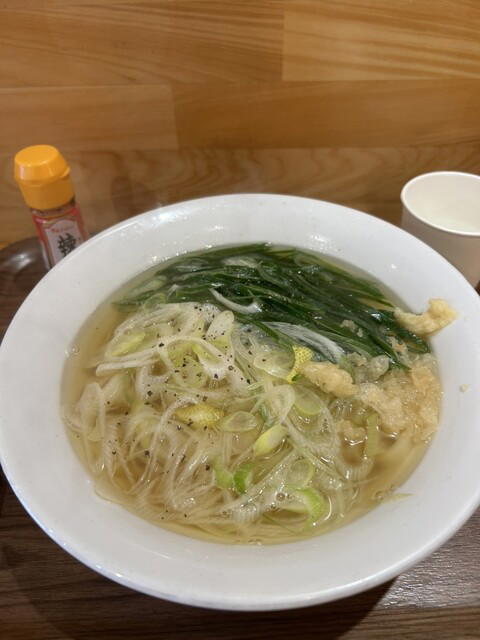
Osaka’s weekday food culture has its own tempo: people moving through the city, compact shopfronts doing high turnover, and counters built for customers who know what they want before they reach the door. In that setting, udon is not a stripped-down version of restaurant dining. It is a format with its own rules: short decision time, quick service, minimal ceremony, and a sharp test of whether the kitchen can make wheat noodles feel complete without the protective cover of a long menu or a designed room.
Sanuki Tachigui Udon Kirin Ya Honmachi honten belongs to that Osaka category, but with one important signal: recognition from Tabelog’s Hyakumeiten udon selection in 2024. For a noodle shop operating in the city’s everyday price tier, that recognition matters because udon in western Japan is a crowded field, not a niche. Osaka diners can be impatient judges of broth, texture, and throughput. A shop that survives on repetition has to make the handoff between kitchen, counter, and customer feel almost mechanical, without letting the food read as industrial.
Sanuki udon in Osaka, read through speed and restraint
Sanuki udon carries a different weight from Osaka’s broader noodle culture. The style is associated with wheat structure and a clean sense of chew; Osaka, by contrast, is often prized for the comfort and efficiency of everyday dining. The interesting tension at Kirin Ya is not a chef’s biography or a grand theory of regional cuisine. It is the way a compact counter format brings Sanuki discipline into a city where lunch is often measured in minutes.
The room’s working logic is the story. Its format points to a shop designed around flow rather than lingering. That puts pressure on the whole team dynamic. In a tasting-menu restaurant, collaboration can be staged across courses. Here it has to happen in the open rhythm of orders, noodles, broth, garnishes, payment, and exit. Front-of-house and kitchen are not separate theatrical zones; they are a shared production line, and the customer becomes part of the choreography by moving with it.
That is why the 2024 Tabelog Hyakumeiten udon recognition is more useful than a generic compliment. It places the shop in a regional noodle conversation where precision is judged at low cost and high frequency. A French room such as La Bécasse or a Spanish counterpoint like Asador ROCA can justify attention through pacing, wine, and the full architecture of service. Udon has fewer tools. The format has to make its case through speed, repetition, and a bowl that does not need a lecture.
The counter format is the point, not a compromise
Osaka’s serious eating is often misunderstood by visitors who arrive looking only for night markets, takoyaki, and neon. The city’s deeper food intelligence also lives in quick counters, station-adjacent noodle shops, department-store basements, and lunch rooms that feed people who return every week. Kirin Ya fits that second Osaka: functional, unsentimental, and better understood as infrastructure than occasion.
The udon format also changes how quality is perceived. There is little space for distraction. No extended beverage program, no long pause between courses, no server narrative to frame the food. The customer reads competence through small operational cues: how quickly the line moves, whether the counter feels controlled, how the kitchen keeps noodles and broth aligned under pressure. None of those details require luxury, but they do require a team that behaves as one unit.
That matters in Osaka, where some dining serves the working day rather than the evening out. Around Osaka, premium restaurants compete for planned itineraries; everyday noodle shops compete for repeat behavior. The former wins by making a meal feel rare. The latter wins when it becomes reliable enough to enter someone’s routine. Kirin Ya’s recognition suggests that the routine has editorial weight.
Travelers building a wider Osaka eating map should not treat this kind of shop as filler between reservations. It gives context to the city’s more formal restaurants, because it shows what Osaka demands from food when time and price are compressed. For broader planning, Our full Osaka restaurants guide is the natural anchor, while Our full Osaka hotels guide, Our full Osaka bars guide, Our full Osaka wineries guide, and Our full Osaka experiences guide help place the meal inside a fuller city itinerary.
How it fits a sharper Osaka food itinerary
The better Osaka itinerary balances formats instead of chasing only status dining. A quick udon stop can sit beside bakeries, casual counters, and more formal rooms because it answers a different question: how does the city eat when nobody is performing hospitality for a special occasion? Other casual Osaka dining shows how varied the city’s everyday-to-planned dining spectrum can be.
Within Japan, the comparison becomes even more revealing when set against other single-purpose or tightly focused venues. A traveler looking across regional food formats might connect the logic here with other compact counters, noodle shops, and casual dining rooms around Japan. Outside Japan, unnamed Japanese-inspired bars and quick-service formats underline the same point from abroad: Japanese food culture often travels through compact formats before it travels through luxury.
The editorial case for Sanuki Tachigui Udon Kirin Ya Honmachi honten is therefore clear. It is a small-format Osaka noodle counter with recognized standing in western Japan’s udon field, operating in the low-cost, high-frequency register where flaws are hard to hide. For travelers who care about how a city actually eats, that is a more useful lesson than another polished dinner room.
Nearby-ish Comparables
Comparable options at the same price tier.
| Venue | Cuisine | Price | Awards | Notes |
|---|---|---|---|---|
| Sanuki Tachigui Udon Kirin Ya Honmachi hontenThis venue (the venue you are viewing) | Standing Sanuki Udon | $1–10 | Tabelog 100 #80 | Not listed |
| La Bécasse | Modern French Omakase | $200–300 | 1 Michelin Star · Les Grandes Tables du Monde Member | French |
| Asador ROCA | Spanish-Japanese Fusion Asador | $100–150 | Michelin Plate · Tabelog 100 #55 | Spanish |
| Yoshino Sushi | Traditional Osaka Hakozushi | $10–20 | Not listed | Not listed |
Recognition history
Dated appearances from independent guides and award organizations, with the underlying list record or original source where available.
Tabelog 100 #80 · No. 80
Tabelog · Tabelog 100 - Udon - WEST - 2024
Continue exploring
More in Osaka
Restaurants in Osaka
All restaurants in Osaka →




Bars in Osaka
All bars in Osaka →




Hotels in Osaka
All hotels in Osaka →




Wineries in Osaka
Browse all →
Details
- Lively
- Casual
- Solo
- Family
- After Work
- Casual Hangout
- Standalone
- A La Carte
- Counter Dining
Bright, efficient standing-only counter with a casual, bustling atmosphere focused on quick solo and family meals rather than lingered dining.