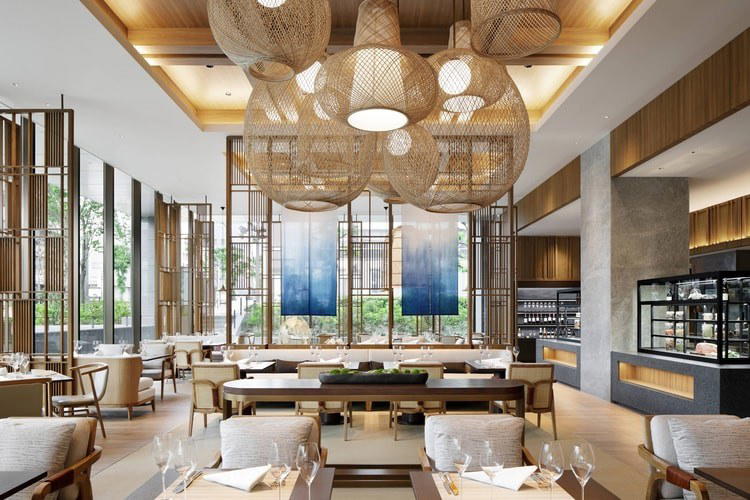
Tabelog 100 #76
Our verdict
Ghar sits in Osaka’s Kyomachibori curry circuit, a small-format lunch address with 14 seats, counter seating, and repeated selection for Tabelog Curry WEST “Tabelog 100,” including 2024. Its relevance is cultural as much as practical: Osaka’s curry scene rewards independent, tightly focused rooms where Indian curry, Japanese curry habits, and weekday lunch rhythms overlap.

Pearl is the En Primeur Club membership app — saves, bookings, and concierge access live there. Same editors, same standards.
- Address
- 1 Chome-9-10 Kyomachibori, Nishi Ward, Osaka, 550-0003, Japan
- Phone
- +81 6-6443-6295
- Hours
- Daily 11:30 AM–2:30 PM
- Website
- ghar-curry.com
- Directions
- Get directions
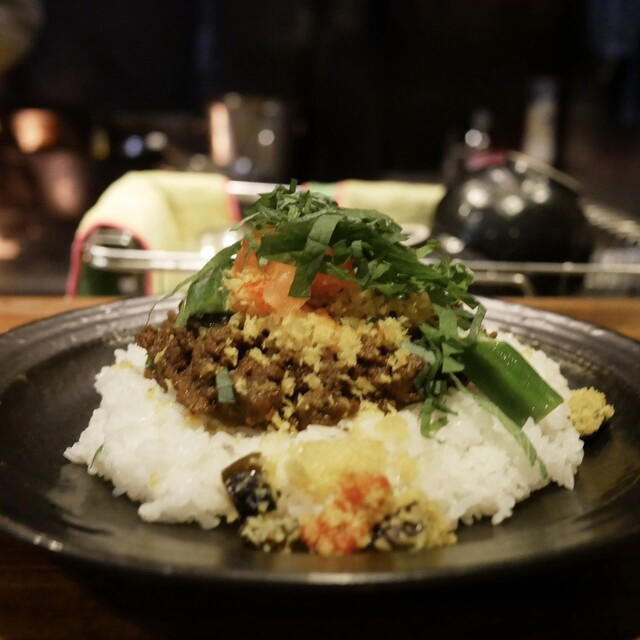
The menu
What to order
- Pork curry
- Stewed beef curry
- Veggie lamb keema
- Monthly special curries
Osaka’s curry rooms often announce themselves quietly: modest frontage, focused service, diners moving with purpose, and compact choreography. Ghar fits that Osaka category without needing hotel-restaurant polish or chain-canteen scale. It is a focused curry room in Osaka, and that scale of ambition matters. In Osaka, curry is often sharpest when regulars know the rhythm and visitors arrive with clear expectations.
The city’s curry culture is broader than “Japanese curry” suggests. Osaka supports old-school yoshoku-style curry, spice curry, Indian curry, and hybrid shops that borrow freely. Ghar’s categories, curry, Indian, and Indian curry, place it in the middle lane where spice structure matters but the format stays quick, affordable, and urban. Its 2024 recognition through Tabelog Hyakumeiten, with a listed score of 3.94 and a price band of - JPY 999, gives it a clear trust signal in a field where local loyalty can be hard to read from outside Japan.
Osaka curry culture, compressed into a focused room
Osaka is often framed by takoyaki, okonomiyaki, and kushikatsu, but curry tells another city story: working-day speed, spice experimentation, and value discipline. A serious curry address here does not need ceremony. It needs a focused identity, a room that can handle regular demand, and enough character to be remembered after the meal. Ghar’s compact, curry-led format fits that culture. The experience is less about lingering than catching a precise urban meal at the right moment.
That separates Ghar from broader Osaka dining categories. Burgerlion and Akira Curry sit in the wider casual Osaka conversation, while STEAK HOUSE NARIKIYO occupies a more substantial dining lane. Sushi Kyomachibori Sato and Nishino represent formal Japanese dining, where reservations, course pacing, and craft codes can shape the meal. Ghar sits at the opposite end: a curry-focused address whose credibility comes from repetition, recognition, and local utility rather than grand-room signals.
The Osaka location matters. The city has enough daily movement to support focused dining, yet enough local depth to keep a regular cadence. The point is function, not secrecy. Osaka’s better casual rooms survive by solving a narrow problem consistently. Here, the problem is clear: curry with enough specificity to matter, served in a format where timing becomes part of the meal.
Indian curry through an Osaka lens
Indian curry in Japan rarely functions as a direct transplant. It is filtered through local expectations about rice, speed, portioning, and value. In Osaka, that filter is especially practical. The city likes intensity but rewards economy: a meal must justify the detour without becoming precious. Ghar’s category language points to Indian curry rather than generic Japanese curry, while the format remains Osaka in its discipline: compact, direct, and built for regular use.
The 2024 Tabelog Hyakumeiten recognition is useful because curry is crowded and fragmented. Michelin-style signals do not map cleanly onto everyday curry shops, and luxury markers can miss the places locals return to. A published score of 3.94 and a price band of - JPY 999 position Ghar as a trusted, accessible curry specialist rather than a general casual dining room.
Travelers building a wider Osaka food route should treat Ghar as one piece of the city’s casual-depth argument, not a standalone trophy. Across Osaka, that argument can run through many unnamed formats: bakeries, quick counter meals, coffee stops, specialist kitchens, and more formal dining rooms. The shared lesson is that Osaka’s range is not only spectacle; it is narrow formats executed with confidence.
How to place it in a serious Osaka itinerary
Ghar works better as a planned curry stop than a casual afterthought. The format is focused, the price band is modest, and the appeal depends on arriving with the right expectations rather than asking it to perform like a formal restaurant. These details are not inconveniences so much as signals of scale: Ghar belongs to the practical Osaka register where value, speed, and flavor carry more weight than ceremony.
For a broader city plan, use Our full Osaka restaurants guide to map curry, sushi, bakeries, casual counters, and formal Japanese dining in one sequence. Visitors pairing food with lodging, drinking, production visits, or cultural programming can also cross-reference Our full Osaka hotels guide, Our full Osaka bars guide, Our full Osaka wineries guide, and Our full Osaka experiences guide. Osaka’s advantage is density: a curry meal can sit beside coffee, a bakery stop, and a serious dinner without turning the day into transit logistics.
Japan’s broader casual-dining map adds texture. Across the country, regional curry identities and compact dining formats show how focused food cultures can develop in different cities. Beyond curry, the same discipline appears in unnamed counters, small dining rooms, and specialist kitchens that make a narrow promise and repeat it carefully. Even overseas Japanese-inspired formats prove the same point: focused food cultures travel well when the format is disciplined.
The editorial read is simple. Ghar is not a luxury restaurant disguised as a curry shop, and judging it by luxury markers misses the point. Its value lies in Osaka curry culture: a tight service rhythm, Tabelog Hyakumeiten recognition in 2024, and a price category that keeps the meal grounded. In a city that often rewards appetite over formality, that is exactly the register to understand.
Frequently asked questions
Where is Ghar in Osaka?
Osaka.
Is Ghar expensive?
Pricing at Ghar is listed as - JPY 999.
What days is Ghar closed?
Specific closing days are not provided in the available venue information.
What is Ghar known for?
Ghar is known for curry, Indian, and Indian curry in Osaka, with 2024 Tabelog Hyakumeiten recognition.
Cuisine and Credentials
Comparable venues for cuisine and category context.
| Venue | Cuisine | Price | Awards | Notes |
|---|---|---|---|---|
| GharThis venue — the venue you are viewing | Japanese curry house | $10–20 | Tabelog 100 #76 | Not listed |
| Human beings everybody noodles (人類みな麺類) | Traditional Shoyu Ramen | $1–10 | Tabelog 100 #65 | Nishinakajima, Yodogawa-ku |
| Ikareta Noodle Fish Tons | Japanese Ramen & Tsukemen | $1–10 | Tabelog 100 #14 | Nishi |
| Curry Ya Dekkao | Sri Lankan-style Curry Shop | $10–20 | Tabelog 100 #45 | Chūō |
| Kokoro ni Amai Anpanya Umeda ten | Japanese Anpan Bakery | $1–10 | Tabelog 100 #67 | Kita |
| KUCHE | Modern KURO-style ramen & tsukemen | $10–20 | Tabelog 100 #88 | Higashiyodogawa |
Recognition history
Dated appearances from independent guides and award organizations, with the underlying list record or original source where available.
Tabelog 100 #76 · No. 76
Tabelog · Tabelog 100 - Curry - WEST - 2024