Our verdict
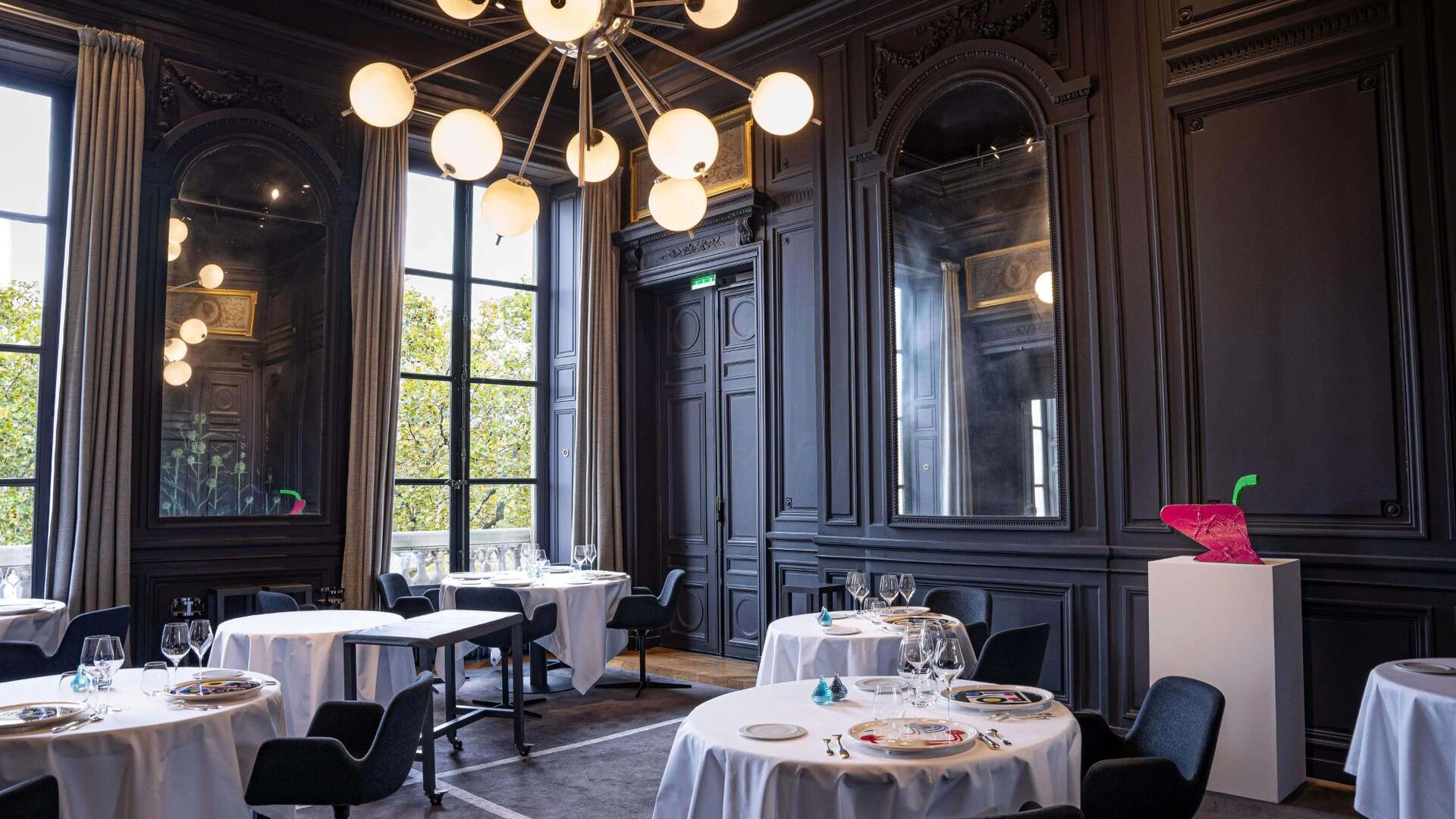
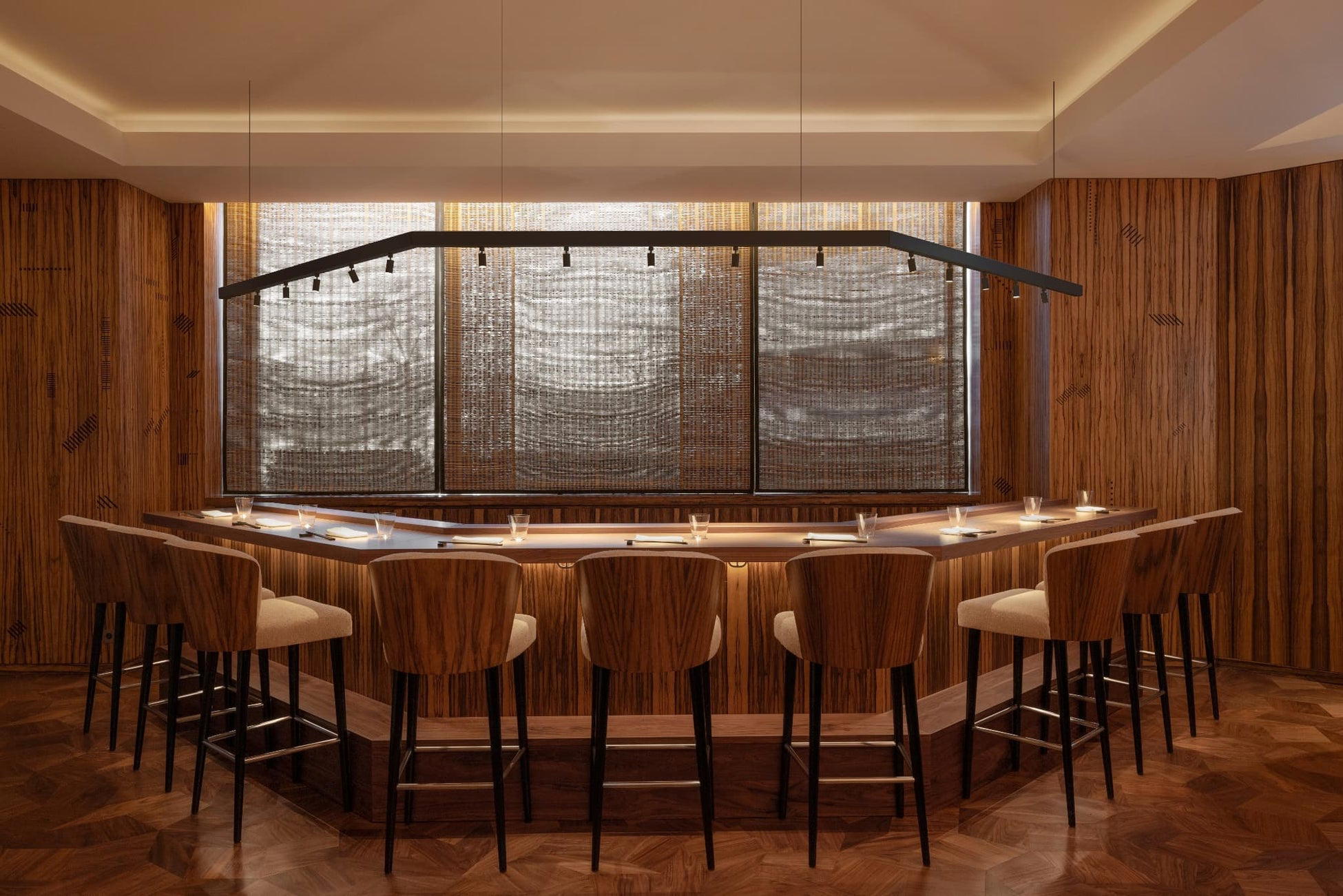
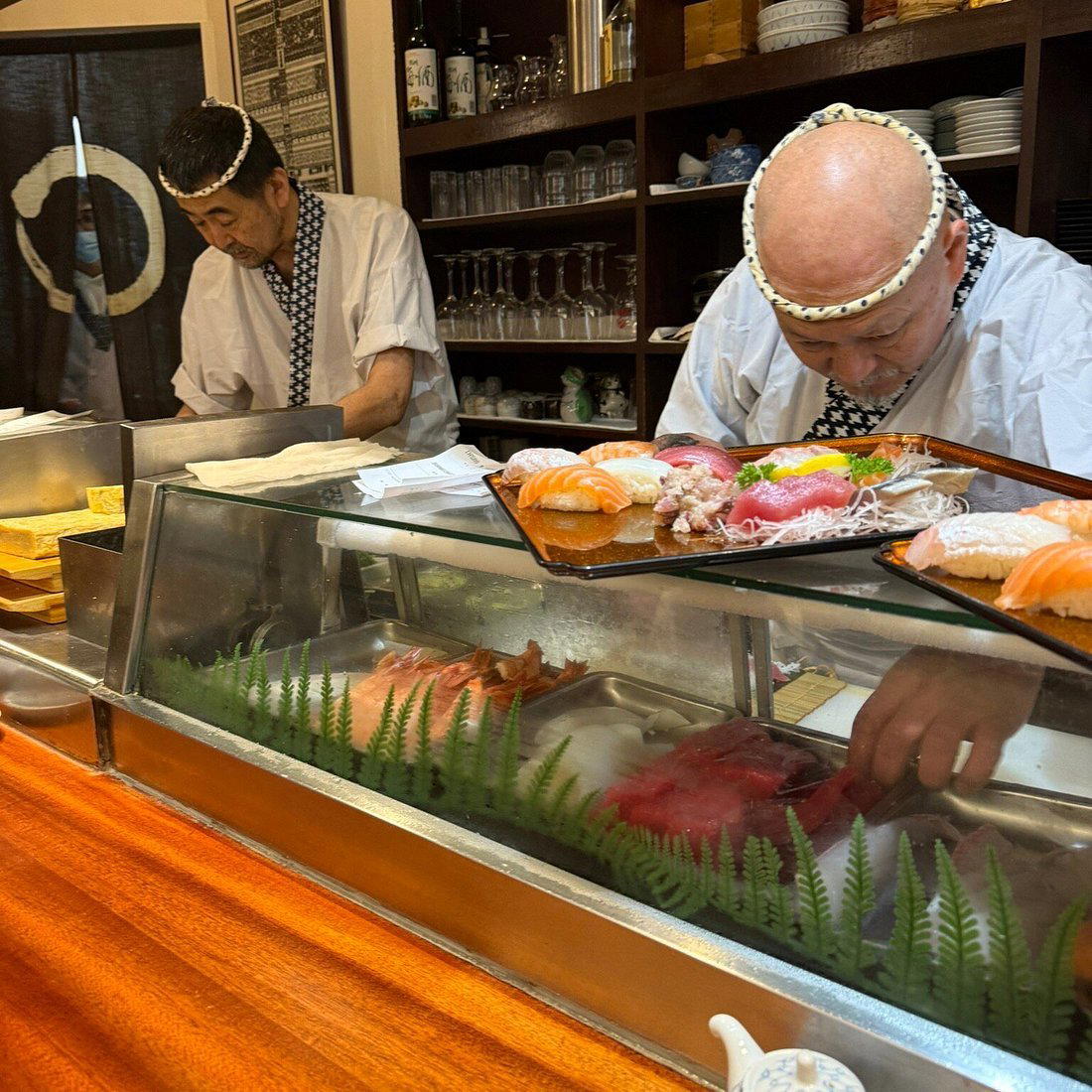
On the Left Bank's Rue des Ciseaux, Tsukizi occupies a quiet address in Saint-Germain-des-Prés that Paris's dining scene has used for thoughtful, counter-format restaurants for decades. Positioned apart from the grand-room French institutions at €€€€ in the 6th arrondissement, it draws the attention of those tracking where precise, course-by-course dining is heading in the capital.

Pearl is the En Primeur Club membership app, where members save venues, book tables and use the concierge.
Where Saint-Germain Meets the Counter Format
The 6th arrondissement has long functioned as a laboratory for dining formats that resist the grand-room tradition. While three-Michelin-star institutions like L'Ambroisie and Le Cinq anchor the city's formal French canon, a quieter tier of restaurants has taken root in the narrow streets between Boulevard Saint-Germain and the Seine, where smaller dining rooms and more compressed menus have created a different kind of precision. Rue des Ciseaux, where Tsukizi sits at number 2 Bis, belongs to that quieter geography.
The address itself carries some editorial weight. Saint-Germain-des-Prés has accumulated enough dining history that a new entrant is immediately placed in context by its neighbours, its room size, and the format it chooses. Counter-forward and course-driven restaurants in this part of Paris tend to draw a crowd that has already worked through the grander rooms and is looking for something with less ceremony around the experience and more concentration inside it.
The Architecture of the Meal
Paris's high-end dining in the past decade has split along a clear line: rooms that stage a complete theatrical occasion, and those that put the sequencing of the food itself at the centre of the evening. Tsukizi sits in the second category, where the progression through courses carries the narrative weight rather than the décor or the service ritual. This approach has become one of the defining formats of contemporary left-bank dining, influenced partly by the way Japanese counter culture and French technique have increasingly informed each other in the capital.
That cross-influence is worth tracing in broader context. Kei in the 1st arrondissement established one model for how Japanese training and French classical technique could be synthesised at the top of the market; its Michelin recognition confirmed there was a critical appetite for that synthesis. The question subsequent addresses in Paris have faced is where to position along the spectrum between full French classicism and something more restrained and ingredient-focused. The restaurants that have made the most coherent choices are those that commit to a tasting progression with an internal logic, rather than assembling courses that could sit in any order.
At Tsukizi, the address and format signal that the meal is structured around that kind of internal logic. That positioning is a choice about what kind of experience the kitchen wants to deliver.
Course Sequencing as the Critical Lens
The most useful way to assess a tasting-format restaurant is not dish by dish but as a progression: does each course create the conditions for the next one? The leading examples of this format in France, from Bras in Laguiole to Mirazur in Menton, demonstrate that a compelling multi-course sequence has its own arc. Lighter, more acidic dishes open the palate; middle courses build in density and complexity; closing savoury courses and the transition to sweet carry a resolution that feels earned rather than arbitrary.
This is the standard against which Tsukizi, as a tasting-format address in the 6th, would be measured by anyone who has eaten across France's serious restaurant tier. The broader French tradition of sequenced dining, refined over generations at houses like Troisgros in Ouches, Auberge de l'Ill, and Paul Bocuse, has created a deep grammar for how a meal should move. The restaurants that interest critics now are those that have absorbed that grammar and found something specific to say within it, rather than simply replicating its surface forms.
Paris also increasingly looks outward for reference points. The way Atomix in New York has fused Korean culinary logic with Western fine-dining structure, or how AM par Alexandre Mazzia in Marseille has compressed a full tasting experience into an intensely personal sequence, shows that the definition of what a multi-course progression can do is being renegotiated at multiple addresses simultaneously. Tsukizi enters that conversation from the 6th arrondissement.
Placement in Paris's Current Fine-Dining Tier
The Michelin-starred tier in Paris currently ranges from long-established institutions with decades of critical recognition, like Assiette Champenoise or Auberge du Vieux Puits in the wider French context, to newer addresses still accumulating their critical record. The latter category is where most of the interesting positioning decisions are made. A smaller room in Saint-Germain that commits to a defined progression, rather than trying to compete with the grand-room formality of a hotel dining room or the celebrity pull of a chef-driven destination, is making a deliberate argument about what fine dining should feel like in 2024 and 2025.
That argument connects to a pattern visible across French cities. Au Crocodile in Strasbourg and Flocons de Sel in Megève show that serious French cooking is no longer confined to Paris's grands boulevards; the critical weight has dispersed, and Paris addresses now have to argue their case more specifically. The 6th arrondissement remains a credible address for this argument, but the argument has to be made through the food.
For those tracking where Paris's serious dining is moving, our full Paris restaurants guide maps the current tier structure across all arrondissements. Le Bernardin in New York provides a useful international comparison point for how a focused, course-driven format sustains critical recognition across decades.
Planning Your Visit
Address: 2 Bis Rue des Ciseaux, 75006 Paris. Arrondissement: Saint-Germain-des-Prés, 6th. Nearest Metro: Saint-Germain-des-Prés (Line 4) or Mabillon (Line 10), both within a short walk. Dress: Smart casual is standard for left-bank tasting rooms of this type; formal attire is not required but the format favours considered dress. Budget:
Frequently asked questions
How do I find Tsukizi?
Tsukizi is located at 2 Bis Rue des Ciseaux, 75006 Paris, France, Paris.
Is Tsukizi in Paris a Japanese-influenced counter restaurant in the 6th arrondissement?
The name Tsukizi and the counter-format structure documented at 2 Bis Rue des Ciseaux, 75006 Paris suggest a Japanese-inflected approach to progressive dining, though cuisine type is not formally confirmed in EP Club's record. The 6th arrondissement has become a consistent address for formats that import counter discipline into a French dining context. Confirming the full culinary orientation directly with the venue before booking is advisable.
What's the signature dish at Tsukizi?
Tsukizi operates a counter-format tasting structure in which the sequence itself is the statement rather than any single dish. Visiting without expectations about a headline plate is the more accurate frame for this format, located at 2 Bis Rue des Ciseaux in the 6th arrondissement, the meal is built around progression rather than a single centrepiece. Check the venue's official channels for the latest details.
How far ahead should I plan for Tsukizi?
Counter-format restaurants in Paris's 6th arrondissement typically carry lead times of four to eight weeks for prime sittings, and venues of Tsukizi's footprint often run tighter than that. Booking as early as possible is advisable.
What do critics highlight about Tsukizi?
What the Saint-Germain counter format attracts attention for, broadly, is the precision of sequencing over room theatrics, a distinction that separates it from the grand-room tradition dominant in Paris's more established institutions. EP Club will update this entry as critical documentation becomes available.
Do they accommodate allergies at Tsukizi?
Counter-format tasting menus in Paris generally require advance notice of dietary restrictions at the time of booking, last-minute requests are rarely workable given the structured progression of courses.
At a Glance
Comparable venues nearby, for context on price, style, and recognition.
| Venue | Cuisine | Price | Notes |
|---|---|---|---|
| TsukiziThis venue (the venue you are viewing) | Authentic Japanese Sushi | $30–50 | Not listed |
| Takara | Traditional Japanese | $50–100 | Louvre / Palais-Royal, Traditional Japanese |
| Kinugawa | Contemporary Japanese | $50–100 | 7th arrondissement, Contemporary Japanese |
| Iza by Kura | Japanese Izakaya | $20–30 | Passy, Japanese Izakaya |
| Ojii | Modern Japanese Fine Dining | $50–100 | Saint-Germain-des-Prés, Modern Japanese Fine Dining |
| L'IZAKAYA DASSAI par Yannick Alléno | Modern Japanese Izakaya | $50–100 | Beaupassage, Modern Japanese Izakaya |