Our verdict
Takara at 14 Rue Molière occupies one of Paris's most quietly competitive dining corridors, a short walk from the Palais-Royal gardens where Franco-Japanese cuisine has quietly matured into a serious category. Positioned among Paris's upper-tier destination restaurants, it draws comparisons with Kei and other addresses where classical French technique meets East Asian precision. Book well in advance.

Pearl is the En Primeur Club membership app — saves, bookings, and concierge access live there. Same editors, same standards.
- Address
- 14 Rue Molière, 75001 Paris, France
- Phone
- +33142960838
- Hours
- Mon 12–2 PMTue–Fri 12–2 PM, 6:30–9:30 PMSat–Sun 6:30–9:30 PM
- Website
- takara-paris.com
- Directions
- Get directions
- Booking
- Book on Zenchef
Franco-Japanese Dining in the 1st Arrondissement: A Category in Transition
The stretch of the 1st arrondissement around Rue Molière and the Palais-Royal has become one of Paris's more quietly serious dining corridors. It is close enough to the grand classical houses — L'Ambroisie anchors the 4th, while Alléno Paris au Pavillon Ledoyen commands the 8th — to share the same committed-diner audience, yet removed enough from the grand boulevard hotel circuit to attract guests who are specifically seeking it out. Takara, at 14 Rue Molière, sits inside this geography, and its address alone signals something about its intended peer group.
Franco-Japanese dining in Paris has evolved considerably over the past two decades. What began as a novelty pairing, French classical structure grafted onto Japanese ingredient sensibility, has matured into a recognized category with its own competitive hierarchy. Kei, the first Japanese chef to receive three Michelin stars in France, represents the category's most decorated upper tier. Below that, a cluster of addresses in the central arrondissements operate with similar ambitions: rigorous sourcing, restrained presentation, and menus that treat Japanese and French traditions as genuinely equal contributors rather than one decorating the other. Takara has long occupied a place in that cluster.
How the Address Has Shaped the Experience
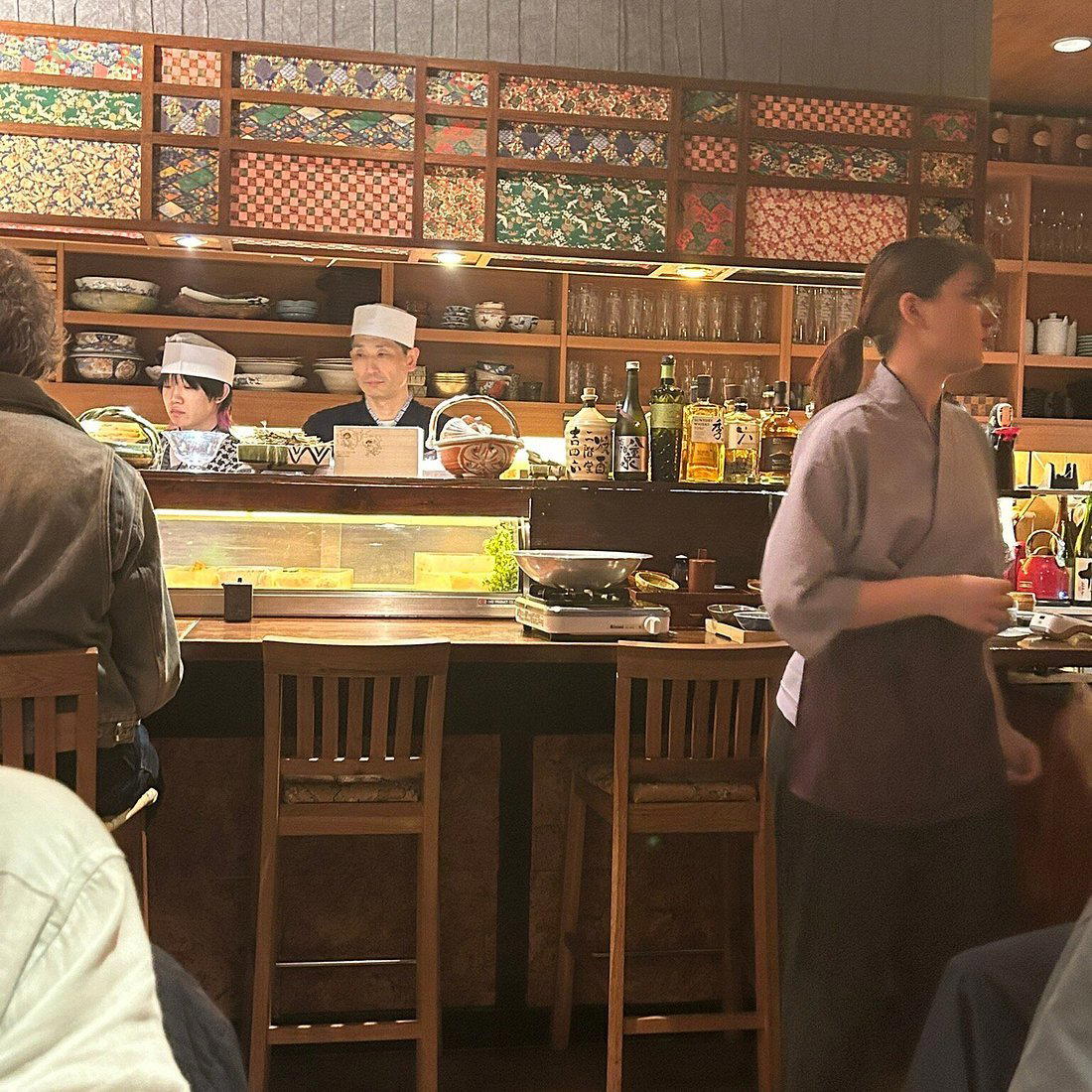
Rue Molière is a short, relatively quiet street by central Paris standards. The theatre of the Comédie-Française is nearby; the Palais-Royal gardens are accessible on foot. This is not a neighbourhood that generates casual foot traffic at the level of the Marais or Saint-Germain, which means the dining rooms in this pocket tend to attract intentional visitors rather than tourists making a spontaneous choice. The atmosphere that results, focused, unhurried, without the performative energy of destination rooms in more visible locations, reflects the neighbourhood's character as much as any deliberate design decision.
Across the wider Paris fine dining category, the past decade has seen a significant divergence between addresses that compete primarily on spectacle and those that compete on precision and restraint. The spectacular tier, heavily decorated rooms, theatrical service, tasting menus designed to photograph, is well represented at places like Le Cinq at the Four Seasons Hôtel George V. Takara belongs to a different mode: smaller in scale, quieter in register, and reliant on what arrives on the plate rather than what surrounds it.
The Evolution of a Paris Institution
Takara's significance in the Paris Franco-Japanese category is in part a function of longevity. Japanese cuisine in Paris has gone through several distinct phases: the post-war novelty period, the 1980s boom driven by business travel and Japanese corporate presence in the city, and the subsequent consolidation into a smaller number of serious destination addresses. Restaurants that survived those transitions typically did so by adapting, shifting from a generalist Japanese offer to a more focused Franco-Japanese register, adjusting price points, and updating their kitchen approach to remain relevant as younger competitors entered the market.
That pattern of reinvention is visible across French fine dining more broadly. The provincial houses that have sustained relevance across generations, Troisgros in Ouches, Auberge de l'Ill in Illhaeusern, Bras in Laguiole, have each navigated generational transitions by finding ways to preserve institutional identity while refreshing creative direction. Paris addresses face a more compressed version of the same pressure, with competition arriving faster and the critical gaze more constant. An address like Takara, with its history in the Franco-Japanese category, carries the weight of that history into every service.
The current direction at addresses in this tier tends toward tighter menus, shorter seasonal rotations, and a more explicit articulation of where the Japanese and French elements meet rather than simply coexisting. Compared to the maximalism that characterized high-end Franco-Japanese dining in the 1990s, the contemporary approach is considerably more edited. That shift aligns with broader movements in French fine dining, where Arpège's vegetable-forward discipline and Mirazur's garden-to-table focus have reframed what ambition looks like at the top of the market.
Placing Takara in the French Restaurant Context
France's restaurant culture supports a wide range of serious addresses beyond Paris. Flocons de Sel in Megève, Assiette Champenoise in Reims, Au Crocodile in Strasbourg, and Auberge du Vieux Puits in Fontjoncouse each represent a regionalism that the Paris fine dining scene does not offer. For a diner building a France itinerary around serious food, these addresses compete with Paris for attention. Within Paris itself, AM par Alexandre Mazzia's Mediterranean intensity (based in Marseille, not Paris) represents a reminder that the capital does not hold a monopoly on creative ambition. And for international reference points, the Franco-Japanese fusion conversation is not exclusively Parisian: Le Bernardin in New York has long shown how French classical training can accommodate non-French ingredient traditions, while Atomix in New York demonstrates a different model of Asian-European creative fusion at the highest level. Against those comparisons, Takara occupies a specific and historically grounded position in the Paris version of this conversation.
The legacy of the grandes maisons also informs Takara's context. Paul Bocuse's Auberge du Pont de Collonges represents the French fine dining institution at its most monumental, a house that became a reference point for what French classical cooking could mean. Takara operates in a very different register, but the seriousness with which French dining culture treats institution and lineage applies here too. An address that has sustained itself through multiple decades in one of Paris's most competitive markets earns its credentials through persistence as much as accolade.
For a fuller map of where Paris dining sits across categories and price tiers, the EP Club Paris restaurants guide covers the spectrum from neighbourhood bistro to grand destination address.
Planning Your Visit
Address: 14 Rue Molière, 75001 Paris, France. The restaurant is in the 1st arrondissement, within walking distance of the Palais-Royal-Musée du Louvre metro station (lines 1 and 7). Reservations: Book ahead; Franco-Japanese addresses at this level in central Paris typically fill two to four weeks out, with weekend covers going faster. Dress: Smart casual is appropriate for the neighbourhood and format; the room is unlikely to enforce a strict code but the diner demographic skews formal. Budget: Timing: Midweek lunch services at Paris addresses in this category tend to be quieter and can offer a more considered pace than Friday or Saturday dinner.
Frequently asked questions
What should I expect atmosphere-wise at Takara?
The Rue Molière address draws a deliberate crowd rather than passing foot traffic, which sets the tone. The surrounding pocket of the 1st arrondissement, between the Comédie-Française and the Palais-Royal gardens, attracts guests who have chosen to be there specifically. Expect a composed, relatively quiet room rather than a high-energy scene.
What's Takara's location?
Takara is located at 14 Rue Molière, 75001 Paris, France, Paris.
Is Takara Paris suitable for a business dinner or formal occasion?
The 1st arrondissement location, close to the Palais-Royal, positions Takara within a corridor of Paris dining rooms that attract a professional and culturally engaged clientele. Franco-Japanese kitchens at this address level tend toward composed, structured formats that suit formal occasions without requiring the theatrical production of a larger tasting-menu operation. Contacting the restaurant directly confirms current seating arrangements and any private dining options.
What's the signature dish at Takara?
Franco-Japanese menus at this level shift with the season, so no single dish defines the experience permanently. What anchors addresses in this category is the discipline of the technique: French culinary structure applied to Japanese product sensibility. Confirming current menu specifics directly with the restaurant before visiting is the reliable approach.
How hard is it to get a table at Takara?
Franco-Japanese destination addresses in central Paris arrondissements run on limited covers and an audience that plans ahead. Takara's longevity at 14 Rue Molière means it carries an established following in Paris's 1st arrondissement. Booking in advance rather than walking in is the standard approach for this category.
Recognition Snapshot
Comparable venues nearby, for context on price, style, and recognition.
| Venue | Cuisine | Price | Notes |
|---|---|---|---|
| TakaraThis venue — the venue you are viewing | Traditional Japanese | $50–100 | Not listed |
| Yatai Ramen Montparnasse | Japanese Ramen with French Fusion | $20–30 | Montparnasse |
| NOBISAN - Marais | Modern Japanese Temaki Bar | $30–50 | Le Marais |
| Onii-San - Izakaya | Modern Japanese Izakaya | $30–50 | Marais |
| Udon Jubey | Authentic Japanese Udon | $20–30 | Louvre / Palais-Royal |
| RAMEN WANG | Japanese-Chinese Fusion Ramen | $20–30 | 14th arrondissement |
Continue exploring
More in Paris
Restaurants in Paris
Browse all →
Bars in Paris
Browse all →
Hotels in Paris
Browse all →
Details
- Classic
- Intimate
- Cozy
- Elegant
- Date Night
- Business Dinner
- Special Occasion
- Historic Building
- Sake Program
- A La Carte
- Set Menu
- Vegetarian Friendly
- Vegan Options
- Gluten Free Options
Current opening hours
- Monday
- 12–2 PM
- Tuesday
- 12–2 PM, 6:30–9:30 PM
- Wednesday
- 12–2 PM, 6:30–9:30 PM
- Thursday
- 12–2 PM, 6:30–9:30 PM
- Friday
- 12–2 PM, 6:30–9:30 PM
- Saturday
- 6:30–9:30 PM
- Sunday
- 6:30–9:30 PM
Hours can change for holidays and private events. Last verified .
Sober, warm, and Japanesque with intimate wooden interiors, origami walls, and a calm, timeless atmosphere evoking a quiet trip to Tokyo.