Trippy Açaiteria Novo Hamburgo
Our verdict
Trippy Açaiteria sits on Rua Bento Gonçalves in the Centro district of Novo Hamburgo, Rio Grande do Sul, serving açaí in a city better known for its leather and footwear industries than its Amazonian food culture. The address places it squarely in the commercial heart of one of southern Brazil's most industrially distinct mid-size cities, where açaíteria culture has taken firm root as an everyday ritual rather than a health trend.

Pearl is the En Primeur Club membership app, where members save venues, book tables and use the concierge.
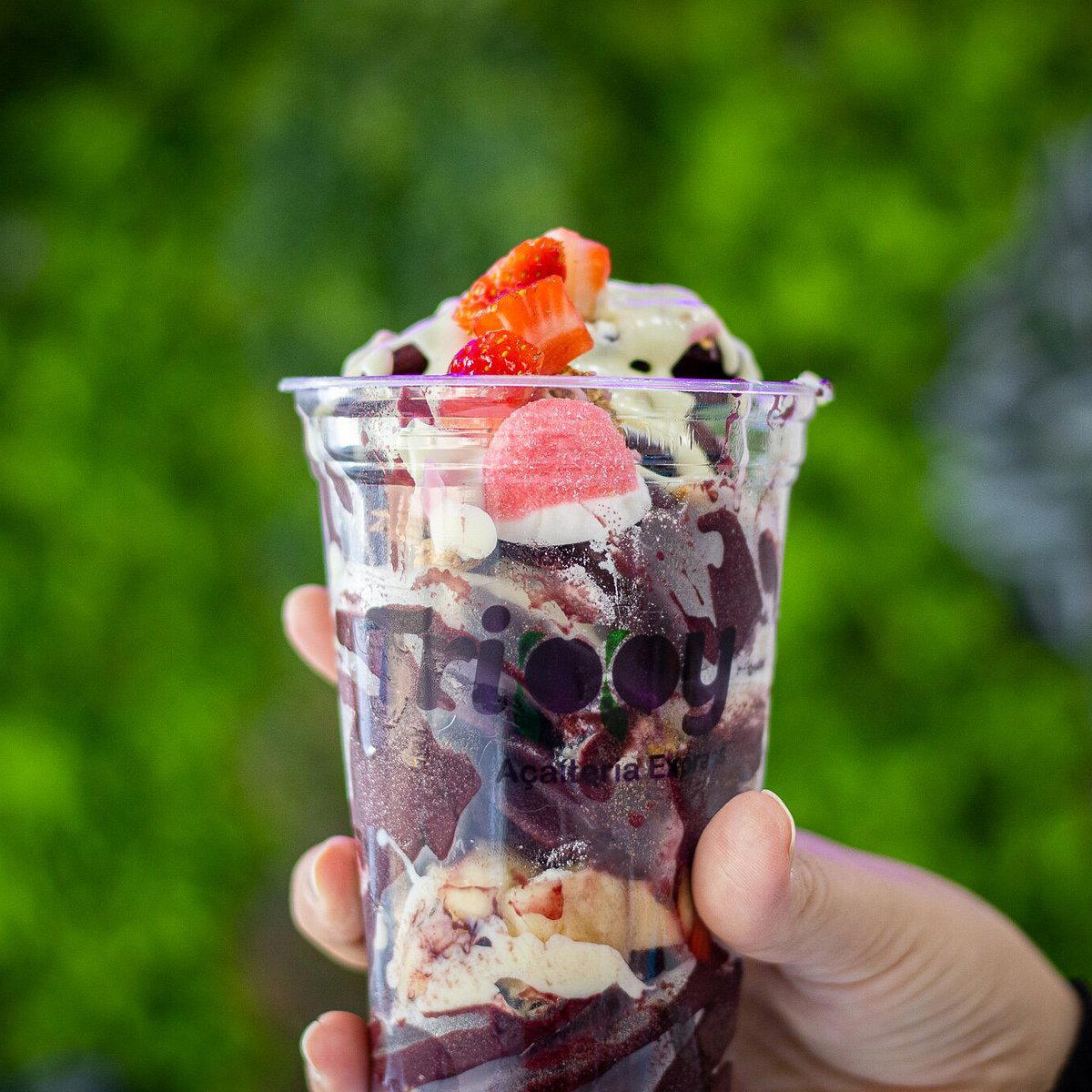
Açaí in the South: What It Means to Serve Amazonian Culture in Rio Grande do Sul
Brazil's açaí culture did not originate in the south. The purple berry comes from the Amazon basin, a product of Amazonian indigenous knowledge and the riverine economies of Pará and Amazonas. What happened next is one of the more interesting food-migration stories in modern Brazilian dining: açaí moved south, was reconfigured by paulistano and carioca health culture, and eventually arrived in cities like Novo Hamburgo as something simultaneously exotic and completely ordinary. Today, açaíterias operate in the same commercial tier as padarias and lanchonetes across Rio Grande do Sul, not as novelty concepts but as fixtures of the everyday food scene. Trippy Açaiteria, at R. Bento Gonçalves, 2164, in the Centro district, sits inside that normalisation, serving a product whose cultural roots sit several thousand kilometres north while its immediate context is one of Brazil's most distinctly European-inflected southern cities.
Novo Hamburgo's food identity is worth pausing on. The city was built by German immigrants and their descendants, and the gastronomic vocabulary of the broader Sinos Valley region still runs toward churrasco, café colonial, and German-Brazilian home cooking. Against that backdrop, the presence of a dense açaíteria market in the city centre represents a genuinely interesting cultural layering: Amazonian berry culture absorbed into a southern city with deep European settler roots. It is the kind of detail that places like D.O.M. in São Paulo or Lasai in Rio de Janeiro address through fine-dining frameworks, but which plays out at street level in cities like Novo Hamburgo every day, without commentary or ceremony.
The Açaíteria Format and Where Trippy Sits Within It
The açaíteria as a commercial format has stratified considerably over the past decade. At one end, you have premium health-food interpretations with curated toppings, cold-pressed additions, and branding aimed at fitness culture. At the other, neighbourhood spots where açaí is served dense, sweet, and cold, topped with granola, banana, and leite condensado, priced for daily consumption. The Rua Bento Gonçalves address places Trippy Açaiteria firmly in the commercial centre of Novo Hamburgo, a zone that serves a mixed population of office workers, students, and shoppers rather than a specifically aspirational demographic. That positioning matters. It suggests a format oriented toward accessibility and volume rather than premium differentiation, which is the dominant model for açaíterias in mid-size Brazilian cities.
For reference, the broader spectrum of Brazilian dining runs from neighbourhood operations like Trippy to nationally recognised fine-dining rooms. The distance between those poles is significant: venues such as Famosa Pizza in Ribeirao Preto or Cantina Pozzobon in Santa Maria operate in the same mid-city everyday category, where consistency, price point, and neighbourhood loyalty define the offer rather than tasting menus or chef credentials. Trippy Açaiteria belongs to that tier of the Brazilian food economy.
Novo Hamburgo's Centro: The Commercial Logic of the Address
Rua Bento Gonçalves is one of the central commercial arteries running through Novo Hamburgo's Centro district. The neighbourhood is the operational and retail heart of a city of roughly 250,000 people, a city whose economic identity has historically been tied to the footwear manufacturing industry. Centro-district eating tends toward quick, affordable, and reliable: the lunch-hour padaria, the fast-casual lanchonete, the açaíteria that handles a steady stream of customers between midmorning and late afternoon. Trippy fits that rhythm. The commercial strip context also means foot traffic rather than destination dining: people arrive on the way to or from somewhere else, rather than making a dedicated trip.
For visitors to the broader region, our full Novo Hamburgo restaurants guide maps the city's eating options across neighbourhoods and price points. The city sits within reach of Porto Alegre and the broader Serra Gaúcha wine and food corridor, which means it functions as a practical stop rather than a dining destination in its own right for most travellers passing through Rio Grande do Sul.
What the Açaí Bowl Tells You About Brazilian Food Culture
There is something instructive about how açaí has travelled through Brazil's food economy. In Belém and Manaus, it is consumed as a savoury staple, served with dried shrimp and tapioca alongside fish. By the time it reached São Paulo and Rio de Janeiro in the 1990s and 2000s, it had been reframed as a sweet, frozen health food. By the time it reached cities in Rio Grande do Sul, it had settled into an affordable everyday treat with no particular health-food premium attached. The product has been reinterpreted at each stage of its migration, shaped by local income levels, food cultures, and consumer expectations.
That trajectory is worth holding in mind when thinking about açaíterias in cities like Novo Hamburgo. They are not serving the same product that Bistro Fitz Carraldo in Manaus operates alongside, nor do they occupy the premium food positioning of venues in Brazil's largest cities. They occupy the middle distance: a nationally normalised food format adapted to local price expectations and consumption habits. Trippy Açaiteria is one instance of that broader pattern.
Planning Your Visit
Trippy Açaiteria is located at R. Bento Gonçalves, 2164, Centro, Novo Hamburgo, Rio Grande do Sul, 93510-018. The address is walkable from the main commercial areas of the Centro district. Given the commercial-strip context, midday to mid-afternoon is the most reliable window for açaíteria formats of this kind across Brazilian cities. No booking infrastructure is required or expected for this category of operation. For other dining options in the surrounding area, Mandinho Burger NH offers an alternative in the city's informal dining tier. Elsewhere in the region, Fornazzo Pizzaria in Passo Fundo and Kampeki Sushi in Canoas represent the kind of neighbourhood dining that defines the gaúcho mid-city scene. Further afield in Brazil, Aero Burguer e Grill in Santa Cruz Do Sul, Arte e café Imperial - Matriz in Angra Dos Reis, Casa da Dika Restô e Eventos in Braganca, Casa da Flor Restaurante in Dourados, Casa da Picanha Penedo in Itatiaia, Madê in Santos, and Bistrô Vila Graziella in Bauru each represent the local-dining tier in their respective cities. For international reference points in fine dining, Le Bernardin in New York City and Atomix in New York City represent the kind of credentialled fine-dining operations that anchor the opposite end of the global dining spectrum from neighbourhood açaíterias.
Frequently asked questions
Is Trippy Açaiteria Novo Hamburgo a family-friendly restaurant?
The açaíteria format is broadly inclusive by nature: bowl-based menus, casual service, and no alcohol dependency make venues like this a practical stop for groups of varying ages. Trippy sits on Rua Bento Gonçalves in Novo Hamburgo's Centro, a high-footfall commercial strip that draws shoppers, workers, and families throughout the day. Nothing in the venue's profile suggests age restrictions or a format that would exclude children.
What kind of setting is Trippy Açaiteria Novo Hamburgo?
The address at R. Bento Gonçalves, 2164 places the venue on one of Centro Novo Hamburgo's main commercial arteries, a district built around everyday retail and service commerce rather than destination dining. Expect a counter-forward, fast-casual environment consistent with the açaíteria model: designed for throughput, not lingering. The format prioritises quick assembly and takeaway as much as seated consumption.
How does Trippy Açaiteria fit into Novo Hamburgo's food scene compared to other açaí spots in Rio Grande do Sul?
Rio Grande do Sul sits far outside the Amazonian origin corridor, so every açaíteria operating in the state is participating in the southward migration of a culturally specific product. Trippy's positioning on Rua Bento Gonçalves in Novo Hamburgo's Centro places it within daily commercial life rather than in a health-food or specialty district, which means it is competing for general foot traffic rather than a niche wellness audience. That Centro address is the operational centre of one of the greater Porto Alegre metropolitan area's more industrially rooted cities, giving the venue a customer base defined more by convenience than food tourism.
What do regulars order at Trippy Açaiteria Novo Hamburgo?
Açaíteria regulars across Brazil tend to anchor their orders around the base bowl, then personalise with toppings ranging from granola and banana to condensed milk or peanut butter. The name 'Trippy' suggests a menu identity that leans into bolder or more playful combinations rather than a stripped-back health-food presentation.
Budget and Context
Comparable venues nearby, for context on price, style, and recognition.
| Venue | Cuisine | Price | Notes |
|---|---|---|---|
| Trippy Açaiteria Novo HamburgoThis venue (the venue you are viewing) | Brazilian Açaí Buffet | $1–10 | Not listed |
| Mandinho Burger NH | Brazilian Burgers | $10–20 | Centro, Brazilian Burgers |
| Monastério Beer & Food | Craft Beer & Pub Food | $10–20 | Centro, Craft Beer & Pub Food |
| The Açaí Xaxim - Sorveteria em Curitiba | Brazilian Açaí & Ice Cream | $1–10 | Xaxim, Brazilian Açaí & Ice Cream |
| Mundo Animal Lanchonete Temática Santa Cruz do Sul - Comidas e Bebidas | Brazilian Jungle-Themed Lanchonete | $10–20 | Centro, Brazilian Jungle-Themed Lanchonete |
| Ana Terra Coffee Store | Centro, Brazilian Coffee House | Not listed | Not listed |
Continue exploring
More in Novo Hamburgo
Restaurants in Novo Hamburgo
All restaurants in Novo Hamburgo →
Bars in Novo Hamburgo
Browse all →
Hotels in Novo Hamburgo
Browse all →
Details
- Trendy
- Lively
- Casual Hangout
- Buffet
- Vegetarian Friendly
Current opening hours
- Monday
- 11:30 AM–7 PM
- Tuesday
- 11:30 AM–7 PM
- Wednesday
- 11:30 AM–7 PM
- Thursday
- 11:30 AM–7 PM
- Friday
- 11:30 AM–7 PM
- Saturday
- 2–8 PM
- Sunday
- 2–8 PM
Hours can change for holidays and private events. Hours as of .
Comfortable air-conditioned space with great music creating a lively atmosphere.