Toryumon Japanese House-Arlington
Toryumon Japanese House-Arlington serves Japanese Sushi & Ramen with a sake program, open kitchen, casual dress, and conversational pacing for lunch or dinner.
Pearl is the En Primeur Club membership app — saves, bookings, and concierge access live there. Same editors, same standards.
- Address
- 1650 Wilson Blvd Suite 100B, Arlington, VA 22209
- Phone
- +15713571537
- Website
- toryumonarlington.com
- Directions
- Get directions
 Saves & bookings on Pearl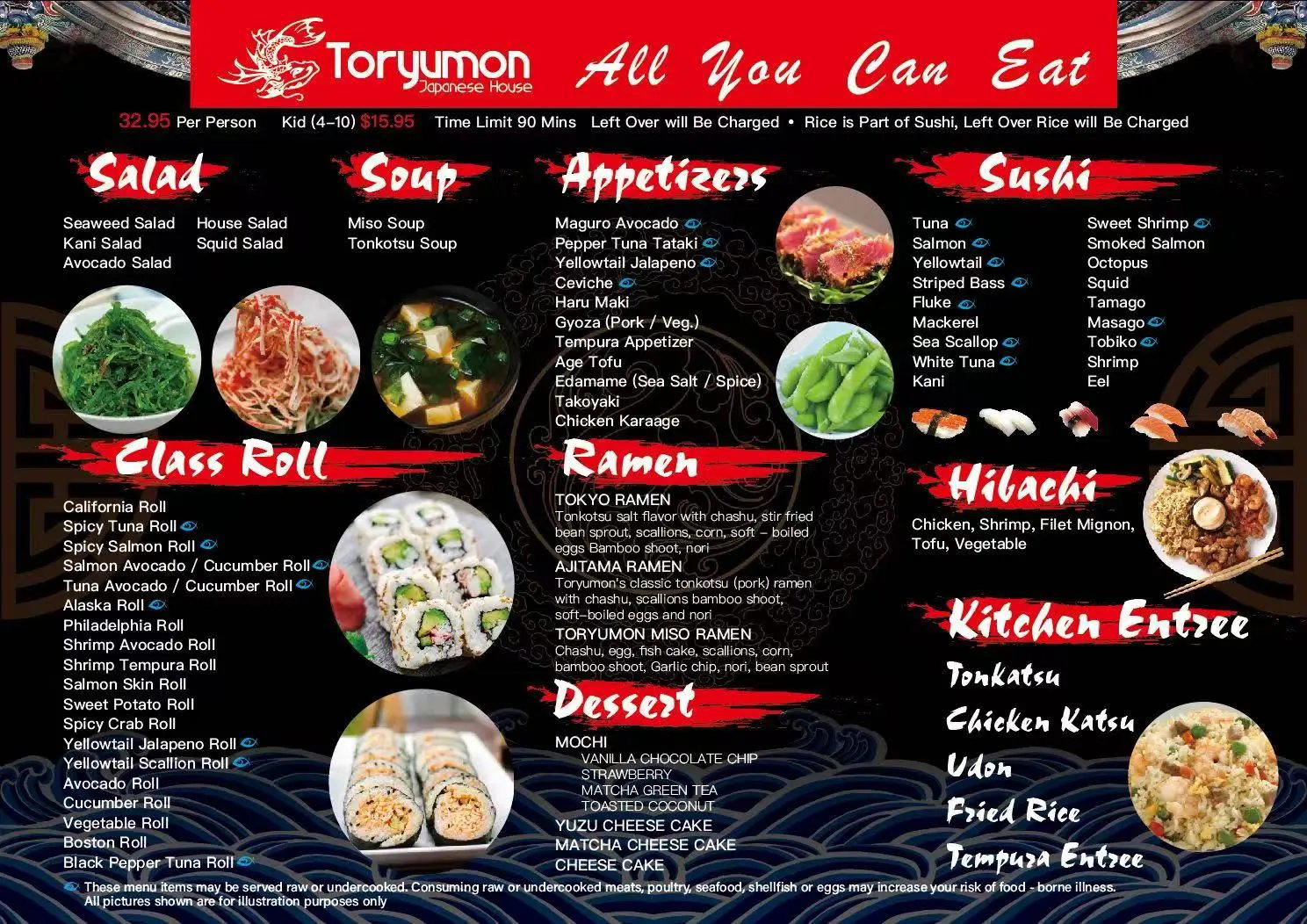
Japanese Craft in the Rosslyn Corridor
Wilson Boulevard through Rosslyn carries the familiar texture of a DC-adjacent commercial strip: glass office towers, metro access, a corridor built around transience rather than destination dining. Against that backdrop, Toryumon Japanese House at 1650 Wilson Blvd operates in a register that the neighbourhood does not otherwise offer. The Rosslyn-Ballston corridor has long been strong on convenience dining, with Vietnamese counters like Pho 75, Thai canteens, and barbecue spots filling the mid-market tier, but dedicated Japanese houses that pursue craft over throughput remain scarce. That scarcity gives Toryumon a specific position in the Arlington dining map.
Arlington's dining scene, as covered in our full Arlington restaurants guide, has grown more varied over the past decade, with European bistro formats represented by places like Angie, Neapolitan pizza at A Modo Mio Pizzeria Napoletana, Southeast Asian cooking at Bangkok 54, and casual American formats at Barley Mac and Bayou Bakery. Japanese cooking at a serious level, however, has been one of the gaps the neighbourhood has not fully closed. Toryumon occupies Suite 100B in a ground-floor retail configuration, which is an unshowy entry point, but the format signals something the address alone does not.
The Technique-and-Ingredient Axis in American Japanese Dining
Across the United States, Japanese dining has split into two broad operating philosophies. The first leans on supply chain: importing from Japan, whether fish, ceramics, sake, or technique-holders trained in Japan, and presenting that provenance as the selling proposition. The second, and arguably more intellectually interesting, approach grafts Japanese method onto American agricultural reality: sourcing Chesapeake seafood, Mid-Atlantic produce, and regional proteins, then applying the precision, restraint, and attention to temperature and texture that define Japanese craft. The two approaches are not mutually exclusive, but the emphasis reveals a kitchen's priorities.
At the high end of the American dining spectrum, this local-ingredient-plus-global-technique approach has become a marker of ambition. Blue Hill at Stone Barns in Tarrytown built an entire identity around treating indigenous American products with European fine-dining rigour. Single Thread Farm in Healdsburg applies kaiseki structure to Northern California produce. Lazy Bear in San Francisco runs Japanese-influenced tasting formats through a California agricultural lens. The question for any Japanese house operating below that altitude is whether the same synthesis operates at a more accessible scale, and whether a neighbourhood like Rosslyn can sustain it.
The Mid-Atlantic is better positioned for this than many regions. The Chesapeake watershed produces shellfish and fin fish that align naturally with Japanese preparation styles: the clean fat of local oysters, the firm texture of rockfish, the seasonal availability of blue crab. Virginia farms have expanded their premium vegetable and mushroom production over the past fifteen years, giving kitchens working in a Japanese idiom access to ingredients that do not require importation to be credible. A kitchen willing to source regionally can build a menu that reads as Japanese in method while drawing on an American agricultural base.
Arlington in the Washington Dining Continuum
Washington's dining geography tends to concentrate its most recognised restaurants inside the District itself. The Inn at Little Washington is the region's most cited fine-dining address, with a weight of recognition that places it alongside Le Bernardin in New York or Alinea in Chicago as a destination in its own right. Korean fine dining in New York, exemplified by Atomix, has shown that Asian technique applied at the highest level can command the same recognition as European-lineage fine dining. The appetite for serious Asian cooking in the American mid-Atlantic market is documented; the question is where in the region it takes root.
Arlington's position, directly across the Potomac from DC and served by Metro, means it draws a dining public with DC-level expectations but neighbourhood-level habits. That creates an audience for a Japanese house that does not require a special-occasion price point but does require more than conveyor-belt delivery. Formats that have found traction in comparable suburban-adjacent markets, from Providence's neighbourhood-anchored fine dining in Los Angeles to Addison's San Diego positioning, suggest the suburban-to-urban dining relationship rewards venues that hold a specific register rather than attempting full fine-dining competition with the city centre.
What the Format Signals
Japanese houses in American cities have diversified considerably beyond the sushi bar default. Izakaya formats, ramen counters, tonkatsu specialists, and kaiseki-derived tasting menus each address a different audience and a different price point. The name and positioning of Toryumon Japanese House suggests a broader register than a single-discipline specialist, which in the Arlington context reads as a considered choice: a venue that can serve the neighbourhood's working population across formats and occasions rather than restricting access to a single ceremonial format.
Comparison venues in the area, including the mid-market barbecue and sandwich formats that populate the Rosslyn-Ballston strip, operate at a price tier and formality level well below what a Japanese house with craft ambitions would target.
The dining scene in American suburbs has also been reshaped by the post-2020 redistribution of restaurant talent, with chefs and operators who previously anchored city-centre kitchens relocating to or opening in suburban corridors where rents are lower and the local customer base has grown more demanding. That structural shift benefits any Japanese house in a position to capture the Arlington professional market before it commutes into DC for dinner.
For comparable elevation in technical Asian dining at the national level, Atomix in New York and the seafood-driven ambition of Le Bernardin illustrate what the technique-over-provenance approach can achieve at its ceiling. At the regional level, Emeril's in New Orleans and The French Laundry in Napa represent the model of a kitchen that becomes definitional for its location. Toryumon's ambition, and the measure by which it should be assessed, is whether it can perform a similar anchoring function for Japanese cooking in the Arlington corridor.
Know Before You Go
- Address: 1650 Wilson Blvd, Suite 100B, Arlington, VA 22209
- Neighbourhood: Rosslyn, Arlington (walkable from Rosslyn Metro station)
- Cuisine category: Japanese
- Hours: Confirm current hours before visiting
- Dietary enquiries: Raise allergy and dietary requirements with the venue when booking or on arrival
Continue exploring
More in Arlington
Restaurants in Arlington
Browse all →
Bars in Arlington
Browse all →
Hotels in Arlington
Browse all →
At a Glance
- Modern
- Trendy
- Casual Hangout
- Group Dining
- Open Kitchen
- Sake Program
Current opening hours
- Monday
- 11 AM–3:15 PM, 5–10 PM
- Tuesday
- 11 AM–3:15 PM, 5–10 PM
- Wednesday
- 11 AM–3:15 PM, 5–10 PM
- Thursday
- 11 AM–3:15 PM, 5–10 PM
- Friday
- 11 AM–3:15 PM, 5–10:30 PM
- Saturday
- 12–10:30 PM
- Sunday
- 12–9:30 PM
Hours can change for holidays and private events. Last verified .
Warm hospitality with clean, contemporary design blending Japanese traditions and Asian fusion.
Know Before You Go
- Getting there
- 1650 Wilson Blvd Suite 100B, Arlington, VA 22209