
Tonpito Torino Koryu Masu belongs to Osaka’s serious ramen circuit rather than the city’s tourist-facing dining lane. Its Tabelog Ramen OSAKA “Tabelog 100” 2025 selection, compact counter-led format, and Sakuranomiya location place it in the low-friction, high-demand category of Japanese noodle shops where reputation is built through repeat custom, not ceremony.
Pearl is the En Primeur Club membership app — saves, bookings, and concierge access live there. Same editors, same standards.
- Address
- 5 Chome-9-5 Nakanocho, Miyakojima Ward, Osaka, 534-0027, Japan
- Phone
- +81 6-6923-5604
- Website
- tabelog.com
 Saves & bookings on Pearl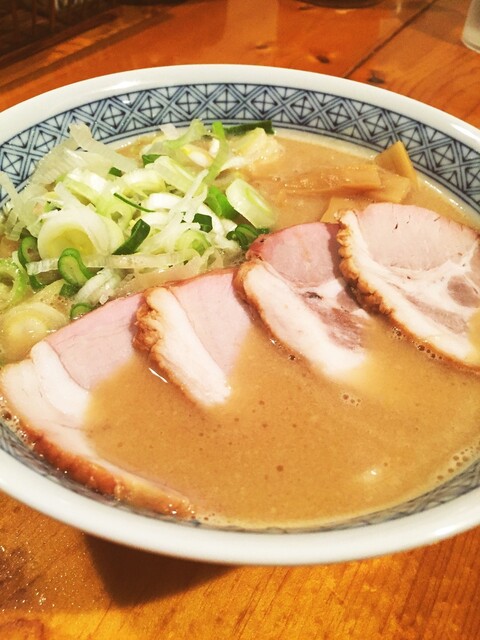
Sakuranomiya does not announce itself with the dining theatrics of Namba or Umeda. The rhythm is more residential, more commuter Osaka: station exits, narrow streets, small rooms built for regulars rather than spectacle. That setting matters for ramen. In Japan, serious noodle shops often gain authority through restraint of format, not expansion of concept. A compact counter-and-table room can say more about the genre than a polished dining room, because ramen’s culture rewards speed, repetition, and a kitchen that can hold a narrow line all day.
Tonpito Torino Koryu Masu sits inside that Osaka tradition with a useful credential: selection for Tabelog Ramen OSAKA “Tabelog 100” 2025, after earlier appearances across the Tabelog ramen lists. That recognition does not make it a luxury restaurant, and that is the point. Osaka’s ramen hierarchy is not built only around cost or design. It is built around consistency, queue culture, neighborhood loyalty, and the ability to make a single bowl feel decisive without turning lunch into an event.
Osaka ramen, measured by repetition rather than ceremony
Osaka is often read through takoyaki, okonomiyaki, kushikatsu, and department-store dining, but ramen occupies a different register. It is a city cuisine of quick decisions: where to go before work, after a train ride, between appointments, or when a full restaurant meal feels excessive. The better shops tend to be judged by regularity. A bowl has to work on a Monday lunch as well as a Friday evening; the format leaves little room for narrative padding.
This is where Tonpito Torino Koryu Masu becomes interesting as part of the scene rather than as a personality-led restaurant. The chef’s biography is not the story here. The story is Osaka’s appetite for ramen that borrows from broader Japanese noodle technique while staying grounded in local dining behavior: low ceremony, focused execution, and a room small enough that operational discipline matters. The global history of ramen, from Chinese wheat-noodle origins to Japan’s regional codification of broth, tare, fat, and noodle texture, has been absorbed into a local Osaka grammar. The result is not fusion rhetoric. It is technical compression.
That compression separates this address from more expansive Osaka dining formats. Hachidori occupies the izakaya lane, where variety and drinking cadence define the night. Doshin Tei and Kamon operate in a higher-spend register, with the tempo and expectation of composed dining. Odashi to Spice Ganso Electroni Curry shows another side of Osaka’s casual seriousness, where spice and dashi can carry a meal without formality. Ramen sits apart from all of them. It asks for less time, usually less explanation, and often more precision per minute.
A small-room format with award-list gravity
The practical experience of this category is inseparable from the room. Counter seating changes how ramen is consumed: the kitchen is close, the pace is visible, and the meal has a built-in brevity. Tables soften that slightly, which makes the place workable for friends or families, but the genre remains counter-first in spirit. In Osaka, that format also keeps the economics accessible. The city has many restaurants where craft is priced as ceremony; ramen often does the opposite, holding technique inside a casual spend.
The Tabelog Ramen OSAKA “Tabelog 100” 2025 selection gives the shop a clear trust signal in a crowded field. Tabelog’s ramen lists are particularly useful for travelers because they capture a Japan-specific kind of consensus: not international fine-dining glamour, but the sustained approval of diners who compare bowls closely. Repeated selection across recent ramen lists adds weight because ramen shops are vulnerable to slippage. Broth balance, noodle handling, and service rhythm have to survive daily repetition.
For a visitor, the editorial case is direct. This is not the Osaka meal to choose for a long sake progression, private-room conversation, or hotel-dining polish. It is the one to choose when the city’s ramen culture is the subject. The value lies in seeing how a small neighborhood shop can enter the same conversation as more central, easier-to-plot dining stops. Sakuranomiya is close enough to central Osaka to be practical, but the atmosphere is removed from the tourist conveyor belt. That tension is part of the appeal: serious recognition, ordinary urban setting.
How to place it in an Osaka itinerary
Tonpito Torino Koryu Masu works better as a focused ramen stop than as the anchor for an entire evening. Build the day around the area, or fold it into a route that already passes through Osaka’s loop-line neighborhoods. The decision is less about luxury and more about appetite management. Ramen rewards arriving with intent: not overfed, not in a rush to compare five dishes, and not expecting the pacing of a tasting menu.
Travelers mapping the wider city should use it as one marker in Osaka’s broader casual-dining intelligence. For coffee and lighter stops, compare the city’s smaller-format addresses such as .cafe and 52CHO-ME BAKERY. For the classic takeaway side of Osaka appetite, 551 Horai (551蓬莱) sits in a different but equally local lane. Italian cooking appears in more specialized forms at 99 Pizza Napoletana Gourmet and a canto (Italian), which helps frame how Osaka absorbs outside techniques without abandoning its appetite for directness.
For a wider planning map, use Our full Osaka restaurants guide, then layer in Our full Osaka hotels guide, Our full Osaka bars guide, Our full Osaka wineries guide, and Our full Osaka experiences guide. For broader Japan and overseas context, compare how casual precision travels through -Grilled beef Sukiyaki- KAMAKURA TANUKIAN 鎌倉 たぬき庵 in Kamakura. 鮪と炭火焼き うお炭 秋葉原店 in Tokyo.know in Kumamoto, (Shoku) Vietnam in Kawasaki, [Curry Senmon Ten] Maruyama Kyoju. in Sapporo, [ki:] in Kyoto, Jōdo Saké Bar in Los Angeles, and Onigiri Time in Pasadena.
Cuisine and Credentials
Comparable venues by cuisine and price in the same metro.
| Venue | Cuisine | Price | Notes |
|---|---|---|---|
| Tonpito Torino Koryu MasuThis venue — the venue you are viewing | Japanese Ramen | $ | Not listed |
| Umaiya Takoyaki | Traditional Osaka Takoyaki | $ | Tenma |
| Hana | Okonomiyaki & teppan comfort food | $ | Miyakojima |
| Fu-n@ | Japanese Shokudo / Teishoku | $ | Kita |
| Udon Bo Oosaka honten | Traditional Sanuki Udon Noodle Shop | $ | Kita |
| Ennosuke Shoten | Ramen & Tsukemen Shop | $ | Higashiyodogawa |
Recognition history
Dated appearances from independent guides and award organizations, with the underlying list record or original source where available.
Tabelog 100 #64 · No. 64
Tabelog · Tabelog 100 - Ramen - OSAKA - 2025
Continue exploring
More in Osaka
Restaurants in Osaka
Browse all →




Bars in Osaka
Browse all →




Hotels in Osaka
Browse all →



Wineries in Osaka
Browse all →
At a Glance
- Cozy
- Classic
- Solo
- Family
- Casual Hangout
- Standalone
Current opening hours
- Monday
- 11:30 AM–1:30 PM, 6–8 PM
- Tuesday
- 11:30 AM–1:30 PM, 6–8 PM
- Wednesday
- 11:30 AM–1:30 PM, 6–8 PM
- Thursday
- 11:30 AM–1:30 PM, 6–8 PM
- Friday
- 11:30 AM–1:30 PM, 6–8 PM
- Saturday
- Closed
- Sunday
- Closed
Hours can change for holidays and private events. Last verified .
Compact, low-key ramen shop atmosphere with counter seating and a hidden-gem feel.