
Kashiwa’s ramen culture is built on quick turnover, counter seating, and bowls that compete on broth discipline rather than ceremony. Tonkotsu Shoyu Ramen Oudouya Kashiwa ten sits in that lane with Tabelog Ramen EAST 100 selections from 2023 through 2025, a low-price bracket, and a format that rewards diners who understand ramen as an ingredient-driven craft, not a long-form restaurant occasion.
Pearl is the En Primeur Club membership app — saves, bookings, and concierge access live there. Same editors, same standards.
- Address
- 千葉県柏市明原1-7-26
- Phone
- +81471400078
- Website
- oudouya.com
 Saves & bookings on Pearl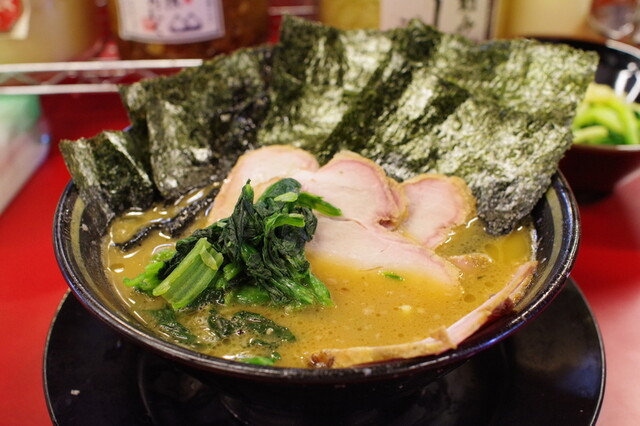
Approaching a serious ramen counter in Kashiwa is not about theatre. The cues are practical: a compact room, counter-first seating, quick movement, and the expectation that the bowl carries the argument. In Chiba’s commuter cities, ramen often works as a daily food with obsessive internal standards, where pork-bone stock, soy seasoning, noodle texture, and toppings are judged in minutes rather than over a tasting menu. Tonkotsu Shoyu Ramen Oudouya Kashiwa ten belongs to that sharper category: low ceremony, high scrutiny, and a reputation strong enough to place it on Tabelog’s Ramen EAST 100 list in 2023, 2024, and 2025.
Kashiwa ramen, judged by broth rather than ceremony
The tonkotsu-shoyu style sits at the intersection of weight and salinity. Pork bone gives the soup body; soy sauce gives structure and direction. In a good bowl, neither element behaves as garnish. The broth has to support noodles, tare, fat, and toppings without collapsing into heaviness or salt alone. That is why ingredient sourcing matters in this genre more than casual diners sometimes assume. The bones, soy seasoning, rendered fat, and noodle specification are not background details; they define the entire eating rhythm.
Kashiwa’s dining scene makes that discipline easier to see because the city is not built only around destination dining. Around the station area, everyday restaurants carry much of the local identity: ramen counters, tonkatsu specialists, bakeries, izakaya-style rooms, and compact Western-leaning addresses sit closer together than their price points suggest. Compared with Anbai’s broader Japanese dining bracket or Bakery Feve’s bakery format, a ramen counter competes on compression. A meal has fewer moving parts, so flaws have nowhere to hide.
Recognition from Tabelog’s Ramen EAST 100 is useful here because ramen in eastern Japan is an unusually crowded category. A repeat selection across three consecutive years signals more than a single spike of attention. It places the shop within a regional field where consistency, queue tolerance, and repeat local use matter as much as travel hype. That does not make the format luxurious in the conventional sense. It makes it exacting: a small number of components, judged by diners who know how quickly a bowl can lose balance.
The ingredient argument behind tonkotsu shoyu
Tokyo and Chiba ramen culture has long rewarded shops that make a clear choice about broth identity. Some chase clarity, some chase emulsified richness, and others use soy seasoning as the main point of tension. Tonkotsu shoyu works when the pork base has enough depth to carry the bowl but leaves room for the soy profile to cut through. The result is not a neutral comfort food; it is a style with a built-in pressure test. If the broth is thin, the soy dominates. If the fat and bone extraction run too heavy, the bowl becomes blunt.
That balance explains why this kind of ramen draws repeat scrutiny from local diners. The sourcing and handling of base ingredients shape texture, aroma, and finish before a diner thinks about extras. Noodles matter as a structural decision rather than a decorative one: thickness, firmness, and absorption determine how long the bowl holds together. Toppings can deepen the experience, but they do not rescue weak broth. In this category, the kitchen’s authority is measured through fundamentals.
The price tier also changes the reader’s expectations. Kashiwa has restaurants such as 66 and Bakery Feve operating in modest everyday brackets, while places like zoe’s sit at a much higher spend. Ramen at this level asks a different question: how much craft can be delivered inside a brief, counter-led meal? Tonkotsu Shoyu Ramen Oudouya Kashiwa ten answers inside the grammar of a working ramen shop, not through a long menu, elaborate plating, or a room designed for lingering.
How to place it in a Kashiwa food day
For travellers building a Kashiwa itinerary, ramen is better treated as the anchor of a focused food stop than as a flexible fallback. The room format favours small parties, the counter carries the experience, and the pace belongs to diners who are ready to order, eat, and move. That is part of the appeal. Kashiwa is close enough to Tokyo’s orbit to absorb serious ramen expectations, but it keeps the feel of a local city where regulars shape the room’s tempo.
Readers comparing local options should think by format rather than cuisine alone. Anbai fits a broader sit-down Japanese meal; 66 offers another casual Kashiwa bracket; Bakery Feve belongs to a different daytime rhythm; ramen here is narrower and more decisive. For a wider map of the city, see Our full Kashiwa restaurants guide, with adjacent planning context in Our full Kashiwa hotels guide, Our full Kashiwa bars guide, Our full Kashiwa wineries guide, and Our full Kashiwa experiences guide.
Within Kashiwa, useful nearby reading includes Anbai, 66, Bakery Feve, AYUBOWAN, and Bunsai Ka. For contrast beyond the city, compare how single-format dining changes across -Grilled beef Sukiyaki- KAMAKURA TANUKIAN 鎌倉 たぬき庵 in Kamakura. 鮪と炭火焼き うお炭 秋葉原店 in Tokyo.cafe in Osaka.know in Kumamoto, (Shoku) Vietnam in Kawasaki, [Curry Senmon Ten] Maruyama Kyoju. in Sapporo, Jōdo Saké Bar in Los Angeles, and Onigiri Time in Pasadena.
The editorial case is clear: this is a ramen stop for diners who care about broth architecture, regional recognition, and the compressed pleasure of a counter meal. Kashiwa has broader dining choices, but tonkotsu shoyu at this level makes its point with fewer distractions.
Quick Comparison
Comparable venues by cuisine and price in the same metro.
| Venue | Cuisine | Price | Notes |
|---|---|---|---|
| Tonkotsu Shoyu Ramen Oudouya Kashiwa tenThis venue — the venue you are viewing | Iekei-style tonkotsu shoyu ramen | $ | Not listed |
| Mendokoro Nishio | Ramen & Tsukemen Counter | $ | Kashiwa |
| Curry no Mise Bombay Honten | Japanese curry house | $ | Kashiwa |
| Tonkatsu Hisago | Tonkatsu & Japanese Curry | $$ | Kashiwa |
| Chuka Soba Sakaeda | Japanese Ramen | $$ | Kashiwa |
| Bakery Feve | Bakery & sandwich shop | $ | Izumi-cho |
Recognition history
Dated appearances from independent guides and award organizations, with the underlying list record or original source where available.
Tabelog 100 #32 · No. 32
Tabelog · Tabelog 100 - Ramen - EAST - 2025







At a Glance
- Lively
- Classic
- Cozy
- Well Known
- Solo
- Casual Hangout
- After Work
- Late Night
- Standalone
- Local Sourcing
A compact, non-smoking ramen-ya centered on counter seating, with an energetic, no-frills atmosphere focused on slurping bowls of rich iekei ramen rather than lingering; lighting and decor are simple and functional rather than design-driven.