
Chuka Soba Sakaeda belongs to Kashiwa’s serious ramen tier: small-format, lunch-focused, and recognised in Tabelog’s Ramen EAST “Tabelog 100” 2025 selection. The appeal is less about spectacle than discipline, placing a suburban Chiba counter inside the wider culture of Japanese chuka soba shops where broth clarity, noodle handling, and turnover define reputation.
Pearl is the En Primeur Club membership app — saves, bookings, and concierge access live there. Same editors, same standards.
- Address
- 2 Chome-2-6 Chiyoda, Kashiwa, Chiba 277-0025, Japan
- Phone
- +81 70-8444-1413
- Website
- twitter.com
 Saves & bookings on Pearl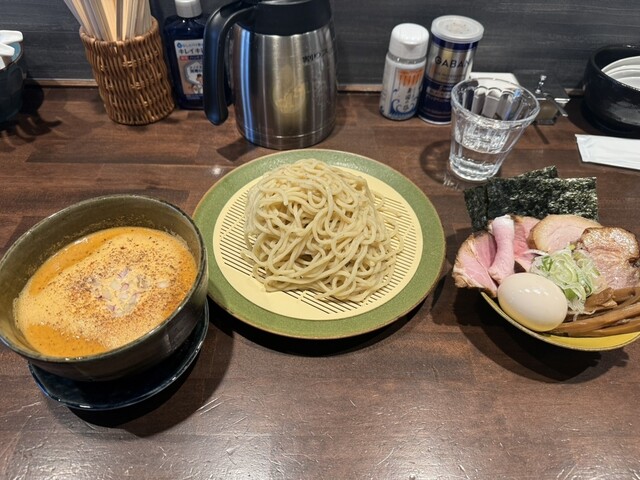
Approaching a ramen shop in Kashiwa is rarely theatrical: a compact frontage, a pause before the door, and the expectation of a room built for eating rather than lingering. Chuka Soba Sakaeda fits that grammar. In Japan’s ramen culture, especially outside central Tokyo, seriousness often appears through scale and restraint: narrow service rhythm, short menu logic, and customers who judge a bowl by timing as much as flavour.
Kashiwa is well placed for ramen. It has enough commuter density to sustain specialists, without the tourist performance that can distort central-city dining. Its better counters compete on repeat local traffic, not postcard value. For travellers looking beyond Tokyo Station and Ginza, Kashiwa’s ramen scene offers another reading of Japanese casual dining: everyday pricing, exacting craft, and meals measured in minutes, not courses.
Chuka soba culture, read through a small Kashiwa room
Chuka soba carries cultural weight in Japan because it sits between borrowed Chinese noodle forms and the regionalised ramen language that followed. The term points to an older style: soup, noodles, seasoning, and toppings arranged with a directness predating many heavier modern subgenres. Today, that does not mean simple; it means the margin for error is narrow. A shop in this lane has fewer places to hide than one built around volume, fat, or novelty.
That is how to read Chuka Soba Sakaeda’s reputation. Recognition in Tabelog’s Ramen EAST “Tabelog 100” 2025 selection places it within an eastern Japan field judged by diners who follow ramen closely. Tabelog’s 3.72 score signals more than neighbourhood convenience: it has attracted attention in a competitive ramen region. The distinction matters because Japanese ramen awards often reward consistency across short service windows, not ceremony.
The format reinforces the point. With eight seats split between counter and small table seating, the experience belongs to compact ramen-shop tradition rather than broader casual restaurant culture. A small room changes consumption: bowls move quickly, customers read the counter’s pace, and the kitchen rhythm is exposed. In a larger dining room, weakness can be softened by service or atmosphere; here, the bowl carries the argument.
For Kashiwa, this shop also broadens the city’s dining identity. The area is not one register: Bunsai Ka and higher-priced Chinese dining such as chukaryouriogiwara occupy another spending bracket, while ramen peers such as Chuka Oshima, Mendokoro Nishio, and 66 show how much local conversation happens at lower everyday prices. Kashiwa has serious rooms at both ends, but ramen remains one of its clearest democratic forms.
Why the comparison set matters in Kashiwa
Visitors often misread ramen as quick lunch rather than specialist field. In Japan, low spend does not mean low scrutiny. Shops in the same price band can differ sharply by broth style, noodle texture, seasoning balance, queue culture, and intended eating speed. That is why a ramen address selected for a category list can carry more editorial weight than its bill suggests.
Chuka Soba Sakaeda shares a price tier with several Kashiwa ramen peers, making recognition more meaningful, not less. When cost of entry is similar, diners compare execution. Higher-budget Japanese and Chinese restaurants ask how much ceremony, sourcing, and pacing the guest wants. Ramen asks whether a short meal justifies a detour. In Kashiwa, that question is serious enough to shape an itinerary.
The 2023 opening matters too. Japan’s ramen field is mature, crowded, and unforgiving; newer entrants get little time to build credibility. Selection for a 2025 Tabelog category list so soon suggests rapid traction within the ramen audience. The better reading is not hype, but a shop entering an established culture with enough control to be noticed quickly.
For a wider Kashiwa plan, the city guide matters as much as the meal. Our full Kashiwa restaurants guide is the starting point for placing ramen alongside other local formats; Our full Kashiwa hotels guide, Our full Kashiwa bars guide, Our full Kashiwa wineries guide, and Our full Kashiwa experiences guide help turn a single food stop into a structured day in Chiba.
The editorial case for making the trip
The reason to come is not conventional luxury. It is the Japanese habit of compressing craft into a modest room and accessible bowl. That habit is easy to underrate if value is judged by linens, wine lists, or reservation theatre. Ramen reverses the hierarchy: the room may be spare, the spend contained, and the critical pressure high. A shop selected in an eastern Japan ramen list competes in that context.
The restaurant also shows travellers how suburban ramen can be more than a convenience meal near a station. Kashiwa rewards diners who think in categories rather than landmarks. A ramen stop can sit beside Bakery Feve, a Sri Lankan meal at AYUBOWAN, or a more formal dinner elsewhere in the city. Anbai is another reference point for the variety of Kashiwa’s restaurant mix.
For broader comparison, see this address as part of a national and international Japanese-dining continuum, not an isolated bowl. The same database of choices can run from -Grilled beef Sukiyaki- KAMAKURA TANUKIAN 鎌倉 たぬき庵 in Kamakura to. 鮪と炭火焼き うお炭 秋葉原店 in Tokyo, from.cafe in Osaka to.know in Kumamoto, and from (Shoku) Vietnam in Kawasaki to [Curry Senmon Ten] Maruyama Kyoju. in Sapporo. Abroad, venues such as Jōdo Saké Bar in Los Angeles and Onigiri Time in Pasadena show how Japanese casual formats travel, adapt, and become codified for different audiences.
The sharper point: Kashiwa’s ramen culture needs no spectacle to justify attention. A small shop, recognised category placement, and tight service format are enough evidence for a serious reader. The restaurant belongs on the itinerary when the goal is to understand how contemporary Japanese dining assigns value to precision at ordinary scale.
Pricing, Compared
Nearby venues at a similar price tier for orientation.
| Venue | Cuisine | Price | Notes |
|---|---|---|---|
| Chuka Soba SakaedaThis venue — the venue you are viewing | Kashiwa, Japanese Ramen | $$ | Not listed |
| Motsuni Taro | Not listed | $ | :null, Japanese comfort food canteen specializing in motsuni stew |
| Anbai | Kashiwa, Tonkatsu & Beefsteak | $$ | Not listed |
| Tonkatsu Hisago | Kashiwa, Tonkatsu & Japanese Curry | $$ | Not listed |
| Mendokoro Nishio | Kashiwa, Ramen & Tsukemen Counter | $ | Not listed |
| 66 | Kashiwa, American Burgers | $$$ | Not listed |
Recognition history
Dated appearances from independent guides and award organizations, with the underlying list record or original source where available.
Tabelog 100 #83 · No. 83
Tabelog · Tabelog 100 - Ramen - EAST - 2025











At a Glance
- Classic
- Cozy
- Solo
- Casual Hangout
- Standalone
- Street Scene
Current opening hours
- Monday
- Closed
- Tuesday
- Closed
- Wednesday
- 11:30 AM–3 PM
- Thursday
- 11:30 AM–3 PM
- Friday
- 11:30 AM–3 PM
- Saturday
- 11:30 AM–3 PM
- Sunday
- 11:30 AM–3 PM
Hours can change for holidays and private events. Last verified .
Simple, focused ramen-shop atmosphere with a neighborhood feel and a no-frills setup geared toward quick, attentive dining.