Tommy's Joynt
Tommy's Joynt at 1101 Geary Blvd has anchored San Francisco's Tenderloin-adjacent dining scene for decades as one of the city's most recognizable hofbrau-style institutions. Where the surrounding neighborhood has cycled through reinvention, the Joynt has remained fixed on its own terms: steam tables, carved meats, and a room that makes no apologies for what it is.
Pearl is the En Primeur Club membership app — saves, bookings, and concierge access live there. Same editors, same standards.
- Address
- 1101 Geary Blvd, San Francisco, CA 94109
- Phone
- +1 415 949 0399
- Website
- tommysjoynt.com
- Directions
- Get directions
 Saves & bookings on Pearl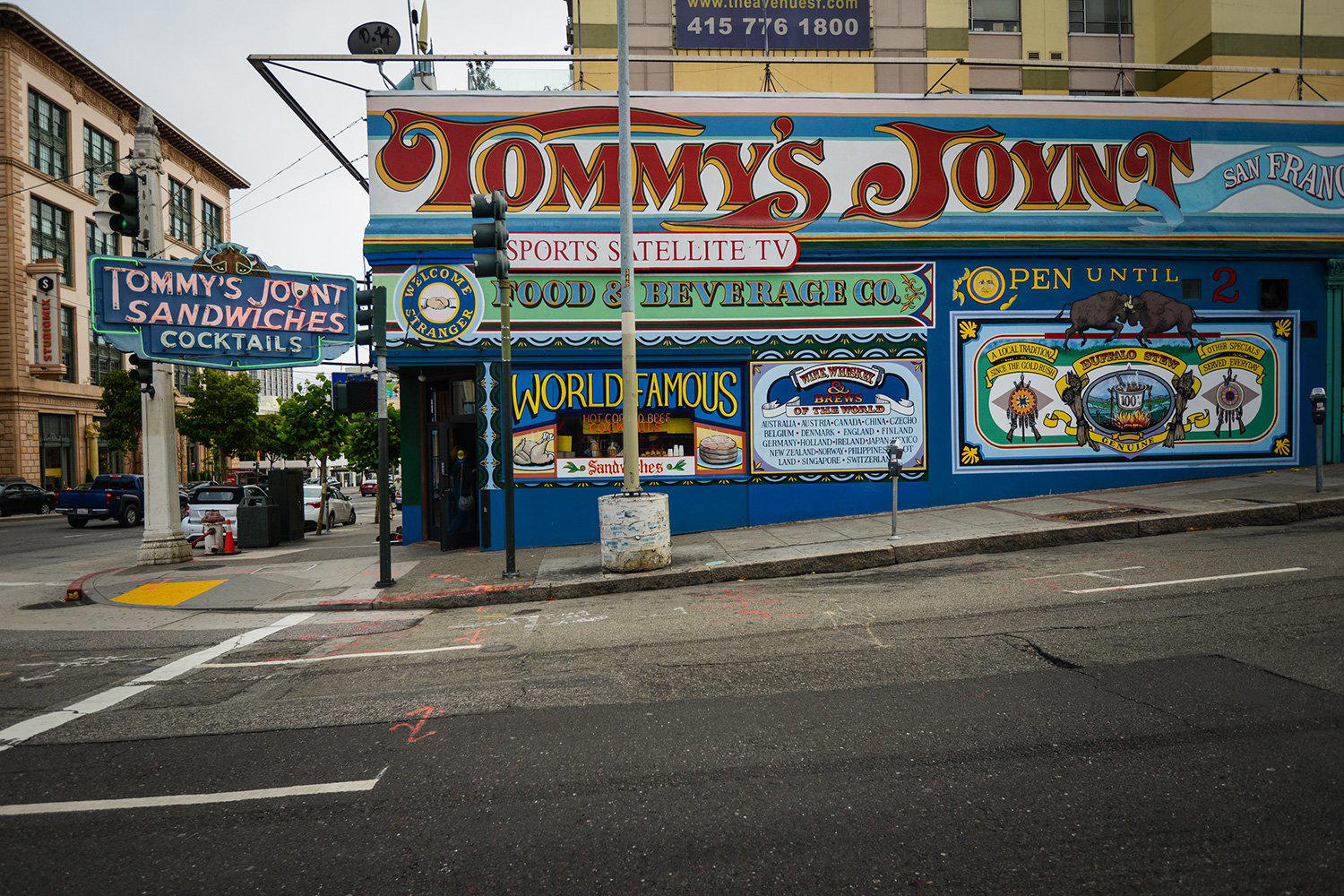
The Hofbrau Holdout on Geary Boulevard
San Francisco's dining scene in 2025 occupies two nearly parallel tracks. Tommy's Joynt is a classic American hofbrau in San Francisco, serving casual walk-in meals at 1101 Geary Blvd for about $20 per person. On one, Michelin-chasing tasting menus at places like Lazy Bear, Atelier Crenn, and Benu command four-figure bills per couple and booking windows measured in months. On the other, a shrinking number of old-format rooms keep doing what they have always done: high-volume, low-ceremony feeding of a city with genuinely diverse appetites. Tommy's Joynt at 1101 Geary Blvd belongs emphatically to the second track, and the fact that it still operates in an era when comparable institutions have closed is itself an editorial statement about what San Francisco's neighborhoods actually absorb and preserve.
The approach to Tommy's Joynt prepares you before you reach the door. The exterior is painted in a dense, almost confrontational mural of color, a visual vocabulary that has nothing to do with the muted tones of contemporary restaurant branding. Inside, the room is long, loud on busy evenings, and organized around the hofbrau format that defined working-class urban dining across American cities from the 1940s through the 1970s. You collect a tray. You point at the meat you want. Someone carves it. The transaction is direct and has not been reimagined.
The Hofbrau Format in American Food History
The hofbrau tradition arrived in American cities via Central European immigrant communities and peaked as a democratic institution: good protein at reasonable prices, served fast, without tablecloths or reservation books. San Francisco had several of them through the mid-twentieth century, and the format spread to cities like New York, Chicago, and Los Angeles in various configurations. Most have since closed or been converted. The handful that remain, the restaurant most visibly among them, still reflect a category that contemporary restaurant economics has largely reduced.
What the format represents, beyond nostalgia, is a set of principles that actually align with some of what the farm-to-table movement has claimed to rediscover: whole-animal thinking, minimal transformation of the product, and consistency over novelty. The steam table approach and carved-to-order service require sourcing proteins that hold well and reward simple preparation. It is a different discipline from the precision cooking at Quince or Saison, but it is a discipline nonetheless.
Where Tommy's Joynt Sits in the San Francisco Dining Picture
San Francisco's restaurant culture is often discussed through the lens of its Michelin-starred tier, and that tier is genuinely formidable. The city's concentration of three-star restaurants, its influence on progressive American cuisine, and its proximity to Northern California's agricultural infrastructure have made it one of the more consequential dining cities in the country. But a city's food character is also shaped by what it keeps, not just what it creates. The restaurant operates in a price register and a physical format that the starred tier has no interest in, which means it fills a function that nothing at The French Laundry or Single Thread Farm in Healdsburg addresses.
For visitors arriving from cities where the mid-century American hofbrau has fully disappeared, from the dining scenes clustered around Le Bernardin in New York or Smyth in Chicago, the restaurant registers as genuinely unusual, a format they may only know from description. For San Franciscans, it is simply part of the city's operating inventory, in the same way that Emeril's in New Orleans or Providence in Los Angeles anchor their own local continuities at different points on the price curve.
Local Roots and the Question of Technique
The Joynt's relationship to ingredients is older and more transactional. The Joynt's relationship to ingredients is older and more transactional. What it does represent, in the context of San Francisco specifically, is the persistence of a European-derived format on the West Coast: the hofbrau as a Central European template adapted to American portion logic and California's more varied protein culture. Bison and buffalo dishes, alongside the standard roast beef and pastrami of the Eastern American deli tradition, appear on menus of hofbrau operations that took root in California, where the broader ingredient palette prompted some divergence from the original template.
That cross-pollination is, in its own modest way, a version of the local-ingredients-meet-imported-technique story that drives discussions of much more expensive restaurants. The difference is one of register, not of underlying logic. Where Addison in San Diego or Frasca Food and Wine in Boulder use European frameworks self-consciously and at considerable price, the hofbrau applied the same basic architecture without the critical apparatus around it, and decades earlier.
What to Know Before You Go
- Address: 1101 Geary Blvd, San Francisco, CA 94109
- Format: Hofbrau-style steam table and carve-to-order service; no tableside courses
- Reservations: Not required; walk-in format consistent with the hofbrau tradition
- Price tier: Significantly below the city's tasting-menu tier; accessible pricing has been a defining feature of the format
- Context: Situated at the edge of the Tenderloin and Lower Pacific Heights, a neighborhood intersection that reflects the city's mixed-income density more than its tourist corridors
Price and Recognition
Comparable venues nearby, for context on price, style, and recognition.
| Venue | Cuisine | Price | Notes |
|---|---|---|---|
| Tommy's JoyntThis venue — the venue you are viewing | Not listed | $ | Not listed |
| Orphan Andy's Restaurant | Not listed | $ | Castro/Upper Market, Classic American Diner |
| Miyako | Not listed | $ | Japantown, Old Fashioned Ice Cream & Candy |
| Kate's Kitchen | Not listed | $ | Hayes Valley, American Breakfast & Southern Comfort |
| Mo's Grill | North Beach, American Grill Diner | $ | Not listed |
| Roli Roti Gourmet Rotisserie | Not listed | $ | Financial District/South Beach, Gourmet Rotisserie |
Recognition history
Dated appearances from independent guides and award organizations, with the underlying list record or original source where available.
Diners, Drive-Ins and Dives Featured Bar
Diners, Drive-Ins and Dives
Continue exploring
More in San Francisco
Restaurants in San Francisco
Browse all →
Bars in San Francisco
Browse all →
Hotels in San Francisco
Browse all →
At a Glance
- Well Known
- Lively
- Classic
- Casual Hangout
- Group Dining
- Late Night
- Historic Building
- Beer Program
Current opening hours
- Monday
- 12–8 PM
- Tuesday
- 12–9 PM
- Wednesday
- 12–9 PM
- Thursday
- 12 PM–12 AM
- Friday
- 12 PM–12 AM
- Saturday
- 12 PM–12 AM
- Sunday
- 12–8 PM
Hours can change for holidays and private events. Last verified .
Casual, welcoming dive atmosphere with eclectic decor and lively bar vibe.