Tobi Masa

Masa Takayama's London outpost occupies a corner of The Chancery Rosewood, the former US Embassy on Grosvenor Square. Eero Saarinen's mid-century architecture frames a sushi counter omakase alongside an extensive contemporary Japanese menu, with premium ingredients, including the signature toro with caviar, anchoring the offer. It sits at the upper end of London's Japanese dining tier, in a Mayfair address already home to several of the city's most serious restaurant rooms.
Pearl is the En Primeur Club membership app — saves, bookings, and concierge access live there. Same editors, same standards.
- Address
- The Chancery Rosewood Hotel, 30 Grosvenor Square, Mayfair
- Phone
- +44 20 7889 7007
- Website
- rosewoodhotels.com
- Directions
- Get directions
 Saves & bookings on Pearl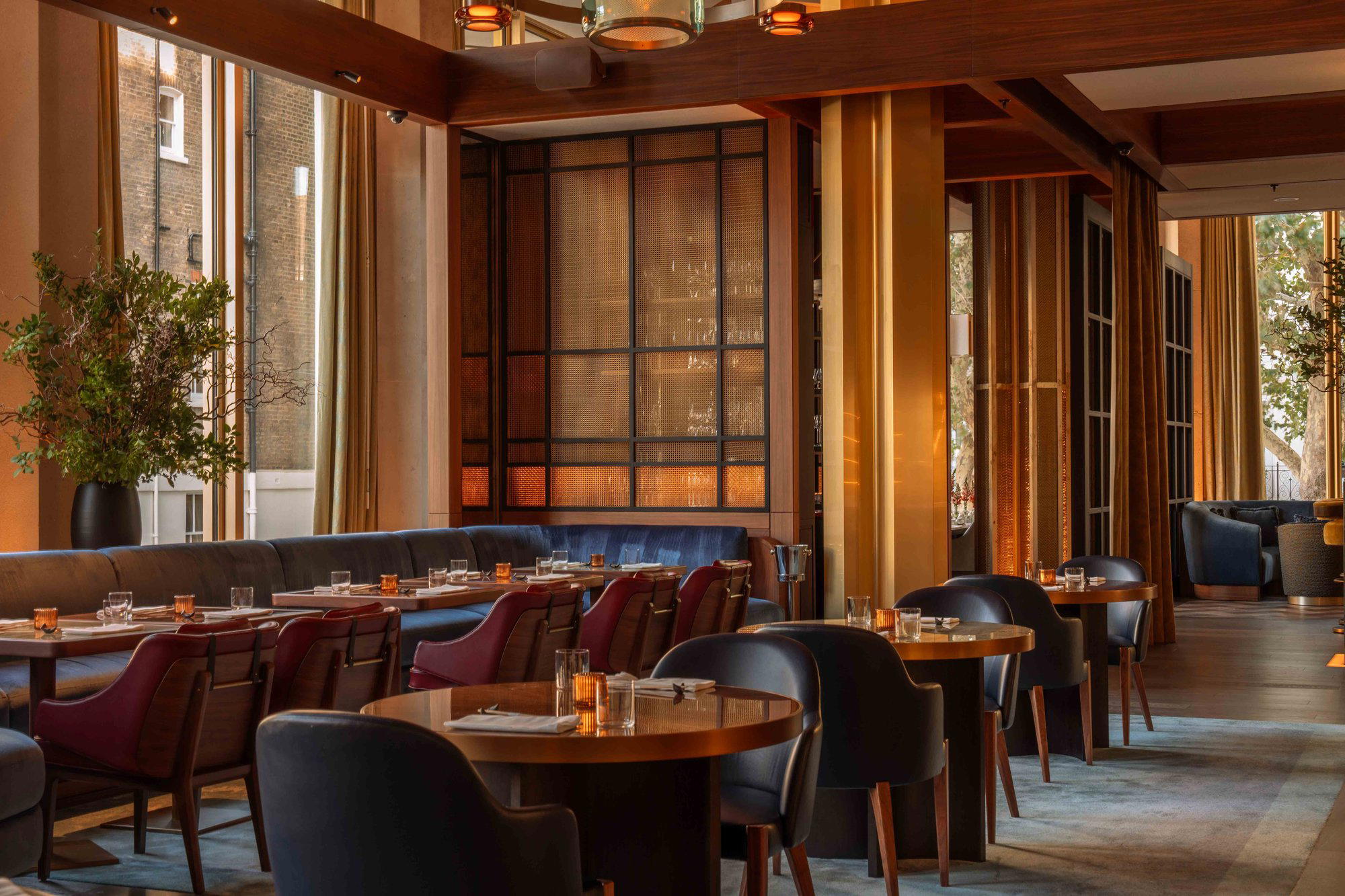
Grosvenor Square and the Architecture of Arrival
The former US Embassy at 30 Grosvenor Square spent decades as among the more recognisable modernist facades in central London. Eero Saarinen's 1960 building, clean Portland stone, a gilded eagle above the entrance, a formal square address in the heart of Mayfair, was designed to project authority. When Rosewood converted it into The Chancery Rosewood hotel, the architectural brief was preservation: keep the bones, refit the interior. The result is a dining room with real presence before anyone sits down.
Hotel-anchored Japanese restaurants at this level in London tend to occupy one of two formats: stand-alone omakase counters that happen to be housed within a hotel, or full-service Japanese dining rooms that use the hotel footprint to offer both counter and table experiences. Tobi Masa is firmly the latter. The sushi counter seats guests for omakase, while the wider room runs an extensive contemporary Japanese menu. That dual-format approach is less common in London than in Tokyo or New York, and it gives the space a different rhythm from single-format omakase rooms.
Masa Takayama in London: What the Lineage Signals
New York's upper-tier Japanese dining has long been benchmarked against Masa at the Time Warner Center, where Masa Takayama established a counter widely cited as among the more expensive restaurants in the United States. That reputation, built over more than two decades in New York and before that in Los Angeles and Japan, carries specific meaning when a chef opens abroad. London's Japanese dining scene has matured considerably over the past decade, The Ledbury and CORE by Clare Smyth anchor the fine dining end, while more recent openings from Ikoyi and The Clove Club show how the city absorbs globally-sourced culinary influence, but a Masa Takayama outpost is a different kind of signal. It suggests the city has reached the density and spending power that makes a second address viable for a chef whose original venue trades on scarcity.
That scarcity logic matters for how Tobi Masa positions itself. Le Bernardin in New York City is a useful comparison point: a restaurant closely identified with a single chef whose name carries global weight but whose London or international presence would reframe the original's cachet. The question for any chef-branded second address is whether the satellite operation carries forward the discipline of the original. At Tobi Masa, the signature toro with caviar, a dish whose ingredient logic traces directly to the premium sourcing philosophy of the New York counter, suggests the ingredient standards travel with the name.
The Japanese List in a Mayfair Context
Mayfair's restaurant addresses, Alain Ducasse at The Dorchester included, operate in a neighbourhood where the wine list is part of the room's value signal, not merely a supplement to food. Japanese fine dining, particularly at omakase level, has historically sat in a complicated relationship with wine: sake-first programmes were common for much of the 2000s, but the upper-end counters in New York and Tokyo have progressively built wine lists that compete seriously with comparable Western fine dining rooms.
For a Mayfair opening anchored in hotel infrastructure, the expectation is a cellar that speaks to both the Japanese menu and the address. The dual-format menu (counter omakase plus full table service) creates an interesting curation challenge: sake pairing for the counter, a broader list capable of running alongside contemporary Japanese dishes for the wider room. A list that handles both with depth, rather than defaulting to a generic international selection, is the marker of a programme that takes the format seriously.
London's broader drinks scene has moved in a direction that rewards this kind of specificity.
Where Tobi Masa Sits in London's Japanese Dining Tier
London's omakase counter scene has grown noticeably since 2019. The format, fixed seat count, chef-led progression, premium sourcing, now has multiple serious practitioners across zones 1 and 2, and the tier occupied by the restaurant sits at the upper end of that range, priced and positioned against comparisons in New York, Paris, and Tokyo rather than against mid-market London Japanese restaurants. The Rosewood address, the Saarinen architecture, and the Takayama name set the restaurant apart from the broader London Japanese market.
For context on how this fits into London's wider fine dining picture, the comparison set includes restaurants like those listed in our London restaurant guide. Beyond London, those tracking the chef-driven end of UK dining should also look at Waterside Inn in Bray, Moor Hall in Aughton, L'Enclume in Cartmel, Gidleigh Park in Chagford, Hand and Flowers in Marlow, and hide and fox in Saltwood for the depth of the UK's current fine dining position. And for a transatlantic reference point, Emeril's in New Orleans illustrates how chef-brand expansion beyond a flagship can work when the original's standards are clearly transmitted.
Know Before You Go
- Address: The Chancery Rosewood Hotel, 30 Grosvenor Square, Mayfair, London
- Format: Sushi counter (omakase) and full table service (contemporary Japanese menu)
- Signature: Toro with caviar
- Booking: Reservation essential
- Setting: Eero Saarinen's 1960 modernist building, preserved as part of the Rosewood hotel conversion
- Neighbourhood: Mayfair, Grosvenor Square, served by Bond Street (Central/Jubilee) and Marble Arch (Central) Underground stations
- Masa Toro Tartare with Caviar
- A5 Wagyu Nigiri
- Uni with Truffle
- Peking Duck Tacos
- Carabinero Shrimp with Coconut Curry
- Surimi Masa Pasta
Budget and Context
Comparable venues nearby, for context on price, style, and recognition.
| Venue | Cuisine | Price | Awards | Notes |
|---|---|---|---|---|
| Tobi MasaThis venue — the venue you are viewing | Mayfair, Modern Japanese Omakase | $$$$ | Michelin Plate | Not listed |
| Hannah | South Bank, Modern Japanese Kaiseki | $$$$ | Michelin Plate | Not listed |
| Mayha | Marylebone, Modern Japanese Omakase | $$$$ | Michelin Plate | Not listed |
| HIMI | Soho, Modern Japanese Neo-Izakaya | $$$ | Michelin Plate | Not listed |
| Roketsu | Marble Arch, Kyoto-Style Kaiseki | $$$$ | Michelin Plate | Not listed |
| Ginza St James's | Not listed | $$$$ | Michelin Plate | St. James's, Modern Japanese Omakase & Fine Dining |
Recognition history
Dated appearances from independent guides and award organizations, with the underlying list record or original source where available.
Michelin Plate
Michelin
Continue exploring
More in London
Restaurants in London
Browse all →
Bars in London
Browse all →
Hotels in London
Browse all →

At a Glance
- Elegant
- Sophisticated
- Quiet
- Modern
- Intimate
- Date Night
- Special Occasion
- Business Dinner
- Chefs Counter
- Open Kitchen
- Hotel Restaurant
- Design Destination
- Historic Building
- Sake Program
- Craft Cocktails
- Corkage Allowed
- Beer Program
- Local Sourcing
- Sustainable Seafood
Current opening hours
- Monday
- Closed
- Tuesday
- 12–2 PM, 5:30–9:30 PM
- Wednesday
- 12–2 PM, 5:30–9:30 PM
- Thursday
- 12–2 PM, 5:30–9:30 PM
- Friday
- 12–2 PM, 5:30–9:30 PM
- Saturday
- 12–2 PM, 5:30–9:30 PM
- Sunday
- Closed
Hours can change for holidays and private events. Last verified .
Refined and contemplative with soft lighting, warm materials, and minimalist design; the seven-seat sushi counter serves as a ritual hub while the dining room features inward-facing banquettes and calm, meditative service choreography.