Mayha

A Japanese omakase counter that made the journey from Beirut to Marylebone, Mayha brings highly seasonal menus and a luxury-ingredient approach to Chiltern Street's quieter end. The curved wooden counter, tree-inspired lighting, and theatrical service place it firmly in the intimate, chef-focused tier of London's growing omakase scene. A Michelin Plate recognition in 2025 marks it as a serious address in a city where the format has become increasingly competitive.
Pearl is the En Primeur Club membership app — saves, bookings, and concierge access live there. Same editors, same standards.
- Address
- 43 Chiltern St, London W1U 6LS, United Kingdom
- Phone
- +44 20 3161 9493
- Website
- mayhalondon.com
- Directions
- Get directions
 Saves & bookings on Pearl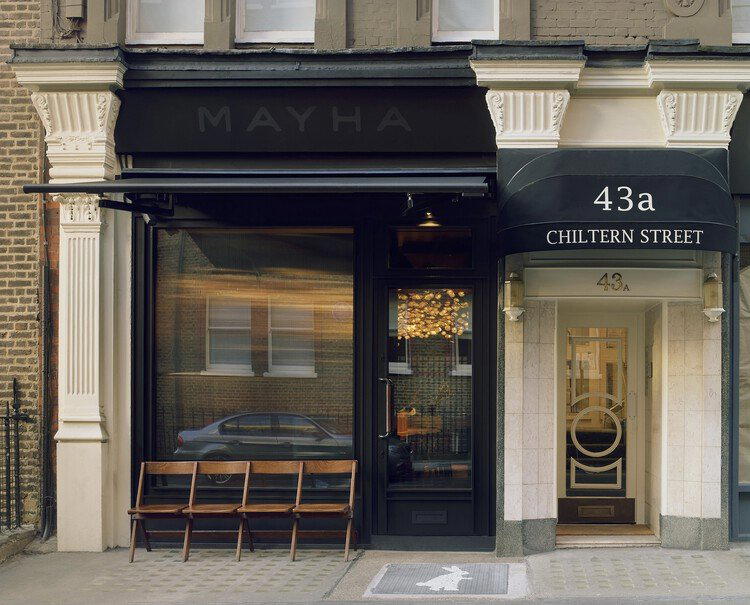
Chiltern Street and the Counter Format
Mayha is a Modern Japanese Omakase restaurant at 43 Chiltern St, London. It sits close enough to the West End to draw destination diners, yet the street itself moves at a quieter register than the main arteries of Mayfair or Soho. The independent retailers, small-scale cafés, and specialist food addresses that have settled here over the past decade give it a neighbourhood character that most of central London has lost. A Japanese omakase counter fits that register well: the format rewards deliberate visits, not passing footfall.
Mayha, at number 43, operates within this dynamic in a way that feels considered rather than incidental. The relocation brought a fully formed sensibility rather than a blank-page opening, which may explain why the interior reads as coherent from the outset: a curved wooden counter, tree-inspired lighting that casts the room in a low, intimate glow, and a clear emphasis on the chefs as the visual centre of the experience.
Where Mayha Sits in London's Omakase Scene
London's Japanese fine dining tier has grown considerably in the past five years. The omakase format in particular has moved from a handful of specialist addresses to a more populated field that spans a wide range of price points and ambitions. At the upper end, counters holding fewer than twenty seats command booking windows of several weeks and price menus into the three-figure range per head. Umu and Humble Chicken occupy different positions within that ecosystem, as does Akira and, at a slightly different angle, Chisou. Ginza St James's represents the more formal end of the Japanese dining spectrum in the capital.
Mayha's Michelin Plate recognition in 2025 places it within a defined quality tier. The format, seasonal omakase with luxury ingredients at the fore and a shortened version available on weekdays, is consistent with how the serious mid-to-upper counters in the city structure their offer. The theatrical element, which Michelin's own language around the venue specifically notes, aligns Mayha with the trend toward counter dining as performance rather than mere service.
For readers comparing across London's broader fine dining spectrum, the ££££ price positioning places Mayha alongside other high-spend addresses in terms of outlay expectations, even if the format and register differ entirely. Those UK addresses offer useful reference points for what ££££ means in practice: menus that require a deliberate budget allocation and an evening's commitment.
The Menu Logic: Seasonality and the Nigiri Core
Omakase menus in the upper tier of London Japanese dining share a structural logic: the chef sequences the meal, seasonal availability drives the selection, and luxury ingredients (wagyu, premium seafood, aged fish, caviar) appear as punctuation rather than constant presence. Mayha's menu sits within this framework, with the nigiri selection functioning as the meal's central statement rather than a preliminary course.
This matters because it reflects a particular school of Japanese counter dining, one that positions nigiri not as an addendum to cooked courses but as the point toward which the earlier progression builds. The seasonal omakase format also means the menu shifts with what is available rather than maintaining a fixed programme, which is the appropriate approach for a counter operating at this price level.
The weekday shortened format is a practical concession to the mid-week London market. It also means Mayha is accessible at more than one tempo, depending on the occasion.
For context on how Tokyo's equivalent counter scene operates, Myojaku and Azabu Kadowaki in Tokyo represent the source tradition against which London's leading omakase counters are inevitably measured.
The Chiltern Street Experience in Broader Context
What makes Mayha's Marylebone address more than a logistical detail is the way the street shapes the visit. Chiltern Street is walkable from Baker Street and Marylebone stations, and the surrounding blocks contain enough quality addresses to construct a full evening around the counter dinner. The neighbourhood's density of independent operators means the area functions as a genuine destination rather than a transit point, which is the condition that suits a long-format omakase booking most naturally.
The interior design choices reinforce this: the curved counter directs attention inward, the lighting keeps the room intimate rather than dramatic, and the tree-inspired overhead installation gives the space a visual identity that is neither austere nor overworked. These are not trivial details in a format where the physical environment is part of what justifies the price tier.
Those planning day trips or weekend extensions might also consider Gidleigh Park in Chagford, Hand and Flowers in Marlow, or Le Manoir aux Quat' Saisons in Great Milton as companion visits within reach of the city.
Know Before You Go
- Address: 43 Chiltern St, London W1U 6LS
- Cuisine: Japanese omakase
- Price: ££££
- Format: Full seasonal omakase (evenings); shortened format available on weekdays 6 from 150 reviews
- Booking: Advance reservation strongly advised given counter-format capacity
- Transport: Baker Street (Bakerloo, Circle, Hammersmith & City, Jubilee, Metropolitan lines) and Marylebone (Bakerloo) are both within walking distance
- More in London: London wineries | London bars | London restaurants
Cuisine-First Comparison
Comparable venues nearby, for context on price, style, and recognition.
| Venue | Cuisine | Price | Awards | Notes |
|---|---|---|---|---|
| MayhaThis venue — the venue you are viewing | Modern Japanese Omakase | $$$$ | Michelin Plate | Not listed |
| The Araki | Japanese Omakase | $$$$ | Not listed | Mayfair |
| Dinings SW3 | Modern Japanese Izakaya | $$$$ | Not listed | Knightsbridge |
| Taku | Modern Japanese Omakase | $$$$ | Not listed | Mayfair |
| Tobi Masa | Modern Japanese Omakase | $$$$ | Michelin Plate | Mayfair |
| Maru | Modern Japanese Omakase with Dry-Aged Fish | $$$$ | Michelin Plate | Mayfair |
Recognition history
Dated appearances from independent guides and award organizations, with the underlying list record or original source where available.
Michelin Plate
Michelin
Michelin Plate
Michelin
Continue exploring
More in London
Restaurants in London
Browse all →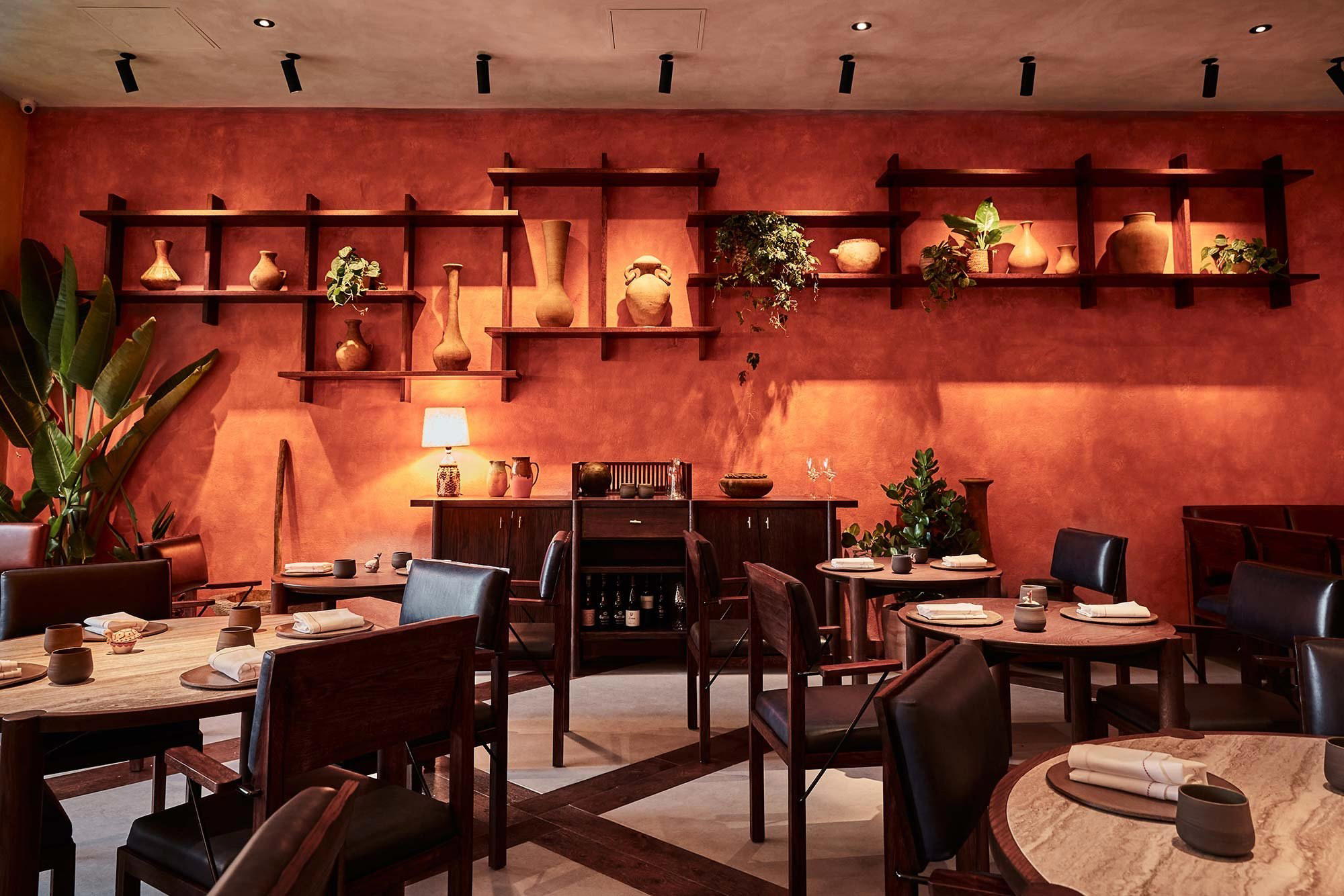
Bars in London
Browse all →
Hotels in London
Browse all →


At a Glance
- Intimate
- Modern
- Sophisticated
- Elegant
- Date Night
- Special Occasion
- Chefs Counter
- Open Kitchen
- Sake Program
- Craft Cocktails
Current opening hours
- Monday
- Closed
- Tuesday
- 12–8:30 PM
- Wednesday
- 12–8:30 PM
- Thursday
- 12–8:30 PM
- Friday
- 12–8:30 PM
- Saturday
- 12–8:30 PM
- Sunday
- Closed
Hours can change for holidays and private events. Last verified .
Modern yet warm decor with ambient lighting, open kitchen, curved wooden counter creating a relaxing, sophisticated, and intimate atmosphere.