HIMI


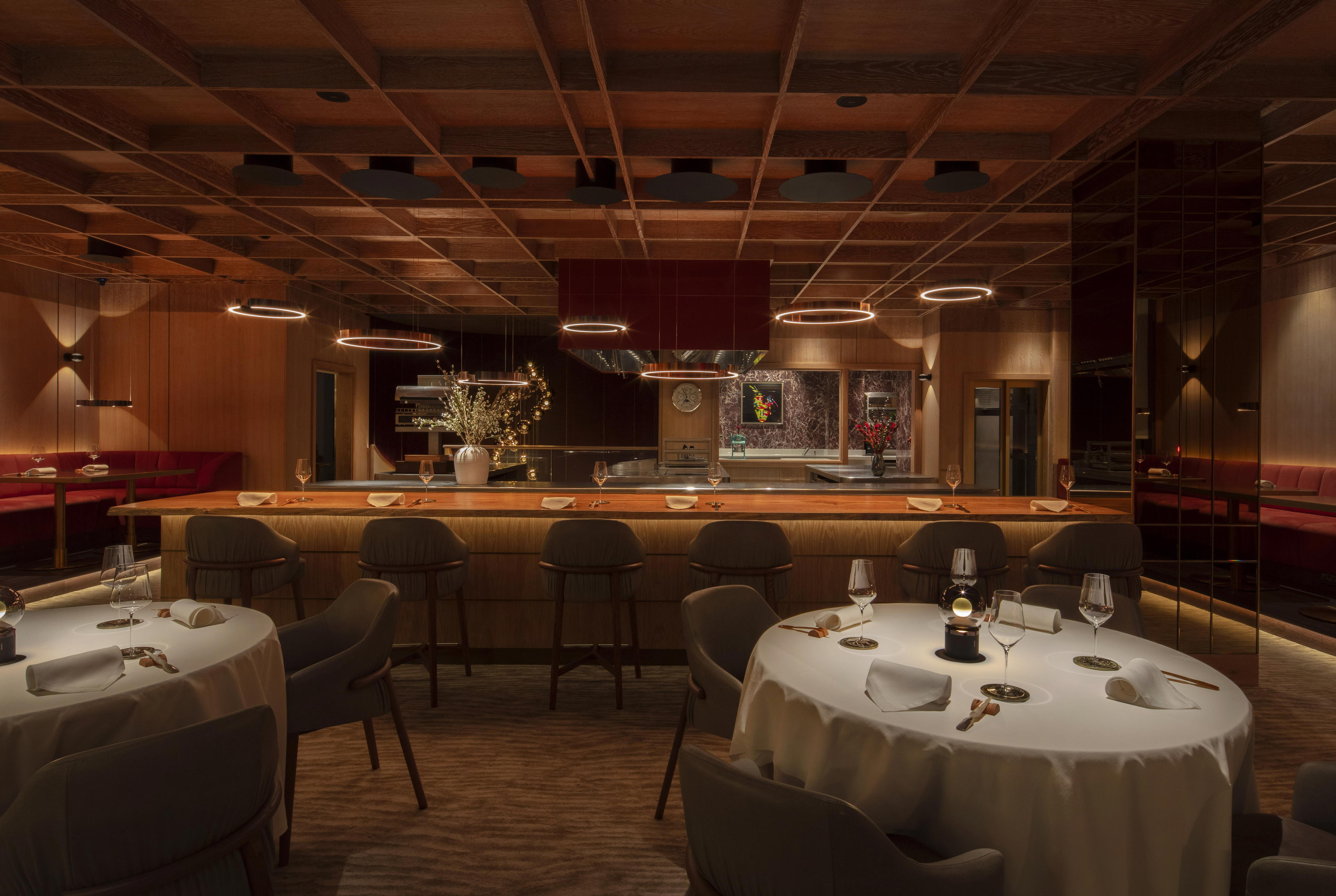
Opened in early 2025 by the team behind Roji, HIMI brings izakaya-style drinking and eating to Carnaby Street's Newburgh Street. The format leans into counter seating, animated kitchen energy, and a short menu built around robata grilling, udon, and fried chicken.
Pearl is the En Primeur Club membership app — saves, bookings, and concierge access live there. Same editors, same standards.
- Address
- 4 Newburgh St, Carnaby, London W1F 7RF, United Kingdom
- Phone
- +44 20 3089 8223
- Website
- himi.uk
- Directions
- Get directions
 Saves & bookings on Pearl
Counter Culture on Newburgh Street
Carnaby Street's retail-heavy grid has never been London's most obvious address for serious Japanese cooking, but the blocks running off it, particularly Newburgh Street, have quietly accumulated a more considered restaurant scene than the surrounding shopfront tourism might suggest. HIMI is a modern Japanese neo-izakaya in Carnaby, London, with a counter-forward room where the kitchen is the centrepiece and the evening is structured around the kind of standing-order drinking and eating that defines the izakaya format in Japan.
The izakaya model, transplanted to London, tends to bifurcate. Some versions arrive as full-service restaurants that borrow the aesthetic but retain formal pacing; others commit to the looser, drinks-first, dishes-as-they-come rhythm that gives the format its appeal in Osaka and Tokyo. HIMI positions itself clearly in the second camp. The counter seats face the kitchen directly, and the energy of the room is tied to what's happening at the grill and fryer rather than to a tasting menu's cadence. Tables are available for groups who want to face each other, but the counter is where the format reads most fluently.
Evening vs. Daytime: When the Format Works Hardest
The izakaya tradition is, at its core, an after-work institution: a place where the transition from the office to the evening happens incrementally, beer by beer and small plate by small plate. HIMI channels that specific function.
Where comparable Japanese addresses in London, including Chisou and Humble Chicken, run more structured daytime and evening services, the izakaya format resists that division. The room is calibrated for the post-work crowd: cold beer on arrival, robata smoke in the air, the kitchen moving at speed.
HIMI operates on different logic entirely: the menu is short, the dishes are designed to share, and the value proposition is built around frequency rather than occasion. You come here after work on a Tuesday, not to mark an anniversary.
What the Kitchen Sends Out
The menu is anchored by three points that recur across early assessments of the room: fried chicken with the crispness that makes the dish work alongside cold lager; Inaniwa udon with duck, a pairing that borrows from the richer broth traditions of northern Japan; and red shrimp from the robata grill, finished with squid ink. These are not dishes that require contextual explanation at the table. They are direct in their pleasures and precise in their execution.
The robata grill is the kitchen's central piece of equipment, and it shows in how the menu is structured. Robata cooking, which uses charcoal heat applied at distance rather than direct flame, suits seafood and smaller cuts that benefit from smoke without the intensity of direct grilling. Red shrimp is a natural fit: the sweetness of the flesh reads against char and salt cleanly. Squid ink as a finish adds salinity and a visual contrast that makes the dish legible at a glance.
Inaniwa udon is a different register, one of the four major udon traditions in Japan, distinguished by its thin, smooth noodle and delicate texture. Pairing it with duck, which has the fat content to carry a richer broth, is a considered combination. It sits alongside the fried chicken as a reason to return, rather than a reason to visit once and move on.
For context on what London's Japanese scene produces at greater formality, Akira operates at a different price tier and register. And if the Tokyo source of this cuisine is of interest, Myojaku and Azabu Kadowaki represent the capital of origin at its most precise.
The Roji Connection and What It Signals
HIMI was opened by the husband-and-wife team behind Roji, a fact that carries some weight in how the room is read by the London Japanese dining community. Roji earned a Michelin Star and established a reputation for careful, small-format cooking. HIMI does not replicate that format: it is deliberately looser, larger in ambition for frequency rather than occasion, and lower in its price architecture. That trajectory, from starred tasting menu to accessible izakaya, reflects a pattern visible in other cities where chef teams use a second venue to reach a broader audience without diluting the first project.
The Michelin Plate awarded in 2025 confirms a minimum standard of execution without placing it in the starred tier. A Plate signals that Michelin's inspectors found consistent, honest cooking worth noting, and for a venue less than a year old, that recognition sets a floor. Among the broader context of London's decorated restaurants, which at the leading end includes addresses like The Fat Duck in Bray, L'Enclume in Cartmel, and Moor Hall in Aughton, HIMI occupies a different position by intent: accessible, repeatable, and priced at £££ in a neighbourhood where the surrounding offer skews more tourist-facing.
Planning Your Visit
HIMI is at 4 Newburgh Street, Carnaby, London W1F 7RF, a short walk from Oxford Circus. The price range sits at £££, positioning it as a mid-tier spend for London's Soho-adjacent dining, notably lower than the formal Japanese tier represented by venues like Umu. Counter seats are the recommended choice for the full kitchen-facing experience; table seats are available for parties who prefer a different arrangement.
If you are building a wider UK itinerary around serious cooking, Gidleigh Park in Chagford, Hand and Flowers in Marlow, and hide and fox in Saltwood represent the regional picture at varying price points.
Quick reference: HIMI, 4 Newburgh St, Carnaby, London W1F 7RF. Price range: £££. Michelin Plate 2025. Google: 4.7 (177 reviews). Counter and table seating.
Budget Reality Check
Comparable venues nearby, for context on price, style, and recognition.
| Venue | Cuisine | Price | Awards | Notes |
|---|---|---|---|---|
| HIMIThis venue — the venue you are viewing | Soho, Modern Japanese Neo-Izakaya | $$$ | Michelin Plate | Not listed |
| Akira | Not listed | $$$$ | Michelin Plate | South Kensington, Authentic Japanese Omakase |
| Canteen | North Kensington, Flavour-driven Italian | $$$ | Michelin Plate | Not listed |
| Junsei | Marylebone, Authentic Japanese Yakitori | $$$ | Not listed | Not listed |
| Danieru Sushi | Chelsea, Authentic Japanese Sushi | $$$ | Not listed | Not listed |
| Pippin's | Earl's Court, Modern British Gastropub | $$$ | Michelin Plate | Not listed |
Recognition history
Dated appearances from independent guides and award organizations, with the underlying list record or original source where available.
Michelin Plate
Michelin
Opinionated About Dining Casual in Europe Recommended
Opinionated About Dining
Opinionated About Dining Newly Added European Restaurants
Opinionated About Dining
Michelin Plate
Michelin
Continue exploring
More in London
Restaurants in London
Browse all →
Bars in London
Browse all →
Hotels in London
Browse all →



At a Glance
- Trendy
- Modern
- Intimate
- Lively
- Date Night
- Casual Hangout
- After Work
- Open Kitchen
- Sake Program
- Craft Cocktails
Current opening hours
- Monday
- Closed
- Tuesday
- 12–2:30 PM, 5:30–10:30 PM
- Wednesday
- 12–2:30 PM, 5:30–10:30 PM
- Thursday
- 12–2:30 PM, 5:30–10:30 PM
- Friday
- 12–2:30 PM, 5:30–10:30 PM
- Saturday
- 12–10:30 PM
- Sunday
- Closed
Hours can change for holidays and private events. Last verified .
Minimalist design with warm welcoming energy, open kitchen heat, clinking drinks, and a Soho-cool soundtrack in a cramped yet lively counter-focused room.