The Vincent Rooms
The Vincent Rooms sits inside Westminster Kingsway College on Vincent Square, SW1, where culinary students run a full-service restaurant open to the public. Positioned a short walk from Victoria and the Houses of Parliament, it offers a distinctive proposition: formally trained kitchen work at accessible prices in one of London's more quietly residential Westminster squares.
Pearl is the En Primeur Club membership app — saves, bookings, and concierge access live there. Same editors, same standards.
- Address
- 76 Vincent Square, London SW1P 2PD, United Kingdom
- Phone
- +442078028391
- Website
- thevincentrooms.co.uk
- Directions
- Get directions
 Saves & bookings on Pearl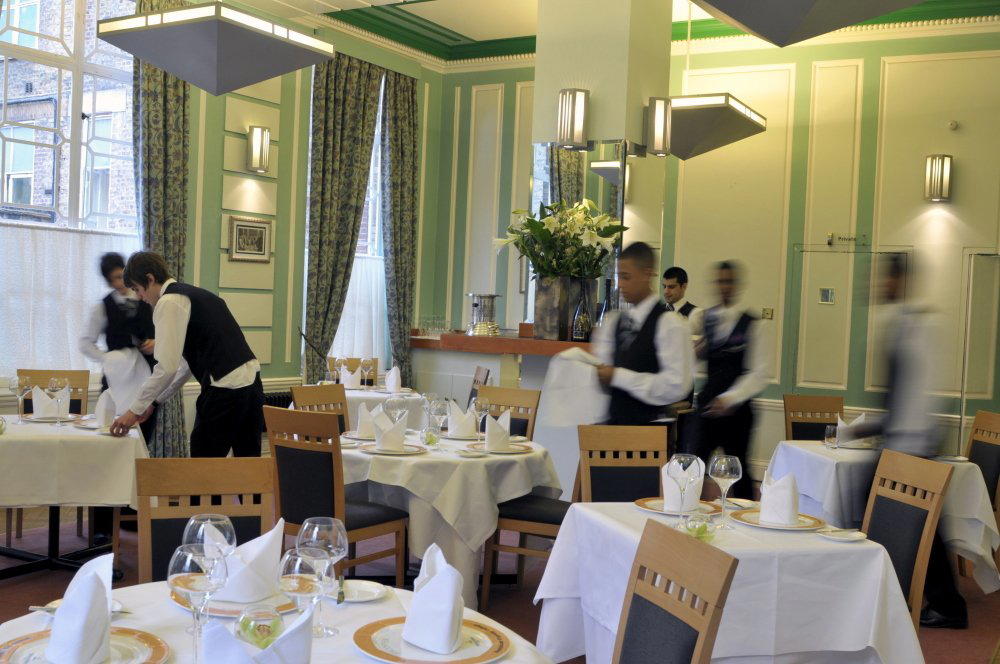
Vincent Square and the Westminster Dining Tradition
Vincent Square occupies an unusual position in the SW1 map: a large private garden square owned by Westminster School, ringed by mansion blocks and college buildings, sitting between the political machinery of Parliament and the residential calm of Pimlico. It is not a restaurant district in any conventional sense. There are no queues on the pavement, no neon signage, no clusters of competing kitchens nearby. That geographical remove is precisely the condition that makes The Vincent Rooms possible as a format.
London's serious culinary training colleges have long maintained public-facing restaurants as live practice environments. The model is well established across European cities: students execute full-service dining under qualified supervision, the public receives formally structured meals at prices that reflect the educational context rather than the commercial market, and the institution builds a practical bridge between classroom instruction and professional kitchen reality. The Vincent Rooms belongs to that tradition.
A Location That Shapes the Experience
The address puts The Vincent Rooms at a deliberate distance from the West End dining circuit. CORE by Clare Smyth, Restaurant Gordon Ramsay, and Sketch, The Lecture Room and Library operate at ££££ price points in districts where the dining is itself part of the neighbourhood identity. Vincent Square offers the opposite condition: the square is quiet, the setting collegiate, and the draw is not the postcode but the format.
That format has a specific geography of relevance. Diners who visit tend to arrive from Victoria (the nearest major transport hub), from the offices that fill Westminster's side streets, or specifically because they know the college's reputation. Walk-in traffic from passing tourists is minimal. The restaurant draws a self-selecting audience: people who understand what a college training restaurant is and why the trade-offs involved are worth making.
For comparison, the UK's most formally recognised fine dining destinations operate in different geographic registers. Waterside Inn in Bray, Le Manoir aux Quat'Saisons in Oxford, and L'Enclume in Cartmel are destination-led, built around travel and occasion. The restaurant belongs to a different category entirely: accessible, proximity-led, and structured around the idea that serious culinary craft should have a public stage even before it enters the commercial market.
The Training Restaurant Model
Across the UK, the training restaurant format has produced kitchens that punch well above their price tier. Institutions like Westminster Kingsway have supplied graduates to some of London's most recognised kitchens, and the pipeline runs visibly through the public restaurant. What distinguishes a well-run college restaurant from a direct student exercise is the presence of professional supervisors who hold the standard, and the degree to which the menu and service format mirror commercial expectations rather than simplified approximations of them.
The college's culinary programme has produced chefs who have gone on to work in the kinds of kitchens that hold Michelin recognition, and the training restaurant is where that professional formation begins to take shape in front of a paying audience.
That dynamic creates a particular kind of dining atmosphere. Service may carry the measured formality of students performing to assessment criteria. Kitchen timing can reflect the realities of supervised instruction. But the seriousness of intent is structurally built in: students have professional stakes in the meal, supervisors are qualified practitioners, and the menu reflects what the curriculum demands at any given point in the academic year. For diners who understand this, the experience carries a dimension that no fully commercial restaurant can replicate: the sense that the meal is doing something beyond feeding its guests.
Placing The Vincent Rooms in London's Broader Scene
London's fine dining tier in SW1 and the surrounding area leans heavily toward established, high-investment operations. The Ledbury and Dinner by Heston Blumenthal represent the ££££ end of Modern European and British cooking in the city. Across the wider UK, kitchens like Moor Hall in Aughton, Gidleigh Park in Chagford, and Midsummer House in Cambridge define the upper bracket of formally recognised restaurant dining. The restaurant sits in a different category. Its competitive set is better understood as the category of value-accessible, formally structured dining in London where the provenance of the food and service carries its own specific interest.
Internationally, the training restaurant model has analogues in cities with strong culinary school traditions. Institutions in Paris, Lyon, and New York operate similarly structured public dining rooms, and some, like the restaurants associated with Le Bernardin's peer institutions in New York, have produced commercially significant talent. The format is not a London peculiarity; it is a structural feature of how serious culinary education sustains itself financially while giving students exposure to service under real conditions. For readers familiar with Le Bernardin in New York City or Atomix in New York City, the distance between those kitchens and a training restaurant is obvious, but the lineage of culinary formation runs through institutions like Westminster Kingsway.
Other UK kitchens that have shaped the broader range of formal dining, including Hand and Flowers in Marlow, hide and fox in Saltwood, Opheem in Birmingham, and Restaurant Andrew Fairlie in Auchterarder, were each shaped by chefs who passed through training environments before building independent identities. The training restaurant sits at the beginning of that chain, not the end.
Know Before You Go
- Address: 76 Vincent Square, London SW1P 2PD
- Nearest transport: Victoria station (approximately 10 minutes on foot); Pimlico and St James's Park are also within walking distance
- Context: Operating within Westminster Kingsway College; service and kitchen are run by culinary students under professional supervision
- Academic calendar: Opening times and availability follow the college term schedule; the restaurant does not operate during holidays or exam periods
- Booking: Reservation is essential.
- Price tier: Accessible relative to London's commercial restaurant market; reflects the educational rather than commercial context
Where It Fits
Comparable venues nearby, for context on price, style, and recognition.
| Venue | Cuisine | Price | Notes |
|---|---|---|---|
| The Vincent RoomsThis venue — the venue you are viewing | Modern European Brasserie & Tasting Menus | $$ | Not listed |
| Half Cut Market | Modern European Small Plates | $$$ | Holloway |
| Picture Fitzrovia | Modern European | $$$ | Fitzrovia |
| 28-50 By Night | Modern European with Live Jazz | $$$ | Marylebone |
| Little Duck The Picklery | Seasonal European Small Plates & Ferments | $$ | Dalston |
| Avenue | Dining | Not listed | St. James's |
Continue exploring
More in London
Restaurants in London
Browse all →
Bars in London
Browse all →
Hotels in London
Browse all →



At a Glance
- Elegant
- Sophisticated
- Intimate
- Special Occasion
- Date Night
- Hotel Restaurant
- Extensive Wine List
Current opening hours
- Monday
- 9 AM–3 PM
- Tuesday
- 9 AM–9 PM
- Wednesday
- 9 AM–9 PM
- Thursday
- 9 AM–9 PM
- Friday
- 9 AM–3 PM
- Saturday
- Closed
- Sunday
- Closed
Hours can change for holidays and private events. Last verified .
Light and airy dining room with 1920s windows and panelled walls, providing a relaxed, welcoming, and elegant atmosphere.