The Only Place In Town
Our verdict
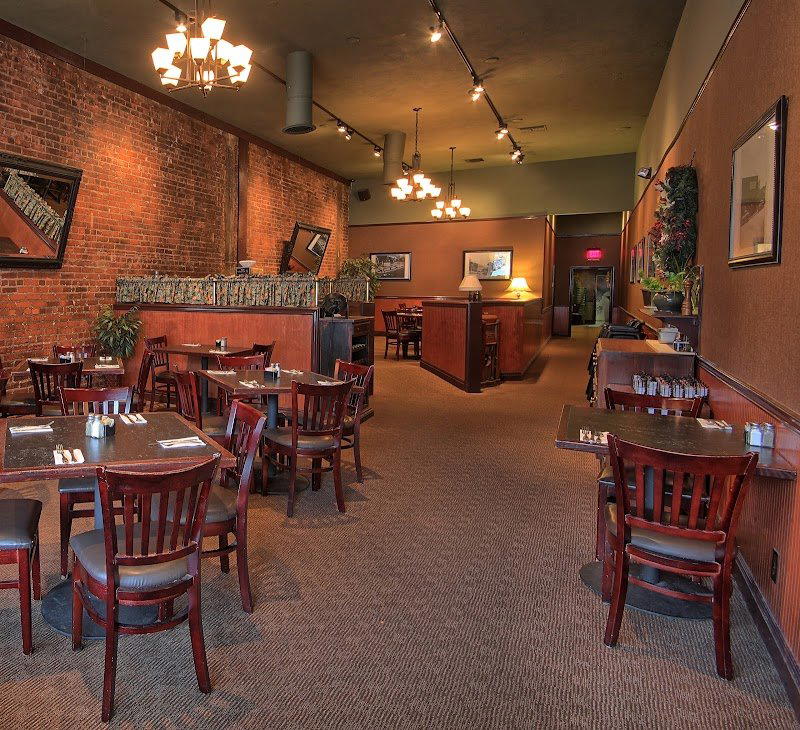
Tucked into the quiet residential rhythm of Sierra Madre's main boulevard, The Only Place In Town carries a name that doubles as a local verdict. The restaurant sits at 110 W Sierra Madre Blvd, in a small-town dining scene where community regulars and curious visitors share the same tables. Specific menu and pricing details are best confirmed directly with the venue before visiting.

Pearl is the En Primeur Club membership app, where members save venues, book tables and use the concierge.
The menu
What to order
- Turkey burger
- Cobb salad
- Gyros sandwich
- Mountain Trail Breakfast
- Scallops
- Salmon
The Small-Town Dining Ritual and What It Demands of the Guest
Sierra Madre is not a dining destination in the way Pasadena or Monrovia are. Its restaurant scene is short, walkable, and shaped by the rhythms of a community that largely knows its neighbors. Along West Sierra Madre Boulevard, the pace slows to match the foothill setting: morning coffee stretches into late brunch, lunch slips toward mid-afternoon, and dinner feels less like an event than a continuation of the day. Into that context, The Only Place In Town at 110 W Sierra Madre Blvd arrives with a name that functions as both self-description and local consensus. In towns this size, that kind of name either ages badly or proves accurate over years of steady patronage.
The dining ritual in small American towns operates by different conventions than the tasting-menu formalism you encounter at, say, Alinea in Chicago or Atomix in New York City. There are no sommeliers narrating pours, no printed menus timed to courses. What structures the meal instead is familiarity: servers who recognize faces, a room that settles into conversation rather than performance, and a menu calibrated to the expectations of a community rather than the ambitions of a single chef. This is a different kind of discipline, and for the reader accustomed to the tasting-counter format of Lazy Bear in San Francisco or the farm-sourcing protocols of Single Thread Farm in Healdsburg, it requires a deliberate adjustment of expectations.
A Name That Earns Its Place
The phrase "the only place in town" carries specific weight depending on context. Applied to a restaurant in a major metropolitan corridor, it reads as marketing bravado. Applied to a venue on the main street of a foothill enclave with a population under 11,000, it reads as geography. Sierra Madre has limited dining infrastructure by design: zoning, community character, and a local resistance to chain development have kept the boulevard intimate. The result is that each venue on that strip occupies a more visible, more consequential role than any single restaurant would in a denser city.
That dynamic shapes how regulars relate to their chosen rooms. In larger dining markets, loyalty is diffuse, spread across a dozen neighborhood spots with overlapping menus and indistinguishable price points. In Sierra Madre, a restaurant that becomes a regular destination does so because the alternatives are genuinely limited. Loyalty here is structural, not sentimental. A venue that holds a regular's attention over months and seasons is doing something functional right, whether that's consistency of execution, reliability of hours, or simply being the room where the community chooses to gather.
The Foothill Setting as Context for the Meal
Approaching the venue along West Sierra Madre Boulevard, the physical environment matters more than it would in a denser urban corridor. The street reads as a main-street archetype: low-rise storefronts, a walkable scale, the San Gabriel Mountains visible as a backdrop that changes character with the light. The geography places Sierra Madre between the denser commercial strips of Arcadia to the south and the Angeles National Forest to the north. Dining here is not preceded by a valet queue or a parking structure; it is preceded by a short walk through a neighborhood that still functions as a neighborhood.
That approach shapes the pacing of the meal before the guest sits down. Small-town dining rituals begin at the door, not at the table. The entry, the greeting, the familiarity or lack of it between staff and arriving guests, these set the register for everything that follows. The contrast with the orchestrated arrival sequences at The French Laundry in Napa or The Inn at Little Washington is instructive: formal dining ritualizes the threshold crossing as ceremony. Neighborhood dining treats it as a return.
Where The Only Place In Town Sits Among Sierra Madre's Dining Options
Sierra Madre's dining offerings span a narrow but coherent range. Belle's Bagels anchors the morning end of the day, handling the breakfast-and-lunch format with a focus that keeps the menu disciplined and the lines moving. Bess operates in the Italian wine-bar register, with a largely vegetarian-friendly approach that places it in a different evening tier. The Only Place In Town occupies a position in that compact scene whose specific cuisine and format are best confirmed directly with the venue, the details available at time of writing do not extend to menu category or price structure.
What the name implies is primary relevance within a limited field. That is a different kind of credential than the recognition that places Providence in Los Angeles or Addison in San Diego in their respective competitive sets, but it is a credential nonetheless. In a town where dining options are few, the venue that sustains a reputation across a community of regulars is meeting a meaningful standard, even if that standard is defined by proximity and habit rather than by critical consensus.
Planning Your Visit
The venue is located at 110 W Sierra Madre Blvd, Sierra Madre, CA 91024. Sierra Madre sits approximately 20 miles northeast of downtown Los Angeles, accessible via the 210 freeway with parking generally available along the boulevard and on adjacent residential streets. Given the limited dining inventory in the immediate area, arriving without a reservation or a confirmed understanding of current hours carries risk, particularly on weekends, when the foothill communities draw visitors from the broader San Gabriel Valley. For a fuller picture of what the boulevard offers across different meal occasions and cuisine types, the EP Club Sierra Madre restaurants guide maps the scene across all current entries.
Readers building a wider Southern California dining itinerary can also reference Blue Hill at Stone Barns and Bacchanalia in Atlanta for contrast in how farm-to-table commitments operate at different scales and price tiers. For those traveling through other US cities with an interest in how regional dining scenes develop around community identity rather than critical acclaim, Brutø in Denver, Causa in Washington, D.C., and Emeril's in New Orleans each offer instructive points of comparison in how a single venue can define a neighborhood's dining identity over time.
Frequently asked questions
Where do I go for The Only Place In Town?
The Only Place In Town is located at 110 W Sierra Madre Blvd, Sierra Madre, CA 91024, Sierra Madre.
Is The Only Place In Town a good dining option for visitors staying near the San Gabriel foothills?
For visitors based in the San Gabriel foothill corridor, Sierra Madre sits approximately 20 miles northeast of downtown Los Angeles and is accessible without freeway driving once you're in the area. The Only Place In Town at 110 W Sierra Madre Blvd is positioned on the town's main commercial strip, making it a practical stop alongside the walkable block. It functions as a local dining reference point rather than a destination restaurant, which suits day-trippers exploring the foothills.
What's the signature dish at The Only Place In Town?
Given the venue's position as a neighborhood cornerstone at 110 W Sierra Madre Blvd, the kitchen likely reflects the preferences of a close-knit local community rather than a rotating concept menu. Visit directly or contact the venue for current offerings.
Should I book The Only Place In Town in advance?
Sierra Madre's dining options are deliberately few, which concentrates local demand on a short list of addresses. For weekend visits especially, checking ahead is advisable. No online booking platform is currently listed so calling ahead or arriving early on weekdays is the practical approach.
What makes The Only Place In Town worth seeking out?
A restaurant that holds a position as a community anchor in a town the size of Sierra Madre earns that standing through consistency, not marketing. Located at 110 W Sierra Madre Blvd, roughly 20 miles northeast of downtown Los Angeles, it serves a residential foothill community that has limited alternatives and high expectations for the ones it keeps. That dynamic tends to produce reliable, unpretentious cooking.
Can The Only Place In Town handle vegetarian requests?
The best approach is to check the venue's official channels before your visit. Sierra Madre's dining scene is small enough that most local restaurants are accustomed to straightforward dietary requests from regulars.
Is The Only Place In Town good value for money?
In the broader foothill corridor between Pasadena and Monrovia, neighborhood restaurants at this scale tend to price for repeat local custom rather than destination visitors, which generally keeps costs moderate. Confirm current pricing directly with the venue at 110 W Sierra Madre Blvd.
Cuisine Lens
Comparable venues nearby, for context on price, style, and recognition.
| Venue | Cuisine | Price | Awards | Notes |
|---|---|---|---|---|
| The Only Place In TownThis venue (the venue you are viewing) | Classic American Comfort Food | $10–20 | Not listed | Not listed |
| Belle’s Bagels, Sierra Madre | Modern Jewish Deli Bagels | $10–20 | Not listed | Sierra Madre |
| Bess | Italian Wine Bar | $30–50 | Not listed | Sierra Madre |
| Fountain Cafe | Classic American Diner | Not listed | Not listed | Mission District |
| Luella | Refined Comfort Food with Mediterranean & Southern Influences | Not listed | Not listed | Russian Hill |
| Trencher | Detroit-Style Pan Pizza & Desserts | $20–30 | Michelin Bib Gourmand · James Beard Award Semi Finalist | Echo Park |
Continue exploring
More in Sierra Madre
Restaurants in Sierra Madre
All restaurants in Sierra Madre →
Bars in Sierra Madre
Browse all →

Hotels in Sierra Madre
Browse all →
Wineries in Sierra Madre
Browse all →
Details
- Classic
- Cozy
- Casual
- Brunch
- Casual Hangout
- Family
- Group Dining
- Standalone
- Mountain
- Street Scene
- A La Carte
- Vegetarian Friendly
- Gluten Free Options
Current opening hours
- Monday
- 8 AM–9 PM
- Tuesday
- 8 AM–9 PM
- Wednesday
- 8 AM–9 PM
- Thursday
- 8 AM–9 PM
- Friday
- 8 AM–9 PM
- Saturday
- 8 AM–9 PM
- Sunday
- 8 AM–3 PM
Hours can change for holidays and private events. Hours as of .
Relaxed and casual with natural lighting from windows offering mountain views; described as a friendly neighborhood gathering spot with a homey, unpretentious feel.