On a quiet stretch of Rue Verrerie in central Dijon, The Little Italy Shop occupies a different register from the city's formal dining rooms. Where Dijon's Michelin-tracked tables lean into Burgundian tradition and modern French technique, this address plants itself in Italian deli and retail territory, offering an alternative to the tasting-menu circuit for those after provisions, pantry staples, or a slower kind of eating.
Pearl is the En Primeur Club membership app — saves, bookings, and concierge access live there. Same editors, same standards.
- Address
- 25 Rue Verrerie, 21000 Dijon, France
- Phone
- +33380305837
- Website
- facebook.com
- Directions
- Get directions
 Saves & bookings on Pearl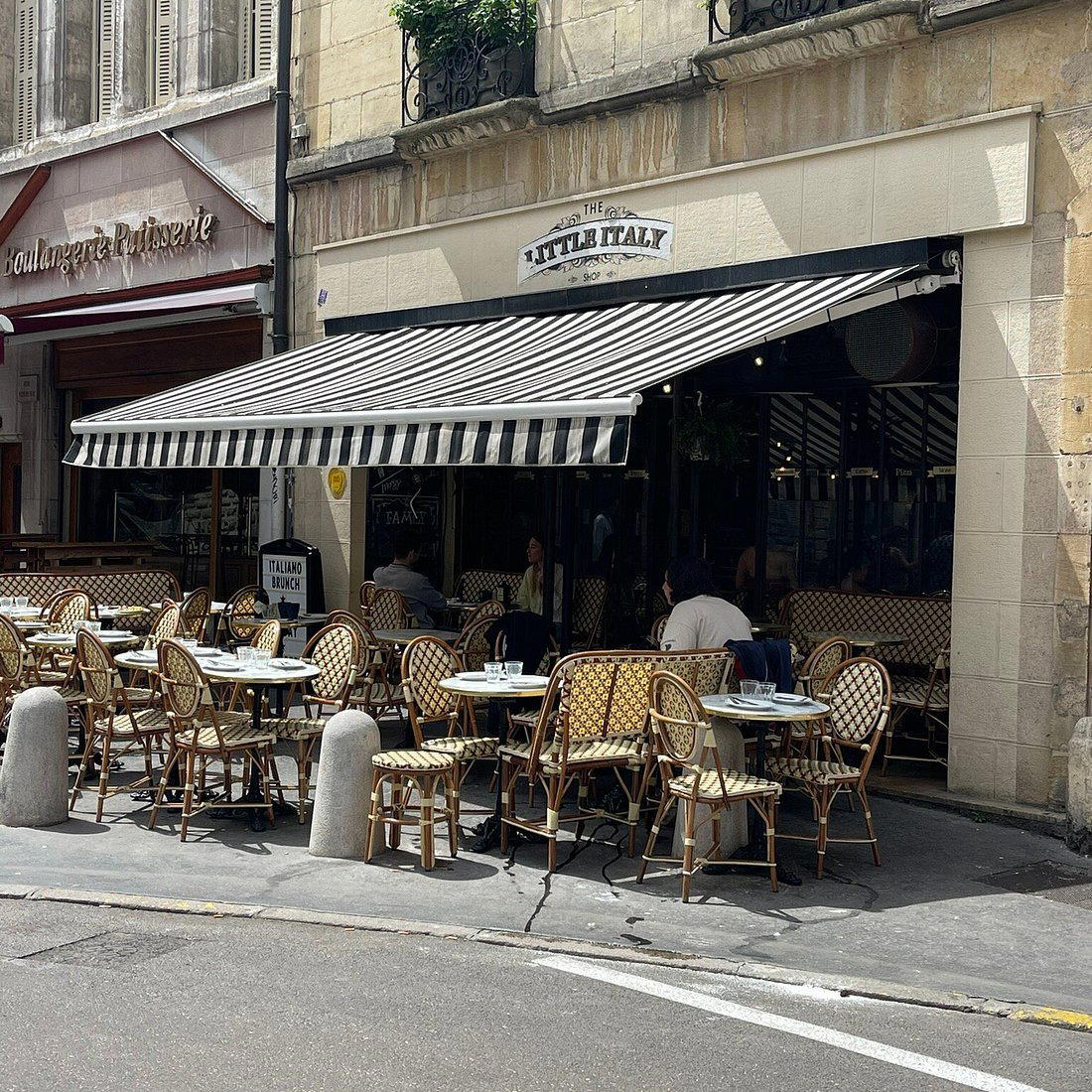
Italian Retail in a Burgundian City
Dijon's dining identity is anchored in Burgundian produce and French technique. The city's most-discussed addresses, including William Frachot at the Michelin two-star level and Loiseau des Ducs in the creative-modern bracket, operate in a culinary register defined by wine-country produce and classical French discipline. The Little Italy Shop at 25 Rue Verrerie sits outside that tradition entirely. It is an Italian-facing retail or deli concept in a city where the dominant culinary conversation rarely strays from Pinot Noir and Époisses. That positioning alone gives it a distinct function in the local food scene.
French cities at Dijon's scale tend to support a small cluster of Italian specialty shops that serve a dual audience: locals seeking imported pantry goods unavailable in supermarkets, and visitors looking for a less formal food encounter than the tasting-menu circuit provides. The Little Italy Shop appears to occupy that space on Rue Verrerie, a street in the historic centre that sees consistent pedestrian traffic given its proximity to Dijon's main commercial and cultural zones. The address puts it within reach of the city's broader restaurant corridor, where venues like L'Aspérule and Origine define the upper end of modern French cooking in the city.
The Space and What It Signals
Italian deli formats in French provincial cities have developed a recognisable spatial grammar over the past two decades. Shelves loaded with imported tins, dried pasta in multiple formats, olive oils arranged by region, and wheels or wedges of aged cheese create a density of product that functions as interior architecture in its own right. The visual language of an Italian specialty shop, with its colour from packaged goods and the physical presence of cured meats and aged cheeses behind or on the counter, communicates something specific to a customer before a word is exchanged: this is a place of sourcing, not just consuming.
At 25 Rue Verrerie, the street-level presence of The Little Italy Shop places it in a neighbourhood context that is more everyday than the formal dining zones of Dijon. Rue Verrerie sits within the historic core, which means stone-fronted buildings and a pedestrian scale that suits a slow-browse retail visit. In Italian deli formats, the counter is typically the functional and social centre of the space: it is where you ask questions about provenance, where recommendations happen, and where the transaction carries some of the weight that tableside service carries in a restaurant. If the space follows that format, the counter is where most of the editorial interest lies.
This format contrasts meaningfully with where Dijon's dining energy is concentrated. The city's upper tier, anchored by addresses like William Frachot and Loiseau des Ducs, operates in purpose-built formal dining rooms with structured service sequences. Further down the price spectrum, Akatsuki offers a different non-French register entirely. The Little Italy Shop belongs to none of these categories. Its spatial proposition is closer to the European alimentari model, where the room is a storage and display system as much as a hospitality environment.
Italian Specialty Retail in the French Provincial Context
The category of Italian specialty food retail in France has a long precedent. Italian immigration into Burgundy and Lyon contributed significantly to French food culture across the twentieth century, and Italian products have been present in French specialty retail since well before the current artisan-import wave. What has changed in the past decade is the specificity of sourcing: where earlier shops stocked broadly Italian goods, the current generation tends to emphasise regional Italian provenance, small-producer relationships, and DOP or IGP-certified products that carry traceable geographic identity.
That shift mirrors what has happened at the upper end of French restaurant cooking more broadly. Venues like Alléno Paris au Pavillon Ledoyen and Mirazur have built reputations on hyper-specific provenance at the plate level. The Italian deli format, at its more considered end, applies a version of that same logic to retail: the product on the shelf has a story, a region, a producer. The format in which it operates invites that expectation from a certain kind of customer.
For visitors already planning time at Dijon's more formal tables, including the multi-course formats at Loiseau des Ducs or the creative modern programme at Origine, a stop at an Italian specialty shop provides a different register of food encounter: slower, more self-directed, and oriented toward taking something home rather than consuming on the spot. This is a useful function in a city whose dining scene otherwise skews heavily toward the sit-down and served format.
Where It Sits in Dijon's Food Scene
Dijon supports a food scene with more range than its Michelin count alone suggests. The formal tier, tracked through awards and covered in our full Dijon restaurants guide, runs from starred French tables through modern creative formats. Below and alongside that tier, the city has a practical food culture: markets, specialty retailers, and neighbourhood addresses that serve the daily needs of a mid-sized French city with strong food literacy. The restaurant belongs to the latter category.
That category rarely attracts the same critical attention as the tasting-menu circuit, but it is often where a city's food character is most legible. The cheeses a specialty shop chooses to stock, the pasta formats it carries, the olive oils it selects: these choices reflect both supplier relationships and a reading of local appetite. In a city where Burgundian produce dominates the fine-dining conversation, an Italian-facing shop offers a counterpoint that has its own logic. It is not competing with L'Aspérule or William Frachot. It is serving a different moment in a visitor's or resident's relationship with food in this city.
For context on how Italian-leaning formats sit within broader French dining culture, the output of chefs like those at Bras or Flocons de Sel illustrates the French fine-dining end of the spectrum. The restaurant operates nowhere near that register, which is precisely its point. It occupies the retail and provisions space that a city's food scene needs to feel complete: somewhere between the farmers' market and the restaurant table.
Planning a Visit
The address at 25 Rue Verrerie places the restaurant in Dijon's historic centre, walkable from the main train station and from the city's principal dining and shopping streets. As with most retail formats of this type, the visit rewards those who arrive without a fixed list and are prepared to take direction from what is on the shelf or behind the counter on any given day. Dijon's covered market, the Halles de Dijon, operates on a separate schedule and offers complementary Burgundian produce for those building a broader provisions itinerary in the city.
The Essentials
Comparable venues nearby, for context on price, style, and recognition.
| Venue | Cuisine | Price | Notes |
|---|---|---|---|
| The Little Italy ShopThis venue — the venue you are viewing | Not listed | $$ | Not listed |
| Akatsuki | Not listed | $$ | Rue Coupée de Longvic, Authentic Japanese Izakaya |
| Dr Wine | Not listed | $$$ | city centre, Burgundian Wine Bar with Small Plates |
| Le Coin Caché | Jouvence, French Bistronomique | $$$ | Not listed |
| Au Gre de mes envies | Centre-ville, Authentic Taiwanese Asian | $$ | Not listed |
| Masami | Centre-ville, Authentic Japanese Sushi | $$$ | Not listed |
Continue exploring
More in Dijon
Restaurants in Dijon
Browse all →
Bars in Dijon
Browse all →
Hotels in Dijon
Browse all →
At a Glance
- Cozy
- Rustic
- Casual Hangout
- Brunch
- Open Kitchen
Current opening hours
- Monday
- Closed
- Tuesday
- 12–2 PM, 7–10 PM
- Wednesday
- 12–2 PM, 7–10 PM
- Thursday
- 12–2 PM, 7–10 PM
- Friday
- 12–2 PM, 7–10 PM
- Saturday
- 12–2 PM, 7–10 PM
- Sunday
- 12–3 PM
Hours can change for holidays and private events. Last verified .
Cozy and atypical atmosphere with antiques, warm Italian hospitality, and a bustling vibe.