The Grand Tier
The Grand Tier occupies one of New York City's most consequential dining addresses: the Metropolitan Opera House at Lincoln Center. As a venue shaped by decades of formal American dining culture, it sits at the intersection of cultural institution and restaurant, drawing a crowd that arrives for performance nights and stays for the experience of dining inside one of the city's defining architectural spaces.
Pearl is the En Primeur Club membership app — saves, bookings, and concierge access live there. Same editors, same standards.
- Address
- 30 Lincoln Center Plaza, New York, NY 10023
- Phone
- +12127993400
- Website
- patinagroup.com
- Directions
- Get directions
 Saves & bookings on Pearl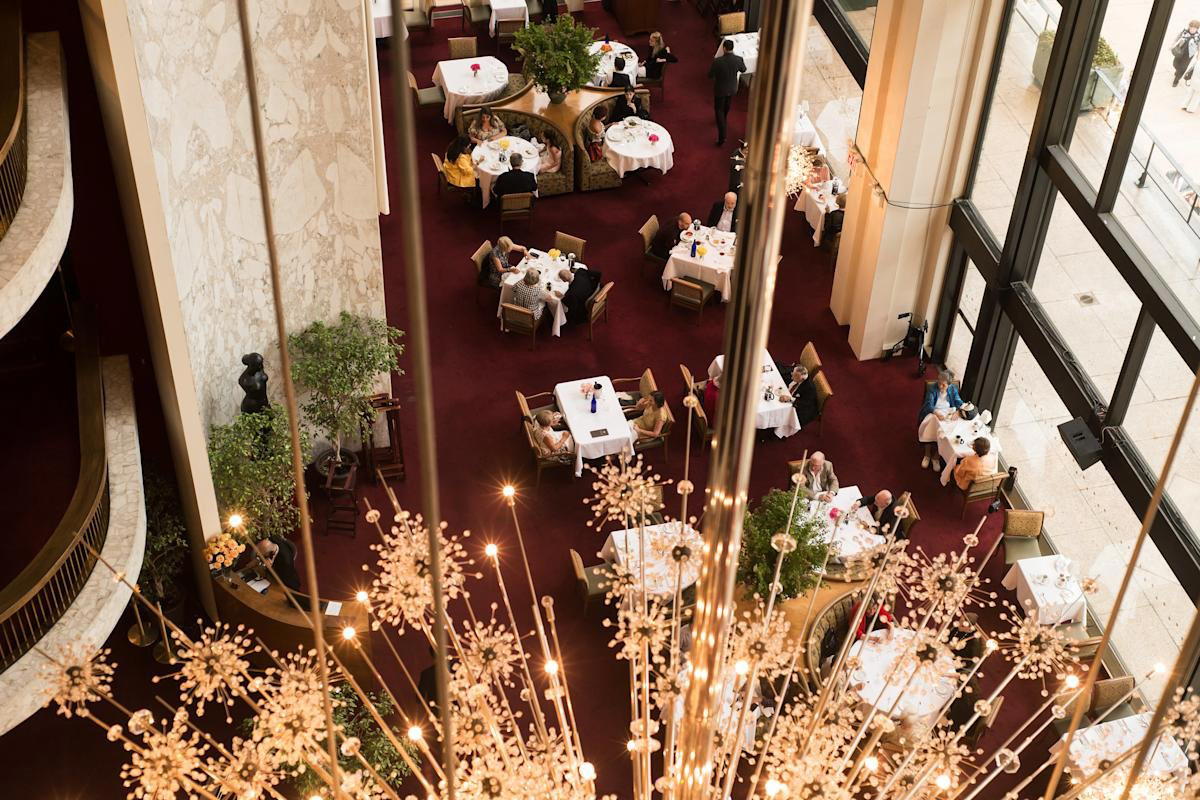
Dining at Lincoln Center: A Room That Predates the Modern Fine Dining Conversation
The Grand Tier restaurant, positioned inside the Metropolitan Opera House, inherited that cultural gravity from the beginning. While the city's fine dining conversation has cycled through nouvelle cuisine, molecular innovation, and now chef-driven tasting menus at places like Per Se and Atomix, The Grand Tier has operated in a different register: a room defined first by the institution it serves, and secondarily by the food it produces. That distinction matters when assessing where it sits in the city's dining hierarchy.
How the Format Has Shifted Over Sixty Years
Few New York restaurant addresses carry as much accumulated context as the Metropolitan Opera House. When The Grand Tier opened alongside the building, formal pre-performance dining was a standard feature of upper-tier American cultural life. The expectation was white tablecloths, continental cooking, and a room that signaled occasion before the curtain rose. That format was common across the country's major performing arts institutions, from Chicago's Lyric Opera to the Kennedy Center in Washington.
What changed over the following decades was not distinctive to Lincoln Center. The long decline of continental European fine dining as a category, the democratization of the tasting menu format, and the rise of chef-driven destination restaurants shifted where serious diners directed their attention. Venues like Le Bernardin redefined what French technique could mean in New York. Counter-format Japanese dining, represented at its most expensive by Masa, carved out a separate premium tier entirely. The Grand Tier's evolution has been less about competing with those developments and more about clarifying its own position within a cultural institution that predates them.
The reinvention question for institution-attached restaurants has never been simple. The dining room exists to serve an opera audience on a schedule dictated by curtain times, not to accommodate a three-hour chef's tasting menu. That structural constraint shapes everything from menu format to service pacing. It is the same constraint that governs comparable rooms at The Inn at Little Washington and similarly positioned venues in other American cultural capitals, though the restaurant's specific version is tethered to among the more demanding performance calendars in the world.
The Current Direction: Institution-Driven, Not Chef-Driven
One telling signal about the restaurant's current positioning is structural rather than culinary. Institution-operated or institution-affiliated restaurants in this tier tend to optimize for reliability and occasion rather than culinary innovation. Across comparable venues in American fine dining, including rooms at major performing arts centers in cities like Chicago and San Francisco where Lazy Bear and Alinea represent the chef-driven alternative, the institution-attached room occupies a clearly different niche. The diner arrives with a cultural purpose already defined. The restaurant's job is to serve that purpose well.
This is not a criticism. The tradition of pre-performance dining is a specific and legitimate category with its own standards. What it means practically is that restaurant's competitive set is less the Michelin-starred tasting menu circuit and more the broader group of destination dining rooms attached to cultural institutions, a category that includes comparable venues at major opera houses and concert halls across Europe and North America. Particularly useful international comparisons are rooms like those adjacent to Alain Ducasse's Louis XV in Monte Carlo, where formality and occasion have their own logic independent of ranking systems.
The Room Itself as the Argument
Lincoln Center's architecture makes a case that few dining rooms in the United States can match on sheer physical terms. The restaurant's position within the Met Opera House places it inside Phillip Johnson's travertine-clad interior, with views over the plaza and access to the Chagall murals that remain among the more reproduced images in the building's visual history. The room's architectural gravity is the kind of detail that justifies the address for a specific category of dining occasion, particularly during the Met's season, which runs from September through May.
That seasonal structure is relevant to planning. Dining at the restaurant during the Met Opera season carries a different energy than visiting outside of performance nights. The room has been associated with pre-curtain dining since the building opened, and the operational rhythm of the restaurant follows the opera's calendar more closely than a conventional restaurant's service schedule. For the fall and winter months, particularly during marquee productions, the context of the room shifts perceptibly. Comparable farm-to-table destination restaurants like Blue Hill at Stone Barns in nearby Tarrytown have their own seasonal logic; the restaurant's is dictated by the Met's programming calendar instead.
Where It Sits in the New York Dining Map
For a full account of where the restaurant fits relative to the city's other premium dining options, including the Korean-influenced tasting menu rooms that have emerged as a serious alternative tier, see our full New York City restaurants guide. The progressive Korean format at Jungsik New York and the more technically demanding counter at Atomix represent the category of dining room where the food is the primary argument. The restaurant makes a different argument, one where the room, the institution, and the occasion carry as much weight as what arrives on the plate.
Across the broader American fine dining circuit, the institution-attached room has produced some of the country's most durable dining experiences. Bacchanalia in Atlanta, Addison in San Diego, Providence in Los Angeles, and Single Thread Farm in Healdsburg each define their position through a combination of format discipline and physical setting. The restaurant's setting is among the more architecturally significant of any restaurant in the country. Whether the kitchen matches the room is the question repeat visitors bring to the table.
For reference points on what institution-adjacent fine dining looks like at its most ambitious internationally, 8 1/2 Otto e Mezzo Bombana in Hong Kong and Emeril's in New Orleans each demonstrate how a destination dining room can maintain relevance through format evolution over decades. The restaurant's own evolution continues inside one of New York's most demanding institutional contexts.
Planning Your Visit
Reservations: Advance booking is advisable, particularly during the Met Opera season (September through May) when pre-performance demand concentrates around curtain times. Dress: Dress: Smart casual. Budget: Budget: Expect about $85 per person. Timing: Pre-performance seatings are timed to Met Opera curtain schedules; confirm service hours with the venue directly when booking around specific productions.
- Seafood Prelude
- Lobster Tail
- Pan-Seared Scallops
- Filet Mignon
- Chocolat Soufflé
- Branzino a la Plancha
Comparable Venues
Comparable venues nearby, for context on price, style, and recognition.
| Venue | Cuisine | Price | Notes |
|---|---|---|---|
| The Grand TierThis venue — the venue you are viewing | Contemporary American Fine Dining | $$$$ | Not listed |
| Gansevoort Rooftop | Contemporary American with Mediterranean & Sushi Influences | $$$$ | West Village |
| The NoMad Restaurant | Seasonal European-American Fine Dining | $$$$ | Midtown South-Flatiron-Union Square |
| Home | Contemporary American Fine Dining | $$$$ | West Village |
| To Be Hosted Supper Club | Contemporary American | $$$$ | Tribeca-Civic Center |
| Miss Nellie's | New American Gastropub | $$$ | Hell's Kitchen |
Continue exploring
More in New York City
Restaurants in New York City
Browse all →
Bars in New York City
Browse all →
Hotels in New York City
Browse all →





At a Glance
- Elegant
- Sophisticated
- Classic
- Well Known
- Special Occasion
- Date Night
- Celebration
- Historic Building
- Design Destination
- Extensive Wine List
- Craft Cocktails
- Local Sourcing
- Street Scene
Classic, elegant, and theatrical, with a refined fine-dining atmosphere.