The Global Village Foundation Kafe serves international Indonesian cafe fare in Buleleng, with beer, casual service, and a conversational setting for lunch, dinner, or brunch.
Pearl is the En Primeur Club membership app — saves, bookings, and concierge access live there. Same editors, same standards.
- Address
- Jl. Raya Lovina-Singaraja, Anturan, Kec. Buleleng, Kabupaten Buleleng, Bali 81191, Indonesia
- Phone
- +6282141320288
- Directions
- Get directions
 Saves & bookings on Pearl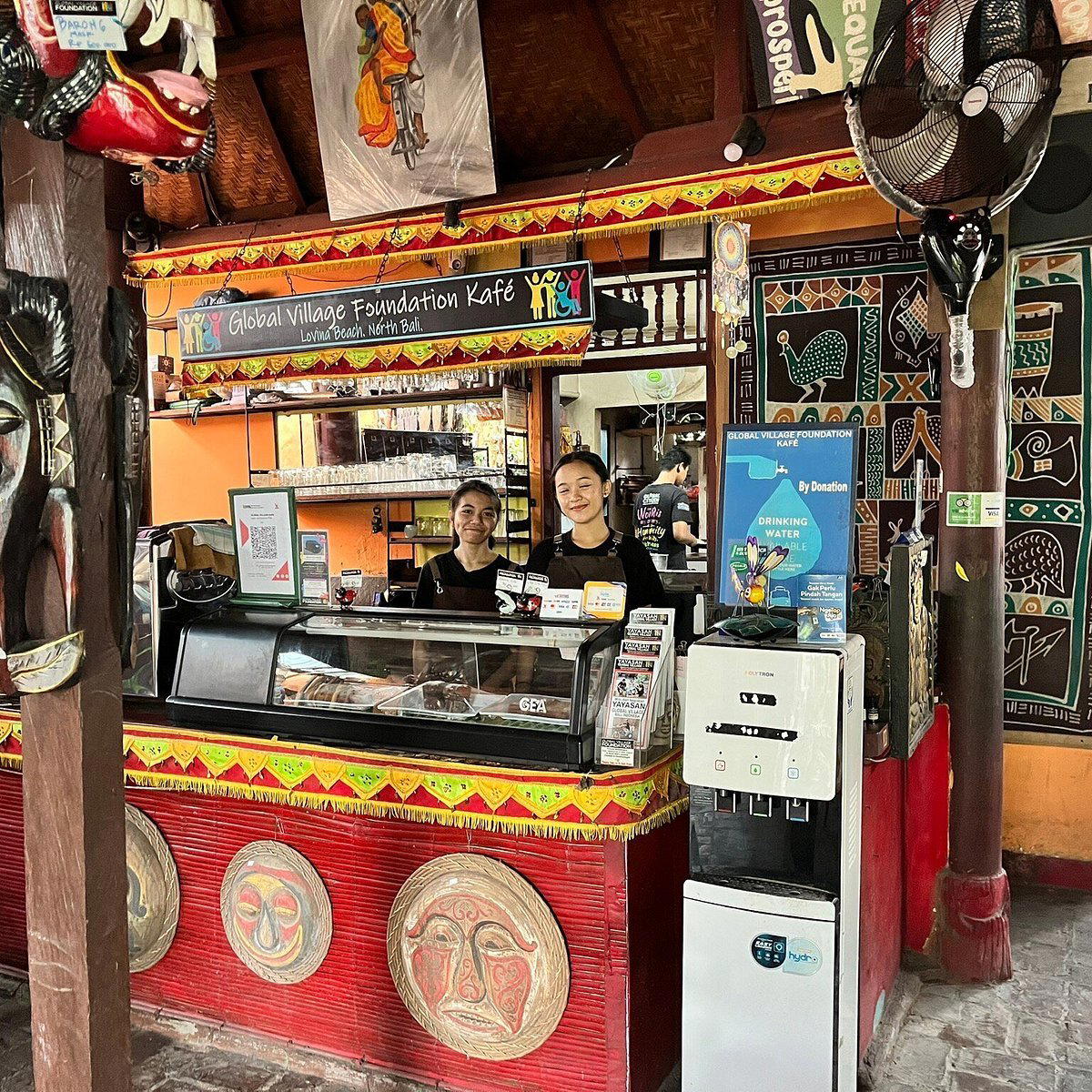
Lovina's Coastal Fringe and the Informal Dining Tradition
Along the Lovina–Singaraja corridor in Buleleng, North Bali, the dining scene operates on different rhythms than the resort-dense south of the island. The coast here is darker volcanic sand rather than pale tourist-beach white, and the communities strung along Jalan Raya Lovina–Singaraja have built a hospitality culture that is quieter, more locally anchored, and less driven by the international package-tour traffic that shapes menus in Seminyak or Canggu. The Global Village Foundation Kafe sits within this Anturan stretch, a village address that places it squarely in the community-facing, everyday-social part of Buleleng's food economy rather than in any curated fine-dining tier.
That placement matters for how you read the venue. North Bali's informal café and warung continuum runs from roadside rice plates to NGO- and foundation-linked community spaces that double as gathering points. The Global Village Foundation Kafe, with its foundation branding, belongs to the latter category, a format that is more common in Bali's inland and northern regions than the south, where commercial hospitality dominates almost completely.
What the Setting Communicates Before You Order
The address on Jalan Raya Lovina–Singaraja puts the kafe on one of Buleleng's main coastal road connectors, a stretch that carries local traffic, motorbikes, and the occasional tourist vehicle heading toward the dolphin-watching jetties at Lovina or onward to Singaraja's market district. Venues along this road tend to be legible from the road, open-fronted, and designed for air circulation rather than air conditioning, a structural response to North Bali's climate, where the dry season runs from approximately May through October and afternoon heat is a consistent variable.
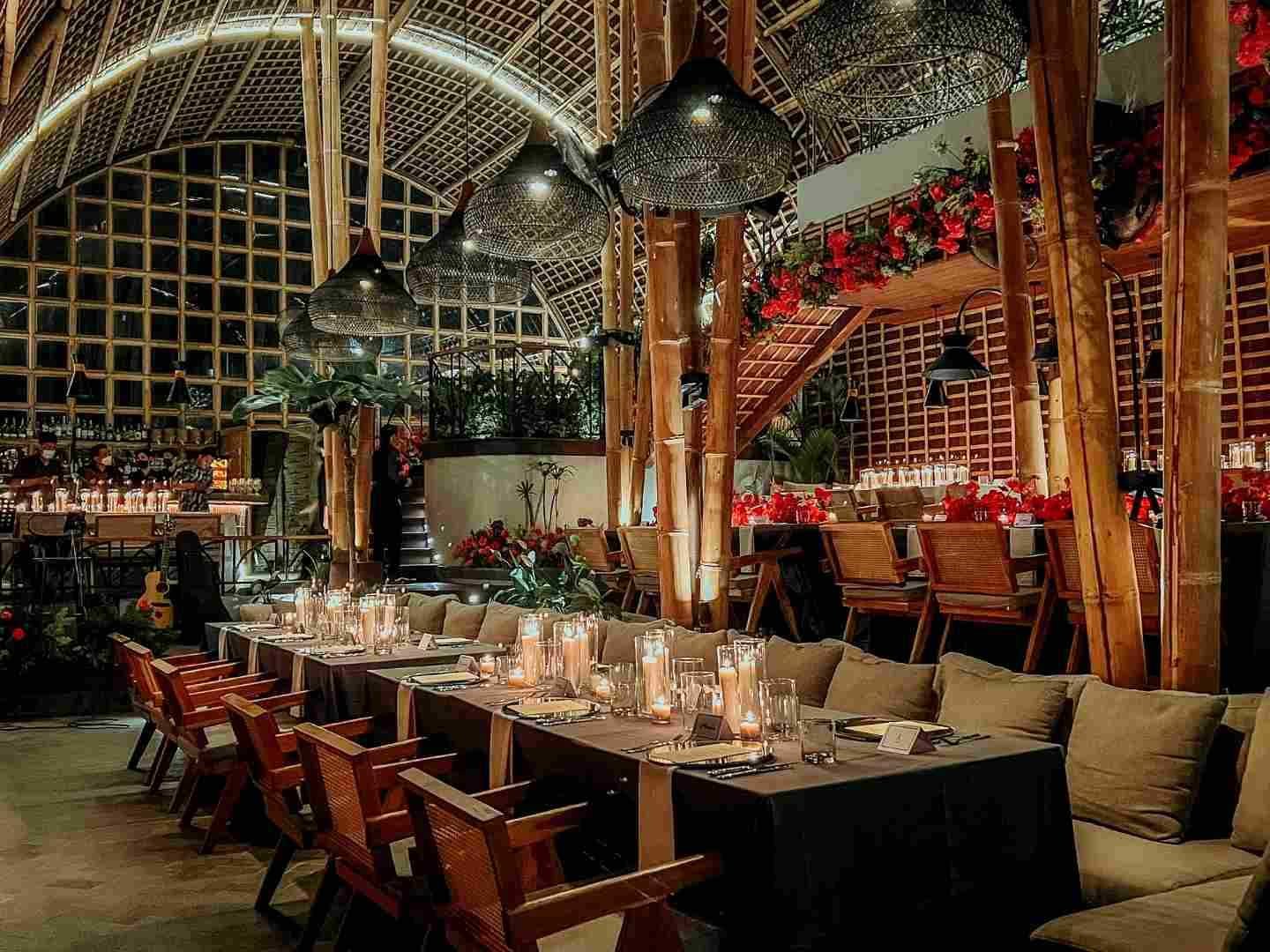
The sensory register of this kind of space is specific: the ambient sound is road traffic mixed with whatever acoustic buffer the building's setback provides, cooking smells from open kitchens carry outward rather than being contained, and the visual vocabulary is often hand-painted signage, tiled or concrete floors, and seating arranged for communal use rather than intimate dining. This is not a criticism, it is a description of a format that works precisely because it is not trying to replicate a southern Bali resort aesthetic. For context on what other Buleleng venues are doing within this broader coastal corridor, Pantai Restaurant and Secret Garden Restaurant represent alternative registers in the same district.
The Foundation-Linked Café Format in Bali's North
Foundation-linked or NGO-adjacent food spaces appear with some regularity across Indonesia's secondary cities and regional towns. They typically serve a dual function: generating income for a broader community or charitable mission while also providing a physical meeting point for volunteers, visitors, and locals involved with that mission. The menu choices in such spaces tend toward inclusivity, dishes that are accessible across dietary backgrounds, familiar to both Indonesian and international guests, and priced at a level that reflects the non-commercial orientation of the parent organisation.
This positions the Global Village Foundation Kafe differently from purely commercial competitors like Hiland 1280 Restaurant or Orlando's Mama Pizza Garden in Buleleng. The competitive set here is not other restaurants, it is other community-purpose spaces, which have a different value proposition entirely. For a broader map of where this venue sits within the Buleleng dining picture, see our full Buleleng restaurants guide.
Placing Buleleng Within Bali's Wider Dining Conversation
Bali's culinary attention has, for the better part of a decade, concentrated on the south. Locavore NXT in Ubud and Bikini Restaurant Bali in Badung represent the kind of ambitious, credentialed dining that draws international food press. Jungle Fish Bali in Gianyar occupies a scenic-plus-casual tier that appeals to travellers willing to venture slightly off the Seminyak axis. North Bali, by contrast, has not produced that tier of destination restaurant, partly because the visitor infrastructure is thinner and partly because the local food culture has not historically sought that kind of external validation.
That gap is not necessarily a deficit. Particularly interesting regional food in Indonesia exists precisely because it has not been reshaped for external consumption. The warung and café culture in Buleleng reflects Balinese-Javanese coastal cooking traditions, rice-forward, rich in sambal variation, fish sourced from the Bali Sea, that do not require a tasting menu format to communicate their integrity. Across the Indonesian archipelago, similar community-adjacent café formats can be found in Lombok, Flores, and Sulawesi, each carrying a distinct regional food vocabulary. For comparison points at the higher end of Indonesia's dining spectrum, August in Jakarta and Kita 喜多 Restaurant And Bar in Kecamatan Menteng illustrate what formal ambition looks like in the capital. The distance between those venues and a foundation kafe in Anturan is not just geographical, it is structural.
Practical Considerations for Visitors
The Global Village Foundation Kafe is a casual International Indonesian Cafe in Anturan, Buleleng, with an average price of about $10 per person. That absence itself is informative. Spaces of this type typically operate on drop-in rather than reservation models, keep hours that track their community programming rather than standard restaurant service windows, and communicate primarily through local word-of-mouth or foundation network channels rather than through booking platforms or social media presence. Visitors planning a stop should treat arrival flexibility as a given rather than an inconvenience.
The Anturan address is reachable from central Singaraja in under twenty minutes by motorbike or car, and from the Lovina beach area in approximately ten minutes, depending on traffic along the coastal road. Those arriving from southern Bali face a longer overland journey, the cross-island route via Bedugul and Munduk takes roughly two hours from Denpasar, which is worth factoring into any trip that combines north and south Bali itineraries. Seasonally, the dry months between May and October provide more predictable conditions for this stretch of coast; the wet season (November to April) brings heavier rains to North Bali, which can affect open-air venues more significantly than enclosed ones.
Indonesia's Broader Café and Community Space Scene
Coffee culture component of Indonesian café life deserves mention here. Indonesia is among the world's major coffee-producing nations, Flores, Toraja, Aceh, and Kintamani (notably in Bali itself) produce arabica varieties with distinct regional profiles. Community cafés across the archipelago have become informal showcases for local coffee, and a foundation-linked kafe in Bali's coffee-adjacent north would logically occupy that space. Kintamani arabica, grown at altitude in the volcanic highlands to the south, is Bali's most geographically distinct coffee and appears widely across the island's café scene. The café sits within Bali's coffee-adjacent north, where local coffee culture is part of the everyday dining landscape.
For reference points elsewhere in Indonesia's café and restaurant ecosystem: Agreya Coffee Bogor in Bogor illustrates how the serious coffee-café format operates in West Java, while Hwang Fu Dimsum in Tangerang and Chongqing Liuyishou Hotpot in South Jakarta show the diversity of formats operating across Greater Jakarta. Beyond Indonesia, İstanbul Kebab in Lombok Utara offers a regional cross-archipelago comparison, and at the furthest end of the dining spectrum, Le Bernardin in New York City and Atomix in New York City anchor the global tier of formal dining against which community cafés read as an entirely different category of experience, intentionally so, and without apology for it. Hai Di Lao in Central Jakarta offers yet another reference point for how communal dining formats scale in Indonesia's urban centres.
Peers Worth Knowing
Comparable venues nearby, for context on price, style, and recognition.
| Venue | Cuisine | Price | Notes |
|---|---|---|---|
| The Global Village Foundation KafeThis venue — the venue you are viewing | International Indonesian Cafe | $$ | Not listed |
| Secret Garden Restaurant | Indonesian Seafood in Garden Setting | $$ | Anturan, Lovina Beach |
| The 10th Table | Contemporary European-Asian Fusion | $$ | Lovina Beach |
| Orlando's Mama Pizza Garden | Italian Pizza | $$ | Lovina |
| Hiland 1280 Restaurant | Mountain Comfort Food | $$ | Pancasari |
| Pantai Restaurant | Balinese Seafood & International Beach Grill | $$ | West Bali National Park |

At a Glance
- Cozy
- Rustic
- Casual Hangout
- Family
- Standalone
- Beer Program
Current opening hours
- Monday
- 12–9 PM
- Tuesday
- 12–9 PM
- Wednesday
- 12–9 PM
- Thursday
- 12–9 PM
- Friday
- 12–9 PM
- Saturday
- 12–9 PM
- Sunday
- 12–9 PM
Hours can change for holidays and private events. Last verified .
Warm and welcoming atmosphere with friendly service from deaf staff.