The Fort
The Fort sits along Colorado Highway 8 outside Morrison, occupying a hand-built adobe structure modeled on Bent's Old Fort, the nineteenth-century fur-trade post that once anchored the Santa Fe Trail. The menu draws from the culinary traditions of the American West, including game meats, Native American ingredients, and frontier-era recipes that rarely appear on restaurant menus in the Denver metro area. It is a specific, historically grounded dining experience with few direct comparisons in the region.
Pearl is the En Primeur Club membership app — saves, bookings, and concierge access live there. Same editors, same standards.
- Address
- 19192 CO-8, Morrison, CO 80465
- Phone
- +13036974771
- Website
- thefort.com
- Directions
- Get directions
 Saves & bookings on Pearl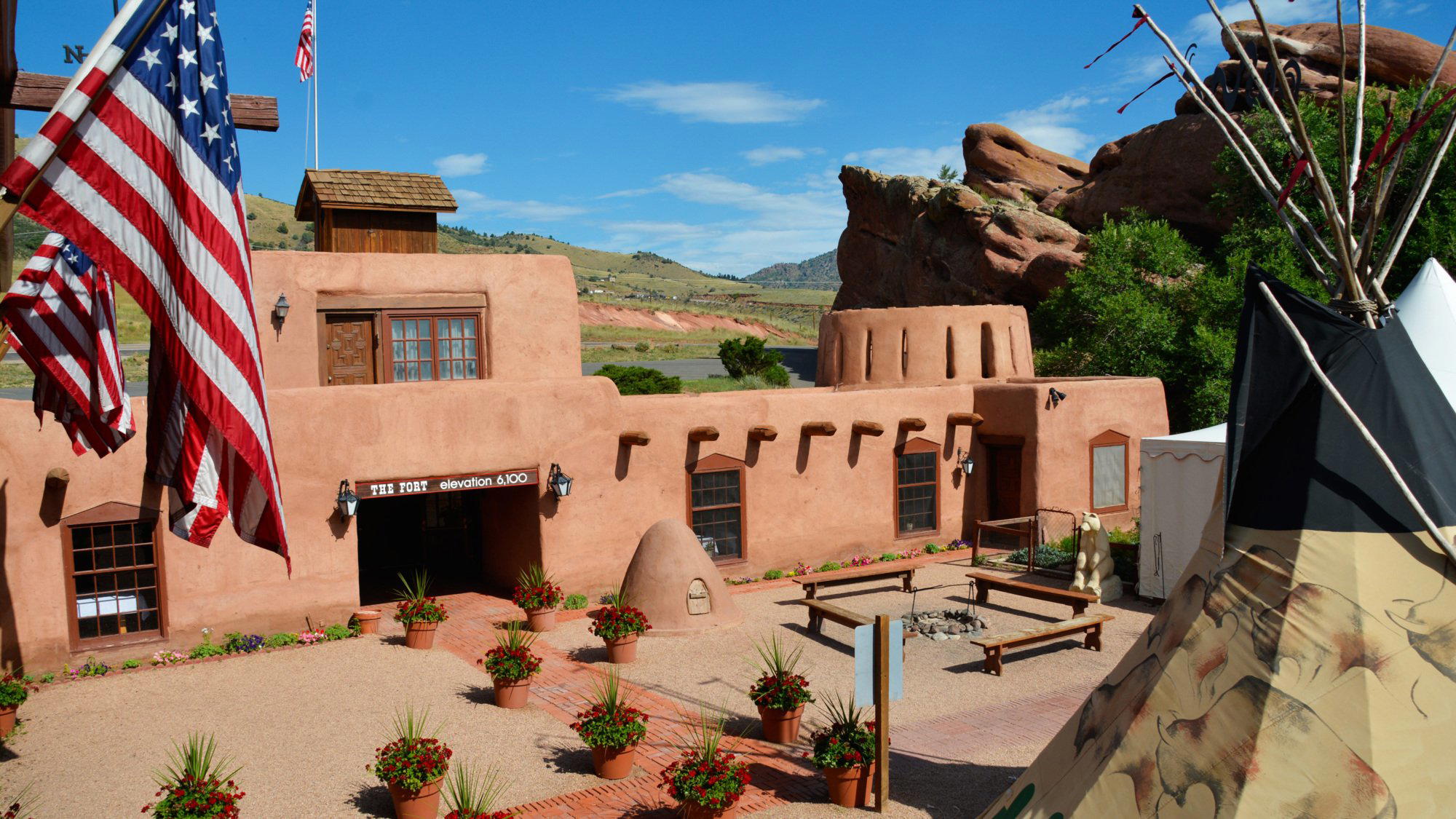
Adobe Walls and the American West on a Plate
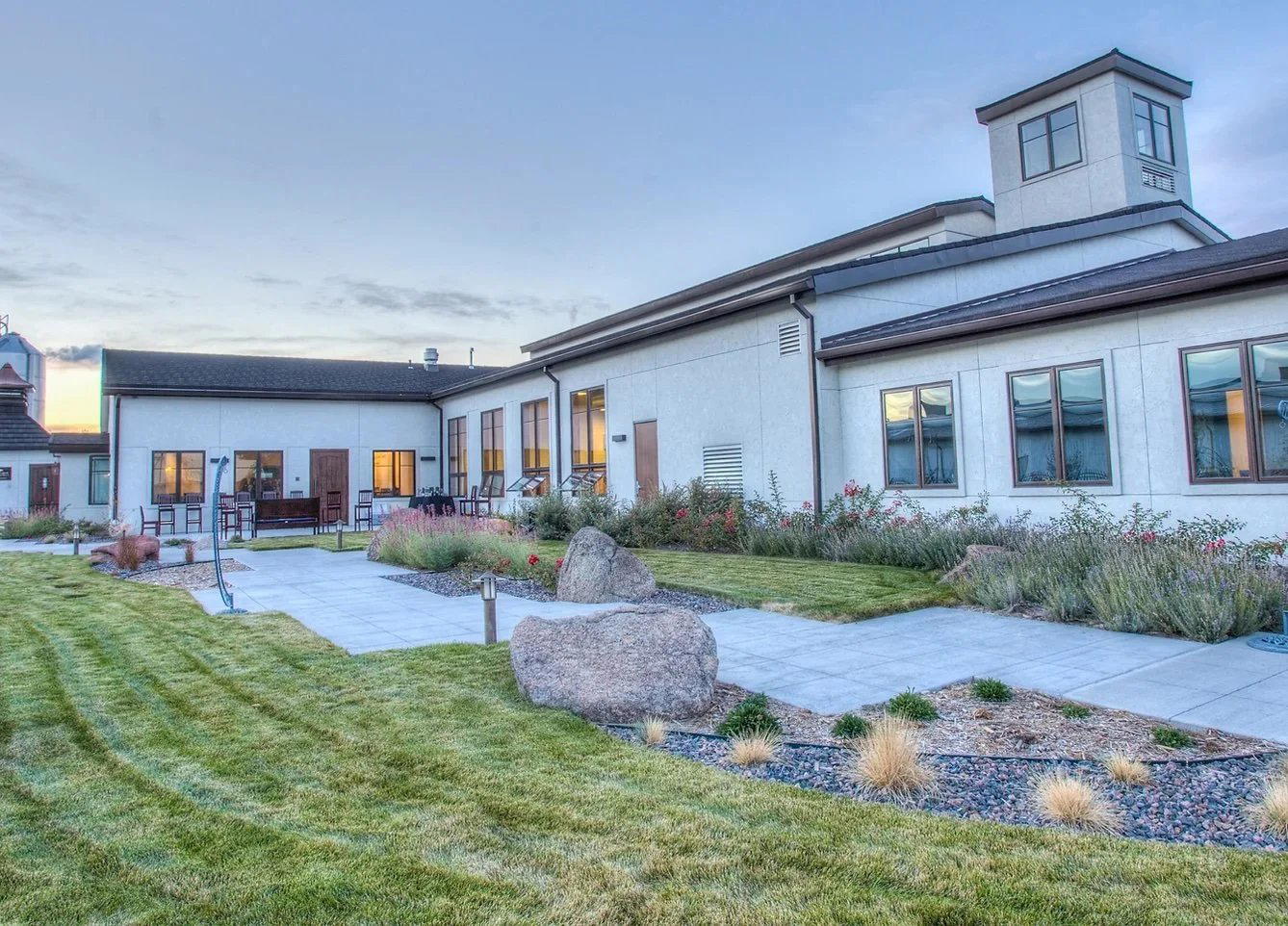
Drive south from Denver on Highway 285, turn onto Colorado Highway 8 toward Red Rocks, and the building that eventually appears on the hillside stops most first-time visitors in their tracks. It is not a converted warehouse or a repurposed Victorian. It is a full-scale adobe structure built by hand, modeled closely on Bent's Old Fort, the National Historic Landmark on the Arkansas River that served as the central trading post of the American Southwest from the 1830s onward. The physical environment at The Fort communicates something before a single dish arrives: this is a restaurant organized around a historical proposition, not a culinary trend.
That proposition is rare in American dining. While much of the country's premium restaurant conversation has consolidated around European technique, Japanese precision, or farm-to-table frameworks, the kind of programming you find at Lazy Bear in San Francisco, Alinea in Chicago, or The French Laundry in Napa, The Fort has spent decades working from a different archive entirely: the foodways of the pre-industrial American West, including the diets of Native American peoples, Spanish colonial settlers, mountain men, and the traders who passed through Bent's Fort before the Civil War.
The Cultural Roots of a Frontier Menu
The cuisine of the nineteenth-century American West was, by necessity, highly localized and ingredient-driven in ways that predate the modern farm-to-table vocabulary by more than a century. Buffalo, elk, and other game formed the protein backbone of the region's diet. Indigenous ingredients, pine nuts, chokecherries, tepary beans, blue corn, were staples long before European settlement introduced wheat and cattle at scale. Spanish colonial cooking brought chile-based sauces, posole, and techniques that traveled north from New Mexico and blended with what the land already provided.
The Fort places itself within that tradition deliberately. The menu works from historical research into frontier-era food culture rather than from a contemporary chef's personal reinvention of it. This positions the restaurant within a small category of American dining that treats culinary history as primary source material, a category that also includes places like Blue Hill at Stone Barns in Tarrytown, which organizes its menu around agrarian tradition, though the specific tradition at The Fort is entirely its own.
For diners coming from Denver's more contemporary dining scene, where restaurants like Brutø in Denver and Frasca Food and Wine in Boulder represent the region's modern fine-dining axis, the restaurant offers a genuinely different orientation. The emphasis is on what the American West actually ate, not what contemporary chefs imagine it should have eaten.
Game Meat as the Main Thread
Game proteins remain the defining feature of the menu. Buffalo has been central to the restaurant's identity since its founding decades ago, and the kitchen continues to work with it in multiple preparations. Elk, quail, and other regional meats appear alongside buffalo, maintaining the restaurant's alignment with the protein sources that defined Western frontier cooking. This is not novelty programming. The American bison was the foundational food animal of the Great Plains for thousands of years, sustaining dozens of Native nations and forming the economic basis of the nineteenth-century fur trade that Bent's Fort facilitated.
For guests accustomed to the premium American steakhouse format, where USDA Prime beef from a small number of recognized ranches is the organizing principle, the shift to bison and game represents a genuine recalibration of expectations. Buffalo is leaner than beef, with a different fat distribution and flavor profile. The kitchen's ability to work with that ingredient across a range of preparations is what separates the restaurant from novelty game restaurants that treat bison as an occasional special rather than the house foundation.
Morrison as Setting, Not Just Address
Morrison sits at the mouth of Bear Creek Canyon, at the point where the plains meet the Front Range foothills. Red Rocks Amphitheatre is minutes away. The Denver skyline is visible to the northeast on clear days. This geography matters to the restaurant's identity: the restaurant sits on terrain that carries the actual history it references on the menu. Bent's Old Fort, the original, is roughly three hours southeast near La Junta, but the landscape connecting them is continuous, the same high-altitude shortgrass prairie and red sandstone country that defined the Santa Fe Trail corridor.
For visitors combining the restaurant with a Red Rocks concert or a canyon hike, the location creates a natural itinerary. For diners making the trip specifically, it sits close enough to Denver (roughly a thirty-minute drive from the city center via Highway 285) to function as a destination dinner without requiring an overnight stay. The adjacent dining scene in Morrison is limited, making La Rocca Rossa worth noting as an alternative for those exploring the area's options.
The Colorado dining corridor that runs from Denver through Boulder and into the mountain towns has developed a distinct regional identity that broader national coverage has occasionally acknowledged, even as flagship recognition tends to cluster on the coasts. Restaurants like Le Bernardin in New York City, Providence in Los Angeles, and Addison in San Diego represent the dominant model of American fine dining that earns institutional recognition. The restaurant operates outside that model by design, which is precisely what defines its position in the regional dining conversation.
Planning a Visit
Driving is the practical option from Denver; the route via Highway 285 south to CO-8 west is direct. Visitors planning an evening here should allow time for the approach and the setting itself, both of which are part of the experience in a way that a downtown restaurant cannot replicate. Booking in advance is advisable, particularly during summer months when Red Rocks concert traffic increases demand across the Morrison area.
For those building a broader Colorado dining itinerary, the restaurant sits within a day-trip radius of Denver that also includes Frasca Food and Wine in Boulder to the north and the Denver proper options anchored by Brutø in the city. Each represents a different chapter of what Colorado dining currently looks like; the restaurant represents a chapter that predates all of them.
Budget and Context
Comparable venues nearby, for context on price, style, and recognition.
| Venue | Cuisine | Price |
|---|---|---|
| The FortThis venue — the venue you are viewing | foothills, Historic Western Steakhouse | $$$$ |
| La Rocca Rossa | downtown Morrison, Italian Steakhouse | $$$ |
| The Fort | Rooney Valley, lounge | $$$ |
| Rougarou | Curtis Park, Shapeshifting Southern | $$$ |
| Colt & Gray | Highland, New American Gastropub | $$$ |
| 240 Union Restaurant | Lakewood, Contemporary American | $$$ |
Continue exploring
More in Morrison
Restaurants in Morrison
Browse all →
Bars in Morrison
Browse all →
Hotels in Morrison
Browse all →
Wineries in Morrison
Browse all →
At a Glance
- Rustic
- Historic
- Scenic
- Well Known
- Special Occasion
- Celebration
- Date Night
- Historic Building
- Extensive Wine List
- Craft Cocktails
- Local Sourcing
- Mountain
Current opening hours
- Monday
- 5–7:30 PM
- Tuesday
- 5–7:30 PM
- Wednesday
- 5–7:30 PM
- Thursday
- 5–7:30 PM
- Friday
- 5–8:30 PM
- Saturday
- 5–8:30 PM
- Sunday
- 5–7:30 PM
Hours can change for holidays and private events. Last verified .
Warm, atmospheric lighting in a rustic Pueblo Revival adobe building evoking 19th-century frontier trading post ambiance.