The Crossing
Our verdict
At 176 Concord St in Charleston's Lower Peninsula, The Crossing occupies a dining position defined by the city's broader shift toward deliberate, ritual-paced meals. The address places it within walking distance of the waterfront and the dense concentration of serious restaurants that have reshaped Charleston's national dining reputation over the past decade. A reservation here sits within that evolving conversation.

Pearl is the En Primeur Club membership app — saves, bookings, and concierge access live there. Same editors, same standards.
- Address
- 176 Concord St, Charleston, SC 29401
- Website
- thecooper.com
- Directions
- Get directions
- Booking
- Book on OpenTable
Where the Meal Slows Down
Charleston's Lower Peninsula has a particular relationship with pace. The city's most significant dining rooms, concentrated between the Market District and the waterfront on Concord Street, tend to reward guests who arrive without a hard stop time. The Crossing, at 176 Concord St, occupies that same unhurried register. The address alone signals something: Concord Street runs close enough to the Cooper River that the air carries a salt edge on most evenings, and the walk from any nearby hotel — and there are several worth considering, catalogued in our full Charleston hotels guide — arrives with enough ambient atmosphere to set the frame before you're seated.
That physical approach matters more than it might in, say, a landlocked city block. Charleston dining, at its most considered, treats the entry as part of the ritual. You're not arriving at a transaction. You're beginning a sequence, and The Crossing's Concord Street location slots naturally into that sequence.
The Dining Ritual in a City Shaped by It
To understand what a meal at The Crossing means, it helps to understand what Charleston's dining culture has been building toward for the better part of fifteen years. The city's serious restaurant tier, which includes Vern's for American Contemporary precision and Lowland for its coastal Lowcountry framing, has largely moved away from the breezy Southern-hospitality shorthand that once defined it. What replaced that shorthand is something more deliberate: a dining rhythm that respects the ingredient sourcing, the technique, and the guest's time in roughly equal measure.
That shift runs parallel to what's happened nationally. The restaurants that have received the most sustained critical attention in recent years, from Lazy Bear in San Francisco to Alinea in Chicago, share a commitment to the meal as a structured arc, not a series of independent courses. Charleston's version of that arc tends to be less theatrical and more grounded in the region's pantry: rice-based dishes drawing on Gullah Geechee tradition, shellfish from the barrier islands, and pork preparations that trace a line back through centuries of Lowcountry foodways. Rodney Scott's BBQ represents one pole of that tradition, whole-hog, open-pit, historically rooted. The Crossing operates closer to the other pole, where those same traditions get filtered through a more formal dining lens.
The Concord Street Address in Context
Charleston's waterfront dining corridor has attracted attention that extends well beyond the Southeast. The kind of institutional recognition that accrues to restaurants like Le Bernardin in New York City or The French Laundry in Napa operates at a different scale and in a different culinary tradition, but the underlying dynamic, a city building a dense, serious dining scene over decades, is something Charleston has been replicating at its own register. The Concord Street location places The Crossing inside the zone where that concentration is most legible.
For visitors working through Charleston's restaurant circuit, the geography matters for practical planning. The address is walkable from the French Quarter and from the hotels clustered near Waterfront Park, which makes sequencing an evening easier than in some of the city's more spread-out dining pockets. If you're pairing dinner with a cocktail at one of the bars documented in our full Charleston bars guide, the logistics of the Lower Peninsula hold together well on foot.
Peer Context: Where The Crossing Sits in Charleston's Tier
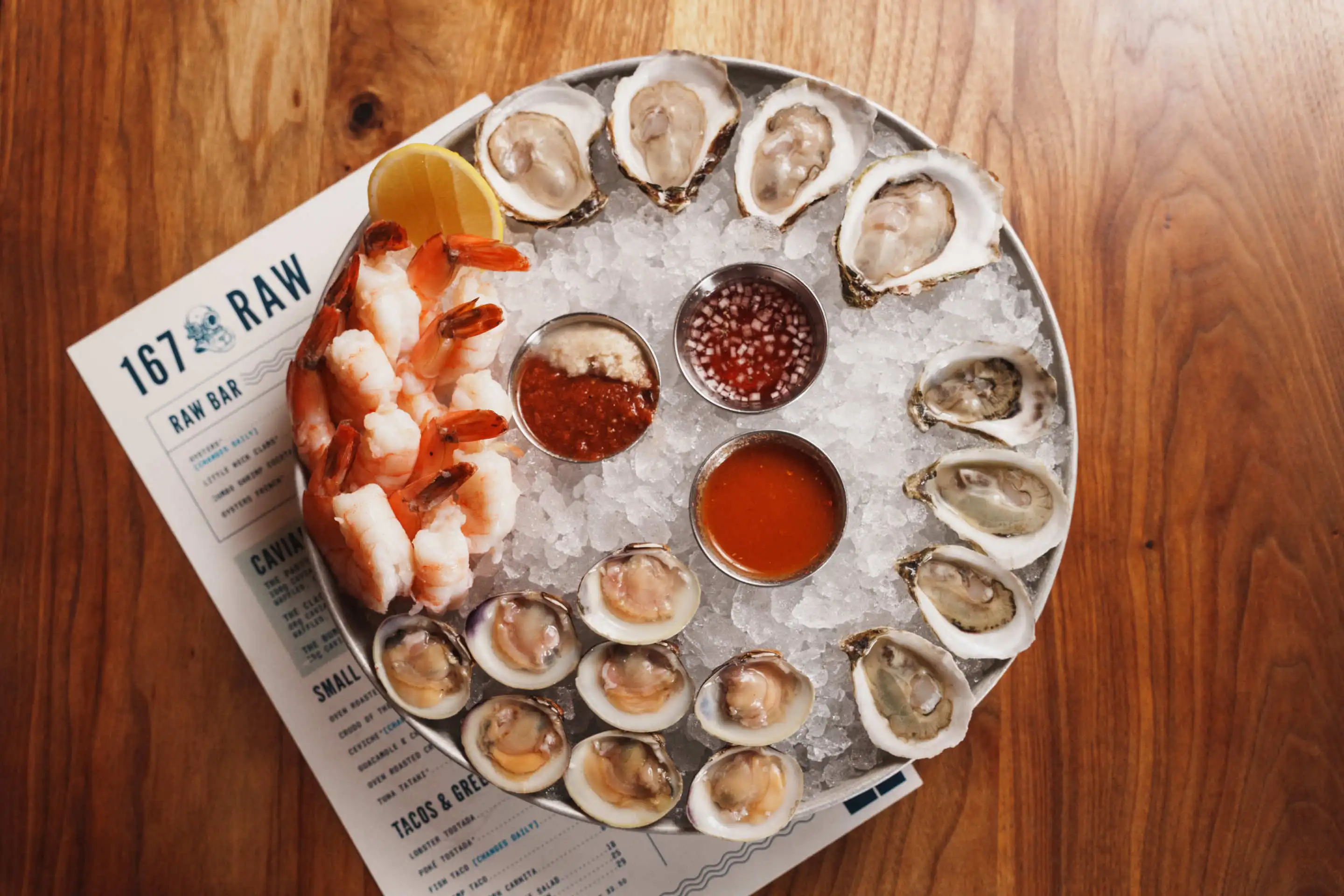
Charleston's restaurant tier is more stratified than it appeared a decade ago. At one end, there are the casual formats: the oyster bars like 167 Raw, the counter-service BBQ joints, the neighborhood spots that have always anchored the residential blocks south of Broad. At the other, there's a smaller cohort of rooms that price, pace, and present themselves against national rather than local benchmarks. Venues in that second cohort, including FIG and Husk in their different ways, established a template for how Charleston could operate at that level. The Crossing at 176 Concord St enters the conversation within that established framework.
For international comparison, the closest analogues aren't necessarily other Southern restaurants. The dynamic of a smaller American city building a credible fine-dining tier that speaks to a national and international audience maps more cleanly to what cities like New Orleans have done, see Emeril's in New Orleans as one historical marker of that ambition, or what Northern California has refined at places like Single Thread Farm in Healdsburg. Charleston's version leans more heavily on its maritime and agricultural identity than most, which gives its better restaurants a specificity of place that's harder to replicate elsewhere.
If you're exploring Charleston's Spanish-influenced counter-formats as a counterpoint, Malagón Mercado y Taperia offers a different pace entirely, the kind of standing, grazing format that makes a subsequent seated dinner feel more intentional by contrast.
Planning a Visit
The Crossing is located at 176 Concord St, Charleston, SC 29401. For current reservations, hours, and menu details, the most reliable approach is to check current listings directly, as booking policies and service formats at Charleston's mid-to-upper tier restaurants shift seasonally. Charleston's high season runs from March through May and again in September and October, when the humidity drops and the city's cultural calendar fills. Tables at the more focused rooms on the Lower Peninsula book several weeks ahead during those windows. If you're building a broader itinerary, our full Charleston restaurants guide maps the city's dining tiers systematically, and our full Charleston experiences guide covers the cultural programming that tends to anchor longer stays. For those extending into South Carolina wine country or the broader culinary tourism circuit, our full Charleston wineries guide is a useful reference.
Frequently asked questions
How do I find The Crossing?
The Crossing is located at 176 Concord St, Charleston, SC 29401, Charleston.
How does The Crossing fit into Charleston's broader dining scene compared to other Concord Street restaurants?
Charleston's Lower Peninsula has developed a distinct dining corridor along and near Concord Street, where the city's most serious rooms have concentrated over the past decade. The Crossing at 176 Concord St sits within that tier rather than outside it, which puts it in conversation with the city's better-known waterfront addresses rather than functioning as a standalone outlier.
What dish is The Crossing famous for?
Charleston's waterfront dining corridor generally draws on Lowcountry ingredients and coastal seafood traditions, and the most current menu information can be confirmed by contacting the venue directly.
What's the best way to book The Crossing?
The Crossing is located at 176 Concord St, Charleston, SC 29401. For current reservation availability, check the venue's own website or third-party reservation platforms such as Resy or OpenTable, as phone and online booking details are subject to change.
What makes The Crossing worth seeking out?
The Crossing sits within Charleston's Concord Street waterfront corridor, a stretch that has drawn sustained editorial and institutional attention well beyond the Southeast. Its Lower Peninsula address places it among a tier of Charleston dining rooms that take the city's evolving food culture seriously, rather than resting on its historical reputation.
Is The Crossing allergy-friendly?
As with any restaurant at this address and in this dining tier in Charleston, the direct approach is to contact the venue before booking and specify any dietary requirements at that point.
Is The Crossing worth it?
The Crossing occupies a meaningful position in Charleston's stratified restaurant scene, on a waterfront block that has earned consistent recognition from outside the region. Whether the experience justifies the spend depends on current pricing and format, both of which are best confirmed directly with the venue at 176 Concord St.
Cuisine-First Comparison
| Venue | Cuisine | Price | Awards | Notes |
|---|---|---|---|---|
| The CrossingThis venue — the venue you are viewing | Not listed | Not listed | Not listed | Not listed |
| Rodney Scott's BBQ | Whole-Hog South Carolina BBQ | $20–30 | Michelin Bib Gourmand · James Beard Award Best Chefs | Barbecue |
| 167 Raw | Modern Seafood Raw Bar | $50–100 | Not listed | Oyster Bar |
| Edmunds Oast | American Brewpub Gastropub | $30–50 | Not listed | New American |
| FIG | Southern Farm-to-Table Bistro | Not listed | Michelin Plate · James Beard Award Outstanding Wine Program | New American |
| Husk | Elevated Southern Farm-to-Table | Not listed | Wine Spectator Award of Excellence · Chef's Table Featured on Chef's Table | Southern |
Continue exploring