On Tervuren's central Markt square, The Cacao Tree occupies a quietly significant address in a town that sits between the Forêt de Soignes and Brussels' eastern commuter belt. The name signals a cacao-forward identity that positions it apart from the broader Belgian bistro circuit. For the Tervuren dining scene, that kind of specialisation carries weight.
Pearl is the En Primeur Club membership app — saves, bookings, and concierge access live there. Same editors, same standards.
- Address
- Markt 3, 3080 Tervuren, Belgium
- Phone
- +3227672767
- Website
- thecacaotree.be
- Directions
- Get directions
 Saves & bookings on Pearl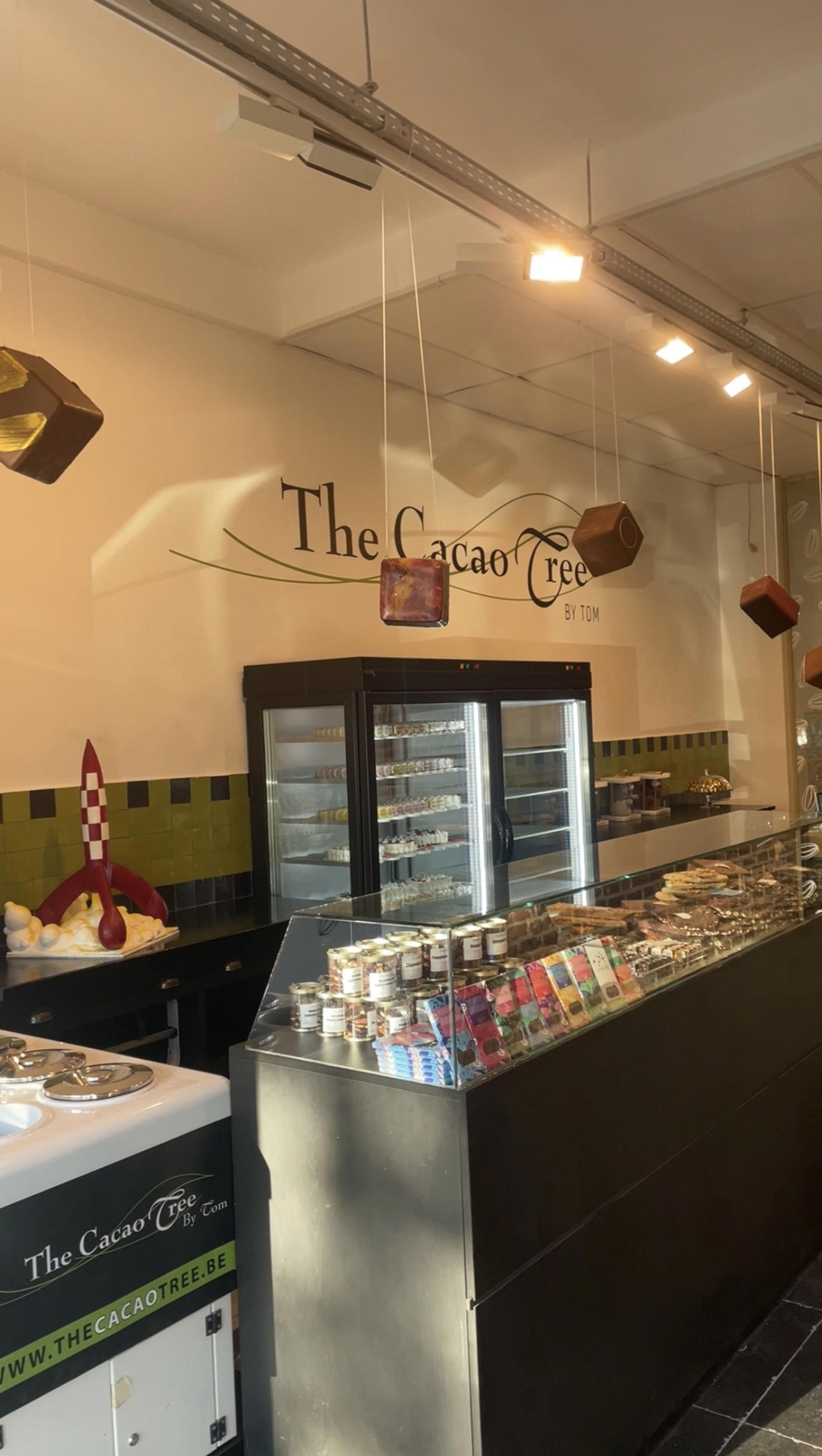
A Square Address in a Town That Earns Attention
Tervuren's Markt is not a square that announces itself loudly. The town sits at the eastern edge of the Forêt de Soignes, a beech forest that connects it by green corridor to Brussels, and the centre reflects that measured pace: a church, some terraces, a rhythm of daily life that hasn't been overrun by weekend tourism. Markt 3 places The Cacao Tree at the gravitational centre of that square, where the foot traffic is local and the expectations are neighbourhood-specific rather than destination-driven. In that context, a name referencing the cacao tree does something deliberate: it frames the establishment's identity around a single, specific ingredient before the door is even opened.
Ingredient-first naming is not a new device in European dining, but in a town the size of Tervuren it carries a particular directness. It signals that what's on offer isn't a broad menu hedging toward every taste, but something organised around a product and its origins. Cacao, as a raw ingredient, has a geography: equatorial growing regions, fermentation traditions that vary by country and farm, roast profiles that shift flavour dramatically. Whether The Cacao Tree engages with all of that depth or focuses on a narrower interpretation, the name sets an expectation that the ingredient itself is the argument being made.
Where Tervuren Sits in the Belgian Dining Conversation
Belgium's serious restaurant circuit tends to concentrate attention on a handful of names: the Flemish creative kitchens like Boury in Roeselare or De Jonkman in Sint-Kruis, the coastal produce-driven formats like Bartholomeus in Heist or Willem Hiele in Oudenburg, and the city fine-dining tier represented by places like Zilte in Antwerp or Bozar Restaurant in Brussels. Tervuren doesn't typically appear in those conversations. It is a residential commune of around 40,000 people, better known for its Africa Museum and its forest trails than for its tables.
That relative quiet is part of what makes a specialised address like The Cacao Tree worth noting. The Belgian dining scene has demonstrated repeatedly that serious ingredient work doesn't require a city postcode: Hof van Cleve in Kruishoutem, L'air du temps in Liernu, and La Table de Maxime in Our are all located outside major urban centres and are taken seriously precisely because of the deliberateness that rural or suburban settings tend to demand. A venue has to mean something on its own terms when it can't lean on neighbourhood cachet.
Within Tervuren specifically, the restaurant operates alongside a modest but varied restaurant offer. Canapé and Centho represent other dining options in the town, but the cacao-centred identity of this address marks a different kind of ambition. For a fuller picture of what Tervuren's restaurant scene offers, our full Tervuren restaurants guide maps the options across formats and price points.
The Ingredient Sourcing Question
Cacao is among the more origin-sensitive ingredients in any kitchen. The difference between cacao from Côte d'Ivoire, Ecuador, Madagascar, and São Tomé is not subtle: fermentation length, drying conditions, and local soil composition produce flavour profiles that shift from fruity and acidic to earthy, bitter, and floral across origin regions. For any establishment that names itself after the ingredient, sourcing specificity is the first editorial question worth raising.
The broader shift in European chocolate and cacao-focused dining has moved toward traceability in the past decade. Bean-to-bar production, direct-trade relationships with farming cooperatives, and single-origin framing have all migrated from the specialty chocolate retail sector into restaurant dessert programs and dedicated cacao-focused venues. This is the context against which a name like The Cacao Tree invites assessment. The positioning implies engagement with cacao as a primary subject, not merely a flavouring agent. Belgium's own chocolate tradition, built on industrial-scale couverture production and the Callebaut and Belcolade supply chains, provides both a convenient backdrop and a counterpoint: the interesting work in Belgian cacao is increasingly happening at the margins of that industrial tradition, not at its centre.
Venues internationally that have made cacao-forward sourcing their defining argument, from Paris's dedicated chocolate bars to the dessert-focused tasting menus seen at places like Le Bernardin in New York City or the ingredient-driven precision at Atomix in New York City, have found that transparency about supply chains becomes part of the hospitality itself. Guests increasingly want to know not just what they are eating but where it was grown, who processed it, and how that process shaped the result. A Markt-facing address in Tervuren is an unlikely place to be having that conversation, which is precisely what makes it worth having.
Comparable Formats and What They Suggest
Across Belgium, the restaurants that have built lasting reputations around single-ingredient or produce-led concepts tend to share certain structural features: a contained menu that changes with availability, a format that resists the pressure to offer something for everyone, and a visual identity that matches the culinary argument. Castor in Beveren, d'Eugénie à Emilie in Baudour, La Durée in Izegem, and Le Chalet de la Forêt in Uccle each occupy specific positions in the Belgian dining conversation, and each one earns its position by being specific about what it does and why.
The restaurant's Markt 3 address positions it physically at the centre of Tervuren's daily life. Whether the operation matches the implied specificity of its name is a question the venue must answer through its execution. The name alone creates a frame that raises the bar: it invites comparison not with neighbourhood bistros but with any establishment that takes an ingredient seriously enough to build an identity around it.
Planning a Visit
Tervuren is accessible from Brussels by tram line 44, which runs from Montgomery station through the Forêt de Soignes and terminates at the Tervuren terminus, placing visitors within a short walk of the Markt. The journey takes approximately 35 minutes from central Brussels, making Tervuren a realistic lunch or early dinner destination from the city. The restaurant is open Mon: 8 AM to 6 PM, Tue to Thu and Sat: 8 AM to 6:30 PM, Fri: 8 AM to 6:30 PM, and Sun: 9 AM to 6 PM. The restaurant is walk-in friendly.
At-a-Glance Comparison
Comparable venues nearby, for context on price, style, and recognition.
| Venue | Cuisine | Price | Notes |
|---|---|---|---|
| The Cacao TreeThis venue — the venue you are viewing | Artisanal Belgian Chocolatier | $$ | Not listed |
| Centho | Belgian Artisan Chocolatier | $$ | Tervuren |
| Canapé | Modern Belgian Small Plates | $$ | Tervuren |
| Fox Den | Craft Cocktails & Spirits Bar | $$ | Schaerbeek |
| Petite Île | Fresh seasonal cuisine | Not listed | Citydox, Anderlecht |
| The Cacao Project | Artisan Chocolate & Patisserie | $$ | Mechelen |

At a Glance
- Cozy
- Classic
- Casual Hangout
Current opening hours
- Monday
- 8 AM–6 PM
- Tuesday
- 8 AM–6:30 PM
- Wednesday
- 8 AM–6:30 PM
- Thursday
- 8 AM–6:30 PM
- Friday
- 8 AM–6:30 PM
- Saturday
- 8 AM–6:30 PM
- Sunday
- 9 AM–6 PM
Hours can change for holidays and private events. Last verified .
Cozy artisanal chocolate shop with a welcoming atmosphere suitable for casual visits.