
Teuchi Soba Yusan puts Tokushima’s soba ritual in a modest, disciplined frame: hand-cut buckwheat noodles, daytime pacing, and a small-room format rather than luxury theatrics. Its selection for Tabelog 100 Soba WEST in 2024 and 2025 gives it a clear quality signal within western Japan’s soba field, while the price band keeps the meal grounded in everyday Japanese dining.
Pearl is the En Primeur Club membership app — saves, bookings, and concierge access live there. Same editors, same standards.
- Address
- 徳島県徳島市八万町上長谷102-1
- Phone
- +819049715222
- Website
- yusan-soba.com
 Saves & bookings on Pearl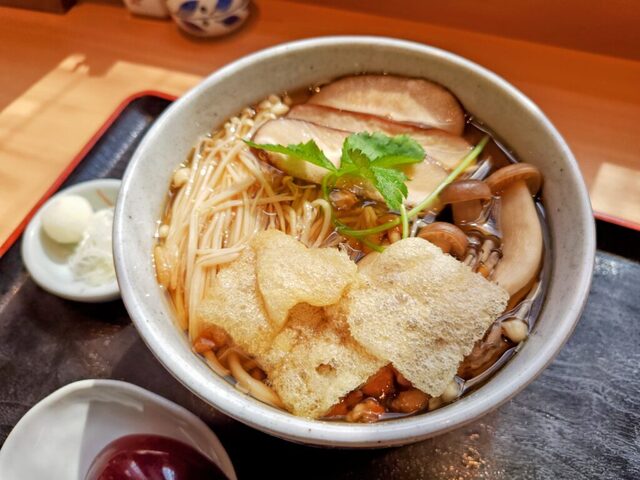
Approaching soba in Tokushima means adjusting the tempo. This is not the late-night drift of an izakaya crawl or counter-menu theater; it is a daytime ritual of timing, texture, and restraint. Teuchi Soba Yusan sits in that tradition: buckwheat noodles, a quiet room, and a meal that rewards pace, not appetite alone.
Tokushima dining is often framed by ramen, seafood, and casual drinking rooms, which makes a serious soba address more interesting. In the city’s circuit, Inotani Honten is the low-cost ramen institution, while Izakaya Harubo sits in the evening drinking-and-dishes lane. Soba occupies another register, asking diners to read the noodle itself: cut, firmness, aroma, and how the dipping broth frames rather than overwhelms it.
Hand-cut soba as a quiet Tokushima counterpoint
Japan’s soba culture has always had a split identity. It can be fast, democratic, and inexpensive, but handmade soba also belongs to an exacting craft tradition, where small differences in flour, water, rolling, and cutting change the meal. The hand-cut format matters because soba is not just a noodle category; it is a test of proportion. Too much sauce, garnish, or ceremony can flatten buckwheat’s appeal.
Teuchi Soba Yusan’s place in the Tabelog 100 Soba WEST selections for 2024 and 2025 puts it in a competitive field beyond Tokushima. That recognition helps because soba excellence is hard to judge from menu language alone. The award points to consistency in a quiet, perishable, less photogenic craft than sushi or beef. The Tabelog score of 3.65 is another public signal, but category selection matters more: soba specialists are assessed against other soba specialists, not general Japanese dining rooms.
The ritual is simple, not careless. Soba meals often move quickly, especially at lunch, and the diner’s role is to keep the focus clean. Order with restraint, taste the noodles before overusing the dip, and treat sake, when taken, as companion rather than center. Unlike higher-spend Tokushima rooms such as Sumibiyaki Steak Tajima or mid-evening places like Shokurakuen, the value is not length, luxury, or a procession of plates. It is compression.
Why the small-room format changes the meal
An 18-seat soba shop changes the social contract. In a room that size, there is less tolerance for dithering and more dependence on rhythm. Cooking is close to the dining room, turnover matters, and soba is strongest when served with minimal delay. That is why serious soba can feel stricter than its price suggests.
The JPY 1,000 to JPY 1,999 price band is part of the story. Western Japan has plenty of expensive destination dining, but soba remains a rare format where technical craft can stay accessible. In Tokushima, that puts Yusan closer to everyday local eating than the city’s splurge bracket, even with national category recognition. Japanese dining hierarchy is not always aligned with price.
Location also shapes the decision. The restaurant is in Hachimancho, not the densest nightlife pocket, reinforcing its role as a planned lunch rather than an incidental stop between bars. The nearest station is Bunkanomori, with local transport and parking part of the practical equation. For travelers building a Tokushima itinerary, it pairs better with daytime cultural movement than a late dinner plan.
That distinction matters beside other Tokushima options. Ishikawa Shoten, NAMAIKI, and Ponzu belong to different dining moods, and a good Tokushima schedule should not treat them as interchangeable. Soba is a short-form meal with a narrow center of gravity. It works when the day has space for it.
How to read the meal without over-ordering
The strongest approach to a soba specialist is sequence rather than volume. Cold soba foregrounds noodle texture and buckwheat character; hot preparations shift emphasis toward broth and warmth. Without a confirmed house signature, order from the soba core rather than chase side dishes. The category itself is the signature: handmade buckwheat noodles, served so small technical choices carry the meal.
Etiquette is useful here. Soba does not need kaiseki choreography, but it rewards attention. Dip lightly. Avoid drowning the noodles. Eat while the texture is at its intended point. If soba-yu is served, it traditionally extends the dipping broth into a final warm drink, moving the meal from noodle to finish without another course. That custom explains why a brief soba lunch can feel complete.
Planning should stay pragmatic. Reservations are unavailable, and the restaurant operates on a daytime schedule with regular closures at the start and end of the week. Credit cards and electronic money are not accepted, while PayPay is listed as accepted; carry cash rather than assume card settlement. Parking is available, useful in this part of Tokushima, and the non-smoking policy fits the clarity the cuisine requires.
For broader city mapping, use Yusan as the soba anchor rather than a catch-all Tokushima recommendation. The wider restaurant field is covered in Our full Tokushima restaurants guide, while trip planning around stays, drinks, producers, and cultural programming sits in Our full Tokushima hotels guide, Our full Tokushima bars guide, Our full Tokushima wineries guide, and Our full Tokushima experiences guide.
Japan’s casual specialist culture is deep enough that a Tokushima soba lunch can share an editorial universe with focused formats elsewhere: -Grilled beef Sukiyaki- KAMAKURA TANUKIAN 鎌倉 たぬき庵 in Kamakura. 鮪と炭火焼き うお炭 秋葉原店 in Tokyo.cafe in Osaka.know in Kumamoto, (Shoku) Vietnam in Kawasaki, and [Curry Senmon Ten] Maruyama Kyoju. in Sapporo. Beyond Japan, the same narrow, disciplined appeal explains why Jōdo Saké Bar in Los Angeles and Onigiri Time in Pasadena read as specialists rather than general-purpose dining rooms.
Cuisine-First Comparison
Nearby venues at a similar price tier for orientation.
| Venue | Cuisine | Price | Notes |
|---|---|---|---|
| Teuchi Soba YusanThis venue — the venue you are viewing | Traditional hand-made soba | $ | Not listed |
| Ishikawa Shoten | Yakitori & chicken dishes | $ | Not listed |
| Inotani Honten | Tokushima-style ramen | $ | .null |
| Izakaya Harubo | Seafood-focused Japanese Izakaya | $$ | Akitamachi / Chuodori, Tokushima |
| Shokurakuen | Japanese Yakiniku / BBQ | $$ | Minami-Nakano-cho |
| Toraya Kochuan | Traditional Kaiseki | $$$ | Sanagochi-son |
Recognition history
Dated appearances from independent guides and award organizations, with the underlying list record or original source where available.
Tabelog 100 #57 · No. 57
Tabelog · Tabelog 100 - Soba - WEST - 2025
Continue exploring
More in Tokushima
Restaurants in Tokushima
Browse all →
Hotels in Tokushima
Browse all →
At a Glance
- Quiet
- Cozy
- Rustic
- Solo
- Casual Hangout
- Standalone
- Sake Program
- Local Sourcing
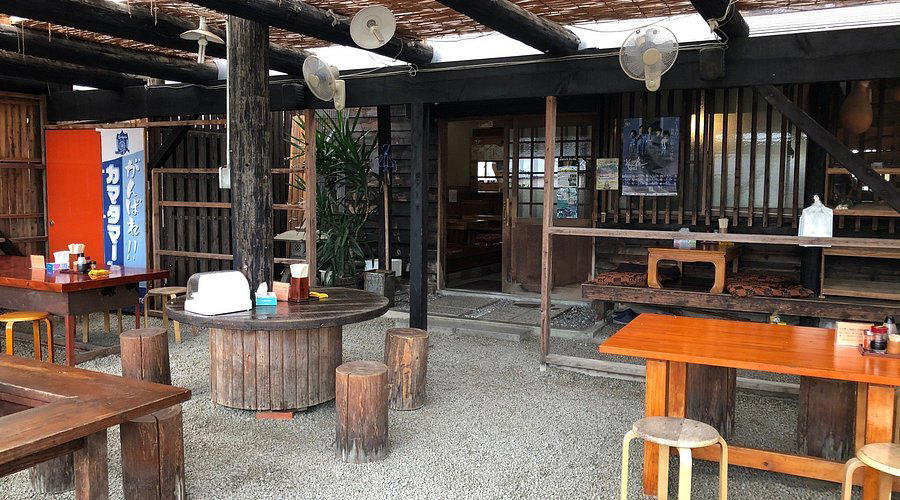
A quiet, non-smoking soba restaurant with only 18 seats, giving it a cozy, hidden-gem feel where the focus is on carefully prepared noodles rather than decor or bustle.