
Tabelog 100 #79
Our verdict
Ishikawa Shoten gives Tokushima’s chicken-cooking tradition a compact, local lens: yakitori and chicken dishes rather than ceremony-heavy dining. Its 2025 Tabelog 100 selection for chicken cuisine, 3.51 Tabelog score, and small room place it in a category where sourcing, grilling discipline, and drink compatibility matter more than spectacle.

Pearl is the En Primeur Club membership app — saves, bookings, and concierge access live there. Same editors, same standards.
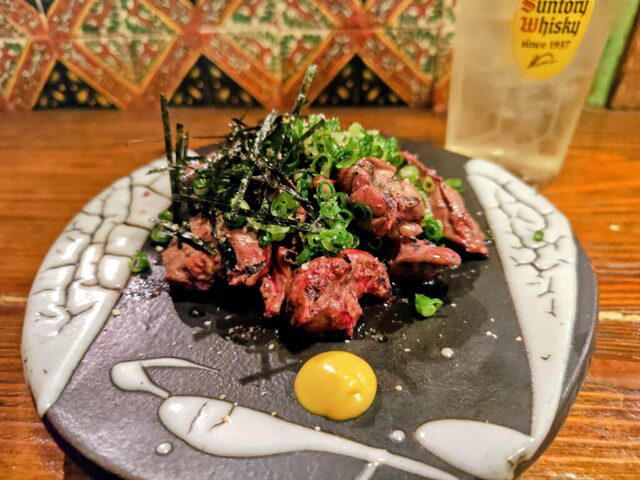
The menu
What to order
- Yakitori (grilled chicken skewers)
- Chicken dishes
Tokushima’s evening dining rhythm is compact and practical: small rooms, local routines, and places where smoke and grilled protein do much of the talking. In that setting, chicken cooking carries a different weight from formal kaiseki or destination sushi. It is a craft of heat control, parts selection, and pacing, built for repeat local use as much as for travelling diners.
Ishikawa Shoten belongs to that Tokushima register rather than the luxury-dining circuit. Its recognition on the 2025 Tabelog 100 list for chicken cuisine gives the room a clear credential, but the more useful reading is category placement: this is chicken as a specialist format, not a broad izakaya trying to cover every table need. The Tabelog 3.51 score reinforces that local-specialist positioning, especially in a city where the dining map is less internationally codified than Tokyo, Kyoto, or Osaka.
Chicken cookery as a sourcing argument, not a long-menu performance
Japan’s chicken restaurants tend to reveal their seriousness through narrowness. A tighter focus lets a kitchen treat the bird as a sequence of textures and cuts rather than a single ingredient. Yakitori, in particular, rewards operators that can keep procurement steady and cooking disciplined; the difference between an ordinary skewer shop and a serious one often lies in portioning, timing, and the confidence to avoid unnecessary garnish.
That is the useful context for Ishikawa Shoten. The categories are chicken dishes and yakitori, a pairing of formats that suits salt, smoke, and fat. The point is not grand theatre. It is the Tokushima version of a familiar Japanese pattern: a modestly priced, focused room where ingredient handling carries the experience.
For travellers building a wider Tokushima eating plan, the contrast matters. Other Tokushima dining rooms may speak to broader local habits or sit in different dinner spend bands; Ponzu and Shokurakuen offer useful points of comparison within the city. The chicken specialist sits apart from that spread by narrowing the brief and keeping the meal grounded in grill-led repetition.
Tokushima's compact rooms reward diners who choose by format
Tokushima dining does not behave like a capital-city checklist. The stronger meals often come from matching the night to the format: a quick local meal, an izakaya-style evening for a group, or a focused dinner when the point is following a kitchen through a defined ingredient. Ishikawa Shoten fits that format-led category, where the restaurant’s narrow brief shapes the meal. Diners who care about pacing and cooking may find that focus useful; a looser evening among friends may call for a different format.
The comparison set inside the city makes the decision clearer. NAMAIKI and 食士わたなべ broaden the local field, while Shokurakuen and Tori Bon Tokushima honmachi ten give diners other ways to think about dinner in Tokushima. Against those options, Ishikawa Shoten is the leaner call: a chicken-focused room with Tabelog 100 recognition and a price position of JPY 2,000 - JPY 2,999.
This is also where sourcing becomes editorially relevant. Chicken cuisine depends on consistency more than luxury signaling. A restaurant does not need imported caviar or a tasting-menu vocabulary to make a serious case; it needs careful handling, controlled cooking, and a kitchen willing to let grilled parts read differently from one another. That is why Japan’s chicken specialists can sit comfortably beside more formal dining in critical lists: the craft is narrower, but not lesser.
How to place it within a Tokushima itinerary
Tokushima works well as an evening base because it keeps dining decisions close together. A traveller could use our full Tokushima restaurants guide to build the food side, then cross-check stays through our full Tokushima hotels guide. For after-dinner planning, our full Tokushima bars guide is the more relevant companion than a dessert detour; a grill-led chicken meal already sets a clear tone.
The broader regional planning layer matters too. Tokushima is not a wine-tourism city in the way Yamanashi or parts of Nagano are, but our full Tokushima wineries guide and our full Tokushima experiences guide help separate food-led evenings from daytime cultural time. That distinction is useful in a smaller city, where overloading one night with too many venues can flatten the reason to choose a focused chicken restaurant in the first place.
For readers comparing Japanese dining formats beyond Tokushima, the internal range is wide. Other regional dining rooms, seafood counters, cafés, contemporary restaurants, curry specialists, sake bars, and casual snack formats all answer different questions. The Tokushima chicken specialist belongs in that taxonomy as a format-first choice: compact, ingredient-led, and better judged by clarity than by luxury cues.
The editorial call is simple. Choose this room when the night calls for chicken cookery and a local Tokushima scale rather than a broad menu or a ceremonial meal. Its Tabelog 100 selection supplies the trust signal; the real appeal is the way that recognition aligns with Tokushima’s practical, tightly drawn evening dining culture.
Frequently asked questions
Can I bring kids to Ishikawa Shoten?
Ishikawa Shoten is a chicken dishes and yakitori restaurant in Tokushima, so families should judge suitability by the group’s comfort with a focused, dinner-oriented setting.
What should I expect atmosphere-wise at Ishikawa Shoten?
Expect a focused Tokushima room built around chicken dishes and yakitori rather than a sprawling, all-purpose dining setup. Its 2025 Tabelog 100 recognition points to a specialist format with a clear local identity.
What should I budget for a meal at Ishikawa Shoten?
Pricing at Ishikawa Shoten is listed as JPY 2,000 - JPY 2,999 View spending breakdown.
What is Ishikawa Shoten known for?
Ishikawa Shoten is known in Tokushima for chicken dishes and yakitori, with 2025 Tabelog 100 recognition and a Tabelog score of 3.51.
How It Stacks Up
Comparable venues by cuisine and price in the same metro.
| Venue | Cuisine | Price | Awards | Notes |
|---|---|---|---|---|
| Ishikawa ShotenThis venue (the venue you are viewing) | Yakitori & chicken dishes | Not listed | Tabelog 100 #79 | Not listed |
| Shokurakuen | Japanese Yakiniku / BBQ | Not listed | Tabelog 100 #24 | Minami-Nakano-cho |
| Inotani Honten | Tokushima-style ramen | $1–10 | Tabelog 100 #82 | .null |
| 食士わたなべ | Traditional Japanese Kaiseki | $50–100 | Not listed | 籠屋町 |
| Ponzu | Yakitori & Izakaya Dining | $30–50 | Tabelog 100 #78 | Tokushima |
| Tori Bon Tokushima honmachi ten | Traditional Yakitori & Chicken Dishes | $30–50 | Tabelog 100 #43 | Tokushima Honmachi |
Recognition history
Dated appearances from independent guides and award organizations, with the underlying list record or original source where available.
Tabelog 100 #79 · No. 79
Tabelog · Tabelog 100 - Chicken cuisine - 2025
Continue exploring
More in Tokushima
Restaurants in Tokushima
All restaurants in Tokushima →
Hotels in Tokushima
Browse all →
Details
- Casual Hangout
- After Work
- Solo
- Standalone
- A La Carte
- Small Plates
Current opening hours
- Monday
- 5:30–11:30 PM
- Tuesday
- 5:30–11:30 PM
- Wednesday
- 5:30–11:30 PM
- Thursday
- 5:30–11:30 PM
- Friday
- 5:30–11:30 PM
- Saturday
- 5:30–10 PM
- Sunday
- Closed
Hours can change for holidays and private events. Last verified .