Teuchi Soba Wakuri

Teuchi Soba Wakuri gives Nakatsugawa a serious soba counterpoint to the city’s better-known confectionery circuit. Its Tabelog 100 Soba EAST 2025 selection, 14-seat scale, and buckwheat-noodle focus place it in the small-format craft tier rather than the casual station-lunch category.
Pearl is the En Primeur Club membership app — saves, bookings, and concierge access live there. Same editors, same standards.
- Address
- 2 Chome-2-35 Otamachi, Nakatsugawa, Gifu 508-0033, Japan
- Phone
- +81573650876
- Website
- tabelog.com
- Directions
- Get directions
 Saves & bookings on Pearl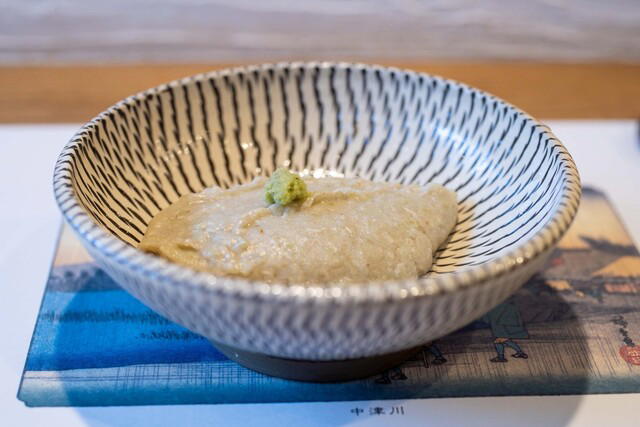
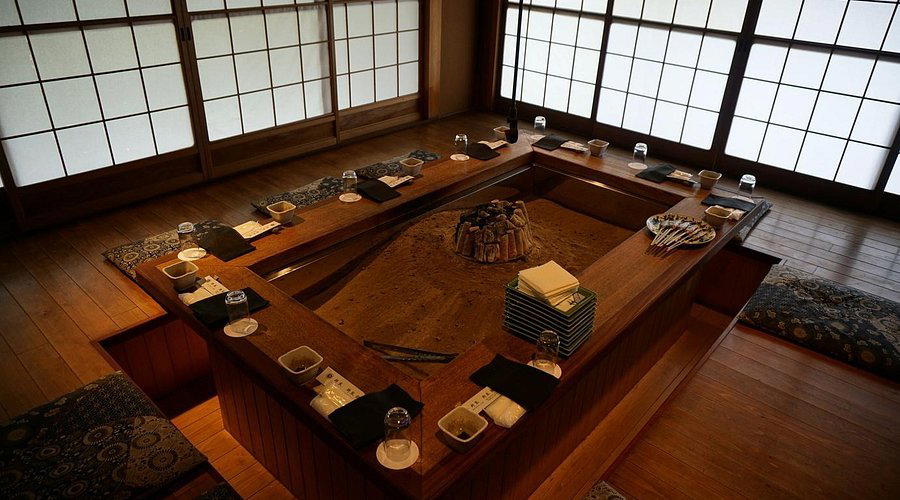
Near Nakatsugawa Station, the city’s food culture shifts quickly from souvenir counters and chestnut sweets to a quieter register: hand-cut buckwheat, sake, and a compact room built for noodles rather than ceremony. Teuchi Soba Wakuri belongs to that register. The setting is a house restaurant with counter seating and tatami space, which matters in a soba town context because the meal is not designed as spectacle. It asks for attention to grain, water, cut, and timing.
Buckwheat in a city better known for chestnut sweets
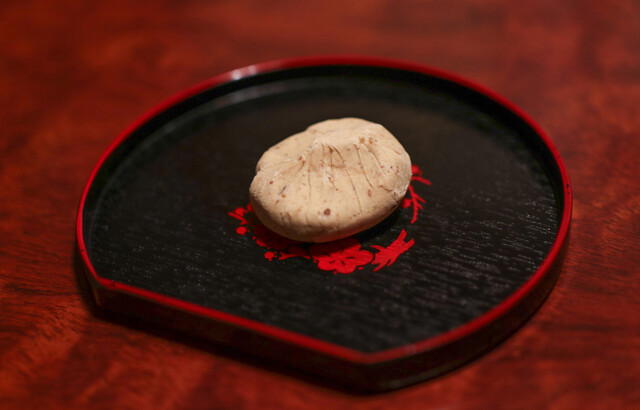
Nakatsugawa is often read through wagashi first. The local circuit includes Kawakamiya Honten, Kurinton Honke Suya Honten, Shichifuku, Shogetsu Do, and Suya Nishiki, where the city’s seasonal chestnut identity is easier for visitors to grasp in a single purchase. Soba works differently. It is less portable, more perishable, and more dependent on the kitchen’s control of texture at the moment of service.
That contrast is the useful lens here. Nakatsugawa’s sweet shops often sit in a lower casual-spend bracket, while Teuchi Soba Wakuri runs at JPY 2,000 to JPY 2,999. The price difference is not just about a seated meal. It reflects a category where ingredient handling is central: buckwheat noodles expose flaws quickly, and hand-cut soba leaves little room for distraction. In regional Japan, that kind of specialization can be more revealing than a broad menu, because the craft has fewer places to hide.
The recognition gives the room broader significance. Selection for Tabelog 100 Soba EAST 2025 places the restaurant in a competitive eastern Japan soba field rather than merely a local dining list. It was also selected in 2024, 2022, 2019, and 2018, a pattern that points to continuity in a category where consistency is difficult to maintain. Tabelog’s score of 3.72 adds another public signal, but the stronger point is repeated selection across years: this is not a single-season spike.
A small-format soba meal, not a generalist Japanese restaurant
The room size shapes the experience. Fourteen seats put the meal closer to a specialist workshop than a flexible group restaurant. Counter seating suits soba because the critical action is immediate: boiling, rinsing, draining, and serving. Tatami seating adds a more relaxed register, but the format remains focused. The presence of sake, specifically nihonshu, also places the meal within the older soba-ya rhythm, where noodles can sit alongside a restrained drink order rather than a long tasting sequence.
For ingredient-led travelers, soba is a useful correction to Japan itineraries overloaded with sushi and kaiseki. Buckwheat has a regional logic, and the noodle’s character changes with milling, proportion, water, and cut. Without naming unlisted farms or varieties, the point remains clear: soba is an agricultural food before it is a restaurant dish. In a place like Nakatsugawa, on the edge of mountain country in Gifu, that connection between grain and terrain reads more naturally than it does in a department-store dining floor.
Reservations are available, but September and October change the rhythm on weekends: numbered tickets replace reservations, and only course menus are served. That seasonal adjustment is worth treating as part of the restaurant’s identity rather than an inconvenience. Autumn is when Nakatsugawa draws more food-focused movement, especially around chestnut season, and a small soba room has to manage demand differently from a sweets shop built for takeaway traffic.
The practical profile is otherwise compact. Credit cards and major electronic money are accepted, QR code payments are not. Private rooms and private use are not offered. The dining room is non-smoking, with an outside smoking area. Middle school students and above are welcome, which makes the family question less about children in general and more about age, patience, and appetite for a focused noodle meal.
How to fold it into a Nakatsugawa food day
The sharper itinerary pairs soba with the city’s confectionery tradition rather than treating them as alternatives. Start with the sweet shops for context, then let the noodle meal reset the palate with buckwheat and broth instead of sugar and chestnut paste. That sequence explains Nakatsugawa better than a single lunch stop: the city’s food identity moves between preserved craft, seasonal gifting, and small rooms where technique is consumed immediately.
For a wider route, use Our full Nakatsugawa restaurants guide alongside Our full Nakatsugawa hotels guide, Our full Nakatsugawa bars guide, Our full Nakatsugawa wineries guide, and Our full Nakatsugawa experiences guide. Travelers building a broader Japan food map can also compare the specificity of this soba stop with formats as different as -Grilled beef Sukiyaki- KAMAKURA TANUKIAN 鎌倉 たぬき庵 in Kamakura. 鮪と炭火焼き うお炭 秋葉原店 in Tokyo.cafe in Osaka.know in Kumamoto, (Shoku) Vietnam in Kawasaki, [Curry Senmon Ten] Maruyama Kyoju. in Sapporo, Jōdo Saké Bar in Los Angeles, and Onigiri Time in Pasadena.
The editorial case for Teuchi Soba Wakuri is precise: it gives Nakatsugawa a serious seated counterweight to its confectionery reputation, with repeated Tabelog 100 Soba recognition and a scale that keeps the meal close to the craft. Come for soba as an ingredient discipline, not as a generic noodle lunch.
Comparison Snapshot
Comparable venues by cuisine and price in the same metro.
| Venue | Cuisine | Price | Notes |
|---|---|---|---|
| Teuchi Soba Wakuri | Handmade Soba (Buckwheat Noodles) | $$ | Nakatsugawa |
| Suya Nishiki | Traditional Japanese wagashi & tea cafe | $ | / Nakatsugawa bypass area |
| Shogetsu Do | Japanese Wagashi & Chestnut Sweets | $ | . Nakatsugawa |
| Shichifuku | Traditional Japanese Wagashi & Chestnut Sweets | $ | Nakatsugawa |
| Kurinton Honke Suya Honten | Japanese Traditional Sweets | $ | Shinmachi, Nakatsugawa |
| Kawakamiya Honten | Traditional Japanese wagashi & chestnut sweets | $ | Hommachi |
Recognition history
Dated appearances from independent guides and award organizations, with the underlying list record or original source where available.
Tabelog 100 #93 · No. 93
Tabelog · Tabelog 100 - Soba - EAST - 2025
Continue exploring
More in Nakatsugawa
Restaurants in Nakatsugawa
Browse all →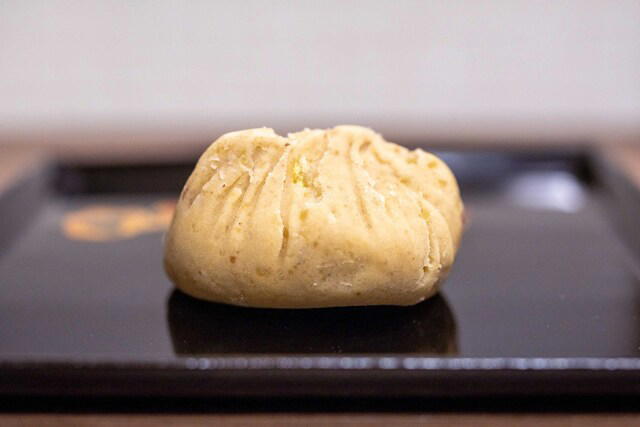
Bars in Nakatsugawa
Browse all →
Hotels in Nakatsugawa
Browse all →
At a Glance
- Cozy
- Modern
- Relaxed
- Casual Hangout
- Solo
- Group Dining
- Family
- Standalone
- Sake Program
- Local Sourcing
Current opening hours
- Monday
- 11:30 AM–2:30 PM
- Tuesday
- Closed
- Wednesday
- 11:30 AM–7 PM
- Thursday
- 11:30 AM–7 PM
- Friday
- 11:30 AM–7 PM
- Saturday
- 11:30 AM–7 PM
- Sunday
- 11:30 AM–2:30 PM
Hours can change for holidays and private events. Last verified .
Small 14‑seat house‑style restaurant with a stylish yet relaxing interior, counter and tatami seating, and a calm atmosphere suited to quietly enjoying carefully crafted soba.