Kurinton Honke Suya Honten

Kurinton Honke Suya Honten is a Nakatsugawa wagashi address tied to the city’s chestnut-sweets culture, with Tabelog 100 recognition for Japanese traditional sweets in EAST 2023 and a low JPY 1,000–1,999 spend. The format is mainly takeaway, with only six seats, so the appeal is less restaurant ritual than regional confectionery at its source.
Pearl is the En Primeur Club membership app — saves, bookings, and concierge access live there. Same editors, same standards.
- Address
- 2-40 Shinmachi, Nakatsugawa, Gifu 508-0038, Japan
- Phone
- +81 120-020-780
- Website
- suya-honke.co.jp
- Directions
- Get directions
 Saves & bookings on Pearl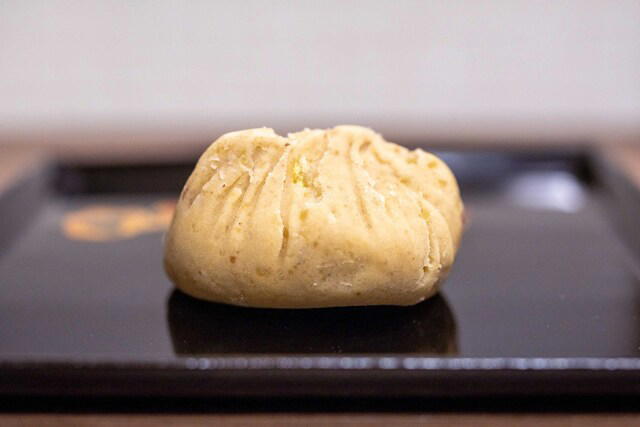
Shinmachi’s scale suits wagashi: low shopfronts, short walks, and a rhythm closer to errands than destination dining. In Nakatsugawa, chestnut sweets are not a decorative afterthought to a meal; they are part of the city’s food identity, tied to the Kiso Valley’s mountain-town trade routes and to a seasonal calendar that matters more than tasting-menu theatre. Kurinton Honke Suya Honten belongs to that older grammar. The room is small, seating is limited, and the experience is built around buying Japanese traditional sweets rather than lingering over courses.
That distinction matters. Many travellers arrive in regional Japan looking for the restaurant equivalent of a grand reveal, but Nakatsugawa’s confectionery culture works through repetition, craft, and restraint. The city’s wagashi circuit rewards comparison: Kawakamiya Honten and Suya Nishiki sit in the same local conversation, while Shichifuku and Shogetsu Do keep the focus on accessible sweets rather than high ceremony. The result is a compact, unusually concentrated scene for travellers who understand that a regional specialty is often clearer at a counter or takeaway window than at a white-tablecloth restaurant.
Nakatsugawa's chestnut-sweets tradition is the point, not the prelude
Kurinton Honke Suya Honten is categorized as Japanese traditional sweets and regional cuisine, which is the correct lens. This is not a chef-led dining room trying to reinterpret wagashi for a global audience. It is part of a local system in which chestnut confectionery carries civic weight, especially in autumn, when Japanese sweets shops across chestnut-producing regions see demand sharpen. The business traces its founding to the Genroku period, 1688 to 1704, and the name “Suya” comes from its earlier identity as a vinegar shop. Those details do not need romantic inflation; they simply explain why the address sits differently from a newer dessert café.
The Tabelog 100 selection for Japanese traditional sweets / Japanese sweets cafe EAST 2023 gives the shop a useful external marker, especially in a category where international awards rarely map cleanly onto regional craft. Its Tabelog score of 3.69 is another signal of local and domestic attention rather than a claim to luxury. In Nakatsugawa, that is the right kind of recognition: specific, category-bound, and tied to sweets rather than general fine dining.
The better comparison is not with a full restaurant tasting menu but with other compact, category-focused addresses. Teuchi Soba Wakuri, for instance, represents another regional discipline at a higher JPY 2,000–2,999 band, while the city’s wagashi shops cluster around lower spends. That pricing structure tells a larger story: Nakatsugawa’s compelling food experiences are not always expensive, but they do ask the traveller to care about category, season, and local habit.
A small-shop format with serious regional credentials
Format is mainly takeaway, with six seats and seating that may not always be available. That keeps the experience close to the way many Japanese confectionery shops function: efficient, product-led, and attentive to gifting as much as immediate eating. Private rooms and private use are unavailable, so the value lies in precision and provenance, not in managed hospitality theatre.
For travellers building a day around Nakatsugawa, this should sit inside a broader food map rather than as a long meal. The address is near Nakatsugawa Station, and there is limited parking nearby, which makes it workable either as a rail-stop purchase or as part of a short city walk. Payment flexibility is stronger than at many small traditional shops: credit cards are accepted, QR code payments are accepted, and electronic money is not. Reservations are unavailable, consistent with the takeaway-first format.
Seasonality changes the practical equation. From September to December, the business schedule expands, with extended published hours and no regular Wednesday closure during that period. That aligns with the wider chestnut-sweets calendar and explains why autumn has a different energy here from an ordinary weekday sweets run. Outside that window, Wednesday closure applies. The public hours should be checked before travel, not because the place is complicated, but because small regional shops in Japan can adjust operating days more readily than urban restaurants.
How to place it in a Nakatsugawa itinerary
Kurinton Honke Suya Honten works for travellers who want the edible logic of Nakatsugawa rather than a generic meal stop. Pair it with another wagashi address to understand differences in price band and format, then add soba or a regional lunch elsewhere if the day needs a seated meal. The city’s food culture is compact enough to reward that kind of sequencing, and Our full Nakatsugawa restaurants guide is the natural starting point for building it.
The same approach applies beyond restaurants. Nakatsugawa is better read as a small destination with several overlapping categories: dining, lodging, drinking, wine, and cultural experiences. For trip planning, use Our full Nakatsugawa hotels guide, Our full Nakatsugawa bars guide, Our full Nakatsugawa wineries guide, and Our full Nakatsugawa experiences guide to avoid treating the city as a single-snack detour.
Readers comparing Japan-focused listings across EP Club will notice a useful contrast with bigger-city and overseas Japanese formats: -Grilled beef Sukiyaki- KAMAKURA TANUKIAN 鎌倉 たぬき庵 in Kamakura is built around beef and sit-down cooking. 鮪と炭火焼き うお炭 秋葉原店 in Tokyo belongs to a denser urban restaurant mode, and.cafe in Osaka reflects café culture rather than regional confectionery..know in Kumamoto, (Shoku) Vietnam in Kawasaki, and [Curry Senmon Ten] Maruyama Kyoju. in Sapporo show how Japanese dining categories stay sharply localized. Outside Japan, Jōdo Saké Bar in Los Angeles and Onigiri Time in Pasadena translate Japanese food ideas into different city habits. Nakatsugawa’s wagashi shops require the opposite reading: go to the source, keep the format modest, and let the regional specialty carry the argument.
Cost and Credentials
Nearby venues at a similar price tier for orientation.
| Venue | Price | Notes |
|---|---|---|
| Kurinton Honke Suya Honten | $ | Shinmachi, Nakatsugawa, Japanese Traditional Sweets |
| Suya Nishiki | $ | / Nakatsugawa bypass area, Traditional Japanese wagashi & tea cafe |
| Shogetsu Do | $ | . Nakatsugawa, Japanese Wagashi & Chestnut Sweets |
| Kawakamiya Honten | $ | Hommachi, Traditional Japanese wagashi & chestnut sweets |
| Shichifuku | $ | Nakatsugawa, Traditional Japanese Wagashi & Chestnut Sweets |
| Teuchi Soba Wakuri | $$ | Nakatsugawa, Handmade Soba (Buckwheat Noodles) |
Recognition history
Dated appearances from independent guides and award organizations, with the underlying list record or original source where available.
Tabelog 100 #64 · No. 64
Tabelog · Tabelog 100 - Japanese traditional sweets / Japanese sweets cafe - EAST - 2023
Continue exploring
More in Nakatsugawa
Restaurants in Nakatsugawa
Browse all →

Bars in Nakatsugawa
Browse all →
Hotels in Nakatsugawa
Browse all →
At a Glance
- Classic
- Cozy
- Solo
- Family
- Casual Hangout
- Standalone
- Local Sourcing
- Street Scene
Current opening hours
- Monday
- 9 AM–7 PM
- Tuesday
- 9 AM–7 PM
- Wednesday
- Closed
- Thursday
- 9 AM–7 PM
- Friday
- 9 AM–7 PM
- Saturday
- 9 AM–7 PM
- Sunday
- 9 AM–7 PM
Hours can change for holidays and private events. Last verified .
Traditional, modest, and intimate, with a small house-restaurant feel centered on takeaway service rather than a dine-in atmosphere.