
TETRA CONTA is a Shirakabe bakery in Nagoya with a take-out format, a sub-¥999 average spend, and recognition on Tabelog’s Bread EAST 100 in 2020 and 2022. Its appeal sits in the city’s quieter bread culture rather than the expense-account dining circuit, closer to a planned morning stop than a seated restaurant reservation.
Pearl is the En Primeur Club membership app — saves, bookings, and concierge access live there. Same editors, same standards.
- Address
- Japan, 〒461-0011 Aichi, Nagoya, Higashi Ward, Shirakabe, 3 Chome−24−58 日興コーポラス 202
- Phone
- +81 52-937-7555
- Website
- tetraconta.blog133.fc2.com
 Saves & bookings on Pearl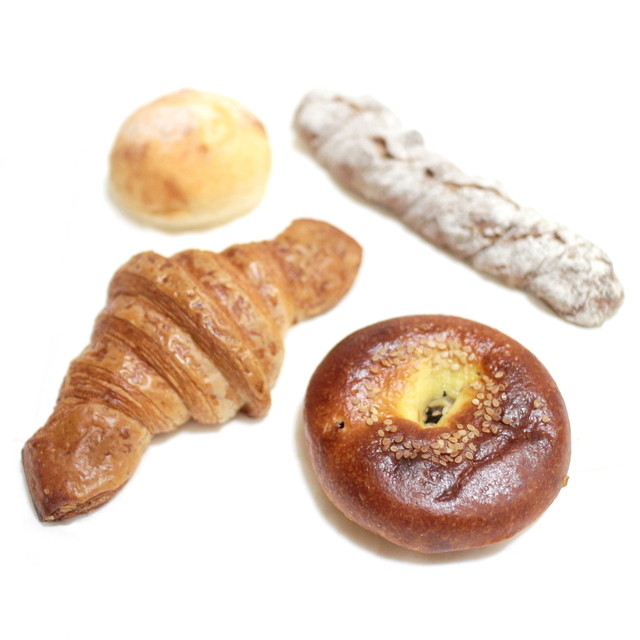
Shirakabe does not announce itself with the density of Sakae or the station-side churn around Nagoya Station. The rhythm is residential, low-rise, and more deliberate, which suits a bakery culture built around timing rather than table service. In that setting, TETRA CONTA belongs to the small-format side of Nagoya eating: bread, bagels, and Western-style sweets sold for take-out, with the room acting less like a restaurant and more like a production-led counter where the day’s supply matters.
Nagoya’s dining conversation often starts with hitsumabushi, miso katsu, kishimen, or the city’s deep kissaten tradition. Bread sits in a different register. It is not ceremonial in the way kaiseki can be, nor does it carry the late-night charge of an izakaya crawl. The serious bakery is a morning-and-afternoon pursuit, judged by repeat habits, restraint, and how much trust a shop can build without the theatre of a dining room. TETRA CONTA’s inclusion in Tabelog’s Bread EAST 100 for 2020 and 2022 places it inside that specialist bracket, where recognition comes from category credibility rather than luxury signals.
Shirakabe's bakery counter, not Nagoya's expense-account dining room
The useful comparison in Nagoya is not with formal restaurants such as La Violetta, か茂免, ラ・グランターブル ドゥ キタムラ, 橦木町 しみず, or China Sichuan Kinsui En. Those names sit in different rituals: course meals, hospitality pacing, wine or sake decisions, and longer stays. A bakery like this is judged by a narrower but unforgiving standard. Product range, turnover, pricing, and repeat local demand matter more than interiors or ceremony.
That distinction is why the wine-list lens has to be translated here. There is no restaurant cellar to parse, no sommelier-led pairing structure, and no long-form beverage program shaping the meal. The relevant kind of curation is shelf curation: a compact selection of bread, bagels, sweets, and bottled juice, presented for take-out rather than paired dining. In Japan, that can be as disciplined as a cellar, because the question is not abundance. The question is whether the shop knows what to leave out.
The price signal is part of the point. With an average spend listed below JPY 999, this is not a luxury bakery using scarcity as theatre. It sits in the everyday category, but the awards recognition gives that everyday format unusual weight. For travellers accustomed to reading Japan through Michelin counters and hotel dining rooms, that can be a corrective. A city’s food culture is often clearer in places that ask for ten minutes and cash, not three hours and a jacket.
For broader planning across the city, compare the category spread in Our full Nagoya restaurants guide with adjacent travel layers in Our full Nagoya hotels guide, Our full Nagoya bars guide, Our full Nagoya wineries guide, and Our full Nagoya experiences guide. The bakery stop belongs early in the day, before the itinerary hardens around museums, shopping, or a longer lunch.
What the recognition says about the bread scene
Tabelog’s Hyakumeiten lists are useful because they separate categories with precision. Bread is not treated as a side note to restaurants; it has its own competitive field. Selection for Bread EAST in 2020 and 2022 says the shop has been assessed within that specific bakery context, not borrowed prestige from a chef’s counter or hotel lobby. The listed score of 3.61 also gives a practical signal: this is a specialist address with enough traction to matter, not a broad tourist machine built on scale.
Nagoya’s advantage for this kind of stop is logistical. The city rewards short detours. A bakery in Higashi Ward can sit outside the main sightseeing axis and still make sense when the day is planned by rail and neighbourhood clusters. Amagasaka Station on the Meitetsu Seto Line anchors the approach, and the Shirakabe address puts the shop in a quieter part of the city’s eastern fabric. That neighbourhood context matters: the experience is not about spectacle, but about folding a local purchase into the day.
This is not a table to secure weeks ahead; it is a stop to time around opening patterns and sell-out risk. The format is take-out, with no seated dining to stretch the visit. That makes it useful for travellers who want one precise food stop without turning the day into a restaurant schedule. It also means expectations should stay aligned with the category: arrive for bread and sweets, not for a plated dessert course or a beverage pairing.
EP Club readers building a wider Japan food map can place this alongside other small-format or category-specific addresses rather than only grand dining rooms. See 1022, 451, Aaron, Alan., and All Day Dining Montmartre for other ways the restaurant category stretches beyond formal dinner. For cross-city context, compare concise Japanese formats such as -Grilled beef Sukiyaki- KAMAKURA TANUKIAN 鎌倉 たぬき庵 in Kamakura. 鮪と炭火焼き うお炭 秋葉原店 in Tokyo.cafe in Osaka.know in Kumamoto, (Shoku) Vietnam in Kawasaki, [Curry Senmon Ten] Maruyama Kyoju. in Sapporo, Jōdo Saké Bar in Los Angeles, and Onigiri Time in Pasadena.
The right expectation: a quick, exacting stop
The smartest way to read TETRA CONTA is as a precision errand rather than a meal occasion. The category is modest, the spend is low, and the service model is take-out, yet the award history gives the stop editorial weight. That combination is common in Japan and easy to underrate: a specialist can be culturally serious without being expensive, formal, or photogenic.
For travellers with one or two days in Nagoya, the bakery makes sense when the route already passes through Higashi Ward or when the morning needs a local anchor before moving toward the city centre. It is less suitable for anyone seeking a long sit-down meal, a chef-led narrative, or a wine program. The draw is narrower and cleaner: a recognized bread counter in a residential pocket of Nagoya, priced for ordinary use, operating on the cadence of a shop that sells what it makes.
- Mango & yogurt cream bread
- Raisin bread loaf
- Whole wheat shokupan
- Bagels (various flavors)
- Quiche (daily)
- Assorted tarts
Cuisine and Credentials
Comparable venues for orientation by cuisine and category.
| Venue | Cuisine | Price | Notes |
|---|---|---|---|
| TETRA CONTAThis venue — the venue you are viewing | Artisanal Japanese bakery & baked sweets | $ | Not listed |
| Le Supreme Jeiāru nagoya takashimaya ten | Artisanal bakery & bread shop | $ | Nakamura |
| Kitchen Cho | Japanized western restaurant | $$ | Chikusa |
| Le Supreme. Sakou honten | Artisan Bakery & Sandwiches | $ | Nakamura |
| SURIPU | Artisan Bakery & Sandwiches | $ | Naka |
| baguette rabbit | French-inspired artisan bakery | $ | Meitō |
Recognition history
Dated appearances from independent guides and award organizations, with the underlying list record or original source where available.
Tabelog 100 #70 · No. 70
Tabelog · Tabelog 100 - Bread - EAST - 2022
Continue exploring
More in Nagoya
Restaurants in Nagoya
Browse all →

At a Glance
- Quiet
- Cozy
- Classic
- Solo
- Casual Hangout
- After Work
- Standalone
- Design Destination
- Local Sourcing
Current opening hours
- Monday
- Closed
- Tuesday
- 10 AM–6:30 PM
- Wednesday
- 10 AM–6:30 PM
- Thursday
- 10 AM–6:30 PM
- Friday
- 10 AM–6:30 PM
- Saturday
- 11 AM–6:30 PM
- Sunday
- Closed
Hours can change for holidays and private events. Last verified .
A tiny, takeout-only neighborhood bakery in a quiet residential area, with a calm, low-key atmosphere focused on the aroma of freshly baked bread rather than seating or decor.