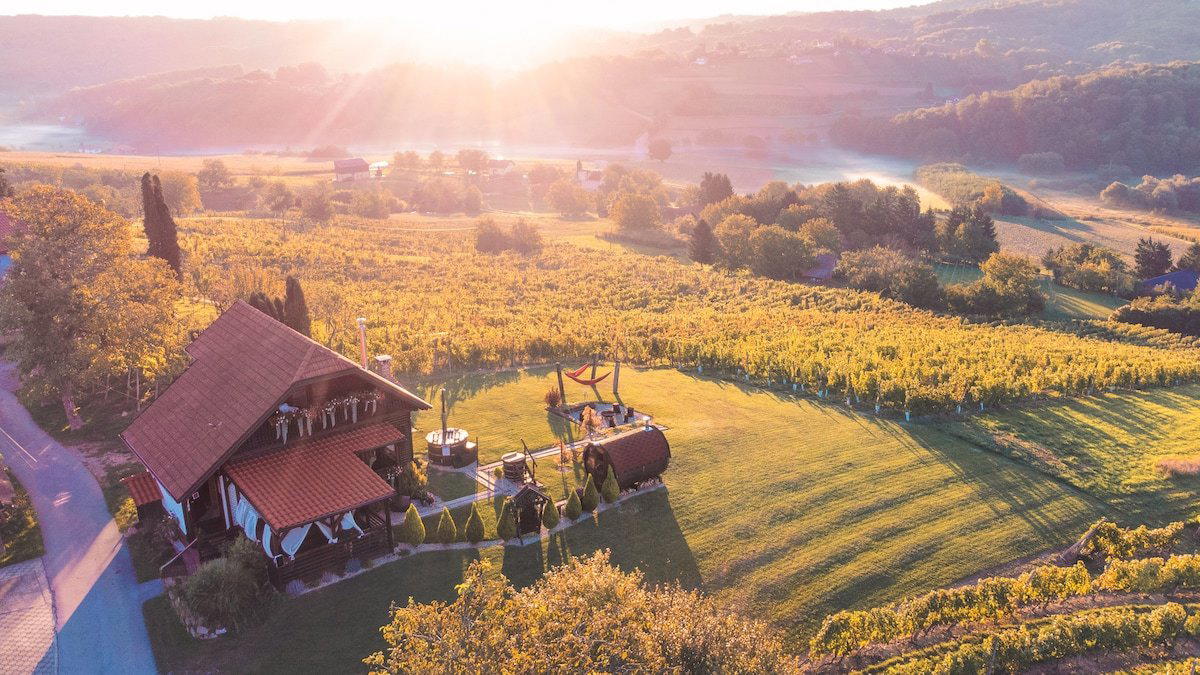
Terbotz sits in Štrigova, a small wine-producing municipality in Croatia's Međimurje region, where the agricultural calendar and local land shape what ends up on the plate. The address alone, a rural road in the Železna Gora hills, signals a kitchen anchored in its immediate geography rather than trend cycles. For those willing to travel north of Zagreb's restaurant scene, it offers a perspective on Croatian cooking grounded in place rather than performance.
Pearl is the En Primeur Club membership app — saves, bookings, and concierge access live there. Same editors, same standards.
- Address
- Železna Gora 113, 40312, Štrigova, Croatia
- Phone
- +38540857444
- Website
- terbotz.hr
- Directions
- Get directions
 Saves & bookings on Pearl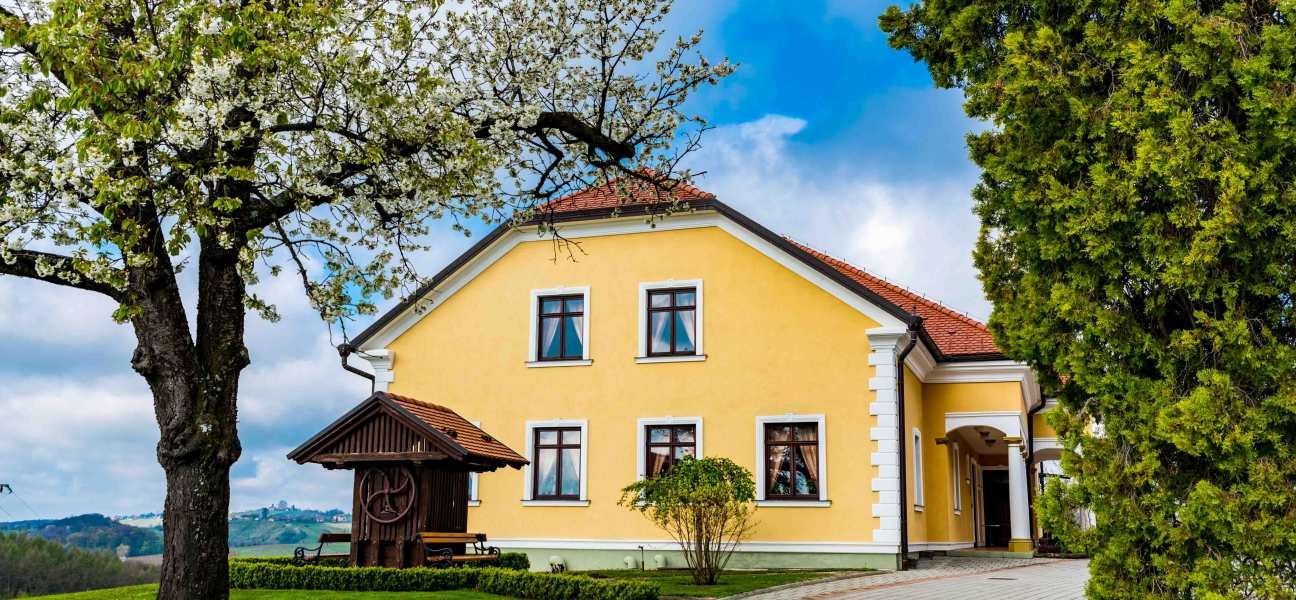
Where the Međimurje Hills Set the Menu
Croatia's most-discussed restaurant addresses tend to cluster along the Dalmatian coast, where Adriatic fish, stone-walled towns, and summer tourism create a reliable circuit. Pelegrini in Sibenik, Restaurant 360 in Dubrovnik, and LD Restaurant in Korčula all operate within that coastal economy. Štrigova sits at the opposite edge of the country, in Međimurje, a compact region wedged between Slovenia and Hungary where the dining conversation is shaped not by the sea but by the soil. Terbotz in Štrigova serves Traditional Croatian Međimurje Cuisine at a smart casual, reservation-recommended restaurant in Croatia's Međimurje region.
Međimurje produces some of Croatia's most underexamined wines, particularly whites from indigenous and international varieties suited to the continental climate. That wine culture, quiet and production-focused rather than tourism-oriented, runs parallel to the food tradition in the region. Kitchens here have historically worked with game, foraged ingredients, freshwater fish from the Mura and Drava rivers, and cultivated produce from the surrounding farmland. It is a pantry defined by latitude and elevation rather than coastline, and it produces a distinctly different set of flavors from what Croatia's Adriatic profile would suggest.
The Logic of Local Sourcing in Continental Croatia
The ingredient-sourcing argument for restaurants in this part of Croatia is not a marketing posture, it is a structural reality. The distance from major distribution networks, combined with the density of small-scale agricultural activity in Međimurje, means that kitchens drawing on nearby producers are working with fresher, more seasonally accurate material than venues that import through Zagreb or coastal wholesale channels. This is the same dynamic that gives farm-adjacent restaurants in comparable European micro-regions, parts of Alsace, the Slovenian hills around Goriška Brda, Austrian Styria, their sourcing credibility.
Štrigova itself has a documented history as a wine village, with viticulture records stretching back centuries. The municipality sits at an altitude and on a soil composition that favors white wine varieties, and the surrounding range of small plots and mixed farming creates a supply geography that a kitchen committed to locality can work with directly. Restaurants that anchor their sourcing in this kind of place, where the producer is often a neighbor rather than a vendor, tend to develop menus that shift meaningfully across the year, because the pantry shifts with it. That seasonal granularity, rather than a fixed signature style, is the characteristic of kitchens genuinely embedded in agricultural cycles.
For Croatian dining at this register, the comparison set is not the Dalmatian fine-dining circuit but rather places like Korak in Jastrebarsko or Cantilly Garden Restaurant in Samobor, inland addresses where the cooking draws from forest, farm, and river rather than harbor. Within Croatia's broader restaurant geography, this northern continental tradition is the less-documented half of the story. The more visible Michelin-tracked venues, including Agli Amici Rovinj and Nebo by Deni Srdoč in Rijeka, work within coastal or port-city frameworks. Međimurje operates outside that recognition circuit, which is partly why its kitchens remain unfamiliar to visitors who plan itineraries around award shortlists.
Getting There and Planning the Visit
Štrigova sits roughly 100 kilometers north of Zagreb, accessible by car through Čakovec, the regional center of Međimurje. The rural location, at Železna Gora 113, in the hills above the main village, means arrival requires navigating minor roads through vineyards and farmland. That geographic remove is part of the proposition: this is not a restaurant positioned for the conference-hotel circuit or the urban spontaneous dinner. It functions as a destination in its own right, and the journey is calibrated accordingly.
For visitors building a broader Croatian itinerary, Međimurje combines productively with wine-region exploration. The surrounding hills hold active producers, and the regional food and drink scene has a cohesion that rewards a day or two rather than a single meal stop. Boskinac in Novalja offers an island comparison point for how Croatian restaurants integrate their own wine production with the kitchen, and Dubravkin Put in Zagreb anchors the capital's interpretation of Croatian produce-led cooking before the drive north. Those planning to combine Međimurje with the Kvarner or Istrian coast should note the driving distances are significant, a realistic multi-day route rather than a day trip. Equally, Cubo in Opatija, Burin in Crikvenica, and Alfred Keller in Mali Lošinj represent the Kvarner coastal tier for those tracking the contrast between sea-anchored and land-anchored Croatian kitchens.
For reference, Croatia's inland farm-to-table format has parallels internationally: Le Bernardin in New York City and Atomix in New York City show how ingredient provenance can anchor a restaurant's identity at the highest urban price tiers. The Međimurje version of that commitment operates in a quieter register, without the infrastructure of a major city market, which makes the sourcing proposition more demanding and, for those who value it, more convincing. Krug in Split and BioMania Bistro Bol in Bol show the island and coastal expressions of local-sourcing commitment in Croatia's southern Adriatic tier. Bodulo in Pag adds the Pag island dimension.
Comparison Snapshot
Comparable venues nearby, for context on price, style, and recognition.
| Venue | Cuisine | Price | Notes |
|---|---|---|---|
| TerbotzThis venue — the venue you are viewing | Traditional Croatian Međimurje Cuisine | $$$ | Not listed |
| The Family | Croatian Traditional with European Influences | $$$ | Central Varazdin |
| Izletište Suhina | Traditional Croatian | $$ | Sveta Nedelja |
| Takenoko | Japanese Fusion Nikkei | $$$ | Ploce |
| Castle Bistro | Modern Croatian Bistro | $$$ | Dubovac |
| YEZI | Modern Pan-Asian Fusion | $$$ | Central Zagreb |
Continue exploring
More in Strigova
Restaurants in Strigova
Browse all →
Bars in Strigova
Browse all →
Hotels in Strigova
Browse all →

At a Glance
- Scenic
- Rustic
- Cozy
- Family
- Celebration
- Special Occasion
- Terrace
- Extensive Wine List
- Local Sourcing
- Vineyard
- Garden
Current opening hours
- Monday
- Closed
- Tuesday
- 11 AM–11 PM
- Wednesday
- 11 AM–11 PM
- Thursday
- 11 AM–11 PM
- Friday
- 11 AM–11 PM
- Saturday
- 11 AM–11 PM
- Sunday
- 11 AM–11 PM
Hours can change for holidays and private events. Last verified .
Pleasant terrace with green surroundings views in good weather; cozy interior with fireplace in winter.