
A Michelin Plate-recognised family restaurant in Međimurje, Mala Hiza occupies a late-19th-century house in Mačkovec where regional cooking built around local beef, lamb, and seasonal produce sits at the mid-price tier. Stuffed pasta and the layered cheese-and-pumpkin gibanica anchor a menu that pairs consistently with wines from the surrounding region.
Pearl is the En Primeur Club membership app — saves, bookings, and concierge access live there. Same editors, same standards.
- Address
- Balogovec 1, 40000, Mačkovec, Croatia
- Phone
- +385 40 341 101
- Website
- mala-hiza.hr
- Directions
- Get directions
 Saves & bookings on Pearl
A Late-19th-Century House and What It Tells You About Međimurje's Table
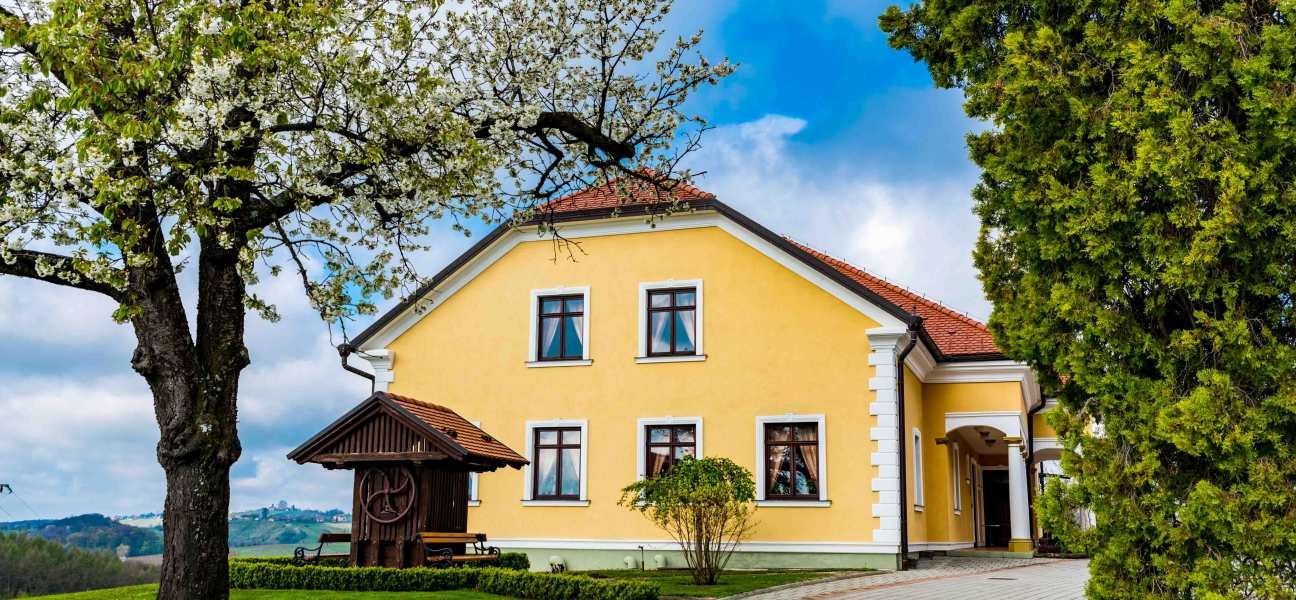
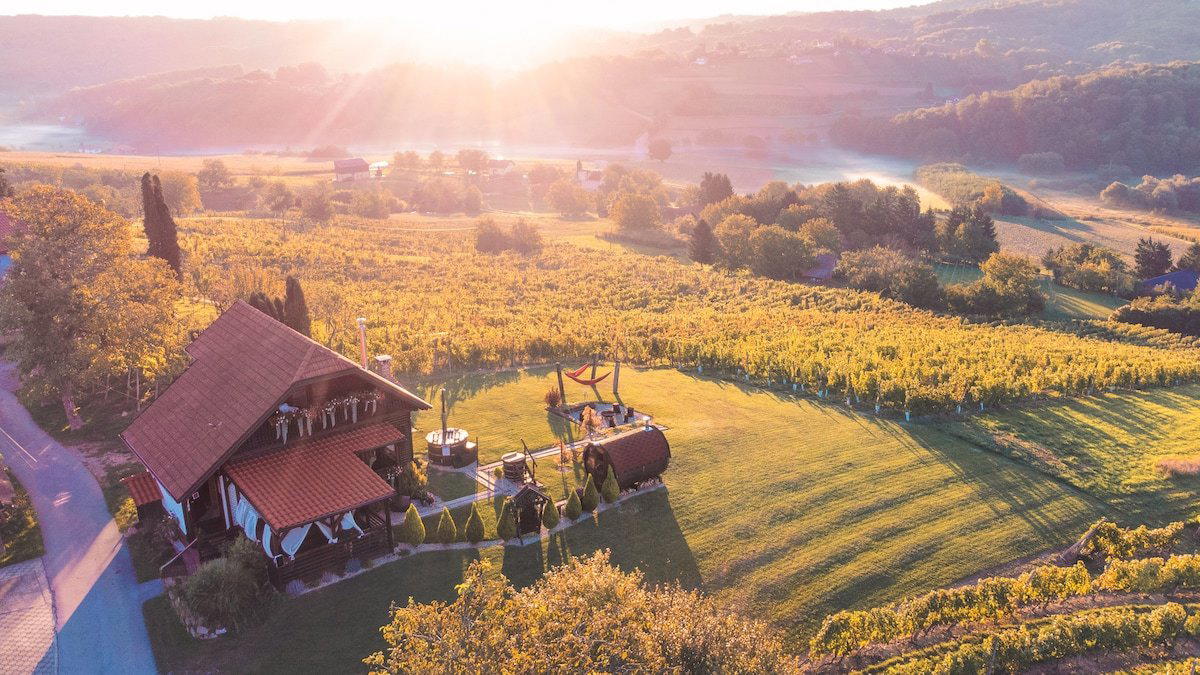
Arriving at Balogovec 1, the setting does the first work. A late-19th-century house, a garden with a fountain, a small stream running alongside, this is not a space designed to signal ambition so much as continuity. Međimurje, Croatia's northernmost county, has a long tradition of family-run country restaurants that treat the land as larder, and Mala Hiza sits squarely in that lineage. The Michelin Plate recognition it received in 2024 is less a disruption of that identity than a confirmation of it: the guide rewards cooking that is coherent with its place, and in this corner of Croatia, place means alluvial plains, river-fed pastures, and a culinary vocabulary shaped by proximity to Hungary and Slovenia as much as to the Adriatic coast.
That regional framing matters when you consider where Mala Hiza sits in the broader map of recognised Croatian dining. Coastal benchmarks like Pelegrini in Sibenik, Restaurant 360 in Dubrovnik, and Agli Amici Rovinj in Rovinj operate at the €€€€ tier with menus oriented toward Adriatic produce and modernist technique. Mala Hiza prices at €€ and makes no claim on that register. Its comparable set is the tradition of inland Croatian cooking, braised meats, filled pastas, local dairy, rather than the Dalmatian seafood canon. That distinction is not a limitation; it is the point.
Where the Ingredients Come From and Why That Shapes the Menu
Međimurje's agricultural character is central to understanding what ends up on the plate at the restaurant. The county's flat, well-watered terrain supports cattle and sheep farming at a scale that few other Croatian regions match, and the kitchen reflects this directly: beef and lamb anchor the main course section, not as novelties but as the structural logic of the menu. This is not a kitchen applying local ingredients as decoration to a pre-existing template. The template is built around what the land produces.
The same sourcing logic extends to the dairy used in the kitchen. Gibanica, the layered dessert of shortcrust pastry, fresh cheese, eggs, and pumpkin that closes the meal here, depends on fresh cheese of the kind produced in small-scale regional dairies, the kind that does not travel well and therefore signals genuine locality. In that sense, the dessert functions as a quality indicator as much as a course: if the gibanica is right, the supply chain is working.
Stuffed pasta in the appetiser section follows the same geographic logic. Northern Croatia shares pasta-making traditions with neighbouring Slovenia and the Friuli region of Italy, the result of centuries of Habsburg administration that moved cooking techniques across borders. The filled pasta at the restaurant is not an Italianate import; it is a regional inheritance, and understanding that context changes how you read the menu as a whole. For a broader view of how regional cooking traditions operate across different Croatian settings, the comparison with Korak in Jastrebarsko or Dubravkin Put in Zagreb is useful, both operate in the inland Croatian register, though at different price points and with different emphases.
The Wine Logic at This Latitude
Međimurje wine sits in a niche even within Croatia's already fragmented wine geography. The region's continental climate, cold winters, warm summers, significant diurnal shifts, produces white wines with pronounced acidity and aromatic intensity, particularly from Graševina, Pinot Gris, and the indigenous Pušipel grape. The restaurant pairs its regional menu with local wines, which at this latitude means bottles that cut through braised meat richness and complement the cheese-forward gibanica rather than competing with it. This is a different proposition from the coastal wine lists at LD Restaurant in Korčula or Boskinac in Novalja, where Plavac Mali and island whites dominate. For visitors accustomed to Dalmatian wine culture, the northern Croatian list is worth approaching with some curiosity. For those interested in exploring the broader Croatian wine scene, our full Mačkovec wineries guide provides additional context.
Family Operation, Mid-Price Tier, and What That Combination Delivers
The family-run format is worth treating as a structural feature rather than a marketing note. In a country where the restaurant industry at the recognition level increasingly separates into large-footprint coastal operations and small specialist formats, a family kitchen in a 19th-century house represents a particular kind of offer: fewer covers, less turnover pressure, and a direct line between ownership and kitchen standards. The Michelin Plate designation, which recognises fresh ingredients and carefully prepared dishes, sits comfortably with this model. It does not require complexity or innovation; it requires consistency and honesty about what the kitchen is doing.
At the €€ price point, the restaurant sits well below the Michelin-recognised coastal restaurants that have become Croatia's international dining calling cards. That gap is deliberate. The restaurant is not competing for the same diner as Nebo by Deni Srdoč in Rijeka or Krug in Split. It is serving a regional tradition to an audience that includes local families, travellers moving through Međimurje, and visitors specifically interested in what inland northern Croatia produces and eats. For comparisons with regional cuisine formats operating in different European contexts, the approach shares some structural logic with Fahr in Künten-Sulz and Gannerhof in Innervillgraten, Central European family restaurants where sourcing and setting are the primary credentials.
Planning a Visit
The restaurant is located at Balogovec 1 in Mačkovec, in Međimurje County in northern Croatia. The €€ pricing makes it accessible without advance financial planning, though the garden and the restaurant's modest footprint mean booking ahead is sensible, particularly on weekends. Contact details and current hours are best confirmed directly with the venue. Mačkovec sits in a part of Croatia where a car is the practical travel mode; the restaurant works well as a destination within a wider Međimurje itinerary. The combination of 19th-century setting, a kitchen with genuine regional grounding, and a 4.4 rating across over 850 reviews makes a strong case for including the restaurant in any serious pass through this part of the country.
How It Stacks Up
Comparable venues nearby, for context on price, style, and recognition.
| Venue | Cuisine | Price | Awards | Notes |
|---|---|---|---|---|
| Mala HizaThis venue — the venue you are viewing | Regional Međimurje Cuisine | $$$ | Michelin Plate | Not listed |
| Waldinger | Modern Regional Croatian | $$$ | Michelin Plate | city center |
| Theatrium by Filho | Modern Croatian-Mediterranean Fine Dining | $$$ | Michelin Plate | Zagreb Central |
| Zlatne Gorice | Regional Croatian Farm-to-Table | $$$ | Michelin Plate | Varaždin Breg |
| Kod Pere | Traditional Croatian | $$ | Not listed | Gornji Grad |
| Vinarija Kos-Jurišić | Croatian Wine & Charcuterie | $$ | Not listed | Suhodol Zelinski |
Recognition history
Dated appearances from independent guides and award organizations, with the underlying list record or original source where available.
Michelin Plate
Michelin · 2026 Michelin Plate
Michelin Plate
Michelin
Michelin Plate
Michelin

At a Glance
- Romantic
- Cozy
- Rustic
- Elegant
- Date Night
- Family
- Special Occasion
- Garden
- Terrace
- Extensive Wine List
- Local Sourcing
- Garden
Current opening hours
- Monday
- Closed
- Tuesday
- 12–9 PM
- Wednesday
- 12–9 PM
- Thursday
- 12–9 PM
- Friday
- 12–10 PM
- Saturday
- 12–10 PM
- Sunday
- 12–4 PM
Hours can change for holidays and private events. Last verified .
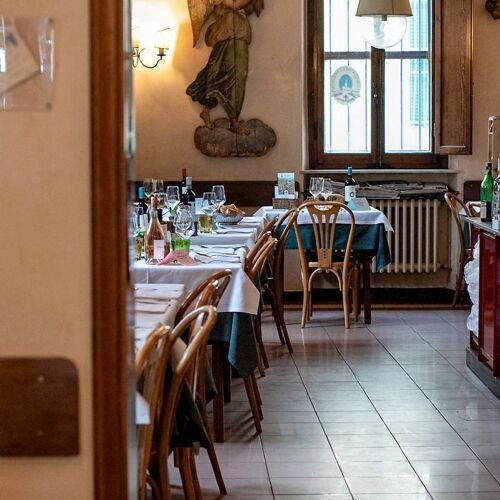
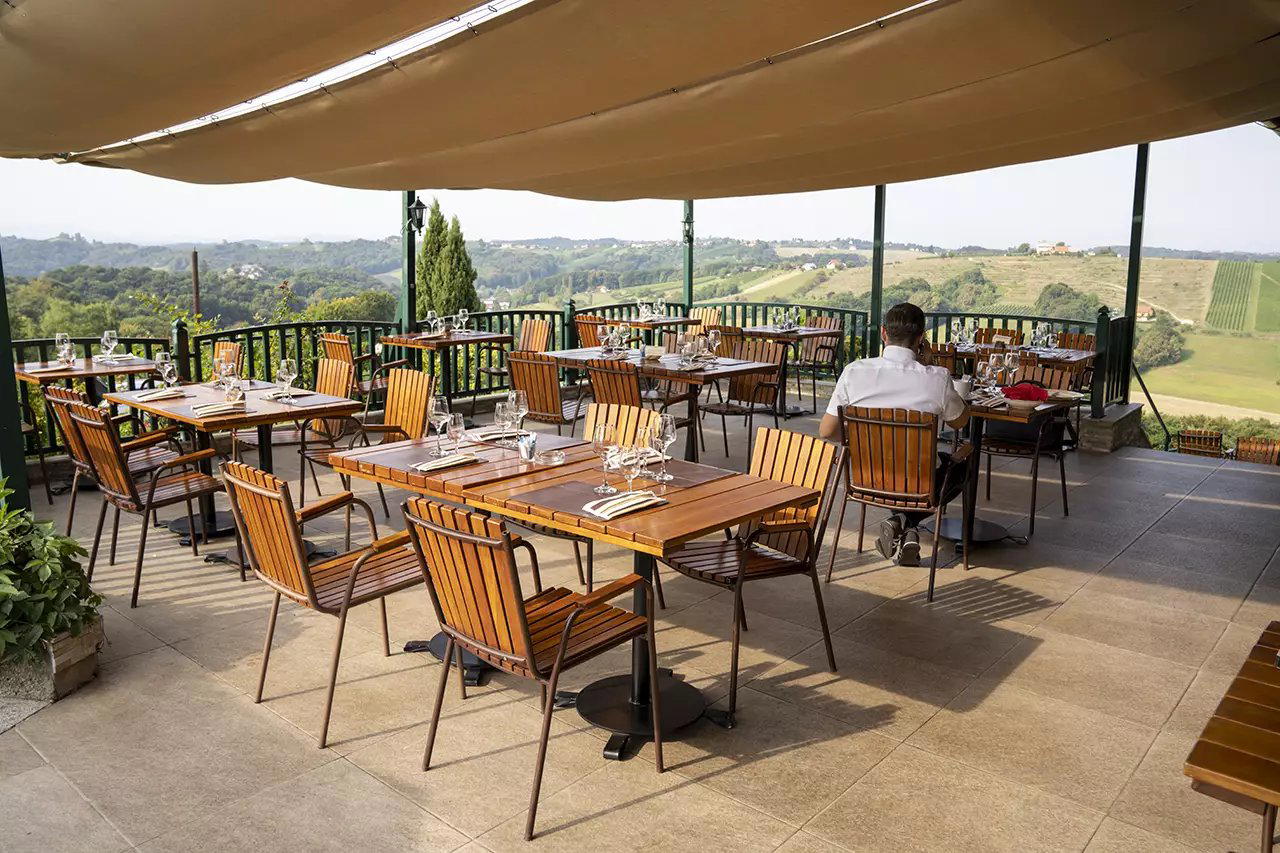
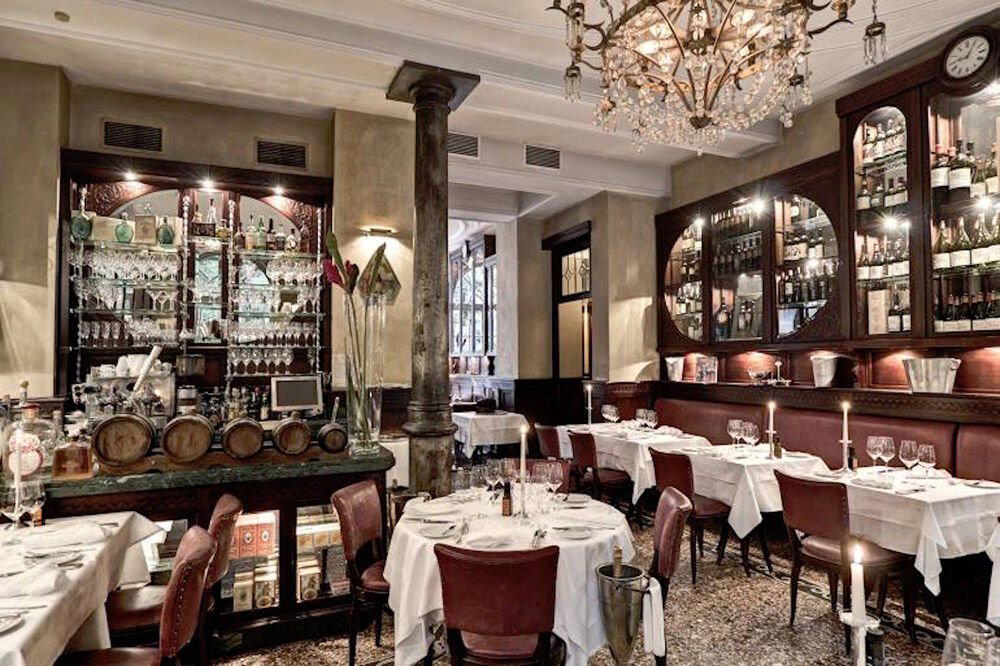
Romantic and cozy with vintage rustic decor, warm lighting, and a welcoming family-run atmosphere surrounded by gardens.