Tabelog 100 #90
Our verdict
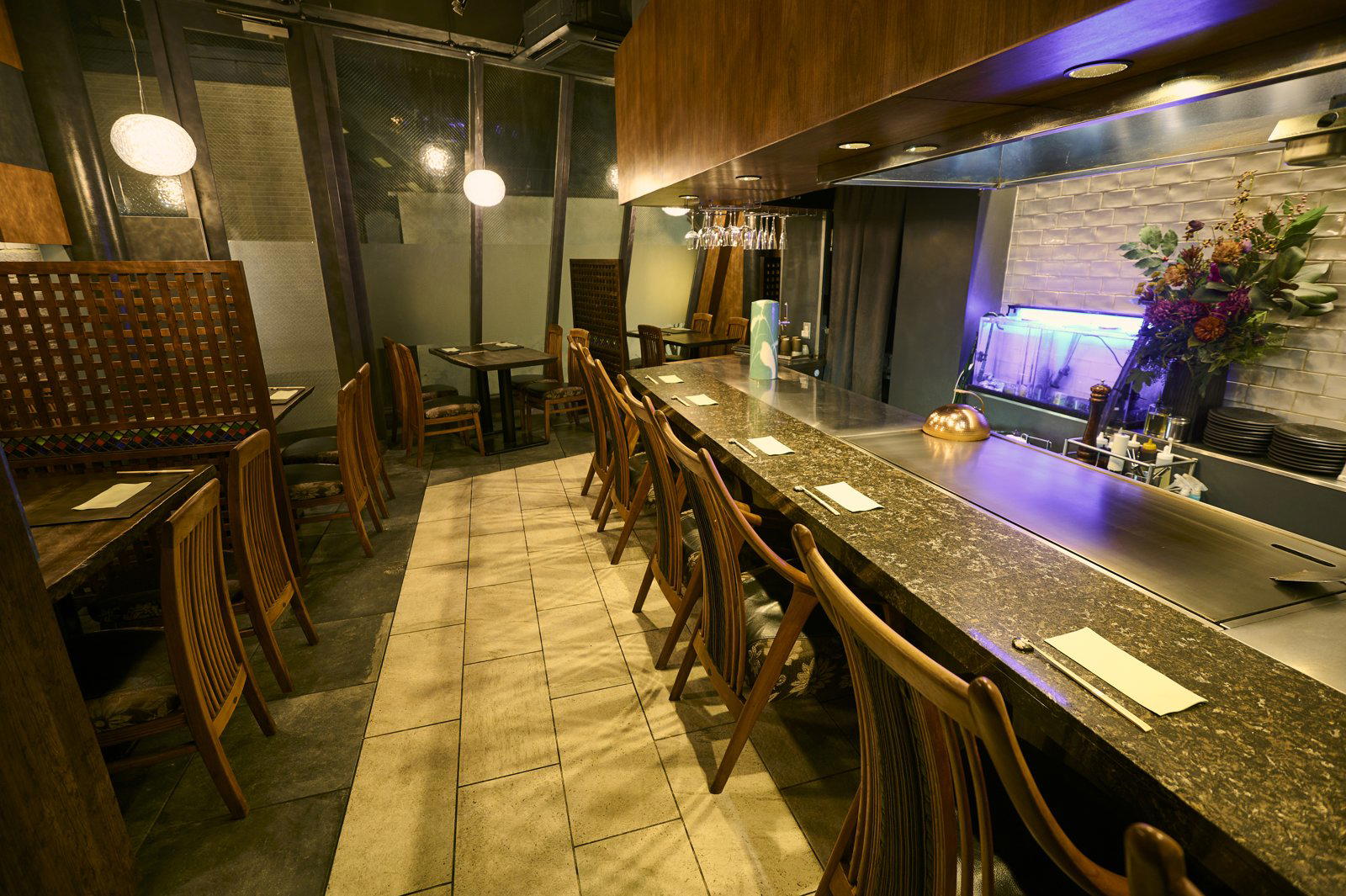
Daikanyama’s teppanyaki scene rewards restraint: counter pacing, visible grill work, and a meal that reads through timing rather than theatre. Teppanyaki Hana fits that mode with 22 seats, steak, seafood, sake, shochu, wine and cocktails, plus selection for Tabelog’s Steak / Teppanyaki EAST 100 in 2024 and 2025.

Pearl is the En Primeur Club membership app, where members save venues, book tables and use the concierge.
The menu
What to order
- A5-rank Japanese black wagyu steak
- Oyster
- Abalone
- Seasonal vegetables
Tokyo changes the dining rhythm before the meal begins. The city’s restaurant culture can make dinner feel measured rather than performative, especially when the format is built around the grill. Teppanyaki suits that register. The cooking is visible, the counter matters, and the meal depends on sequence: heat, rest, slice, serve, then pause long enough for the next plate to make sense.
Tokyo teppanyaki occupies a different lane from steakhouse excess. In stronger rooms, the point is not volume or spectacle but control: the heat source is part kitchen, part stage, and the diner watches technique become service. Teppanyaki Hana belongs to that compact, urban version of the format, with teppanyaki, steak, and seafood shaping the experience more than any grand dining-room gesture. Its 2025 Tabelog Hyakumeiten recognition puts it inside a recognized group rather than the anonymous mid-market steak category.
Tokyo teppanyaki, paced around the counter
The appeal of this format is ritual. Teppanyaki asks diners to accept a slower grammar than à la carte dining: ingredients arrive in a planned order, cooking happens in view, and the counter narrows attention to the work surface. In Tokyo, that can make teppanyaki feel closer to sushi or tempura than to a Western grill room. The movement around the grill, the timing of drinks, and the spacing between courses become part of the meal’s structure.
At Teppanyaki Hana, the categories are direct: teppanyaki, steak, and seafood. That matters because the category can sprawl. Some Tokyo teppanyaki counters lean hotel-luxury, others lean celebratory and theatrical. Teppanyaki Hana is better understood through its stated categories and its Tabelog Hyakumeiten recognition, with a dinner budget listed at JPY 8,000 to JPY 9,999. That keeps the description grounded in what the restaurant is actually presented as, rather than in extra assumptions about the room.
The format also sets etiquette. Counter-style cooking in Japan rewards punctuality, moderate conversation, and attention to the pacing of service. The grill is not background decoration; it is the centre of the room’s attention. For travellers used to louder steak formats, the adjustment is simple: treat the meal as a sequence, not a single main-course event.
Recognition without the trophy-dining price bracket
Tokyo’s premium meat restaurants can climb quickly in price, especially when branding, private rooms, and elaborate settings enter the equation. Here, the listed dinner budget sits at JPY 8,000 to JPY 9,999. That places it in a clear bracket for diners comparing Tokyo teppanyaki options. The useful comparison is not with Italian rooms such as falò or Wajo, nor with Spanish cooking at Arrocería Sal y Amor; the more relevant question is whether a diner wants the controlled rhythm of teppanyaki rather than a multi-course European format.
The Tabelog Hyakumeiten recognition for 2025 is the page’s strongest trust signal. It is not a Michelin star, and it should not be read as one. It does, however, indicate that the restaurant is being judged within a specific Japanese dining context, where repeat local use and category fluency matter. For a visitor, that distinction is useful. Awards that sort by cuisine and region often say more about where a restaurant sits in a city’s daily dining culture than broader international lists do.
Teppanyaki Hana’s listed score is 3.63, with the stated price and dinner budget falling in the JPY 8,000 to JPY 9,999 range. Those are practical signals rather than decorative claims. Together with its categories of teppanyaki, steak, and seafood, they help frame the restaurant as a focused Tokyo choice for diners who want grill-led pacing without stretching the description beyond the available record.
Know Before You Go
- Area: Tokyo.
- Format: Teppanyaki, steak, and seafood.
- Recognition: Tabelog Hyakumeiten 2025.
- Dinner budget: JPY 8,000 to JPY 9,999.
- Lunch budget: Not listed.
- Score: 3.63.
- Phone: +81-3-6873-5412.
- Best fit: Diners who want Tokyo teppanyaki with a clear price bracket and category recognition.
- Planning note: Confirm current opening details and booking conditions directly before going.
For a wider Tokyo dining shortlist, start with Our full Tokyo restaurants guide. Nearby category contrasts can be approached through other Tokyo dining rooms, including comparisons such as Arrocería Sal y Amor, Teppanyaki Hana, Wajo, falò, アビス, and サンプリシテ. For the broader city plan, look to Tokyo hotels, bars, wineries, and experiences guides. Elsewhere in Japan and beyond, keep comparisons generic unless the venue is part of the approved Tokyo shortlist.
Frequently asked questions
What's the price range at Teppanyaki Hana?
Pricing at Teppanyaki Hana is listed as JPY 8,000 - JPY 9,999.
Where do I go for Teppanyaki Hana?
Tokyo.
What's the best way to book Teppanyaki Hana?
Use the current booking or contact details provided by the restaurant, and confirm availability directly before going.
What has Teppanyaki Hana built its reputation on?
Its Tabelog Hyakumeiten 2025 recognition is the clearest credential. The listed categories are teppanyaki, steak, and seafood, with a price range of JPY 8,000–JPY 9,999 and a score of 3.63.
How It Stacks Up
Comparable venues to place this listing in its category.
| Venue | Cuisine | Price | Awards | Notes |
|---|---|---|---|---|
| Teppanyaki HanaThis venue (the venue you are viewing) | Teppanyaki Japanese Fine Dining | $50–100 | Tabelog 100 #90 | Not listed |
| Arakawa (Kyoto) | Traditional Kyoto yakiniku (Japanese BBQ) | Not listed | Not listed | Nakagyo Ward / Kawaramachi |
| Ebisu Kuroiwa | Kaiseki | $200–300 | Tabelog 100 #58 | Shibuya |
| Toriyaki Sasaya | Traditional Yakitori Course Menu | $50–100 | Tabelog 100 #16 | Meguro |
| 伯雲 | Modern Kaiseki Omakase | $300–500 | 2 Michelin Stars · Tabelog Bronze #93 | Minato |
| Yokoyama | Seasonal Japanese Kaiseki | $100–150 | Not listed | Minato |
Recognition history
Dated appearances from independent guides and award organizations, with the underlying list record or original source where available.
Tabelog 100 #90 · No. 90
Tabelog · Tabelog 100 - Steak / Teppanyaki - EAST - 2025