Tea & Sympathy
Our verdict
Tea & Sympathy on Greenwich Avenue has anchored the West Village's British expat community for decades, serving as the neighbourhood's standing answer to proper builders' tea, shepherd's pie, and the kind of unsentimental hospitality that regulars return to week after week. It sits at an interesting remove from New York's tasting-menu circuit, occupying a category that prizes familiarity over innovation.

Pearl is the En Primeur Club membership app, where members save venues, book tables and use the concierge.
The menu
What to order
- Scones with clotted cream
- Sticky toffee pudding
- Bangers and mash
Where the West Village Goes British
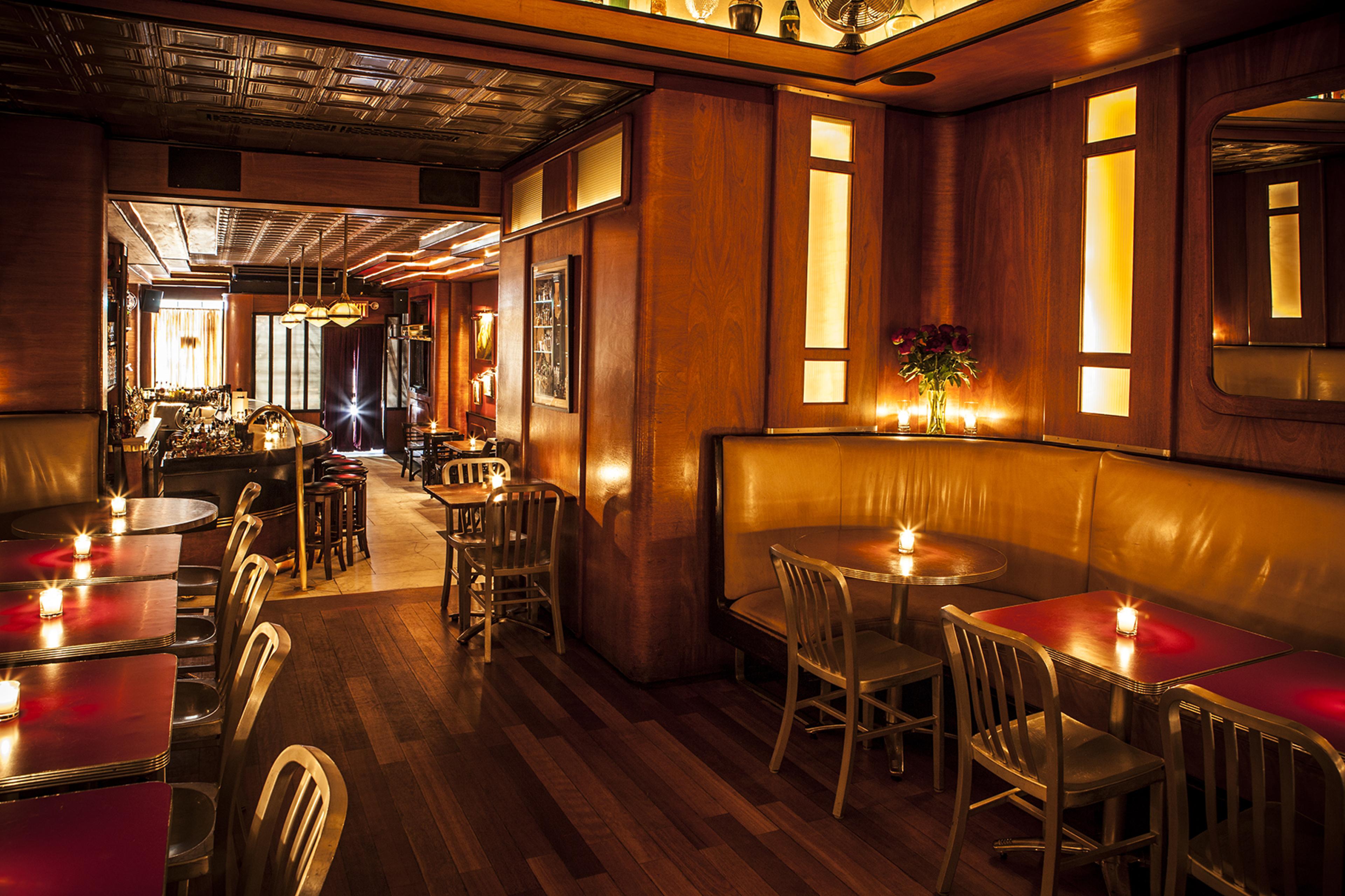
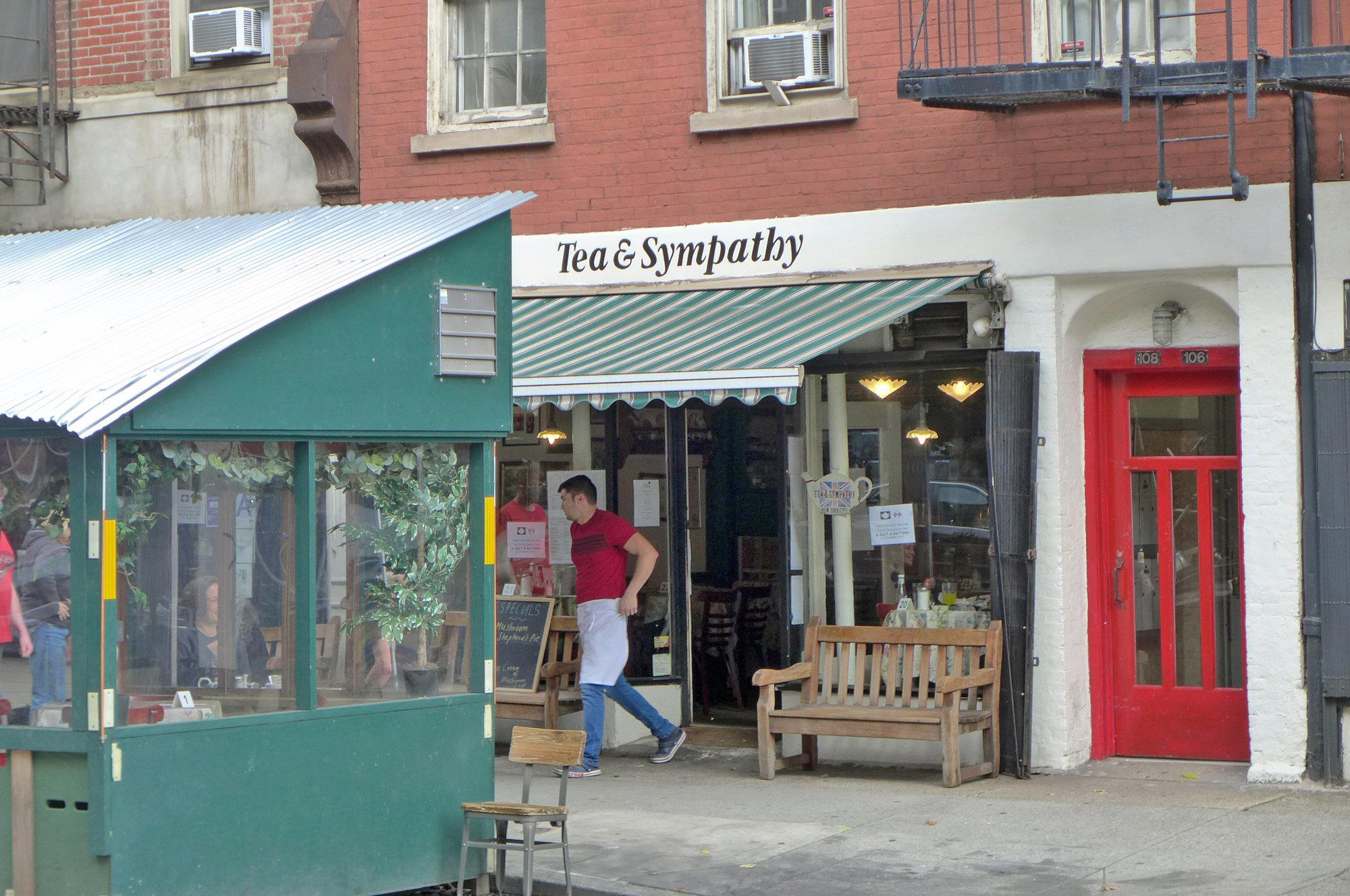
Greenwich Village has long accommodated a particular kind of restaurant that the neighbourhood's tasting-menu circuit ignores entirely: the small, idiosyncratic room that earns its clientele not through press cycles but through repetition. Tea & Sympathy at 108 Greenwich Avenue belongs firmly to that category. The room is compact by any standard, and the format is deliberately unchanged from what regulars first encountered years ago. In a city where Atomix, Masa, and Per Se define one pole of the dining spectrum, Tea & Sympathy defines an entirely different one: resolutely informal, British in temperament, and built for return visits rather than first impressions.
The Logic of the Regular
The restaurants that cultivate the deepest loyalty in New York are rarely the ones chasing awards. They are the ones that offer something consistent, specific, and hard to replicate elsewhere. For the city's British expatriate community and a West Village clientele that has grown up around this address, Tea & Sympathy on Greenwich Avenue operates as a fixed point. The draw is not novelty. It is the opposite: the knowledge that the shepherd's pie, the beans on toast, the proper pot of tea served with milk on the side, will arrive exactly as expected.
This kind of dining has a particular logic in New York. The city cycles through openings at a pace that makes continuity genuinely rare. Restaurants that have been serving the same room, with the same format, for a sustained period occupy a different category of trust than a newly minted tasting-menu counter. For regulars, the unwritten menu is as important as the printed one: the knowledge of which table has the leading light, which hour of service is least rushed, which seasonal British items appear without announcement. That accumulated institutional knowledge is exactly what the West Village's British-inflected regulars carry in.
The comparison set for Tea & Sympathy is not Le Bernardin or Jungsik New York. Those rooms operate in a Michelin-tracked, reservation-heavy tier where every element is calibrated for critical scrutiny. Tea & Sympathy operates outside that system by design, and its longevity on Greenwich Avenue is its own form of credential.
British Dining as a Counterpoint to New York's Tasting-Menu Circuit
British cafe and tearoom culture translates awkwardly in the United States, and most attempts produce something that reads as theme rather than tradition. The formats that endure are the ones that do not perform Britishness for an outside audience but simply operate as if the audience is already native. Scotch eggs, full English breakfasts, Victoria sponge, and pots of properly brewed tea are not curiosities here; they are the point. The room does not explain itself.
That matter-of-fact approach separates Tea & Sympathy from the category of novelty dining that New York produces in abundance. There is no theatrical service component, no chef's table, no tasting format with supplemental courses. What exists instead is a short, direct menu anchored in British home cooking, served in a room small enough that the staff know who comes in regularly. That scale is not a limitation; it is what makes the regulars' experience possible. At the price points and seat counts commanded by The French Laundry in Napa or Alinea in Chicago, the relationship between diner and house is managed through booking systems and front-of-house protocols. At Tea & Sympathy, it is managed through proximity and repetition.
Neighbourhood Placement and the Greenwich Avenue Context
Greenwich Avenue runs through one of Manhattan's more stable residential pockets. The West Village has changed considerably in price and profile over the past two decades, but it has retained a density of independent operators that distinguishes it from the more commercialised stretches of the city. Tea & Sympathy sits in that independent layer, alongside the kind of local bookshops, wine bars, and corner restaurants that give the neighbourhood its character.
The address itself matters. A British tearoom on this particular block does not feel placed; it feels arrived at organically, the way the leading neighbourhood restaurants do. The clientele walking through the door on a given afternoon might include long-term West Village residents, British expats on their second or third visit that month, and visitors who have been directed there specifically because it offers something that the broader New York dining scene does not replicate easily. That mix sustains the room across the week in a way that pure tourist traffic cannot.
For comparison, consider how restaurant communities in other American cities have similarly developed anchor institutions in specific neighbourhoods: Emeril's in New Orleans and Bacchanalia in Atlanta each occupy a kind of neighbourhood-institution status in their respective cities, even if the format and price point differ entirely. The principle of return-visit loyalty operating independently of awards recognition is consistent across all of them.
What the Format Asks of the Visitor
A room this size, with this level of regular patronage, runs differently than a restaurant optimising for first-time guests. Seating is tight, service is direct rather than formal, and the expectation is that you know roughly what you have come for. That suits the regulars exactly. For a first-time visitor, the adjustment is minor: read the room, order confidently, and do not expect the kind of explanatory service that higher price-point rooms provide as default.
The tea list deserves attention in its own right. British tea culture makes distinctions that American cafe culture largely does not: the choice of leaf, the brewing time, the temperature of the water, whether milk arrives separately. At Tea & Sympathy, these are not affectations but baseline operating assumptions. A pot of tea here is a complete thing, not a bag dropped in hot water.
Visitors planning a day in the West Village that includes stops relevant to the wider New York dining scene might also consider Blue Hill at Stone Barns in Tarrytown for a longer excursion, or consult our full New York City restaurants guide for a broader map of the city's dining tiers. Internationally, the combination of comfort-format dining and deep regular clientele appears in rooms as different as 8½ Otto e Mezzo Bombana in Hong Kong and Alain Ducasse's Louis XV in Monte Carlo, though the price points sit at entirely different registers.
Planning Your Visit
Tea & Sympathy is located at 108 Greenwich Ave, New York, NY 10011, in the West Village. Dress: No stated dress code; the room is casual by nature. Budget: Getting there: The West Village is accessible via the 1, 2, and 3 subway lines at Christopher Street, and by the A, C, E lines at 14th Street. Leading timing: Afternoon tea service midweek tends to be less congested than weekend lunch, when the room fills with regulars and neighbourhood foot traffic simultaneously.
Frequently asked questions
What part of town is Tea & Sympathy in?
Tea & Sympathy is located at 108 Greenwich Ave, New York, NY 10011, New York City.
Is Tea & Sympathy in New York City actually run as a traditional British tearoom rather than an American interpretation?
Tea & Sympathy at 108 Greenwich Ave in New York City is widely referenced as one of the few places in Manhattan where British tearoom format is observed as practice rather than pastiche. Most American attempts at this format read as themed dining; this West Village address has maintained a different reputation precisely because it operates like a neighbourhood fixture rather than a concept restaurant. Confirm current service format directly with the venue.
What's the signature dish at Tea & Sympathy?
Tea & Sympathy has built its reputation on British comfort staples rather than a single showpiece dish. The room at 108 Greenwich Ave draws regulars back for the kind of consistent, everyday British cooking that rarely appears elsewhere in Manhattan. Specific menu details should be confirmed directly with the venue before visiting.
What's the best way to book Tea & Sympathy?
Tea & Sympathy operates at 108 Greenwich Ave in the West Village, a small room where regular patronage shapes the pace more than reservation systems do. check the venue's official channels for current booking policy, as a room this size runs on its own terms. Arriving without a plan during peak hours carries real risk.
What do critics highlight about Tea & Sympathy?
Coverage of Tea & Sympathy tends to focus on what it is not: not a tasting-menu destination, not chasing awards, not performing Britishness for tourists. Its West Village address at 108 Greenwich Ave has stayed consistent while the neighbourhood around it has changed considerably in price and profile. That consistency is the credential most often cited.
How does Tea & Sympathy handle allergies?
Given the small size of the room at 108 Greenwich Ave, contacting the venue directly before your visit is the practical approach for any specific dietary requirements.
Accolades, Compared
Comparable venues nearby, for context on price, style, and recognition.
| Venue | Cuisine | Price | Awards | Notes |
|---|---|---|---|---|
| Tea & SympathyThis venue (the venue you are viewing) | Traditional British Tea Room | $30–50 | Not listed | Not listed |
| Dean Fryer | British Seafood Pub | Not listed | Not listed | Not listed |
| Dean's | Coastal British Gastropub | $50–100 | Grub Street Best Food of 2026 (So Far) | SoHo |
| The Spotted Pig | Modern American Gastropub | $30–50 | James Beard Award Best Chefs | West Village |
| Filaga | Traditional Sicilian & Roman-Style Pizza al Taglio | $20–30 | 50 Top Pizza USA Slice #8 | New York City |