
TAVERNE BERNHARDT’S in Toronto serves Montreal-inspired rotisserie chicken and vegetable-forward Contemporary French cooking. Must-try dishes include the Chalet Bar‑B‑Q style Rotisserie Chicken, the seasonal "Big Greenie" salad, and the house-made "super-vanilla" ice cream with haskap berry and buckwheat sablé. The kitchen turns high-quality poultry on a Rotisol rotisserie while potatoes roast beneath, collecting savory drippings; natural and organic wines complement the menu. Noted as #29 on Canada’s 100 Best Restaurants in 2024, Bernhardt’s pairs humble comfort with precise technique in a cozy Edwardian house. Expect warm, savory aromas, crisp skin on the chicken, bright vinegary gravy, and vegetable sides that sing with seasonal brightness.
Pearl is the En Primeur Club membership app — saves, bookings, and concierge access live there. Same editors, same standards.
- Address
- 202 Dovercourt Rd, Toronto, ON M6J 3C8, Canada
- Phone
- +1 416-530-0008
- Website
- bernhardtstoronto.com
- Directions
- Get directions
 Saves & bookings on Pearl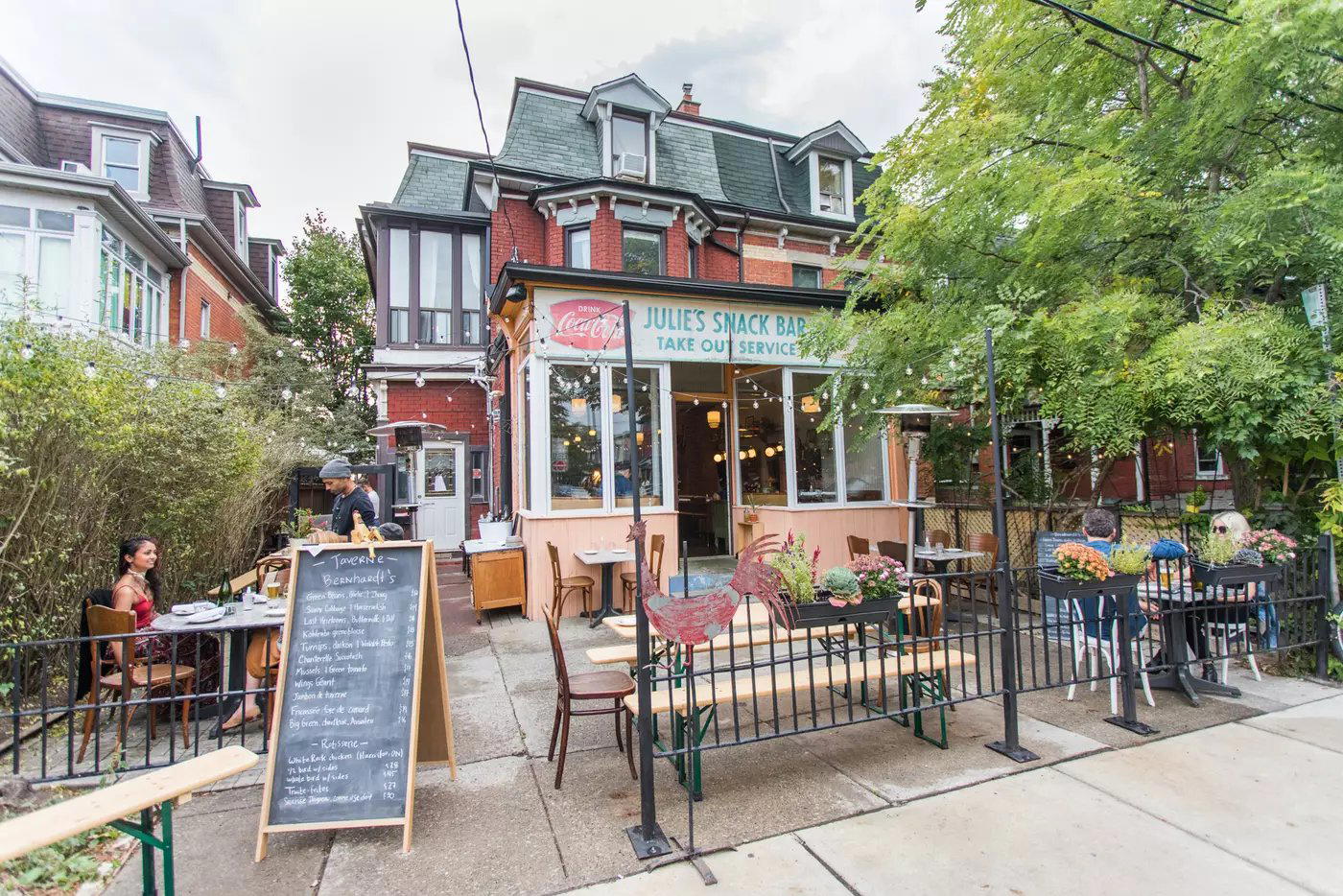
A West-End Edwardian Dining Room and the Montreal Tradition It Carries
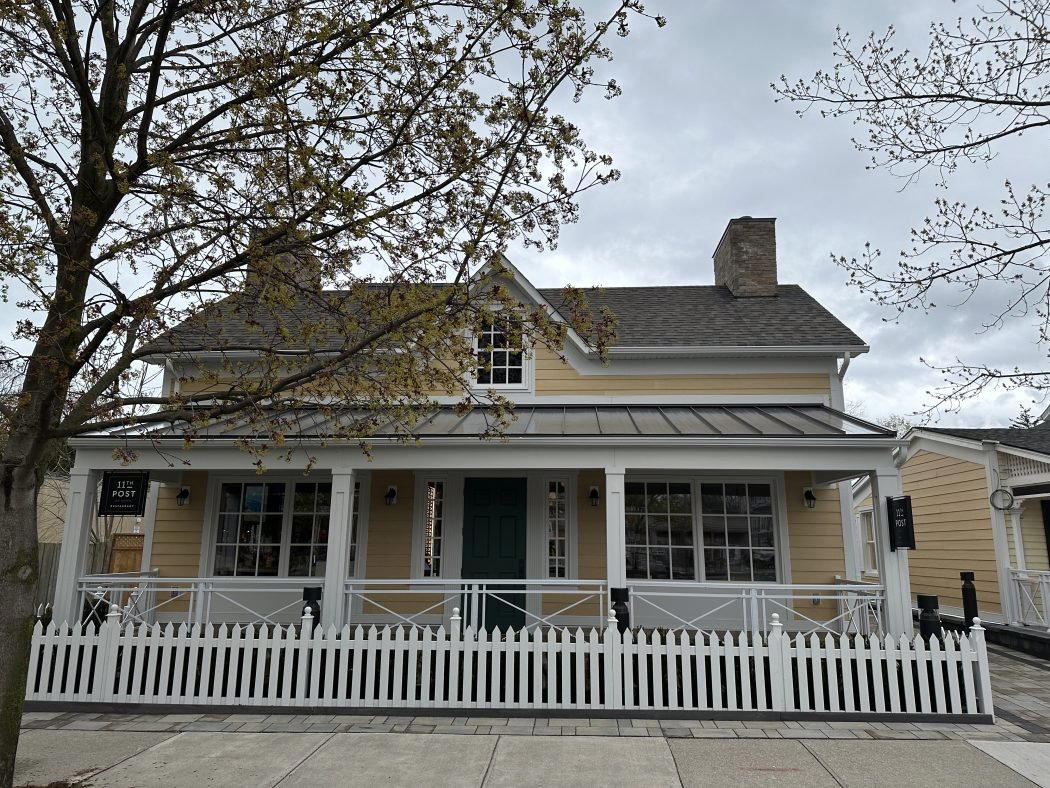
On Dovercourt Road, where Victorian and Edwardian rowhouses define the streetscape of Toronto's west end, Taverne Bernhardt's is a French Bistro Rotisserie in Toronto's west end at 202 Dovercourt Rd, Toronto, ON M6J 3C8, Canada. The facade is modest in that particular way that signals confidence rather than neglect: no large signage, no theatrical entrance. Inside, the room is cozy without being cramped, styled with the kind of considered restraint that suggests someone has thought carefully about what a Montreal-inflected neighbourhood taverne should feel like when transplanted to Toronto. The front patio, open on warm evenings, is the seat that regulars compete for. It frames the experience correctly: casual enough for a Tuesday, deliberate enough that the food demands your attention.
Montreal's Rotisserie Tradition, Carried South
Montreal has a deeply specific rotisserie chicken culture. It traces back to places like Chalet Bar-B-Q, opened in the 1940s, where birds turned over open flames and the accompanying sauce developed a cult following distinct from anything you'd find in Paris or New York. That sauce is vinegary, particular, and polarising to those who don't know it. When Zach Kolomeir, who built his Montreal-tribute credentials at Dreyfus, opened Taverne Bernhardt's as his second Toronto project, he anchored the menu around that tradition rather than softening it for a Toronto audience. The rotisserie chicken here uses a Rotisol machine, a French rotisserie manufacturer that produces equipment used across serious European kitchens, and the birds turning above the drip tray are what the room smells like.
The accompanying gravy carries the correct vinegary tang of the Montreal original, without the cornstarch-heavy texture that can make the Chalet Bar-B-Q version cloying in large quantities. That choice signals something about the kitchen's relationship to its source material: respectful of the spirit, willing to edit the execution. This is how regional food traditions tend to travel at their leading, not as exact replicas, but as interpretations that understand what made the original matter.
Where the Ingredients Come From, and Why the Sourcing Logic Matters
The rotisserie format is only as good as the poultry going into it, and the kitchen sources high-quality birds rather than defaulting to commodity supply. Rotisserie cooking is merciless in this regard: a bird turned over indirect heat for the correct duration will give up everything it has, and inferior sourcing announces itself without ambiguity. The same logic extends to the pork. The bangers and mash that appears on the menu features sausage made from Mangalica, a Hungarian lard pig known for its marbled, flavour-dense meat and increasingly sought by European-trained chefs who want pork that tastes like something. The seasoning is sage and house-made paprika, which suggests a kitchen that prefers to control spice quality rather than open a jar.
Broader vegetable program reinforces this sourcing emphasis. Spring white asparagus arrives with ginger-accented crème fraîche and beurre noisette, a combination that treats the ingredient as seasonal news rather than a year-round garnish. The sweet potato preparation, fried crisp over a steamed, creamy interior and lifted with chili crisp, cilantro, and basil, suggests a kitchen that applies technique to produce rather than using produce merely to fill a plate. Vegetables here are not the obligatory concession to non-meat orders; they carry editorial weight in the menu structure.
The Menu's Cultural Range and Its Ashkenazi-Middle Eastern Thread
Salad and vegetable section of the menu draws from a wider frame of reference than most rotisserie-anchored restaurants. Beets with grated horseradish sit in the Ashkenazi tradition; other preparations arrive with dukkah, zhoug, or tahini, drawing from the Middle Eastern pantry that has become increasingly central to serious vegetable cooking internationally. This is not fusion in the colloquial sense. It reflects the actual culinary inheritance of the kitchen and the city it operates in, where Montreal Jewish food culture and wider Levantine influence are both part of the lived culinary record. Chef Liam Donato also extends the rotisserie logic to duck, pork, and lamb, giving the Rotisol machine a broader workout than a single-protein menu would allow.
House-made ice cream closes the meal in a way that rewards attention. The super-vanilla version, incorporating haskap berry, lemon zest, and buckwheat sablé, is a composed dish rather than a palate cleanser. Haskap is a Canadian berry with a short season, more tart and complex than blueberry, and its appearance in a dessert signals a kitchen that tracks domestic produce with some care.
Where Taverne Bernhardt's Sits in Toronto's Dining Spectrum
Toronto's restaurant market has expanded its upper bracket considerably over the past decade. Tasting-menu formats at places like Alo, omakase counters like Sushi Masaki Saito and Aburi Hana, and Italian-focused rooms like DaNico and Don Alfonso 1890 now define a serious fine-dining tier priced at $$$$. Taverne Bernhardt's occupies a different position: a neighbourhood restaurant operating with genuine culinary intent, where the sourcing and technique are serious but the format stays accessible. That position is harder to sustain than a tasting menu, because the margin for drift is wider and the customer doesn't arrive with the same prepared patience. The kitchen executes the Montreal rotisserie tradition credibly, extends it across additional proteins, and builds a vegetable program around it.
The Montreal-to-Toronto transfer has precedent elsewhere in Canadian dining. Jérôme Ferrer's Europea demonstrates how Montreal's French-inflected tradition operates at high formality; Taverne Bernhardt's operates at the opposite end of that formality spectrum while drawing from the same city's food memory. For broader Canadian context, Tanière³ in Québec City and AnnaLena in Vancouver represent how other Canadian cities are building regionally grounded restaurants with national relevance. Within Ontario, The Pine in Creemore and Restaurant Pearl Morissette in Lincoln show how ingredient-led thinking operates beyond the city. If you are building a wider picture of what serious restaurants look like across Canada, Narval in Rimouski is another data point worth knowing.
Planning Your Visit
| Venue | Format | Price Tier | Booking Lead Time |
|---|---|---|---|
| Taverne Bernhardt's | Neighbourhood taverne, rotisserie-anchored | $$–$$$ | Short to moderate; book ahead on weekends |
| Alo | Tasting menu | $$$$ | Weeks to months in advance |
| Sushi Masaki Saito | Omakase counter | $$$$ | Months in advance |
| DaNico | Italian à la carte | $$$$ | Days to weeks |
Taverne Bernhardt's is at 202 Dovercourt Road in Toronto's west end.
A Quick Peer Check
Comparable venues nearby, for context on price, style, and recognition.
| Venue | Cuisine | Price | Notes |
|---|---|---|---|
| TAVERNE BERNHARDT’SThis venue — the venue you are viewing | French Bistro Rotisserie | $$ | Not listed |
| Sauvignon | French Bistro | $$ | The Beaches |
| Le Papillon On Front | Classic French & Québécois Brasserie | $$ | Saint Lawrence |
| La Palette | Classic French Bistro | $$$ | Queen West |
| Sorrel Restaurant and Bar | Modern French-Mediterranean Bistro | $$$ | Annex |
| Biff's Bistro | Classic French Bistro | $$$ | Church-Yonge Corridor |
Recognition history
Dated appearances from independent guides and award organizations, with the underlying list record or original source where available.
Canada's 100 Best Restaurants #45
Canada's 100 Best
Continue exploring
More in Toronto
Restaurants in Toronto
Browse all →

Bars in Toronto
Browse all →

Hotels in Toronto
Browse all →

At a Glance
- Cozy
- Rustic
- Romantic
- Intimate
- Date Night
- Group Dining
- Casual Hangout
- Special Occasion
- Historic Building
- Terrace
- Open Kitchen
- Natural Wine
- Craft Cocktails
- Farm To Table
- Local Sourcing
- Natural Wine
Current opening hours
- Monday
- 5–10 PM
- Tuesday
- 5–10 PM
- Wednesday
- 5–10 PM
- Thursday
- 5–10 PM
- Friday
- 5–10:30 PM
- Saturday
- 5–10:30 PM
- Sunday
- 5–10 PM
Hours can change for holidays and private events. Last verified .
Warm, rustic, and stylish atmosphere in a cozy Edwardian home with vintage French barn house aesthetic; intimate bar seating and front patio available for summer dining.