
Michelin Plate
Our verdict
A Michelin Plate-recognised Chinese restaurant in Saint-Germain-des-Prés, Taokan at 8 Rue du Sabot sits in a neighbourhood better known for French bistros and literary cafés than for Cantonese technique.

Pearl is the En Primeur Club membership app, where members save venues, book tables and use the concierge.
Chinese Dining in Saint-Germain: A Different Kind of Neighbourhood Bet
Paris has hosted Chinese restaurants for well over a century, but the city's serious Chinese dining has historically concentrated in two corridors: the 13th arrondissement around Avenue de Choisy, where Impérial Choisy represents the working tradition of Cantonese cooking in a community context, and the Right Bank, where hotel dining rooms and upmarket addresses like LiLi and Imperial Treasure have claimed a premium tier. Taokan, on a short Left Bank street in the 6th arrondissement, operates outside both of those gravitational fields. Rue du Sabot sits a few minutes from the Boulevard Saint-Germain, in a neighbourhood that defaults to French cooking and whose restaurant clientele tends toward the international but is not particularly oriented around Chinese cuisine. That positioning is, in its own way, a statement about how Chinese restaurant culture in Paris has evolved.
Consecutive Michelin Plate acknowledgements in 2024 and 2025 place Taokan inside the formal recognition tier without reaching the starred bracket occupied by Madame FAN. The Michelin Plate, awarded since the 2016 guide overhaul, signals good cooking as a baseline, it is recognition that the kitchen is producing food worth attention, not a consolation prize. For a Chinese restaurant in a neighbourhood with no particular Chinese dining identity, sustaining that recognition across two consecutive cycles carries weight.
The Morning Ritual and the Craft Behind the Steamer
Dim sum, the Cantonese tradition of small shared dishes served during morning and midday sittings, most commonly alongside tea, remains one of the more technically demanding formats in Chinese cooking. The pleating of har gow wrappers, the calibration of steamer heat for siu mai, the balance of filling weight and skin thickness in a turnip cake: these are skills that take years to standardise across a full trolley or a composed menu. In Paris, that tradition sits at the intersection of two pressures. The first is ingredient availability: sourcing consistent proteins and produce for a Cantonese-style dim sum programme in France requires either strong supply relationships or intelligent substitution. The second is timing: the traditional yum cha format, built around morning trolley service, is difficult to sustain in a city where lunch service typically begins at noon and brunch culture has absorbed much of the mid-morning hospitality space.
How Taokan handles that tension, whether it offers a full dim sum menu, a partial one, or integrates dim sum items into a broader Chinese menu, is part of what positions it within the Paris scene. Among the Chinese restaurants with Michelin recognition in Paris, the degree to which dim sum craft features in the offering varies considerably. Addresses built around Cantonese tradition typically carry the strongest programmes; restaurants that span regional Chinese cuisines tend to treat dim sum as one chapter among several.
Where Taokan Sits in the Paris Chinese Tier
Pricing at the €€ level places Taokan below the upper tier of Paris Chinese dining, which now includes addresses that price comparably to serious French restaurants. That mid-range positioning is significant. Paris has a genuine mid-tier problem in restaurant dining more broadly: the middle ground between neighbourhood casual and full destination spending is harder to hold than in cities like London or Hong Kong, where the density of Chinese dining supports a more granular price ladder. A Chinese restaurant at the €€ level in Saint-Germain-des-Prés is pricing into an audience that may not have arrived with Chinese food as a primary destination, tourists staying in the neighbourhood, locals looking for variety, diners who found the address through a hotel concierge or a map search rather than a specialist recommendation.
That context makes the Michelin recognition more pointed. For a direct sense of how Taokan compares within Paris's acknowledged Chinese dining set, Imperial Treasure and LiLi represent the higher-spend bracket, while Impérial Choisy represents the community-rooted Cantonese tradition at a different price point and register entirely.
Outside Paris, the broader conversation about Chinese cooking at European fine-dining level includes Restaurant Tim Raue in Berlin, which takes Chinese flavour structures into a European fine-dining framework, and Mister Jiu's in San Francisco, where Chinese-American culinary identity is engaged explicitly as subject matter. Taokan operates in a different register from either, but those reference points are useful for understanding the range of positions a Chinese restaurant can occupy in a Western city dining market.
Saint-Germain Context and What to Expect
The 6th arrondissement's restaurant market skews toward French cooking with a long institutional memory, brasseries, classic bistros, and occasional high-end addresses that reference the neighbourhood's literary and academic history. For a Chinese restaurant to sustain Michelin recognition here, it is competing not against other Chinese restaurants for the same dinner but against the whole neighbourhood offer for a table. That dynamic tends to reward restaurants that can read both their core audience and a broader walk-in or tourist clientele.
For travellers whose Paris itinerary is already calibrated around French cooking, the city's strongest suit, with addresses like Alléno Paris au Pavillon Ledoyen at the creative apex and regional institutions like Mirazur in Menton, Flocons de Sel in Megève, Troisgros in Ouches, Paul Bocuse in Collonges-au-Mont-d'Or, Bras in Laguiole, and Auberge de l'Ill in Illhaeusern representing what the country does at its most deliberate, Taokan offers a mid-priced alternative that carries formal recognition without requiring a major logistical commitment.
Planning Your Visit
| Venue | Cuisine | Price Range | Michelin Recognition | Arrondissement |
|---|---|---|---|---|
| Taokan | Chinese | €€ | Plate (2024, 2025) | 6th |
| Imperial Treasure | Chinese | €€€ | Michelin recognised | 8th |
| LiLi | Chinese | €€€€ | Michelin recognised | 16th |
| Madame FAN | Chinese | €€€ | Michelin starred | 1st |
| Impérial Choisy | Chinese (Cantonese) | € | Michelin recognised | 13th |
Taokan is at 8 Rue du Sabot in the 6th arrondissement, a short walk from Saint-Germain-des-Prés. The €€ price positioning makes it one of the more accessible Michelin-recognised Chinese addresses in the city. Booking ahead is advisable given the small-street location and the neighbourhood's generally high footfall, particularly on weekends. For a fuller picture of where to eat, drink, and stay in the city, see our full Paris restaurants guide, our full Paris hotels guide, our full Paris bars guide, our full Paris wineries guide, and our full Paris experiences guide.
Frequently asked questions
What distinctions does Taokan have?
Taokan has received recognition including: Michelin Plate (2025); Michelin Plate (2024).
What should I eat at Taokan?
Two consecutive Michelin Plate awards (2024 and 2025) point to consistent kitchen standards across the menu. Chinese restaurants recognised at this level in Paris typically anchor their reputation in technically precise dim sum and composed main courses rather than volume-driven banquet formats. Prioritise steamed and slow-cooked preparations, which tend to reveal the most about a kitchen's craft at this tier.
What's the address for Taokan?
Taokan is located at 8 Rue du Sabot, 75006 Paris, France, Paris.
Do I need a reservation for Taokan?
Taokan sits on Rue du Sabot in the 6th arrondissement, a neighbourhood with sustained foot traffic and a dense restaurant market that fills midweek as well as weekends. Its Michelin Plate status across two years draws a deliberate dining crowd alongside passing trade. Booking ahead, particularly for weekend lunch or dinner, is the sensible approach.
What is Taokan known for?
Taokan carries consecutive Michelin Plate recognition for 2024 and 2025, making it one of the formally acknowledged Chinese dining addresses in Paris. Its position in Saint-Germain-des-Prés separates it from the city's traditional Chinese restaurant corridors in the 13th arrondissement and around Belleville, placing it instead within a neighbourhood dominated by French institutional cooking. That contrast is part of its identity: serious Chinese food in an arrondissement that rarely hosts it.
Standing Among Peers
| Venue | Cuisine | Price | Awards | Notes |
|---|---|---|---|---|
| TaokanThis venue (the venue you are viewing) | Elegant Cantonese Dim Sum | $50–100 | Michelin Plate | Not listed |
| Alléno Paris au Pavillon Ledoyen | Modern French Fine Dining | $150–200 | 3 Michelin Stars · World's 50 Best #79 | Creative |
| Kei | Modern French with Japanese Influences | $300–500 | 3 Michelin Stars · World's 50 Best #93 | Contemporary French, Modern Cuisine |
| L'Ambroisie | Classic French Haute Cuisine | $300–500 | 2 Michelin Stars · World's 50 Best #23 | French, Classic Cuisine |
| Le Cinq - Four Seasons Hôtel George V | Modern French Fine Dining | $300–500 | 3 Michelin Stars · World's 50 Best #24 | French, Modern Cuisine |
| Plénitude | Modern French Sauce-Led Fine Dining | $300–500 | 3 Michelin Stars · World's 50 Best #14 | Contemporary French |
Recognition history
Dated appearances from independent guides and award organizations, with the underlying list record or original source where available.
Michelin Plate
Michelin
Full recognition history (3 entries)
Michelin Plate
Michelin
Michelin Plate
Michelin
Continue exploring
More in Paris
Restaurants in Paris
All restaurants in Paris →
Bars in Paris
All bars in Paris →



Details
- Elegant
- Modern
- Cozy
- Sophisticated
- Date Night
- Business Dinner
- Open Kitchen
- A La Carte
- Small Plates
- Vegetarian Friendly
- Vegan Options
Current opening hours
- Monday
- 12–2:30 PM, 7:30–10:30 PM
- Tuesday
- 12–2:30 PM, 7:30–10:30 PM
- Wednesday
- 12–2:30 PM, 7:30–10:30 PM
- Thursday
- 12–2:30 PM, 7:30–10:30 PM
- Friday
- 12–2:30 PM, 7:30–10:30 PM
- Saturday
- 12–2:30 PM, 7:30–10:30 PM
- Sunday
- 7:30–10:30 PM
Hours can change for holidays and private events. Hours as of .
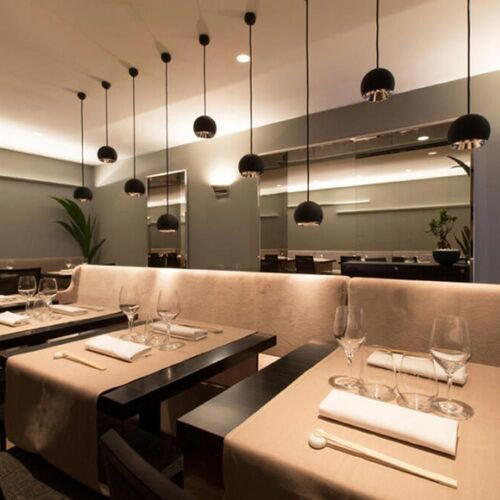
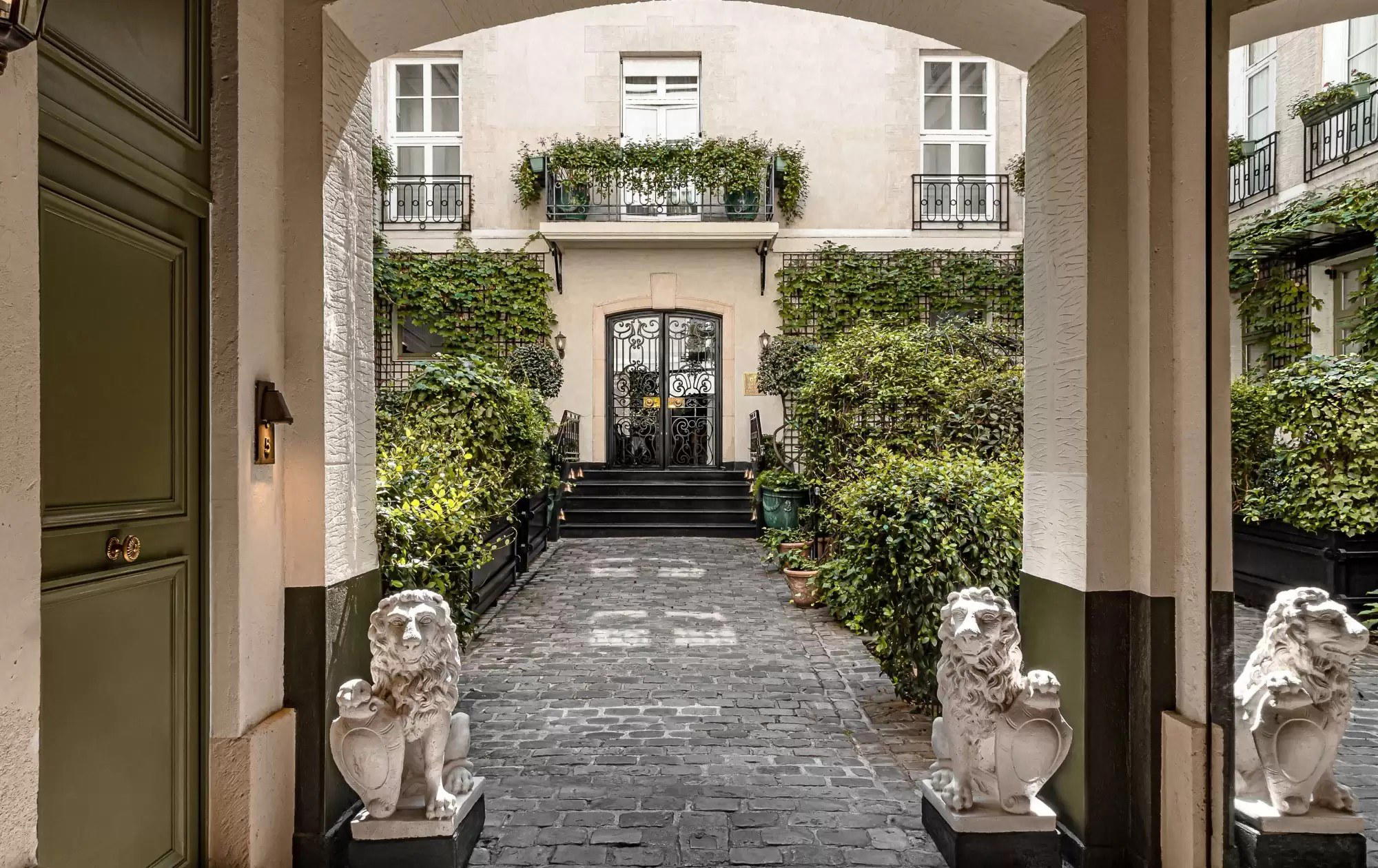
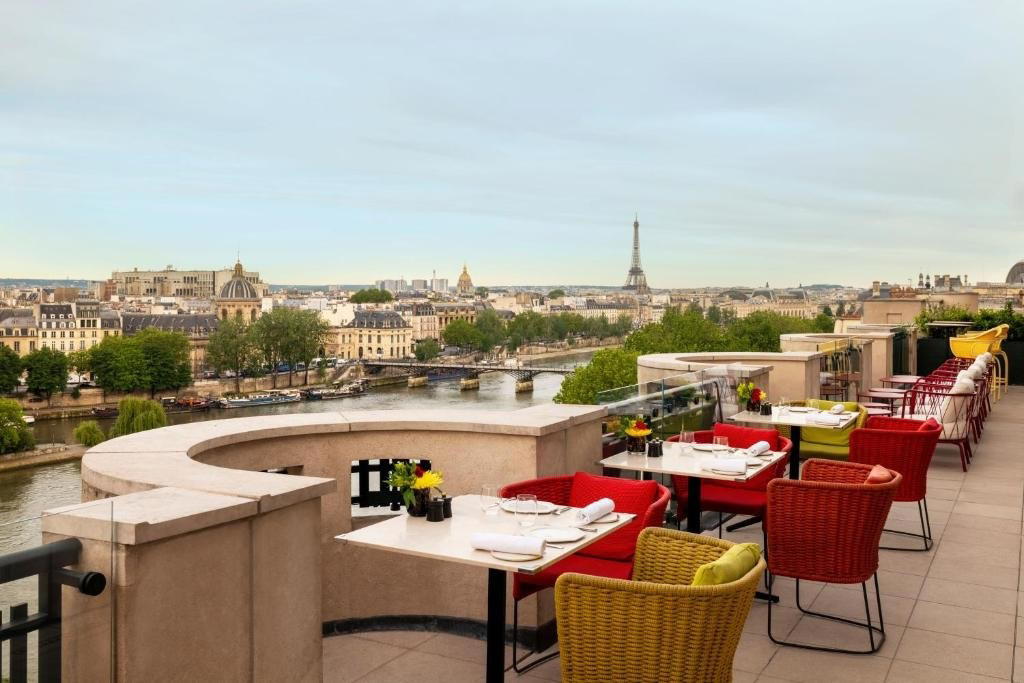
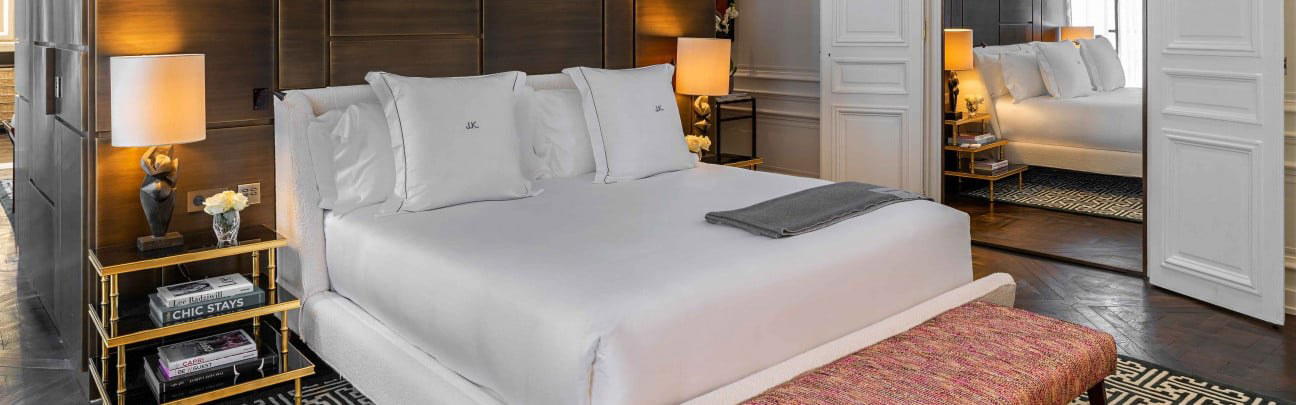
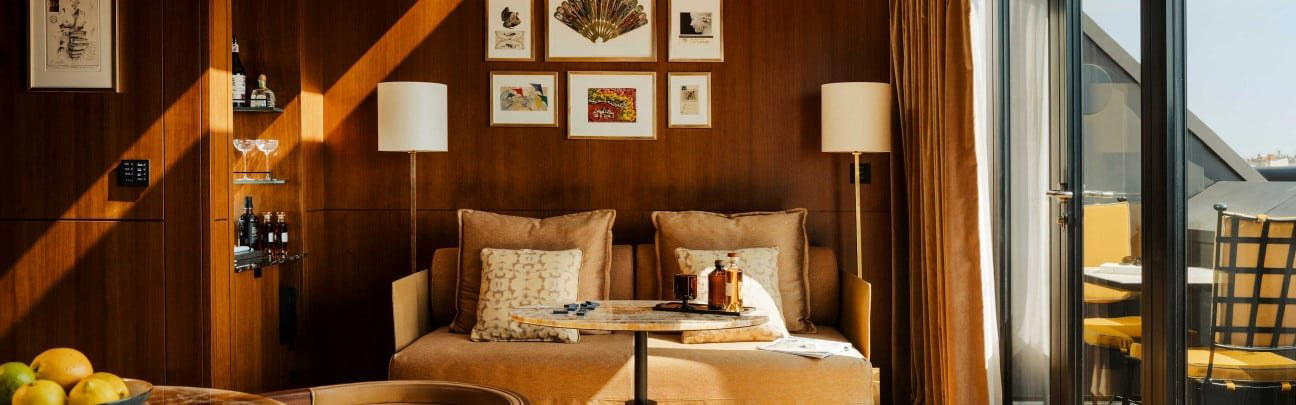
Cozy Zen atmosphere with pale leather banquettes, ebony furniture, clean lines, and monochrome tones.