1 Michelin Star
Our verdict
Imperial Treasure brings the precision and scope of a serious Chinese kitchen to the 8th arrondissement, earning a Michelin Plate and an Opinionated About Dining ranking among Asia's top 200 restaurants. The €€€€ price tier puts it in direct conversation with the neighbourhood's French grandes tables, offering a credible alternative for those seeking Cantonese and regional Chinese cooking at formal-dining standards in Paris.

Pearl is the En Primeur Club membership app, where members save venues, book tables and use the concierge.
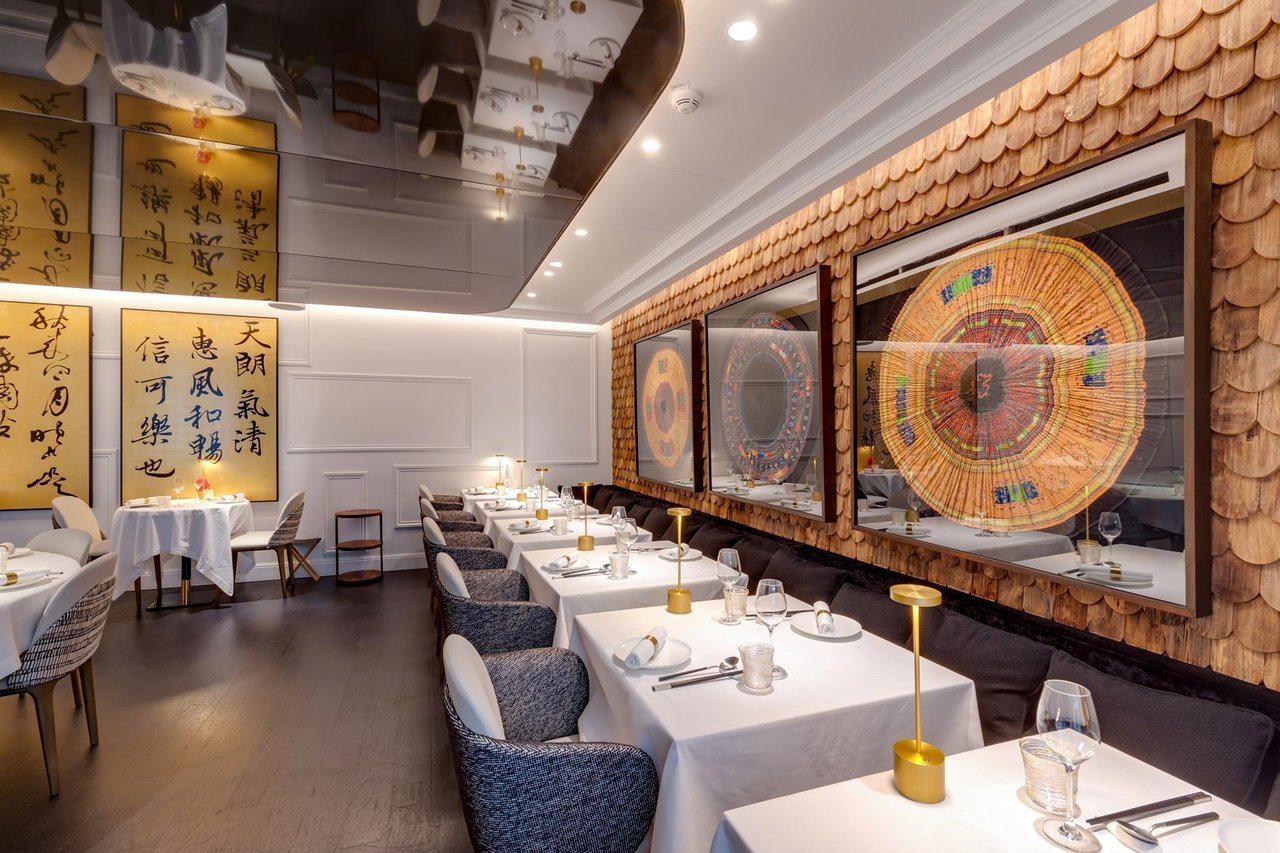
Chinese Fine Dining in the 8th: A Different Register
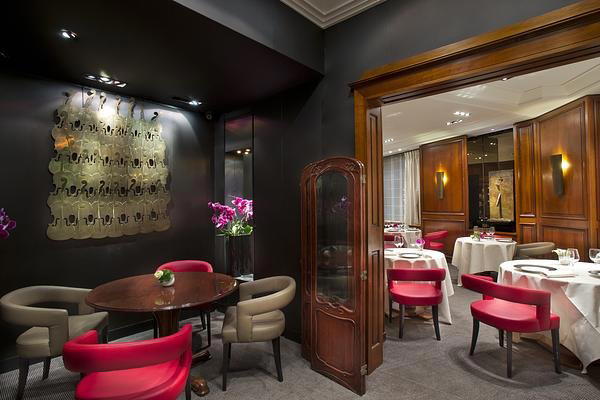
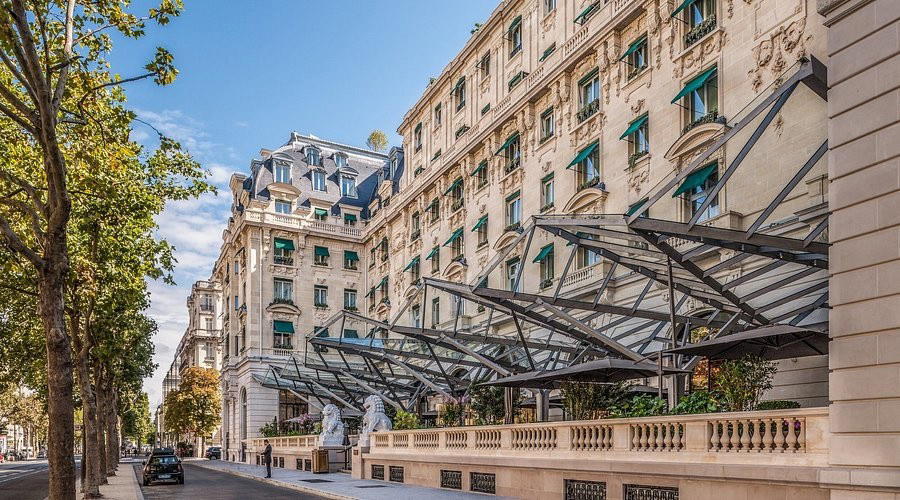
The 8th arrondissement is the address of Paris's most formally ambitious restaurants. Rue de Bassano sits within walking distance of Avenue Montaigne and the hotels lining the Champs-Élysées corridor, a neighbourhood where the dining default is classic or modern French at the highest price tier. Into that context, Imperial Treasure positions Chinese cooking not as a curiosity or an ethnic detour but as a full-format fine-dining proposition: pressed tablecloths, a substantial wine and tea programme, and prices that bracket it alongside the neighbourhood's French grandes tables. That framing matters. This is not the same competitive set as the Cantonese restaurants of the 13th arrondissement or the brasserie-style Chinese rooms of the 1st. Imperial Treasure is asking to be judged against Paris's top-tier dining, and the credentials, a Michelin Plate in 2025 and an Opinionated About Dining ranking at #201 among Asia's restaurant scene, support that claim.
Tea as a Structural Element, Not an Afterthought
In the Chinese fine-dining tradition, tea occupies the same structural role that wine does in French haute cuisine: it opens the meal, bridges courses, and closes the table. European fine-dining rooms that serve Chinese food often reduce this to a cursory pot of jasmine or oolong placed on arrival and ignored thereafter. Serious Chinese kitchens treat tea as an active partner to food, with specific varieties matched to the weight and flavour direction of each course in the same way a sommelier sequences white before red before dessert wine.
The pairing logic has clear culinary grounding. Lighter teas, white teas and young green teas like Longjing, work against delicate steamed dishes, where heavy fermentation in a pu-erh or a heavily roasted oolong would overpower the food. Roasted and aged teas, including aged pu-erh and Da Hong Pao, carry enough body and earthiness to sit alongside braised meats, roasted duck, and rich clay-pot preparations. A Tie Guan Yin, with its floral volatility, functions like a palate cleanser between courses. When this framework is applied with seriousness, the tea programme extends the sensory arc of the meal rather than decorating the table.
At €€€€ price positioning, the expectation is that this architecture is present and legible. Guests arriving from the French fine-dining tradition, where wine pairings are often the primary conversation at the table, should approach the tea component with equivalent attention. Ask what is being poured and why. The answer, in any kitchen taking the programme seriously, will be specific.
Reading the Menu: Regional Scope and Technique
Imperial Treasure as a restaurant group operates across multiple cities in Asia and Europe, with a kitchen vocabulary that draws primarily from Cantonese tradition while incorporating Shanghainese and broader regional Chinese preparations. In the Cantonese register, technique is the differentiator: the quality of a steamed fish, the wok breath on a stir-fry, the precision of dim sum pleating, and the management of a roasting programme, Peking duck, suckling pig, barbecue meats, separate serious kitchens from those executing a surface version of the cuisine.
Paris's Chinese fine-dining tier is small. LiLi at the Peninsula operates at a similar price point with strong institutional support behind its kitchen. Madame FAN brings a different stylistic register. Taokan operates at a slightly more accessible price tier. For volume and neighbourhood familiarity, Impérial Choisy in the 13th represents the longstanding popular reference. Imperial Treasure's position in this set is defined by its address, its price, and its awards alignment, it is the option for guests who want Chinese cooking framed within the conventions of French formal dining rather than as a counterpoint to it.
The 8th in Comparison: Where Imperial Treasure Sits
| Venue | Cuisine | Price | Awards | Context |
|---|---|---|---|---|
| Imperial Treasure | Chinese | €€€€ | Michelin Plate, OAD Top 200 Asia (2025) | Chinese fine dining in classic French-dining district |
| Alléno Paris au Pavillon Ledoyen | Creative French | €€€€ | Michelin 3 Stars | Landmark French creative, Champs-Élysées gardens |
| LiLi | Chinese | €€€€ | Michelin recognition | Hotel-anchored Chinese fine dining, Peninsula Paris |
| Taokan | Chinese | €€€ | Editorial recognition | Accessible Cantonese, multiple Paris locations |
Paris as a Context for Chinese Fine Dining
France's relationship with Chinese cooking has historically been mediated through immigration patterns concentrated in the 13th arrondissement and, later, through a series of upscale hotel restaurants serving an international clientele. The emergence of a dedicated Chinese fine-dining address in the 8th represents a different argument: that Chinese cooking can occupy the same address, price point, and service register as the city's established European fine-dining rooms without being positioned as novel or exotic.
This mirrors a pattern visible in other European capitals and in cities like Berlin, where Restaurant Tim Raue applies Chinese-inflected technique within a formal European fine-dining structure, and in San Francisco, where Mister Jiu's situates Chinese-American cooking within a serious kitchen framework. Paris is later to this conversation than either city, which makes Imperial Treasure's presence in the 8th worth tracking.
For guests accustomed to benchmarking against France's deep classical tradition, the institutional seriousness of a Paul Bocuse, the multi-generational depth of Auberge de l'Ill, the landscape-rooted philosophy of a Bras or Flocons de Sel, or the evolutionary ambition of Mirazur or Troisgros, Imperial Treasure offers a genuinely different register, which is itself a reason to engage with it.
Planning a Visit
Imperial Treasure sits at 44 Rue de Bassano, 75008 Paris, placing it within the 8th arrondissement's core dining and hotel district. The €€€€ designation means guests should expect pricing consistent with Paris's leading formal dining rooms. Given the award profile and the relatively small number of Chinese fine-dining addresses operating at this tier in the city, booking in advance is advisable, particularly for dinner and for group tables where a full shared-format menu is the intended approach. Shared dining is the appropriate format for Chinese cooking at this level: it allows the kitchen's range to be read across a table rather than through a single set of plates.
For full Paris coverage across all categories, see our full Paris restaurants guide, our full Paris hotels guide, our full Paris bars guide, our full Paris wineries guide, and our full Paris experiences guide.
Frequently asked questions
Is Imperial Treasure expensive?
Pricing at Imperial Treasure is listed as €€€€.
What's the address for Imperial Treasure?
Imperial Treasure is located at 44 Rue de Bassano, 75008 Paris, France, Paris.
What distinctions does Imperial Treasure have?
Imperial Treasure has received recognition including: Opinionated About Dining Top Restaurants in Asia Ranked #201 (2025); Michelin Plate (2025).
What's the must-try dish at Imperial Treasure?
In a Cantonese kitchen operating at the €€€€ tier, the roasting programme is the most direct measure of technical discipline. Roasted duck and suckling pig are the reference points at any serious Cantonese counter in this class. Imperial Treasure's Paris kitchen draws from the same group vocabulary that earned its Asia locations recognition on the Opinionated About Dining ranking (ranked #201 globally in 2025), so the roasting section of the menu is where to focus first.
What kind of cuisine does Imperial Treasure serve?
Is there a head chef associated with Imperial Treasure?
The chef associated with Imperial Treasure is Various.
What's the best way to book Imperial Treasure?
At €€€€ pricing in the 8th arrondissement, reservations should be secured well ahead of travel, particularly for weekend evenings or larger tables. The restaurant sits at 44 Rue de Bassano, 75008 Paris, in a district where dining slots at this tier move quickly. Check the restaurant's direct website or a Paris-specialist booking platform for current availability, and treat Imperial Treasure as a fixed diary commitment rather than a walk-in option.
Comparable options at a glance, pulled from our tracked venues.
| Venue | Cuisine | Price | Awards | Notes |
|---|---|---|---|---|
| Imperial TreasureThis venue (the venue you are viewing) | Fine Chinese Imperial Cuisine | $100–150 | 1 Michelin Star | Not listed |
| Alléno Paris au Pavillon Ledoyen | Modern French Fine Dining | $150–200 | 3 Michelin Stars · World's 50 Best #79 | Creative |
| Kei | Modern French with Japanese Influences | $300–500 | 3 Michelin Stars · World's 50 Best #93 | Contemporary French, Modern Cuisine |
| L'Ambroisie | Classic French Haute Cuisine | $300–500 | 2 Michelin Stars · World's 50 Best #23 | French, Classic Cuisine |
| Le Cinq - Four Seasons Hôtel George V | Modern French Fine Dining | $300–500 | 3 Michelin Stars · World's 50 Best #24 | French, Modern Cuisine |
| Plénitude | Modern French Sauce-Led Fine Dining | $300–500 | 3 Michelin Stars · World's 50 Best #14 | Contemporary French |
Recognition history
Dated appearances from independent guides and award organizations, with the underlying list record or original source where available.
Michelin 1 Star
Michelin
Opinionated About Dining Top Restaurants in Asia Ranked #201
Opinionated About Dining
Full recognition history (3 entries)
Michelin Plate
Michelin