Tamashiro Market
Our verdict
Tamashiro Market at 802 N King St is one of Honolulu's most enduring seafood markets, drawing locals and visitors to Kalihi for fresh whole fish, live shellfish, and an atmosphere shaped by decades of community use. The format is market-first, not restaurant — expect to browse, select, and plan around what arrived that morning. It sits within a broader Honolulu tradition of seafood retail that predates the island's current dining boom.

Pearl is the En Primeur Club membership app — saves, bookings, and concierge access live there. Same editors, same standards.
- Address
- 802 N King St, Honolulu, HI 96817
- Phone
- (808) 841-8047
- Hours
- Mon ClosedTue–Wed 8 AM–1 PMThu–Sat 8 AM–4 PMSun 8 AM–1 PM
- Website
- tamashiromarket.com
- Directions
- Get directions
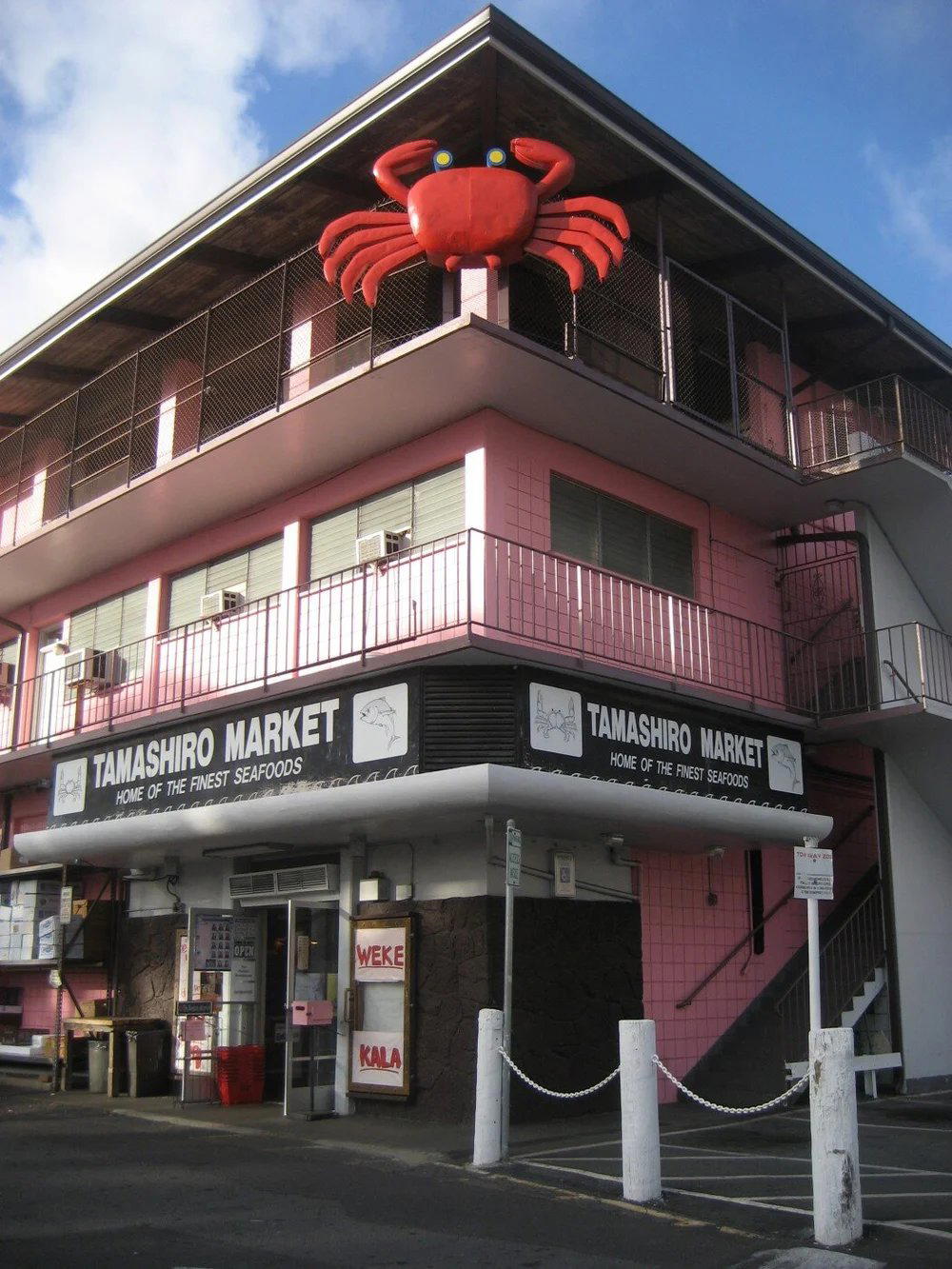
A Market Built on the Logic of the Harbor, Not the Menu
In most American cities, the gap between seafood retail and restaurant dining has widened to the point where the two formats barely overlap. In Honolulu, that gap has always been narrower. The city's proximity to productive Pacific fishing grounds, combined with a multiethnic food culture shaped by Japanese, Filipino, Korean, and Native Hawaiian traditions, kept the wet market format alive long after it faded elsewhere on the mainland. Tamashiro Market, at 802 N King St in the Kalihi district, is the most prominent surviving example of that continuity.
The Kalihi neighborhood is not where Honolulu's current wave of destination dining is concentrated — that energy sits closer to Kaka'ako, Chinatown, and the hotel corridors of Waikiki. Kalihi is a working district, and Tamashiro operates accordingly: the format is functional, the clientele is largely local, and the selection reflects what the boats brought in rather than what a chef's menu requires. That operational logic is precisely what gives the market its authority. Venues like 53 By The Sea and Fête (New American) represent the polished, composed end of Honolulu's food scene. Tamashiro represents the supply chain those restaurants depend on.
What the Market Format Actually Means for Your Visit
Walking into a working seafood market requires a different orientation than booking a tasting menu. There is no reservation, no fixed sequence, and no staff member whose job is to manage your experience. What exists instead is a counter, a display of whole fish and shellfish, and the accumulated knowledge of people who have been sourcing from the same waters for generations. For visitors accustomed to the curated formats of places like The French Laundry in Napa or Alinea in Chicago, the absence of structure is the point.
The practical implication is that arrival timing matters more than booking. Market inventory at a place like Tamashiro is determined by daily supply, which means the selection at opening differs substantially from what remains by mid-afternoon. Anyone planning around specific species or cuts should arrive early. This is not a tip sourced from a concierge — it is the operational reality of any market that receives fresh product on a daily or near-daily basis.
The walk-in format also means the market is genuinely accessible in a way that Honolulu's more formal dining rooms are not. Venues like 3660 On the Rise and Ahaaina Luau require planning, and in some cases advance bookings of weeks or months. Tamashiro requires neither. That openness is structurally different from the scarcity model that defines much of premium American dining, the kind of booking pressure you find at Atomix in New York City or Lazy Bear in San Francisco.
Honolulu's Seafood Market Tradition in Context
Hawaii's relationship with seafood is not purely culinary, it is ecological, cultural, and economic. The state's commercial fishing fleet operates across a vast stretch of the Pacific, landing bigeye tuna, yellowfin, mahimahi, ono (wahoo), and opakapaka (pink snapper) at Honolulu's Pier 38 auction, one of the largest fresh tuna auctions in the United States. The market format is the direct retail expression of that system.
What distinguishes Hawaii's seafood culture from comparable markets on the mainland is the integration of raw preparation into the shopping experience. Poke, now widely distributed in diluted form across the continental US, originated as a practical way to use fresh reef fish, sliced and seasoned with sea salt, limu (seaweed), and kukui nut. At a market like Tamashiro, that preparation logic is still embedded in the retail operation, not abstracted into a fast-casual concept. The difference between poke at its source market and poke at a chain in a mainland food court is roughly analogous to the difference between a Burgundy domaine tasting room and a supermarket shelf.
For comparison, the kind of seafood-forward fine dining that operates at the level of Le Bernardin in New York City or Providence in Los Angeles treats the same underlying ingredients through an entirely different lens, technique, composition, and service ritual doing work that a market leaves to the product itself. Neither approach is a substitute for the other. They answer different questions.
Placing Tamashiro in Honolulu's Broader Food Geography
Honolulu's dining scene in the current decade has grown more stratified. At the top of the price tier, venues with formal service and composed menus compete for the same visitors who might otherwise spend a night at a comparable restaurant in Tokyo or Singapore. At the base of the food economy, local markets, plate lunch counters, and food trucks serve a daily clientele that has little overlap with the destination-dining circuit. Tamashiro sits firmly in the latter category, but with a product quality that the former depends on.
The address, 802 N King St, places the market in Kalihi, a district that does not appear frequently in travel editorial aimed at luxury visitors. That is partly a function of where hotel infrastructure is concentrated (Waikiki, Ala Moana, Kaka'ako) and partly a function of the neighborhood's working character. Getting there from central Waikiki involves a short drive or a bus ride north on King Street. The market is not the kind of destination that requires logistical planning, but it does require intentional routing: it will not appear on a walking itinerary based out of a Waikiki hotel.
Visitors building a broader picture of Honolulu's food identity should cross-reference the market with the city's more composed dining options, the 855-ALOHA experience and the full range reviewed in our full Honolulu restaurants guide. The market answers a specific question: where does the fish come from before it reaches a restaurant plate? For visitors whose food travel extends to farm-to-table formats like Blue Hill at Stone Barns in Tarrytown or Single Thread Farm in Healdsburg, the provenance question is not abstract, it is the organizing principle of the visit.
Know Before You Go
- Address: 802 N King St, Honolulu, HI 96817
- Neighborhood: Kalihi, Honolulu
- Format: Seafood market (retail); no reservations required
- Walk-in policy: Open access; no booking system in place
- Timing: Arrive early for leading selection, inventory reflects daily supply and depletes through the day
- Phone / Website: Not published in; visit in person or contact via local directory
- Getting there: Short drive north from Waikiki via King Street; street parking available in the surrounding blocks
Frequently asked questions
What dish is Tamashiro Market famous for?
Tamashiro Market is most closely associated with fresh poke and whole Pacific fish, the same categories that define Honolulu's seafood market tradition broadly. The market's reputation is built on daily-sourced product rather than a fixed signature preparation, which means what is available reflects the catch rather than a set menu. For composed poke and seafood dishes in a restaurant format, venues like 3660 On the Rise offer a different context.
Can I walk in to Tamashiro Market?
Yes. The market operates as a retail walk-in format with no reservation or booking requirement. In a city where demand for premium dining can push booking windows to weeks or months in advance, as at destination-level venues across the US, from Addison in San Diego to The Inn at Little Washington, Tamashiro's open-door format is a structural contrast. Arriving early improves selection given the daily supply model.
What's the signature at Tamashiro Market?
The market's authority rests on its fresh whole fish and poke selection, both of which draw from Honolulu's commercial fishing supply chain rather than a fixed culinary concept. There is no tasting menu or chef-authored dish, the product itself is the signature. For visitors interested in how Hawaii's seafood culture intersects with formal cuisine, the EP Club guide to Honolulu restaurants maps the wider range.
How does Tamashiro Market handle allergies?
Given the market format, allergen management differs substantially from a restaurant kitchen, shoppers interact directly with unprocessed product, which gives more control over preparation. For specific allergen concerns, contacting the market directly before visiting is advisable; no phone number or website is currently listed in public records, so an in-person inquiry is the most reliable approach. Visitors with severe shellfish or finfish allergies should note that a working seafood market environment involves ambient cross-contact risk.
Is Tamashiro Market suitable for visitors without access to a kitchen?
The market's retail format is primarily oriented toward customers who will cook at home or prepare raw dishes like poke. Visitors staying in hotels without kitchen facilities may find the format less practical for whole fish but well-suited to ready-to-eat poke preparations, which require no further cooking. This positions Tamashiro differently from restaurant-format seafood experiences at venues such as 8 1/2 Otto e Mezzo Bombana in Hong Kong or Emeril's in New Orleans, where the kitchen does all the work. The market's value to a hotel-based visitor is in the ready-to-eat counter, not the raw whole-fish section.
Budget Reality Check
Comparable venues nearby, for context on price, style, and recognition.
| Venue | Cuisine | Price | Notes |
|---|---|---|---|
| Tamashiro MarketThis venue — the venue you are viewing | Hawaiian Seafood Market & Poke | $10–20 | Not listed |
| Growler Hawaii | American Craft Beer Pub | Not listed | Kapahulu, American Craft Beer Pub |
| Paia Fish Market Waikiki | Fresh Hawaiian Seafood | $20–30 | Kapahulu, Fresh Hawaiian Seafood |
| Fire Grill Waikiki | American Steakhouse & Grill | $50–100 | Kapahulu, American Steakhouse & Grill |
| Me's BBQ | Korean BBQ | $20–30 | Kapahulu, Korean BBQ |
| 53 By The Sea | Hawaii Regional Cuisine | $100–150 | Kakaako, Hawaii Regional Cuisine |
Details
- Rustic
- Casual Hangout
- Standalone
- Local Sourcing
- Sustainable Seafood
- A La Carte
Current opening hours
- Monday
- Closed
- Tuesday
- 8 AM–1 PM
- Wednesday
- 8 AM–1 PM
- Thursday
- 8 AM–4 PM
- Friday
- 8 AM–4 PM
- Saturday
- 8 AM–4 PM
- Sunday
- 8 AM–1 PM
Hours can change for holidays and private events. Last verified .
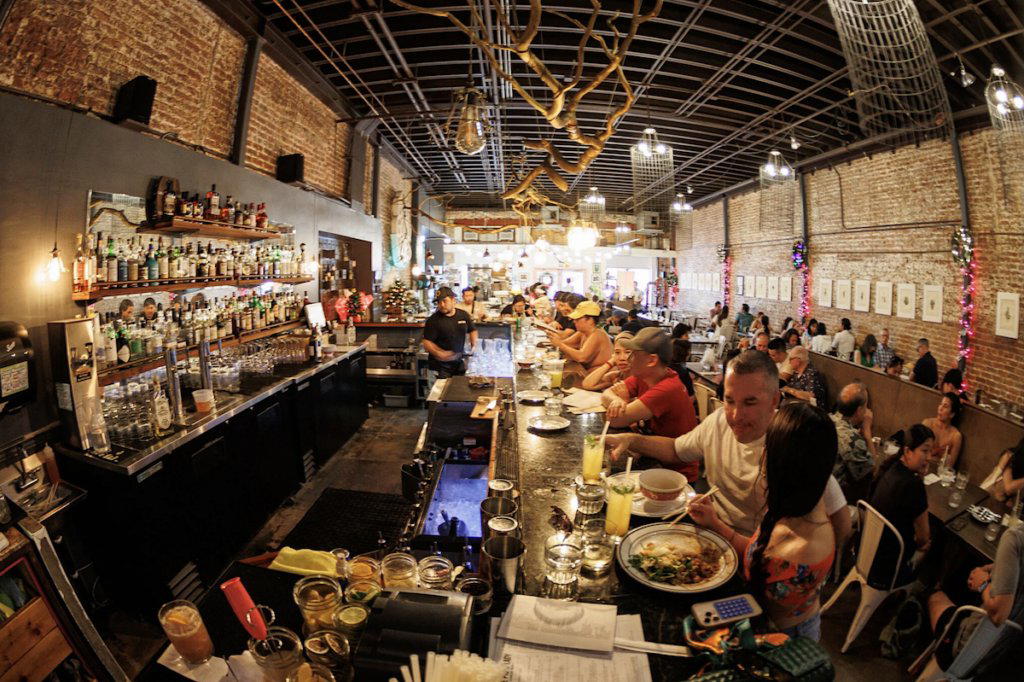
Casual, bustling seafood market atmosphere with fresh fish displays and a functional, no-frills local vibe.