Tamago Sushi and Bowl
Our verdict
Tamago Sushi and Bowl brings Japanese-style sushi and rice bowls to Hall Road in Macomb, Michigan, sitting within a suburban dining corridor that has grown steadily more diverse in its food offerings. The format skews accessible and everyday rather than omakase-formal, making it a practical choice for Macomb residents looking for Japanese-influenced cooking without the formality or price point of metro Detroit's destination sushi counters.

Pearl is the En Primeur Club membership app — saves, bookings, and concierge access live there. Same editors, same standards.
- Address
- 20233 Hall Rd, Macomb, MI 48044
- Phone
- (248) 938-8095
- Hours
- Mon 11 AM–9 PMTue ClosedWed–Sun 11 AM–9 PM
- Website
- tamagosushibowl.com
- Directions
- Get directions
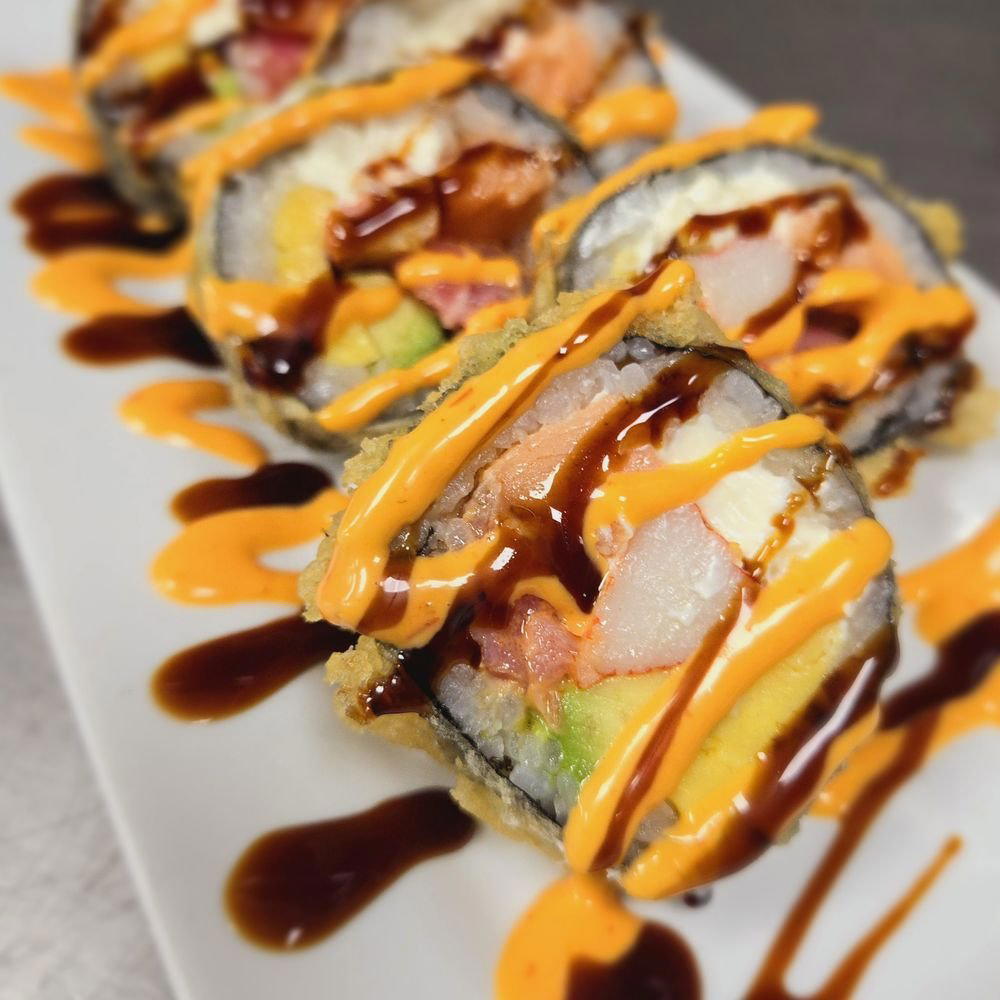
The menu
What to order
- Rainbow roll
- Spider roll
- California bowl
- BBQ bulgogi bowl
Sushi in the Suburbs: What the Hall Road Corridor Tells You
Suburban Michigan's relationship with Japanese cuisine has followed a familiar arc seen across mid-sized American metro edges: Chinese-American buffets gave way to generalist Asian fusion, which gave way, slowly, to more format-specific Japanese restaurants built around either sushi rolls or rice bowls, occasionally both. Tamago Sushi and Bowl, on Hall Road in Macomb, sits squarely in that third wave. The address, 20233 Hall Rd, places it within the dense commercial strip that functions as Macomb Township's de facto dining corridor, a stretch where casual-to-mid-range restaurants compete for the suburban family and the office-lunch crowd in roughly equal measure.
What distinguishes this tier of Japanese dining from the omakase counters you'd find at Detroit proper's more ambitious spots, or the tasting-menu discipline of places like Atomix in New York City or Alinea in Chicago, is the governing logic of the format. Accessible sushi-and-bowl restaurants are built around repetition and reliability, not revelation. The question worth asking is not whether a place like Tamago reaches the altitude of Le Bernardin in New York City or The French Laundry in Napa, but whether it does its specific job well within its specific context. Those are different evaluations, and conflating them serves nobody.
The Sourcing Question in Everyday Sushi
Ingredient sourcing is where the gap between aspirational sushi and everyday sushi becomes most visible. At the high end of American Japanese dining, operations like ITAMAE in Miami or Providence in Los Angeles build sourcing into the identity of the restaurant, with relationships to specific fisheries, documented provenance for seasonal fish, and menus that shift based on what that network delivers. That model requires capital, volume, and a customer base willing to pay for the chain of custody.
The suburban sushi-and-bowl format operates on a different supply chain logic. Fish typically arrives through regional distributors rather than direct fishery relationships, and the menu is engineered for consistency across a broad range of proteins: salmon, tuna, yellowtail, and imitation crab are workhorses because they are reliable, scalable, and familiar to a wide audience. Rice, often the better measure of a sushi operation's care, tells you more than the fish specification alone. A properly seasoned, correctly textured sushi rice requires attention to the vinegar-to-sugar ratio, the rice variety, and the temperature at which it is served, and these are choices any operation can make regardless of price tier.
Bowls, in this format context, carry their own sourcing signals. The donburi tradition from which rice bowls descend is fundamentally about making something coherent from relatively simple components, and the sourcing integrity shows up in the quality of accompaniments: the freshness of avocado, whether pickled ginger is house-made or purchased, the quality of soy-based sauces. These are granular details, but they are the details that separate a bowl worth returning for from one that blurs into the broader category.
The American Midwest, including metro Detroit and its surrounding townships like Macomb, does not have the same access infrastructure as coastal cities for premium Japanese fish. That is a geographic and logistical reality, not a failing of any individual operator. Operations like Single Thread Farm in Healdsburg or Blue Hill at Stone Barns in Tarrytown have built their sourcing models around proximity to agricultural networks, which is an advantage the Midwest actually holds for produce and proteins even if premium seafood provenance requires more effort. How any suburban sushi operation chooses to work within those constraints says something about its priorities.
Format and Atmosphere on the Hall Road Strip
The sushi-and-bowl format that Tamago operates within has a specific spatial logic: counter or booth seating, a menu organized around build-your-own or chef-composed bowls alongside a sushi roll selection, and an atmosphere that trends toward casual rather than hushed. This is not the eight-seat omakase counter with a three-month waitlist that defines destination sushi in cities like Chicago or San Francisco, where Lazy Bear and comparable operators have pushed dinner into theatre territory. This is a neighbourhood restaurant whose success depends on regulars, on reasonable ticket times, and on execution that holds up under volume.
For the Macomb diner, that format distinction matters for planning purposes. The energy in a suburban sushi-and-bowl spot tends to be family-oriented and unpretentious. Evenings are busier than lunches on weekends; weekday lunch draws the office-adjacent crowd from the commercial zone surrounding Hall Road. The experience skews toward the lively rather than the meditative, which is worth knowing before you arrive expecting the focused quiet of a high-end counter. For a broader view of what Macomb's dining corridor offers across formats and cuisines, see our full Macomb restaurants guide.
Where Tamago Sits Relative to the Broader Category
American cities with strong Japanese dining scenes have developed a clear tiering over the past decade. At the formal end: multi-course omakase operations with Michelin recognition or equivalent credentialing, where a meal at Addison in San Diego, Bacchanalia in Atlanta, or The Inn at Little Washington represents a different category of investment entirely. Below that: fast-casual poke and bowl chains that have industrialized the format. The middle tier, where a venue like Tamago operates, is the most contested and the most dependent on execution consistency and genuine local knowledge about sourcing and technique.
Within metro Detroit, the competitive set for this tier includes a range of suburban Japanese restaurants across Macomb, Oakland, and Wayne counties. The Hall Road address gives Tamago strong accessibility for the northeastern suburban population, which is a genuine logistical advantage in a region where driving ten miles to eat is not unusual. Compared to destination-tier American Japanese dining such as Causa in Washington, D.C., Frasca Food and Wine in Boulder, or Brut in Denver, the value proposition is entirely different: accessibility, familiarity, and a price point that permits regular visits rather than occasional ones.
The award-heavy end of the American dining spectrum, represented by operations like Emeril's in New Orleans or 8 1/2 Otto e Mezzo Bombana in Hong Kong, operates on an entirely different axis of credentialing. Tamago carries no formal awards in the public record, which places it in the large majority of American neighbourhood restaurants that are evaluated on community use rather than critical recognition. That is neither a criticism nor a defence; it is simply a description of the tier and what it asks of its audience.
Planning a Visit
Tamago Sushi and Bowl is located at 20233 Hall Rd, Macomb, MI 48044, within easy reach of most of Macomb Township's residential and commercial zones. No booking method, hours, or pricing information is confirmed in the public record, so contacting the restaurant directly before visiting is advisable, particularly for larger groups or weekend evenings when demand on suburban casual restaurants tends to peak. The Hall Road corridor is car-dependent, with parking readily available in the commercial strip adjacent to the address.
Frequently asked questions
Is Tamago Sushi and Bowl child-friendly?
The sushi-and-bowl format at 20233 Hall Rd positions Tamago within Macomb's casual dining tier, where accessible menus and informal seating are the norm. Rice bowl builds and familiar sushi rolls typically read well to younger diners who might resist more formal Japanese presentations. Nothing in the venue's public record suggests a dress code or atmosphere that would work against a family visit.
Is Tamago Sushi and Bowl better for a quiet night or a lively one?
Sushi-and-bowl restaurants along Macomb's Hall Road corridor run social and casual rather than hushed. Tamago carries no awards or press recognition that would signal a chef's-counter atmosphere requiring quiet concentration. Expect the tempo of a neighborhood strip-mall restaurant: conversational, unhurried, and informal.
How does Tamago Sushi and Bowl compare to other Japanese restaurants in Macomb, MI?
Tamago operates within the accessible, everyday tier of Japanese dining in Macomb rather than the formal omakase or full-service restaurant category. The sushi-and-bowl format is designed for volume and accessibility, placing it closer to fast-casual than to white-tablecloth Japanese dining. For Macomb Township residents, that positions Tamago at 20233 Hall Rd as a neighborhood option rather than a destination restaurant requiring advance planning.
What's the signature dish at Tamago Sushi and Bowl?
No single dish is confirmed in the public record for Tamago. The venue's name points to two format anchors: sushi and bowls, which in the suburban Midwest typically means rolls alongside rice or poke-style builds. Until a menu is published, those two categories define the offering more reliably than any single plate.
What's Tamago Sushi and Bowl's location?
Tamago Sushi and Bowl is located at 20233 Hall Rd, Macomb, MI 48044, Macomb.
Comparison Snapshot
Comparable venues nearby, for context on price, style, and recognition.
| Venue | Cuisine | Price | Notes |
|---|---|---|---|
| Tamago Sushi and BowlThis venue — the venue you are viewing | Japanese Sushi and Korean Bowls | $10–20 | Not listed |
| Mito Hibachi & Sushi | Hibachi & Sushi | $30–50 | Warren |
| Sushi Hana | Traditional Japanese Sushi | Not listed | Bloomfield Hills |
| Mon Jin Lau | Nu-Asian Fusion with Sushi | $30–50 | Troy |
| Antonio's in the Park | Northern Italian | $30–50 | Grosse Pointe Park |
| Warda Pâtisserie | Algerian-Inspired Pâtisserie | Not listed | Midtown |

Details
- Casual Hangout
- Sake Program
- A La Carte
- Vegetarian Friendly
Current opening hours
- Monday
- 11 AM–9 PM
- Tuesday
- Closed
- Wednesday
- 11 AM–9 PM
- Thursday
- 11 AM–9 PM
- Friday
- 11 AM–9 PM
- Saturday
- 11 AM–9 PM
- Sunday
- 11 AM–9 PM
Hours can change for holidays and private events. Last verified .
Casual takeout-focused spot with standard lighting for quick Japanese and Korean meals.