On the eastern stretch of Sherbrooke, Takumi Sushi occupies a position in Montreal's growing Japanese counter scene, a city where sushi has moved well beyond supermarket rolls into serious omakase territory. The address at 405A Sherbrooke St E places it in the Plateau-adjacent corridor, where occasion dining and neighbourhood regulars share the same room. For a city still building its Japanese fine-dining credentials, that context matters.
Pearl is the En Primeur Club membership app — saves, bookings, and concierge access live there. Same editors, same standards.
- Address
- 405A Sherbrooke St E, Montreal, Quebec H2L 1J9, Canada
- Phone
- +15142828838
- Website
- takumisushimontreal.com
- Directions
- Get directions
 Saves & bookings on Pearl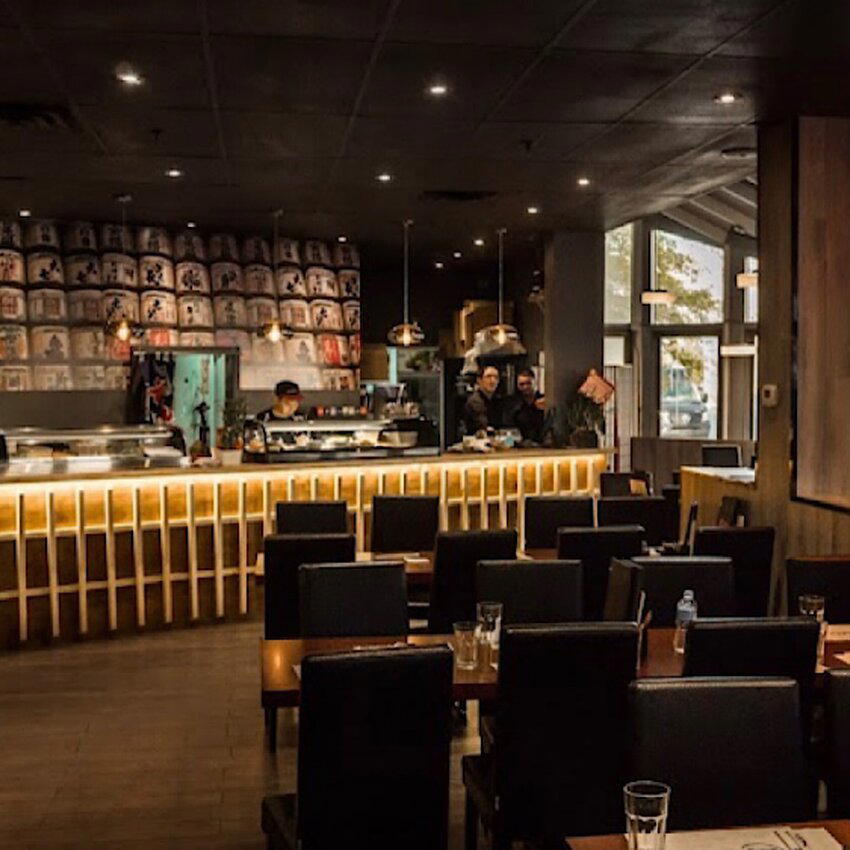
Where Sherbrooke Meets the Sushi Counter
The eastern stretch of Sherbrooke Street has a different rhythm from the gallery-lined western corridor. Quieter, more residential, with the kind of foot traffic that suggests neighbourhood loyalty rather than tourist drift. It is in this stretch, at 405A, that Takumi Sushi has carved out its place, and the address itself signals something about the dining proposition: this is not a destination for passing trade. Guests arrive with intention, and the room’s appeal is its focused, counter-led format rather than spectacle.
Montreal's Japanese dining scene has undergone a meaningful shift over the past decade. The city built its early reputation on French technique and Québécois terroir, venues like Jérôme Ferrer - Europea and the long-dominant Toqué set a benchmark for formal dining that leaned heavily European. Japanese cuisine, by contrast, was long confined to casual neighbourhood spots or pan-Asian menus that prioritised volume over precision. That has changed. A new cohort of sushi-focused addresses has pushed the category into occasion-dining territory, where a meal is planned weeks ahead and the table represents a genuine event. Takumi Sushi sits within that shift.
The Occasion Dining Argument
There is a particular kind of meal that a city's dining culture needs to support: the milestone table. Birthdays, anniversaries, promotions, and the kind of dinner where the reservation itself is part of the gift. In Montreal, that tier has historically been occupied by French and modern Québécois kitchens. The emergence of serious Japanese counters represents a rebalancing, a recognition that precision-led, counter-format dining carries its own form of occasion weight.
The counter format, common to omakase and premium sushi experiences across Japan and increasingly across North American cities, creates a different kind of intimacy than a white-tablecloth dining room. The meal unfolds at the chef's pace. There is no menu negotiation, no course-by-course deliberation. The guest surrenders the decision-making and, in doing so, often ends up more present at the table than they would be in a conventional restaurant setting. For milestone meals, that structure has real value: the occasion becomes the frame, and the food becomes the experience rather than a backdrop to conversation about the menu.
Across Canada, the counter-format Japanese meal has found a foothold in cities with the density and international food culture to support it. Atomix in New York City and Le Bernardin represent the upper register of this format on the eastern seaboard, while Canadian cities from Toronto, where Alo has demonstrated the appetite for serious tasting-format dining, to Vancouver, where AnnaLena operates in the precision-led counter tradition, have shown that the format sustains. Montreal is catching up, and addresses like Takumi Sushi are part of that acceleration.
Montreal's Japanese Dining Context
To understand where a venue like Takumi Sushi fits, it helps to map the city's broader dining architecture. Montreal rewards restaurants that know their category and execute within it without overreaching. The city's most durable dining rooms, from the modernist ambition of Mastard to the quieter precision of Sabayon, tend to have a clear point of view and a consistent execution. Genre-blurring rarely lands as well here as it does in Toronto or New York.
That conservatism in category fidelity actually benefits a focused sushi address. Diners who seek out a Japanese counter in Montreal are not confused about what they want. They have made a deliberate choice, often weeks in advance, and their expectations are calibrated accordingly. The comparison set is not the full spectrum of the city's restaurant scene but the smaller tier of serious Japanese rooms, some of which are yet to develop the visibility they deserve.
For those building a broader picture of the city's dining offer, the full Montreal restaurants guide maps the categories and neighbourhoods in more detail. Within Quebec, the fine-dining conversation extends to Tanière³ in Quebec City, where the approach to ingredients and format carries its own kind of rigour, and to neighbourhood-anchored rooms like 3 Pierres 1 Feu and Abu el zulof, which demonstrate the range of what Montreal's dining culture now accommodates.
Planning the Visit
Counter-format Japanese dining across North America generally rewards forward planning. Particularly in-demand rooms in comparable cities, whether the tasting counters of Eigensinn Farm in Singhampton or the focused menus at Restaurant Pearl Morissette in Lincoln, operate on advance booking windows that can stretch to several months. For occasion dining specifically, the lead time matters: securing the date well ahead removes uncertainty from the milestone and allows the meal to carry the weight it is meant to carry.
The Sherbrooke Street East location is accessible by public transit from most central Montreal neighbourhoods. The surrounding block offers little in the way of pre-dinner bar culture, which, for a counter-format meal with its own pacing, is not necessarily a disadvantage, arriving without a prior stop elsewhere keeps the palate ready and the focus intact.
For those planning a longer Canadian dining tour, the category of serious destination restaurants extends across the country, from The Pine in Creemore and Barra Fion in Burlington to Narval in Rimouski and Bearspaw Golf Club in Calgary. The range of that list reflects how widely Canada's serious dining culture has distributed itself beyond the primary urban centres.
Know Before You Go
- Address: 405A Sherbrooke St E, Montreal, Quebec H2L 1J9, Canada
- Neighbourhood: Plateau-adjacent, eastern Sherbrooke corridor
- Category: Sushi / Japanese counter dining
- Leading for: Milestone dinners, celebrations, occasion meals requiring a structured, counter-format experience
- Getting there: Accessible by Montreal public transit; limited immediate pre-dinner bar options nearby
Cuisine and Recognition
Comparable venues nearby, for context on price, style, and recognition.
| Venue | Cuisine | Price | Notes |
|---|---|---|---|
| Takumi SushiThis venue — the venue you are viewing | Japanese Sushi & Fusion | $$ | Not listed |
| Restaurant nozy | Teishoku-Style Japanese | $$ | La Petite-Italie |
| Restaurant Sho-dan | Authentic Japanese Sushi with Fusion | $$$ | Golden Square Mile |
| Le 404 | Modern Cocktail Bar with French-Mexican Fusion Small Plates | $$ | Vieux Montréal |
| Abu el zulof | Authentic Lebanese & Syrian | $$ | Golden Square Mile |
| La Panzeria | Authentic Puglian Italian | $$ | La Fontaine Park |
At a Glance
- Casual
- Trendy
- Lively
- Casual Hangout
- Group Dining
- Date Night
- Open Kitchen
- Byob
Current opening hours
- Monday
- 5–9:30 PM
- Tuesday
- 5–9:30 PM
- Wednesday
- 5–9:30 PM
- Thursday
- 5–9:30 PM
- Friday
- 5–10:30 PM
- Saturday
- 12–2:30 PM, 5–10:30 PM
- Sunday
- 12–2:30 PM, 5–9:30 PM
Hours can change for holidays and private events. Last verified .